Commercial Roof Inspection in Conroe, TX
Get a commercial roof inspection in Conroe with mapped findings on seams, drains, flashing, moisture, and repair priorities for your building.
Before a leak starts, a roof often gives a quieter signal: a seam that has begun to lift, a drain that empties slowly, or a repair that no longer bonds to its edge. A useful inspection turns those signs into a short list of decisions. We walk the roof, review the interior reports, photograph conditions, and mark each finding by location and urgency. Summer highs near 95 degrees around the region and Conroe's record of tornado activity make drainage, perimeter details, and penetrations worth checking before storm season. We inspect roofs serving warehouse, freight, and manufacturing employers at Conroe Park North as well as retail and office properties near Grand Central Park.
A Roof Walk With a Purpose
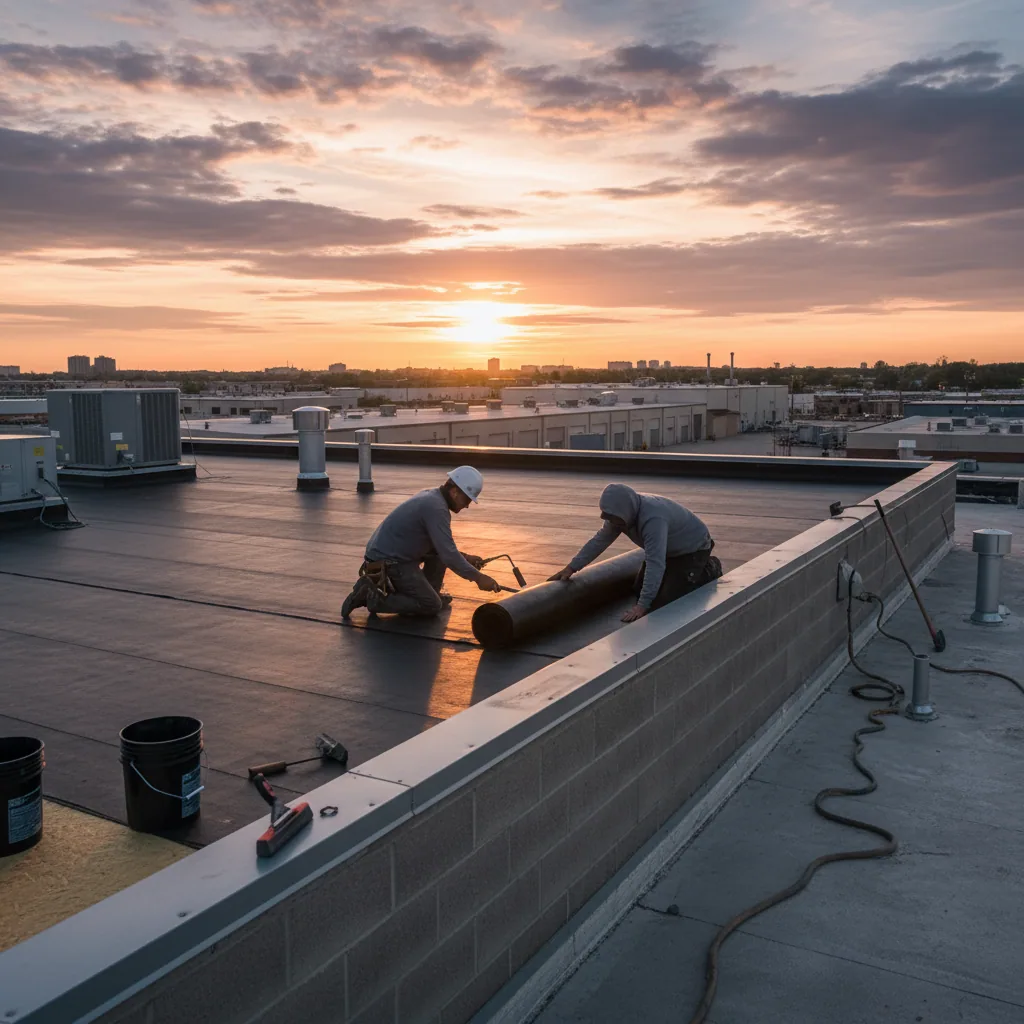
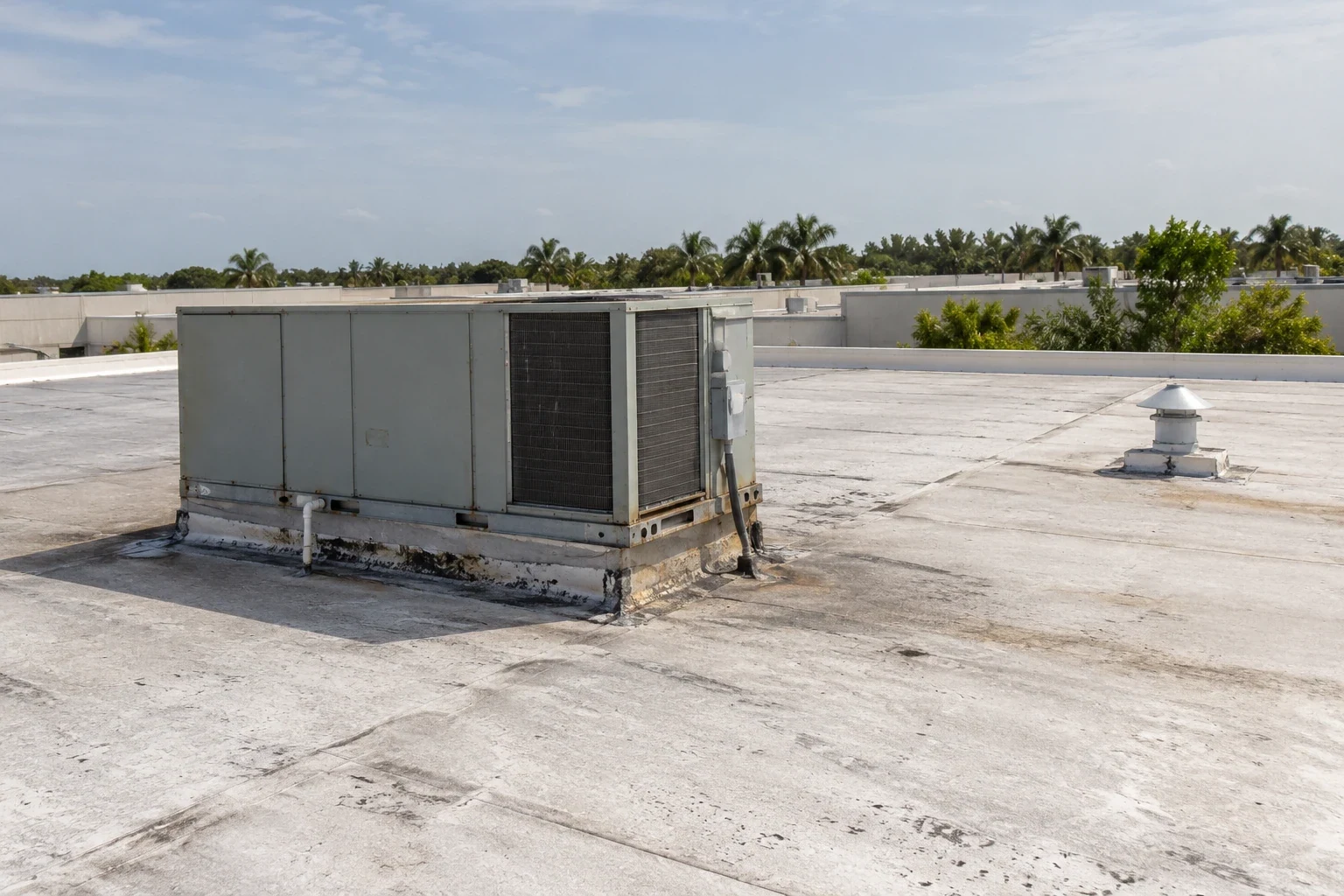
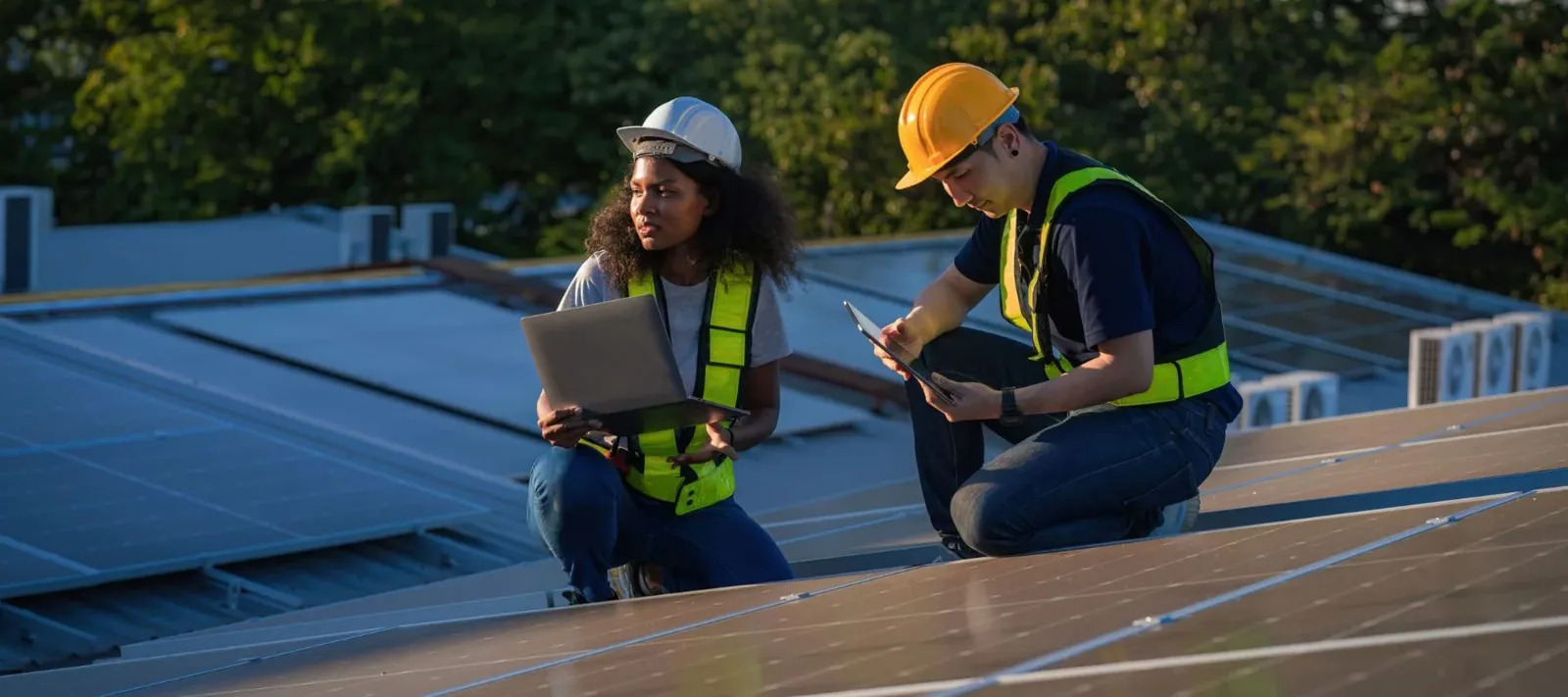
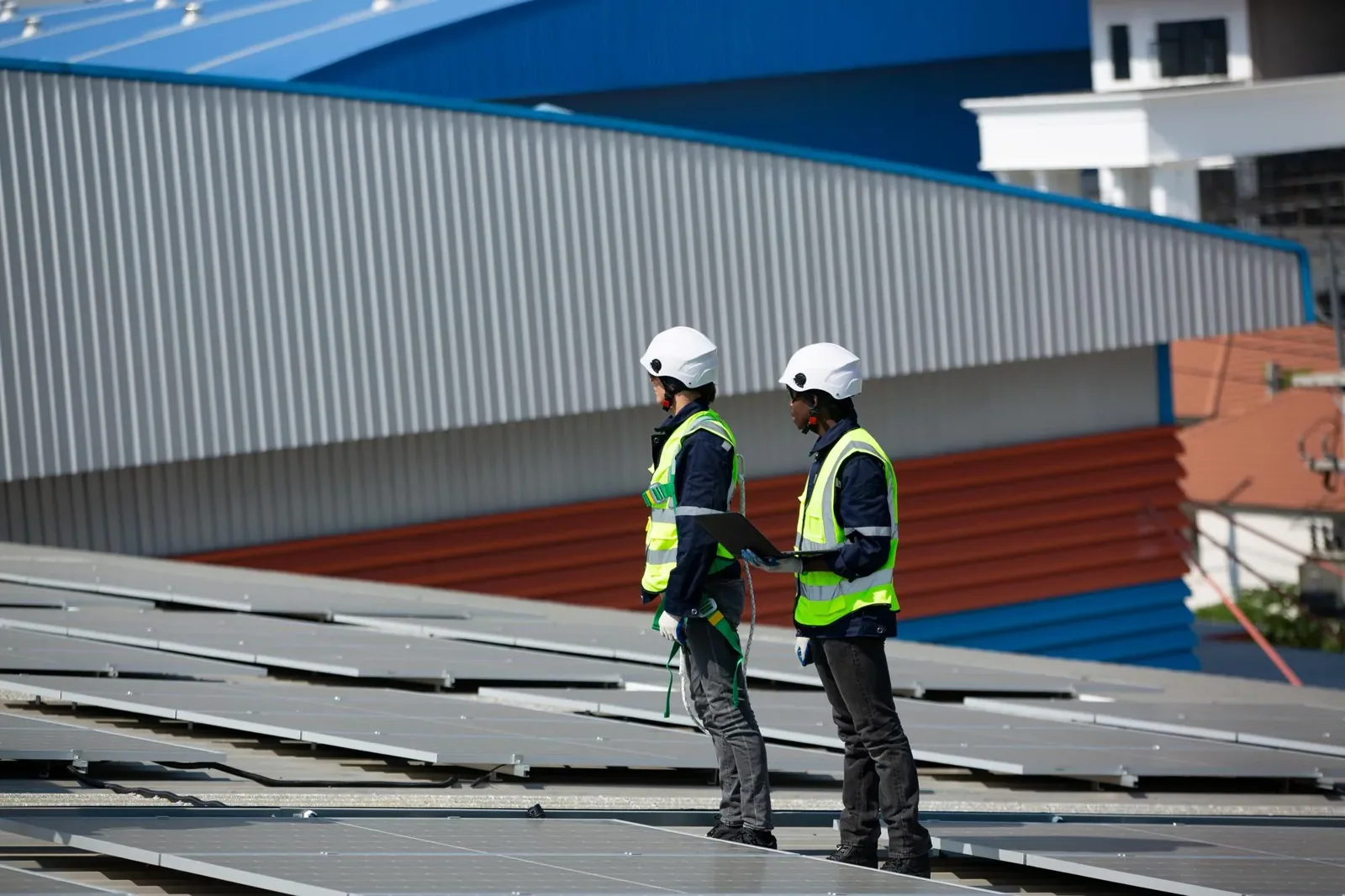
The inspection follows a route that covers the entire roof rather than stopping at the first visible defect. We examine membrane fields, seams, fasteners, flashing, curbs, skylights, drains, scuppers, edge metal, parapets, and transitions to adjoining walls. Rooftop equipment can obscure the membrane below or concentrate foot traffic around a curb, so we check those access paths too. Conditions are recorded with the roof section and a photograph whenever it helps the manager find the item later.
We note the roof system before interpreting what a defect means. A split in an aged modified-bitumen cap sheet has a different repair path from an open weld on a single-ply membrane, and a loose fastener pattern on metal needs its own check. Recording the system and detail prevents a condition note from becoming a vague instruction to patch. It also helps the owner compare the next inspection with this one.
Inside, we compare reported leaks with ceiling stains, equipment rooms, and any available maintenance records. The interior clue may point toward a roof opening, but it does not always sit below the entry point. A mapped condition report connects interior symptoms with roof observations and separates a repair from a maintenance item. The report is useful only when it identifies the location and explains the next action.
What the Findings Mean
We classify conditions by their consequence. An open seam, puncture, or failed curb flashing can allow water to reach the assembly. Debris at a drain may reduce flow before a storm. Surface wear without an open path may call for monitoring or planned maintenance rather than an immediate repair. Wet insulation, corrosion, or a soft deck can change the scope because covering the affected material may conceal an ongoing problem.
Every observation receives a practical disposition: repair, maintain, monitor, or investigate further. When evidence is incomplete, we state the next test needed rather than treating an uncertain condition as confirmed. A small core opening, moisture survey, or controlled water test can resolve a question that a visual walk cannot. If an item needs immediate attention, our repair service can address the confirmed defect without rolling every maintenance item into the same scope.
Weather and Roof Details
Conroe's heat affects how seams, flashings, and surface coatings behave through the year. A local observing station sits at the airport just north of the city; regional summer normals at Houston Intercontinental show average highs close to 95 degrees in July and August. The inspection therefore looks for movement at laps, brittle transitions, loose metal, and repairs that have been exposed through repeated heat cycles. We do not infer damage from a temperature number alone. The material and its condition tell us what action is warranted.
The local storm record also includes an F0 tornado over Conroe and another near Cut and Shoot in 1997. A roof inspection after severe weather checks edge conditions, penetrations, rooftop equipment attachments, and any newly displaced membrane. Buildings near NorthStar Industrial Park and the Conroe I-45 corridor may have different access and equipment layouts, but the same careful distinction applies: local weather gives context; the inspection identifies actual roof conditions.
Set the Inspection Boundary
Before the walk, we confirm building access, roof hatch or ladder location, required safety controls, and any areas where entry needs an escort. The manager shares known leaks, tenant reports, equipment restrictions, and roof work completed since the last visit. If a roof section is active with maintenance or construction, we coordinate a path that avoids disturbing the work or crossing unsafe zones.
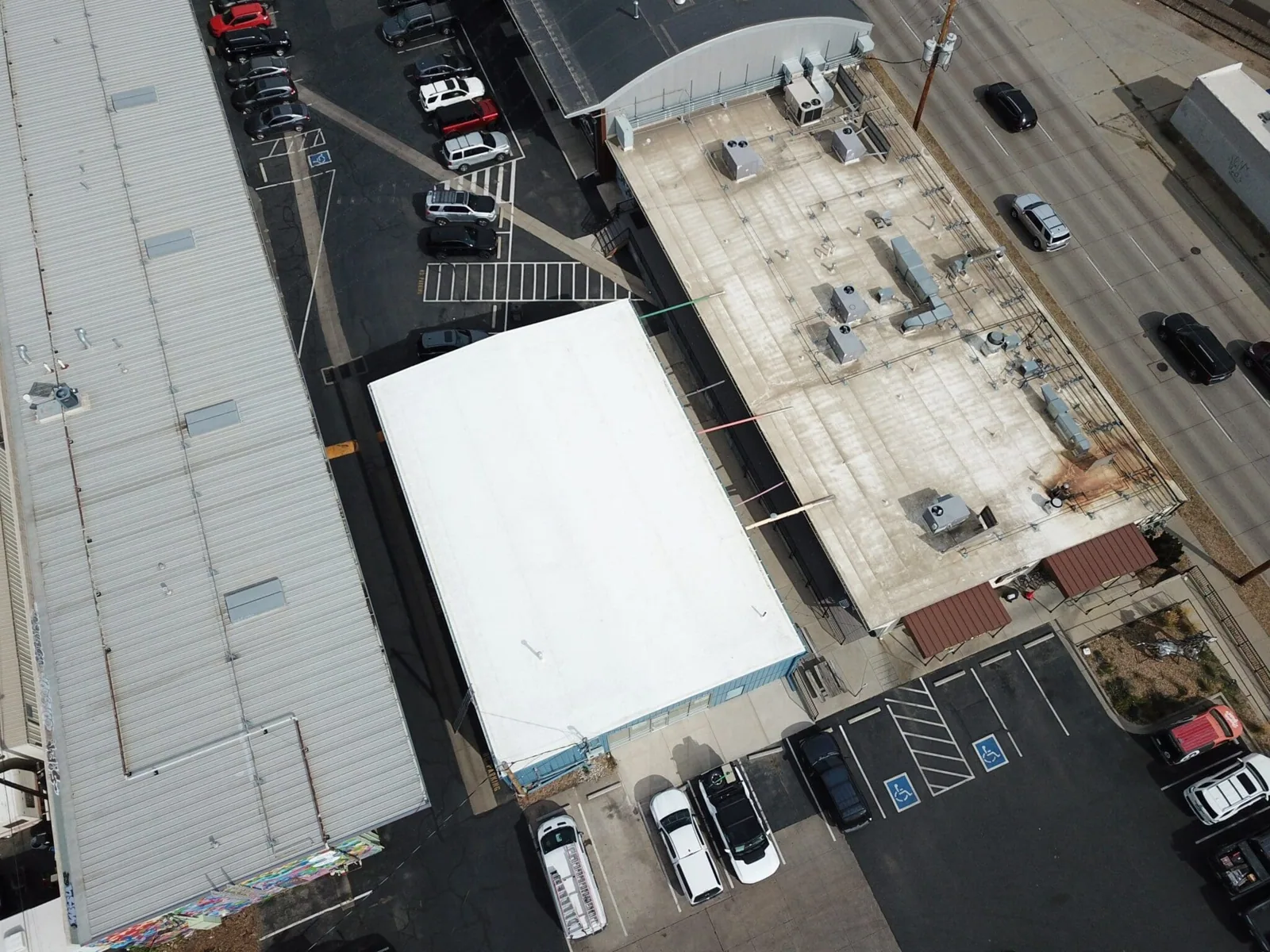
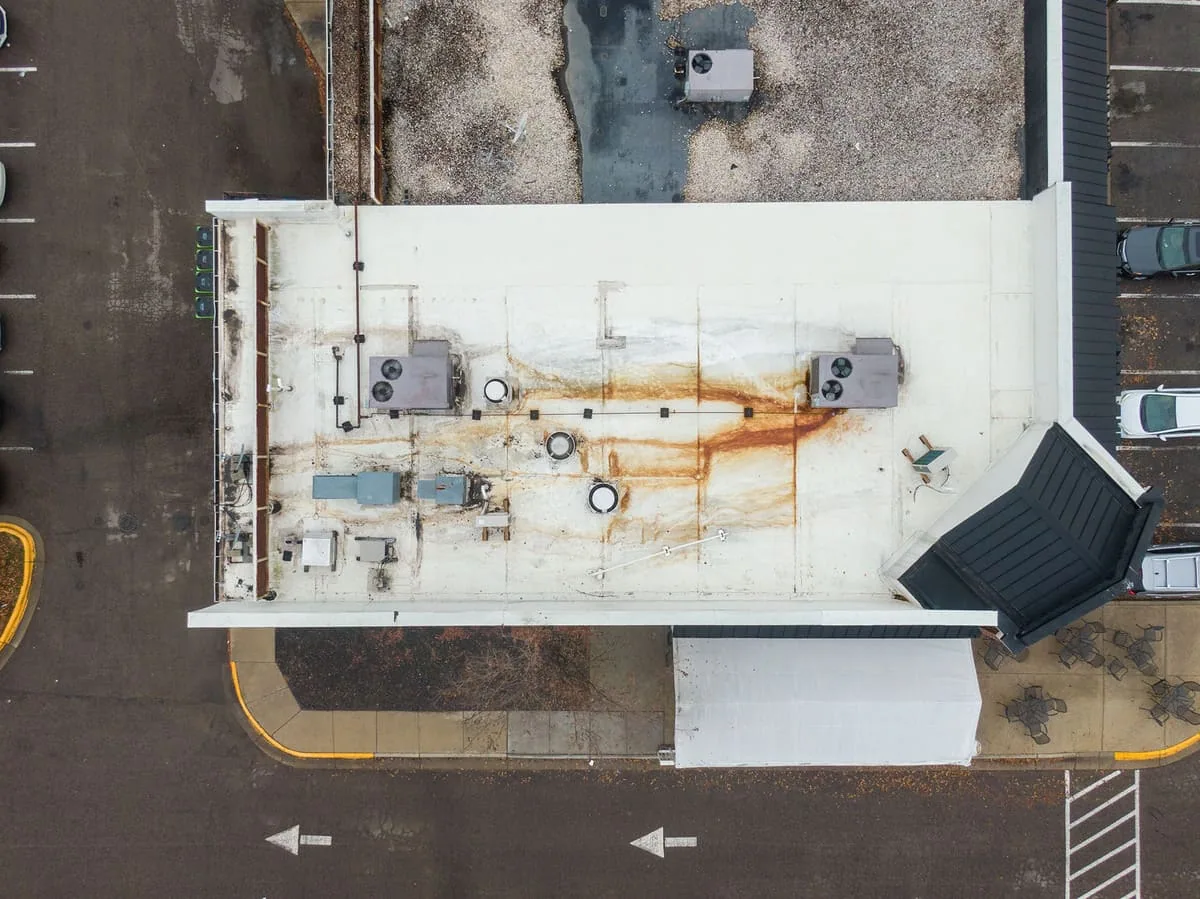
We inspect in a sequence that limits unnecessary movement over the membrane. Fragile skylights and translucent panels are treated as hazards, not walking surfaces. Where a large roof cannot be inspected safely from every section, the report identifies the limitation and the method used, such as a drone overview or targeted close access. A drone roof inspection can capture hard-to-reach areas, but it complements rather than replaces hands-on checks of suspect details.
Choose the Right Inspection Scope
Inspection scope changes with roof area, height, number of systems, accessibility, leak history, and how much testing is needed. A routine condition walk differs from a moisture investigation or a pre-acquisition survey. We agree on the purpose before scheduling so the deliverable answers the manager's question, whether that is immediate leak response, next-year budget, or an upcoming roof project.
For a planned annual visit, we can record current conditions and identify maintenance due before they develop into larger repairs. After hail, wind, or heavy rain, a targeted inspection can focus on the areas exposed to that event. If moisture is the main question, infrared survey work may be added to the visual inspection. The recommendation is tied to the condition; no one test is used as a substitute for all the others.
A Report the Manager Can Use
The closeout includes a roof map or clear location references, photos, condition notes, and a priority for each item. We separate active leak risks from maintenance needs and longer-term planning observations. Where the owner needs a cost, we can scope repairs as separate work so the inspection report remains an honest record of the condition found.
We also identify limits: inaccessible areas, equipment that prevented a close view, or a suspected moisture condition that needs confirmation. If the manager wants the crew to correct an item immediately, the scope and material are confirmed before work begins. That keeps a useful inspection from turning into an open-ended repair call and gives the building a record that can be compared with the next visit.
Commercial Roofing Questions
What does a commercial roof inspection include?
The scope covers membrane fields, seams, flashing, penetrations, drains, edges, rooftop equipment, and interior leak reports. We map findings, photograph conditions, and identify whether each item needs repair, maintenance, monitoring, or a closer test.
Can you inspect the roof after a storm?
Yes. We check for displaced metal, lifted membrane, punctures, damaged flashing, and drainage restrictions. The report distinguishes observed storm-related conditions from pre-existing wear, which helps the owner decide what should be repaired first.
Will an inspection tell us exactly how long the roof will last?
No single walk can give a dependable expiration date. The condition, prior repairs, moisture, drainage, and system details help establish whether the roof needs immediate work, maintenance, or a capital plan. We explain those limits instead of offering a false precision.
When would infrared testing be useful?
Infrared can help identify temperature patterns that suggest moisture under suitable weather and roof conditions. Suspect areas may still need confirmation by a core opening or other method. We recommend it when the inspection question justifies the extra test.
Can we receive repair pricing with the inspection report?
We can provide separate pricing for confirmed repair items. The report first records what was found; a repair proposal then defines labor, materials, and access needed to correct each selected item.
Related Roofing Work