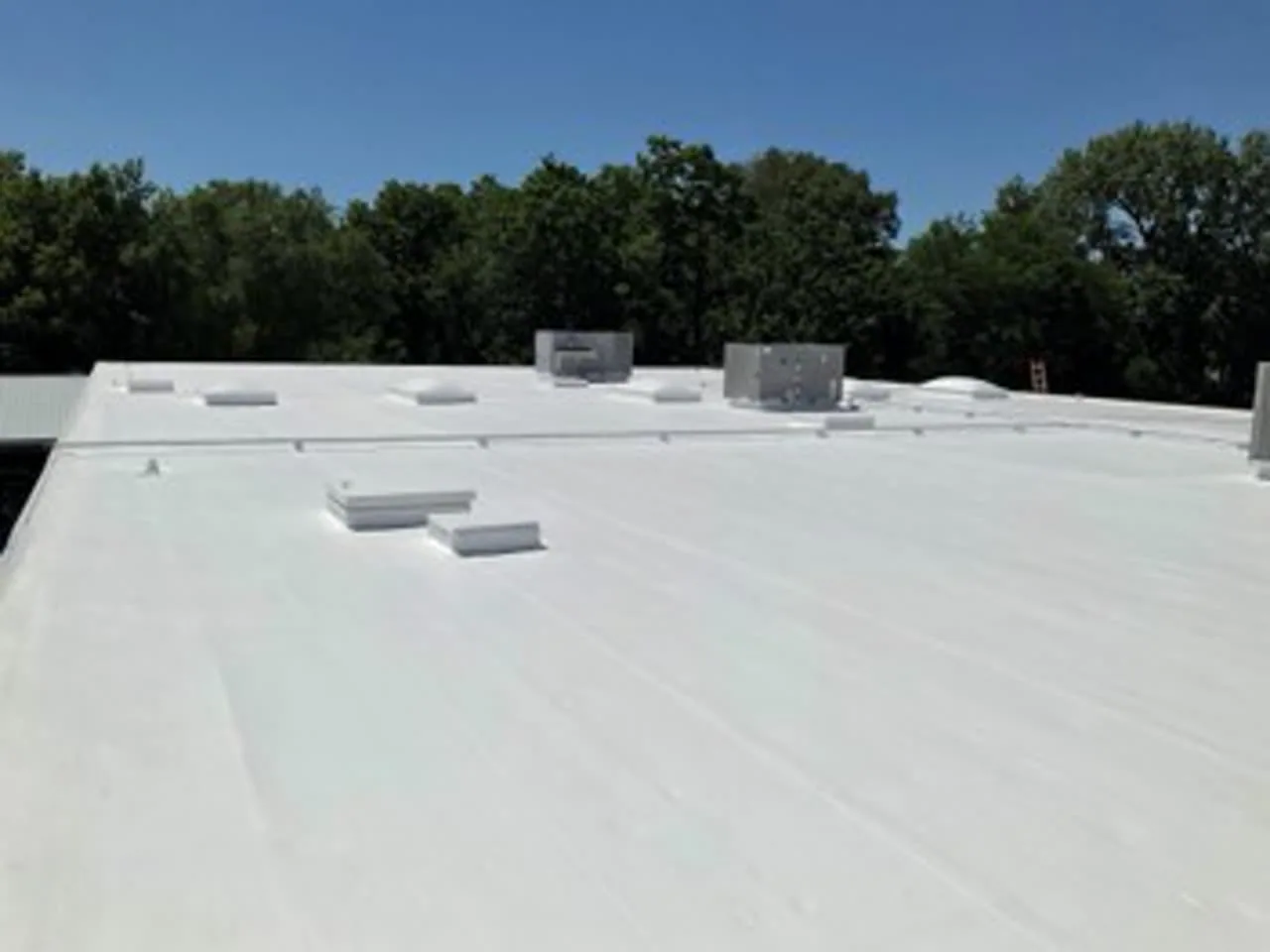
Modified-Bitumen Roofing for Conroe Commercial Buildings
Inspect and repair modified-bitumen roofs in Conroe, TX. We verify SBS or APP materials, seams, surfacing, drainage, and layers before recommending work.
A modified-bitumen roof uses layered asphaltic sheets reinforced for commercial service. Its condition depends on the installed SBS or APP product, the attachment method, surfacing, seams, and details at transitions. In Conroe, high summer heat and hard rain can expose a weak lap, blister, or poorly drained section. We identify the assembly before recommending a torch-applied, self-adhered, or other compatible repair. Conroe Park North brings freight, food processing, warehousing, and manufacturing uses into one broad employment area; a roof visit there still needs the property's actual access and operating plan. We do not infer the roof layers from the business type.
Identify the modified-bitumen assembly
SBS and APP products are not interchangeable labels for the same roof. SBS sheets are modified for flexibility, while APP products have different asphalt characteristics and installation requirements. We look for manufacturer markings, existing records, surfacing, sheet reinforcement, and how laps were joined. A mineral-surfaced cap sheet, smooth surface, and protected base ply call for different preparation. We also inspect whether the roof is a single-ply installation or a multi-layer assembly from prior recover work. Where the record and visible details conflict, a controlled opening can confirm the stack before material is selected. That step avoids placing a repair product over an incompatible surface or assuming that a coating will solve a wet or unstable base. A TPO membrane uses a different seam method and must be assessed as its own assembly.
Trace a seam defect to stable material
At a seam, check bond continuity, lap direction, fishmouths, wrinkles, exposed reinforcement, and evidence of previous patching. Water entering a small opening can migrate beneath the sheet before appearing inside. A repair should extend to stable, clean material and rebuild the lap with a method suited to the product and roof conditions. We map the seam and adjoining details instead of describing a bead of mastic as a completed repair. At a parapet, curb, drain, or roof edge, the connection often matters as much as the open field. The seam-failure review can distinguish a local lap issue from repeated movement along a roof zone. A built-up roof comparison can help when several asphaltic layers make the existing system unclear.
Read ponding and leak paths together
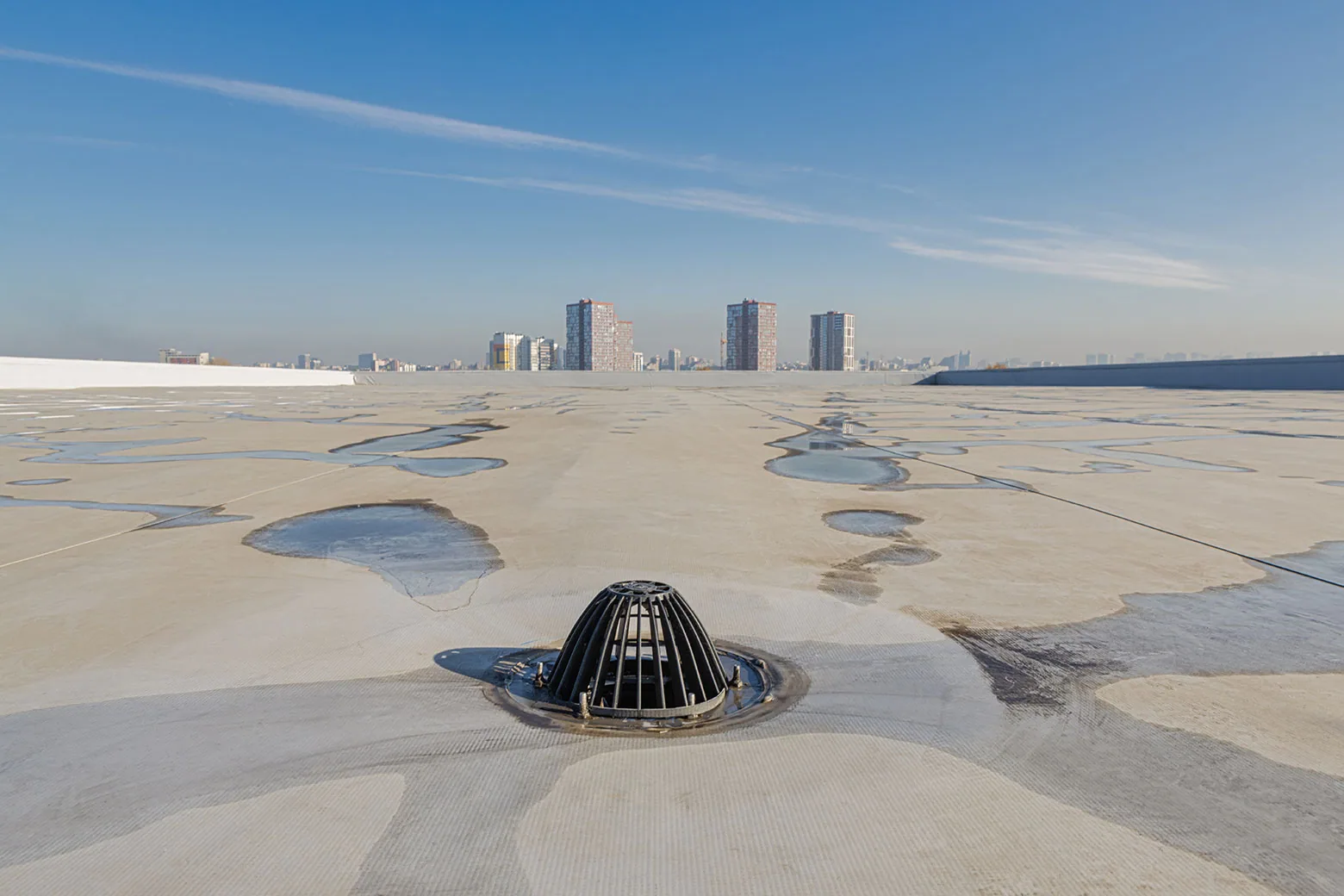
Heat can soften asphaltic materials and make exposed surfaces vulnerable to scuffing; standing water adds a separate drainage concern. We inspect low points, drains, scuppers, overflows, crickets, and the surface around each outlet. Water staining below may not align directly with the opening above. A blister may hold air or moisture, but its appearance alone does not establish which is present or how far it extends; confirm the condition before cutting or covering it. Compare the interior report with roof slope, penetrations, and the route water could travel through the assembly. Moisture testing or a small opening can help set the removal boundary when wet insulation is possible. Any reading needs context from the roof layers and test conditions. A drain and scupper inspection addresses outlet function, while a membrane repair restores the failed roof detail. The two scopes can be coordinated without confusing their purpose.
Inspect after storms without assuming damage
Conroe's October 1997 weather history records two tornado tracks, one through the city and one near Cut and Shoot. That history supports a close look after a reported storm, not an assumption of damage at every property. Inspect for displaced flashing, lifted laps, fresh punctures, and edge movement, then compare with prior conditions when records exist. Houston Intercontinental's normal July and August highs are near 95 degrees, useful regional context for heat exposure but not a substitute for a roof-specific assessment. We note what was directly visible and what remains concealed. If access is unsafe or a surface is too wet for the proposed application, the crew protects the work area and schedules the repair for suitable conditions.
Check the base and transitions before repair
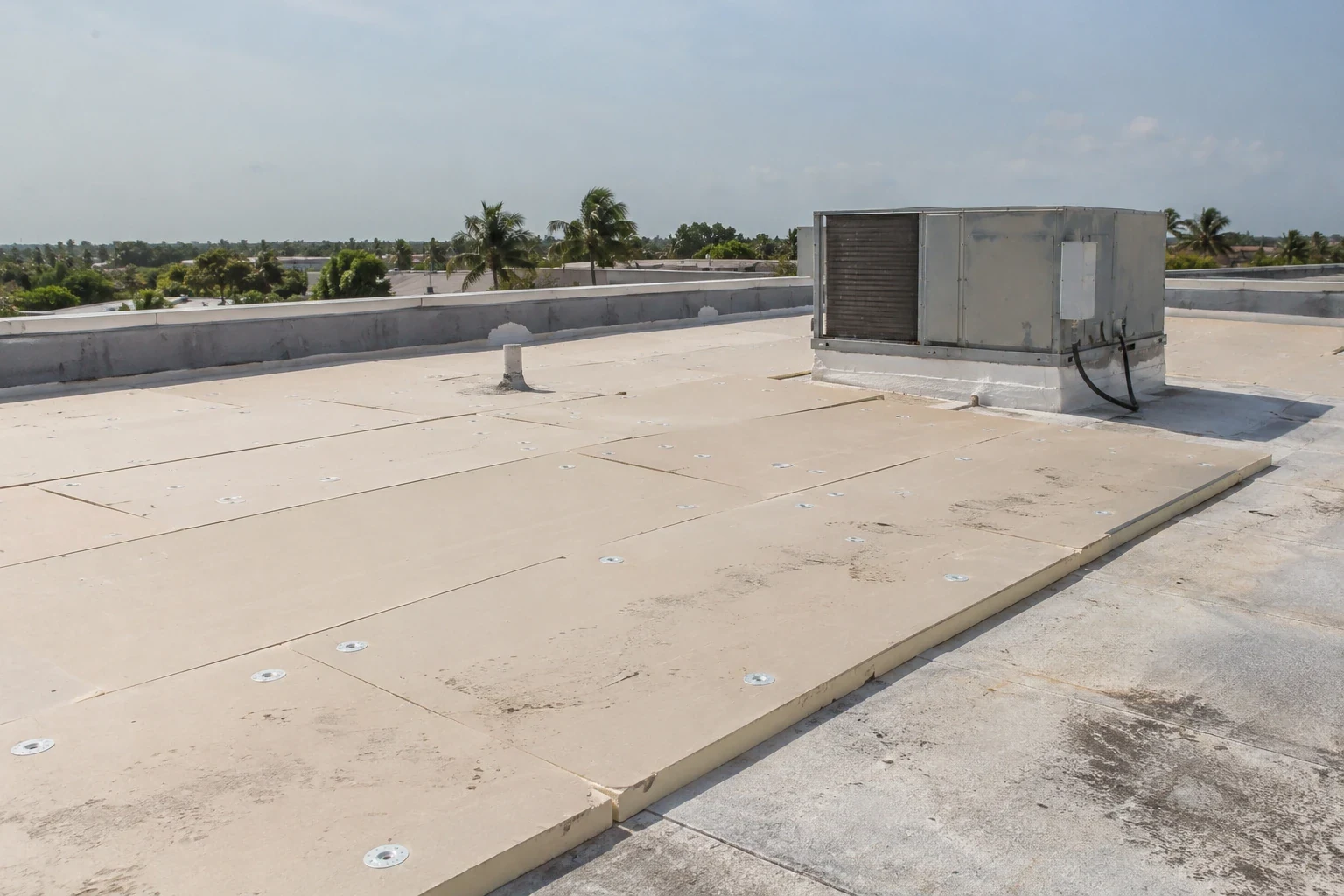
The roof beneath a modified-bitumen surface matters. Check the substrate for soft areas, movement, moisture, and evidence that insulation or cover board has separated. A structurally sound-looking surface can conceal wet layers; an isolated leak does not establish how far moisture extends. Testing should target a question that could change the scope. A cover-board and insulation review may show whether the repair stays at the membrane or needs material replacement. Edge flashing, wall transitions, and penetrations need compatible tie-ins. The edge and coping assessment can align metal work with the membrane repair. When several systems meet, identify each boundary so asphaltic material is not carried onto an incompatible adjacent roof.
Coordinate access and safe application
Operating conditions affect sequencing. At Conroe Park North, freight and production may shape staging, delivery timing, and protection below an opening. Deison Technology Park includes office, research, and life-sciences manufacturing context; confirm which uses are active at the specific building and whether interiors need special coordination. Define the work zone, daily opening limit, dry-in procedure, access route, and person who can approve a change if concealed damage is found. For a larger renewal, a phased occupied-building scope can keep completed zones closed while crews move to the next area. Weather interruptions require a secure temporary condition before work stops.
Installation method affects both the repair plan and the site's safety controls. Hot-applied work requires trained handling, fire watch, and protection of nearby materials; a self-adhered detail has its own temperature, moisture, and substrate requirements. We confirm the existing system and the approved product approach before scheduling. Torch work is not a default simply because the roof contains asphalt. Nearby openings, rooftop equipment, combustible materials, and occupancy can change whether a method is suitable. Where the proposed method cannot be used safely or under its installation limits, select a compatible alternative or return under better conditions. The scope should say how seams will be prepared, how edges will be secured, and how completed work will be checked. These practical controls are part of a durable repair, not an afterthought once material reaches the roof.
Compare repair, recover, and tear-off
A local patch may suit one split lap or puncture if the adjacent field, base, and drainage remain serviceable. Repeated openings, widespread blistering, wet insulation, or multiple prior overlays can point to a broader renewal. Compare repair, recover, and tear-off by layer count, moisture, attachment, drainage, access, disposal, and applicable code. Recover is not appropriate over every existing assembly; confirm a dry, stable base and product compatibility. Tear-off exposes concealed layers but needs dry-in and interior safeguards. A replacement proposal should define the removal limit, transitions, drains, curbs, and assumptions about hidden conditions. The owner should receive a clear record of what was verified, repaired, tested, and left for later review.
Commercial Roofing Questions
How do you tell SBS from APP modified bitumen?
We review product markings, records, reinforcement, surfacing, and installation details. If visible evidence is inconclusive, a controlled opening can identify the assembly before material selection.
Can you repair one open lap?
A limited lap repair may work when nearby sheets and the base are stable. We inspect the full connection and adjacent details to set a boundary that reaches sound material.
Does a blister mean the whole roof is failing?
Not necessarily. We determine whether it is isolated, whether moisture is present, and whether the surrounding assembly remains attached before recommending a repair or broader work.
Can a modified-bitumen roof be recovered?
Recover may be possible when the existing roof is dry, stable, compatible with the new system, and permitted by applicable requirements. Layer and moisture conditions guide that review.
What does a modified-bitumen closeout show?
It should identify the repaired zones, preparation and materials used, seam and flashing details, photographs, test results, and any concealed area that remains unverified.
Related Roofing Work