Commercial Built-Up Roofing in Conroe, TX
Inspect commercial built-up roofing in Conroe, TX. We review surfacing, plies, drainage, moisture, and attachment before scoping repair or renewal.
A built-up roof is a layered assembly, so a surface symptom may reflect more than the cap sheet. We identify how many plies are present, what surfacing protects the roof, how the layers are attached, and whether older recover work is part of the stack. In Conroe, heat, heavy rain, and humidity make drainage and concealed moisture important parts of the review. The recommendation should follow the actual assembly, not a generic assumption about what a commercial building contains. Conroe Park North includes freight, food processing, warehousing, and manufacturing uses; roof access and interior protection need to match the individual property.
Identify the built-up roof layers
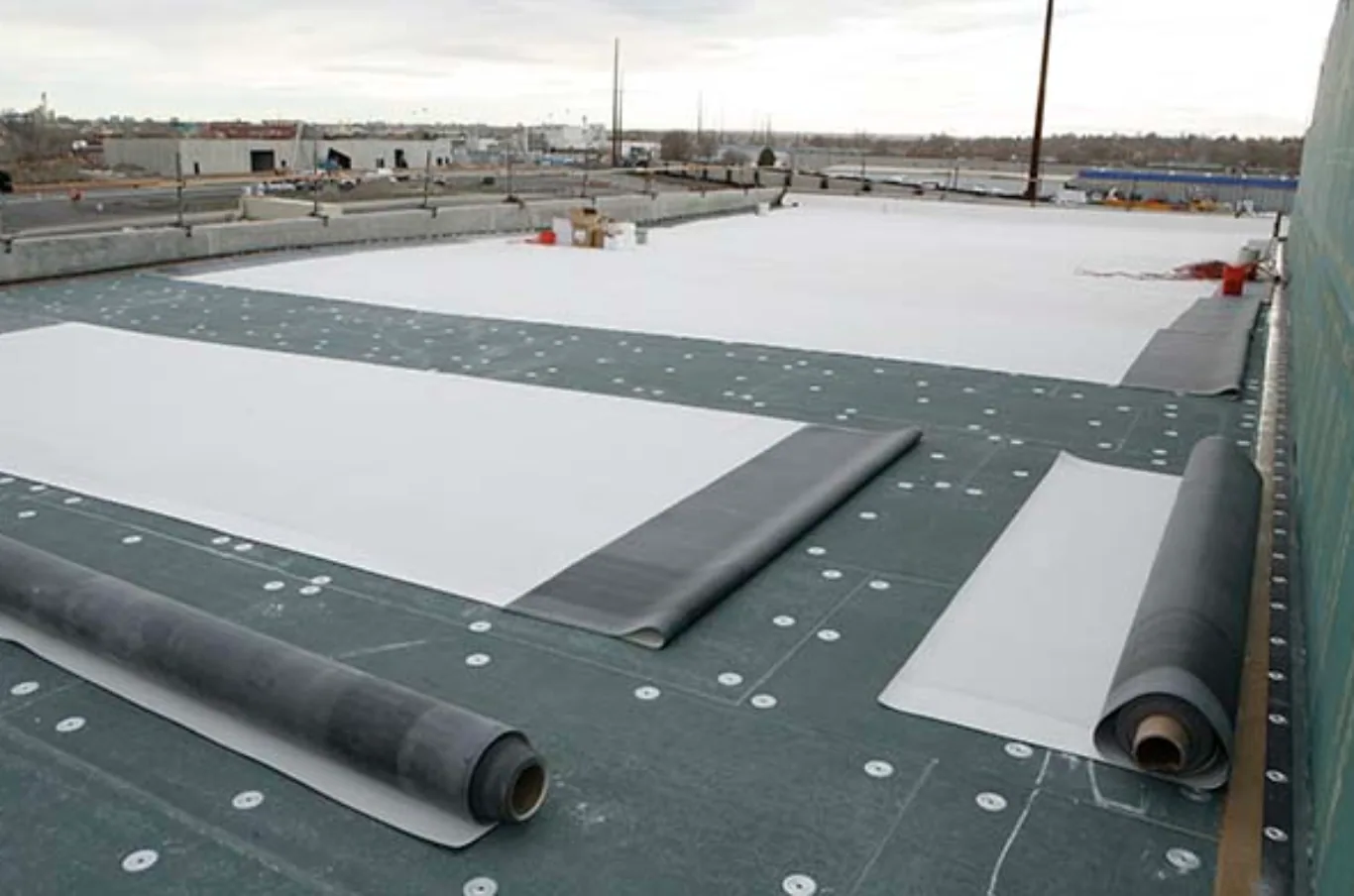
The terms built-up and modified bitumen describe related asphaltic roofing families, but they do not make the systems identical. A BUR may contain several reinforcing plies and surfacing such as gravel, while modified-bitumen sheets use manufactured rolls and specific lap methods. We review visible layer edges, records, surfacing, patches, and transitions to map what is present. If a coating covers the surface or another roof was installed above it, we do not assume the layer count from appearance alone. A controlled opening can reveal the substrate, plies, insulation, and attachment when that information affects repair or recover feasibility. Compare the assembly with modified-bitumen roofing only after the system is identified. A single-ply EPDM assembly has different seams and repair materials.
Inspect seams, edges, and penetrations
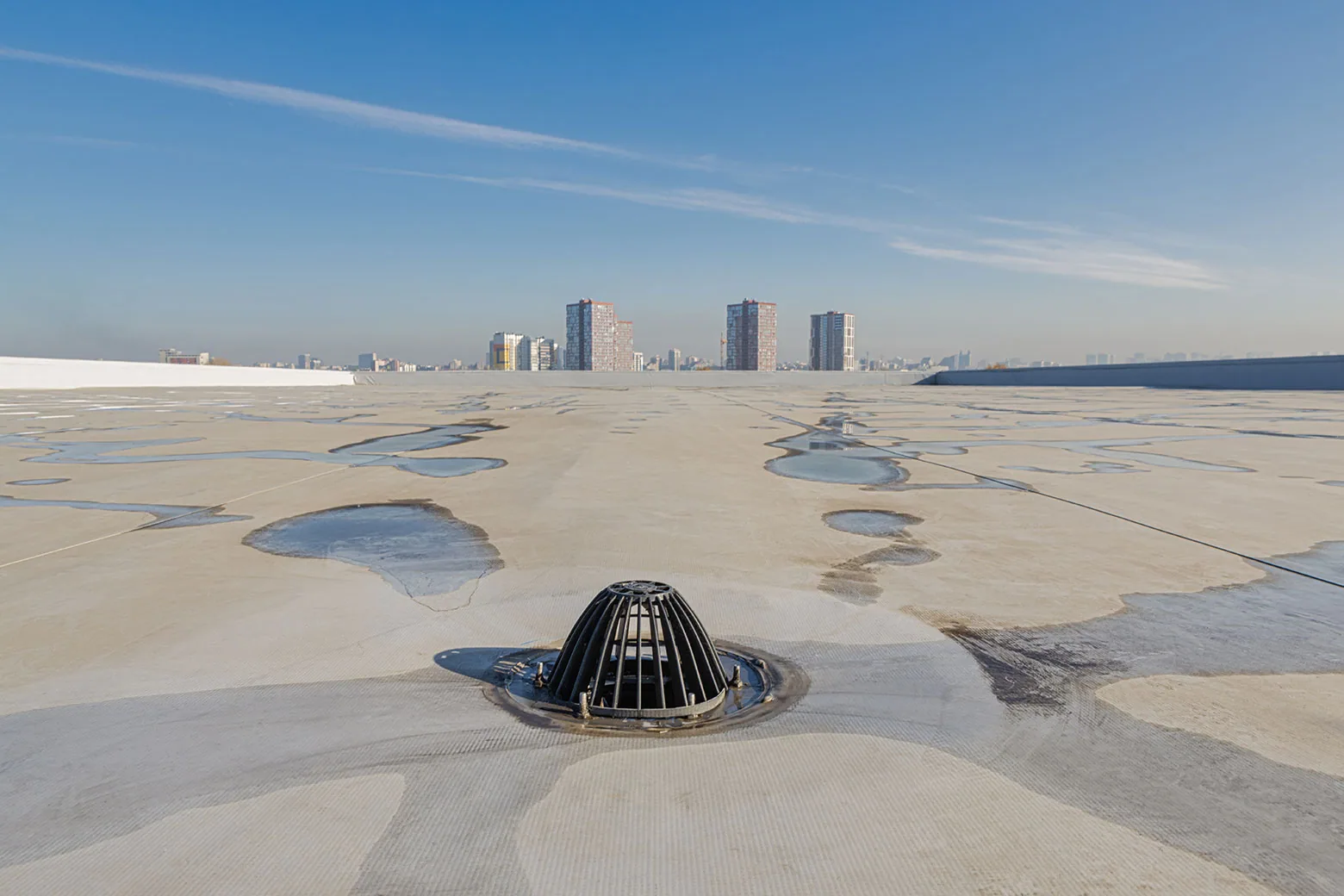
Gravel or mineral surfacing can make a small split hard to see. We inspect drains, walls, curbs, equipment supports, penetrations, and transitions where water can reach the underlying plies. At a roof edge, confirm that the membrane and flashing terminate together and that metal components are secure. Around a drain, look below accumulated surfacing and check the membrane connection to the bowl. At a curb, inspect corners and the transition to vertical flashing. The repair has to remove loose or wet material and tie into layers that remain sound. Adding a surface patch over a wet or poorly bonded area can hide a continuing problem. A roof seam assessment can distinguish an open lap from a broader failure within the roof build-up.
Trace leak paths through the assembly
Water may move laterally between layers before reaching a ceiling tile or wall. We compare reported leaks with slope, low areas, roof penetrations, and interior conditions. Ponding can come from clogged drainage, settled insulation, a deck deflection, or roof geometry. Check both primary drains and overflows so a clear strainer does not create false confidence. Where moisture could change the work limit, use appropriate testing or a controlled opening and record what each method actually confirmed. A drain and scupper review can address outlet function; it does not replace membrane or flashing repair. If saturated insulation is found, the affected area may need removal before a new surface is installed.
Separate storm evidence from older wear
Conroe's October 1997 storm history includes a tornado across Conroe and a second track near Cut and Shoot. After a reported event, we inspect for displaced edge details, impact marks, fresh openings, or loosened surfacing, then separate new observations from older wear. The event history does not establish damage to a specific roof. Regional temperatures also matter during work: Houston Intercontinental's July and August normal highs approach 95 degrees, while site-level surface conditions can differ. Hot asphaltic surfaces require safe access and method-specific controls. If conditions do not support the planned application, protect the roof and reschedule rather than make a rushed bond or lap.
Check the base before choosing repair
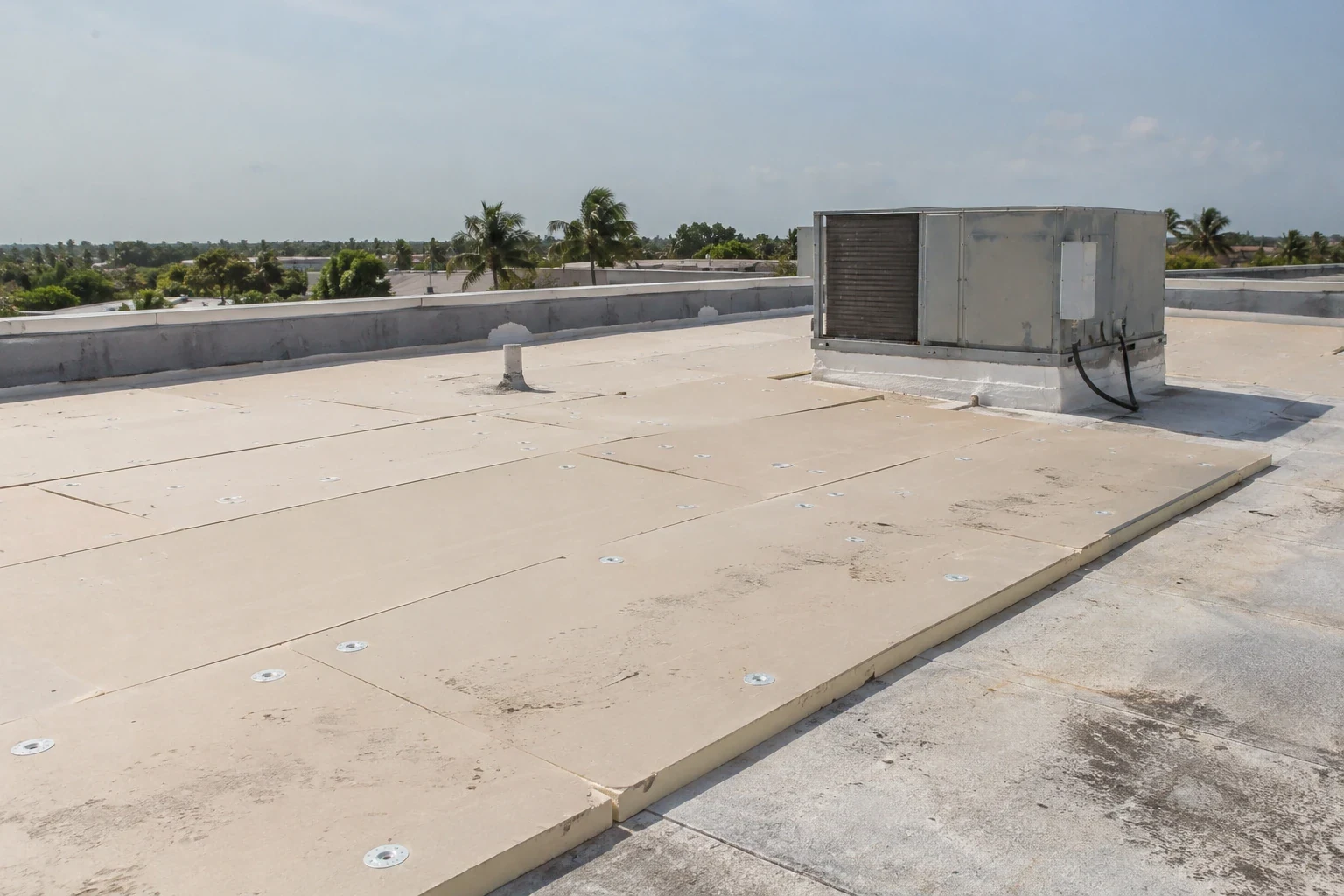
The layer beneath the plies can govern whether a localized repair will last. We look for soft insulation, wet cover board, loose attachment, deck movement, and separation around equipment or parapets. Testing is useful when it answers whether moisture is confined or widespread. A roof insulation and cover-board review can define whether a repair stops at the surface or requires selective removal. We coordinate related perimeter metal through an edge and coping inspection, since flashing details often join the assembly at the wall or roof edge. Where roof sections meet another system, map the boundary and specify a compatible tie-in instead of blending materials by appearance.
Coordinate staging around active uses
At Deison Technology Park, office and research planning and life-sciences manufacturing are part of the area's documented context. At Conroe Park North, freight, processing, and manufacturing operations may affect deliveries or work hours. Confirm the specific tenant, access rules, interior sensitivity, and equipment routes with the property contact. A phased sequence can limit the open roof area and protect spaces below. Define how much surface can be opened each day, how a weather delay will be secured, who authorizes added removal, and when the area is cleared for normal use. A phased reroof plan can align roof work with active operations without promising zero disruption.
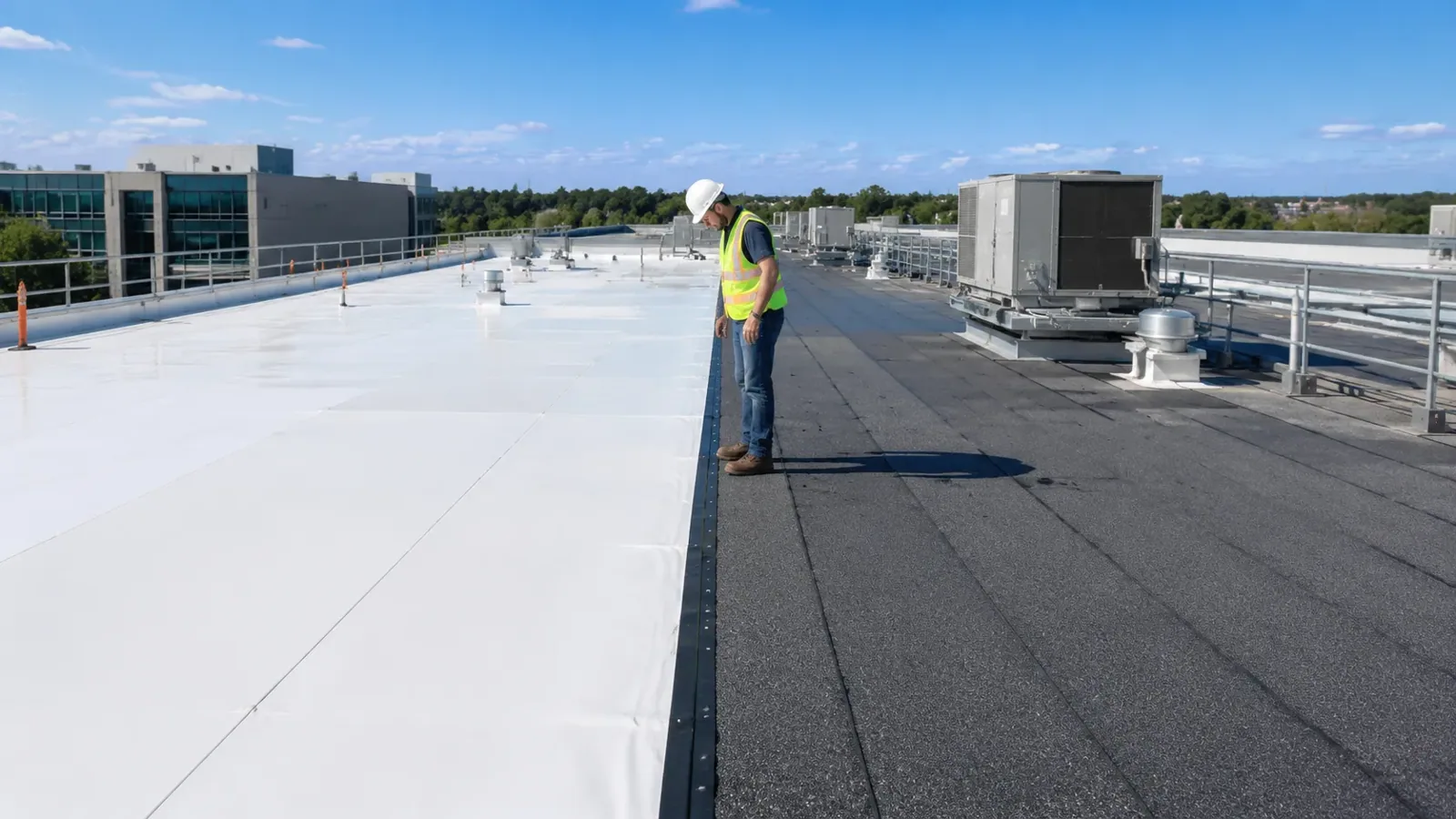
Compare repair, recover, and removal
A localized patch may fit an isolated defect if the surrounding plies and base remain dry and secure. If moisture is broad, surfacing is loose across zones, or several overlay layers complicate attachment, compare repair with recover and tear-off. Recover requires a suitable substrate, acceptable moisture, compatible materials, and compliance with applicable requirements. Tear-off exposes the full assembly and allows wet layers to be removed, but it increases disposal, dry-in, and interior-protection needs. A replacement proposal should identify layer assumptions, removal boundaries, drains, curbs, tie-ins, staging, and concealed-condition contingencies. The owner can then compare a defined repair with a renewal scope on the same evidence. When budgeting, include routine drain clearing, periodic seam and flashing checks, and follow-up after severe weather. Those tasks do not replace a repair, but they can catch a small change before water reaches interiors or production areas. The maintenance record should note the exact zone and observed change for comparison on the next visit.
An inspection should also leave a usable map for future maintenance. Mark roof zones, drains, expansion joints, penetrations, and repaired areas so the next visit can compare like with like. Photograph the same defect from a context view and a close view, and note whether surfacing was moved to inspect a seam. If a roof has ballast or gravel, return it to a stable, even condition after the repair without covering a drain or flashing edge. Record where material was removed, whether the underlying ply was dry, and which layers were restored. This level of detail helps a property team distinguish recurring movement from a separate defect and supports better budgeting for the next roof cycle.
Commercial Roofing Questions
How is a built-up roof different from modified bitumen?
A built-up system generally uses multiple reinforcing plies with asphalt and surfacing; modified-bitumen roofs use manufactured sheets with their own reinforcement and laps. We verify the installed assembly.
Can a leak be repaired without removing gravel?
The affected detail has to be exposed enough to inspect the membrane and layers. We restore surfacing after the repair without covering drains, flashings, or other critical details.
Does ponding mean a built-up roof needs replacement?
No. We inspect drainage, roof slope, insulation, and membrane condition to identify the cause and whether water has reached the underlying assembly.
Can a built-up roof receive a recover system?
Possibly, if the existing assembly is dry, stable, within applicable layer and weight limits, and compatible with the proposed system. Testing and document review guide the decision.
What should the inspection record include?
A useful record maps roof zones, plies or visible layers, leak evidence, test openings, repairs, photographs, and any limits on access or verification.
Related Roofing Work