Commercial Roof Leak Repair in Conroe, TX
Trace and repair commercial roof leaks in Conroe by following water paths through seams, drains, curbs, and insulation without guessing at the entry point.
A wet ceiling tile is an address, not a diagnosis. Water can travel along a deck, conduit, or insulation before it appears indoors, so the room with the drip may sit several feet from the roof opening. We inspect above and below the symptom, trace likely paths, and test the roof details that can admit water. In Conroe, heavy rain can expose a drain or flashing weakness quickly, while heat can reopen a seam that looked closed during a cooler inspection. We plan around the affected operation, whether the leak is above a customer area in Conroe Marketplace or a work bay near the FM 3083 industrial corridor.
Trace the Water Path
We begin with the timeline. When did the leak start, what weather preceded it, where does water appear, and does it recur after every rain or only wind-driven rain? Those details narrow the likely entry points. On the roof, we check membrane laps, penetrations, parapet walls, pitch pans, equipment curbs, drain bowls, and the connection between the roof and adjoining walls. Inside, we look for the direction of staining, damaged insulation, rust, and any route that could carry water away from the opening.
Water near a light or wall does not prove that the roof directly above it has failed. A leak may follow a deck flute or travel across the top of an interior partition. We use the building layout and roof plan to connect the observations, then isolate the suspect detail. If the path remains uncertain, a controlled water test or a focused roof inspection can provide better evidence than applying sealant to several possible locations.
Check More Than the Membrane
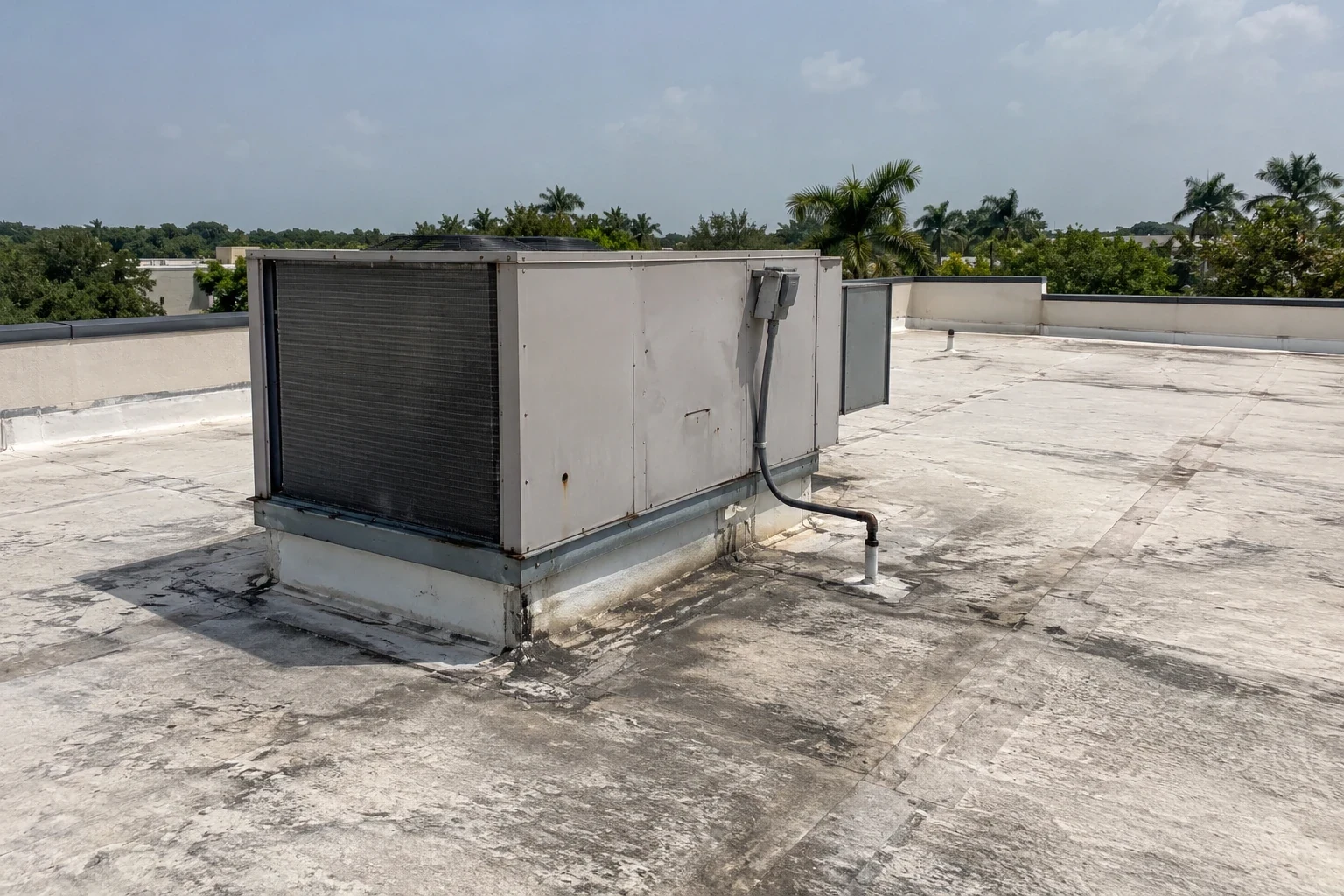
Most leak investigations require more than a look at the field sheet. A curb can leak where its base flashing turns up, where a counterflashing has separated, or where equipment movement has stressed the corner. A drain can overflow because debris blocks the bowl, because water cannot reach it, or because a connection below the roof has failed. A wall leak may enter above the roof line and run down behind the flashing. Each condition calls for a different repair.
We record the suspect detail, adjacent materials, and signs of past work. Open sealant, lifted edges, a patched puncture, soft cover board, or a wet layer beneath the membrane changes the repair scope. The inspection also checks whether the leak is active or whether the interior damage reflects an earlier event. For moisture below the surface, an infrared moisture survey can help locate areas for confirmation, while an approved core opening tells us what the assembly contains at that point.
Rain and Heat Conditions
The weather surrounding a leak gives useful clues. Lone Star Executive Airport lies just north of Conroe, while July and August normal highs at Houston Intercontinental reach about 95 degrees. That sustained summer heat makes surface preparation and safe work timing part of the repair plan. A seam that opens after a hot period may respond to repeated movement. A leak that appears only during hard rain may point toward restricted drainage, a low transition, or an overflow route that cannot carry the water load. Neither clue replaces a roof inspection; each helps us decide where to look first.
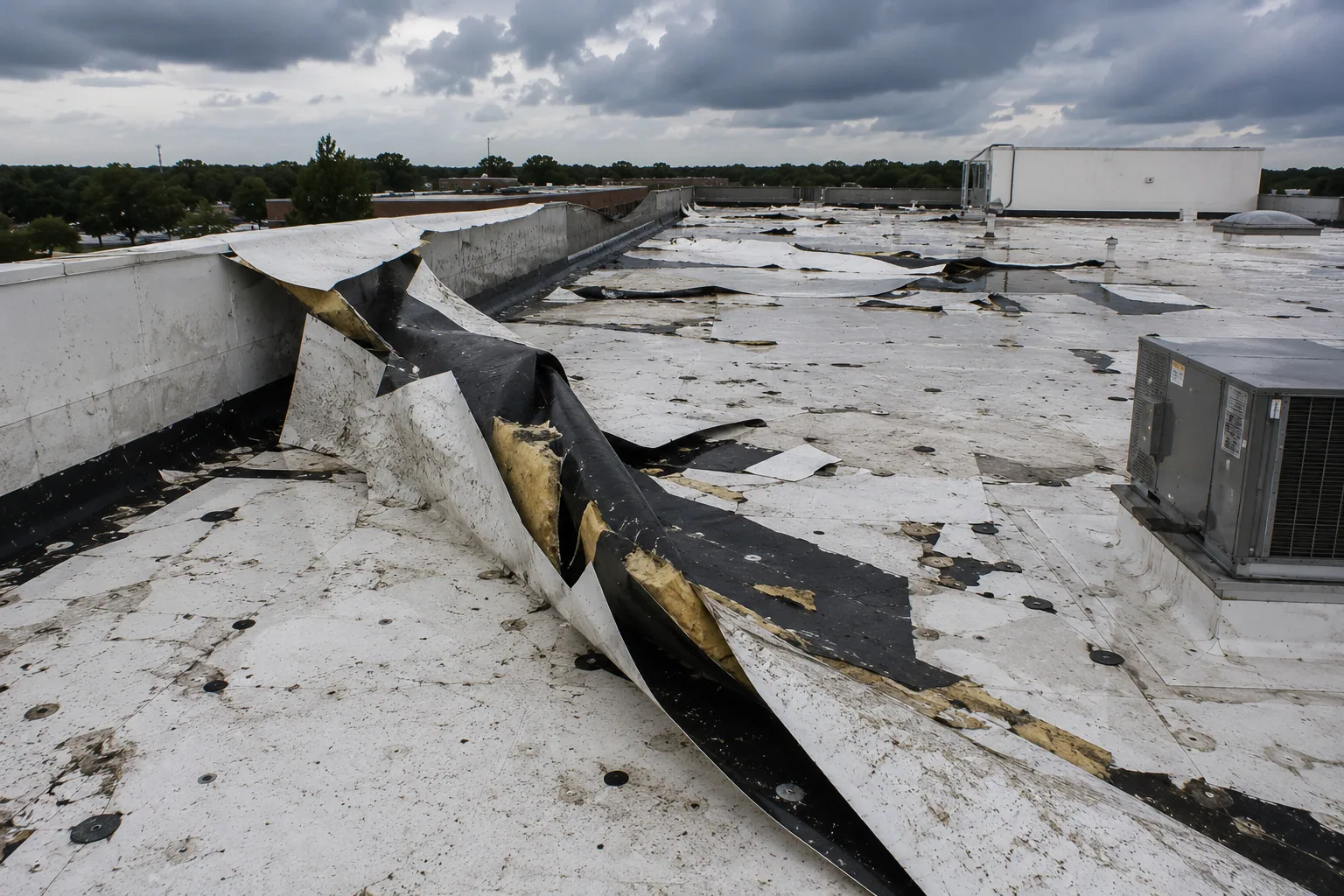
Local weather history also includes a 1997 tornado over Conroe and a second tornado near Cut and Shoot. After a storm, we check for displaced metal, new membrane damage, punctures, and movement at the roof perimeter before addressing the interior leak alone. A nearby event does not establish damage at a particular building. We assess the roof in front of us and document what the weather may have exposed. Commercial sites around The Woodlands Town Center and Conroe receive the same careful distinction between regional conditions and property-specific findings.
Stop the Entry, Then Dry In
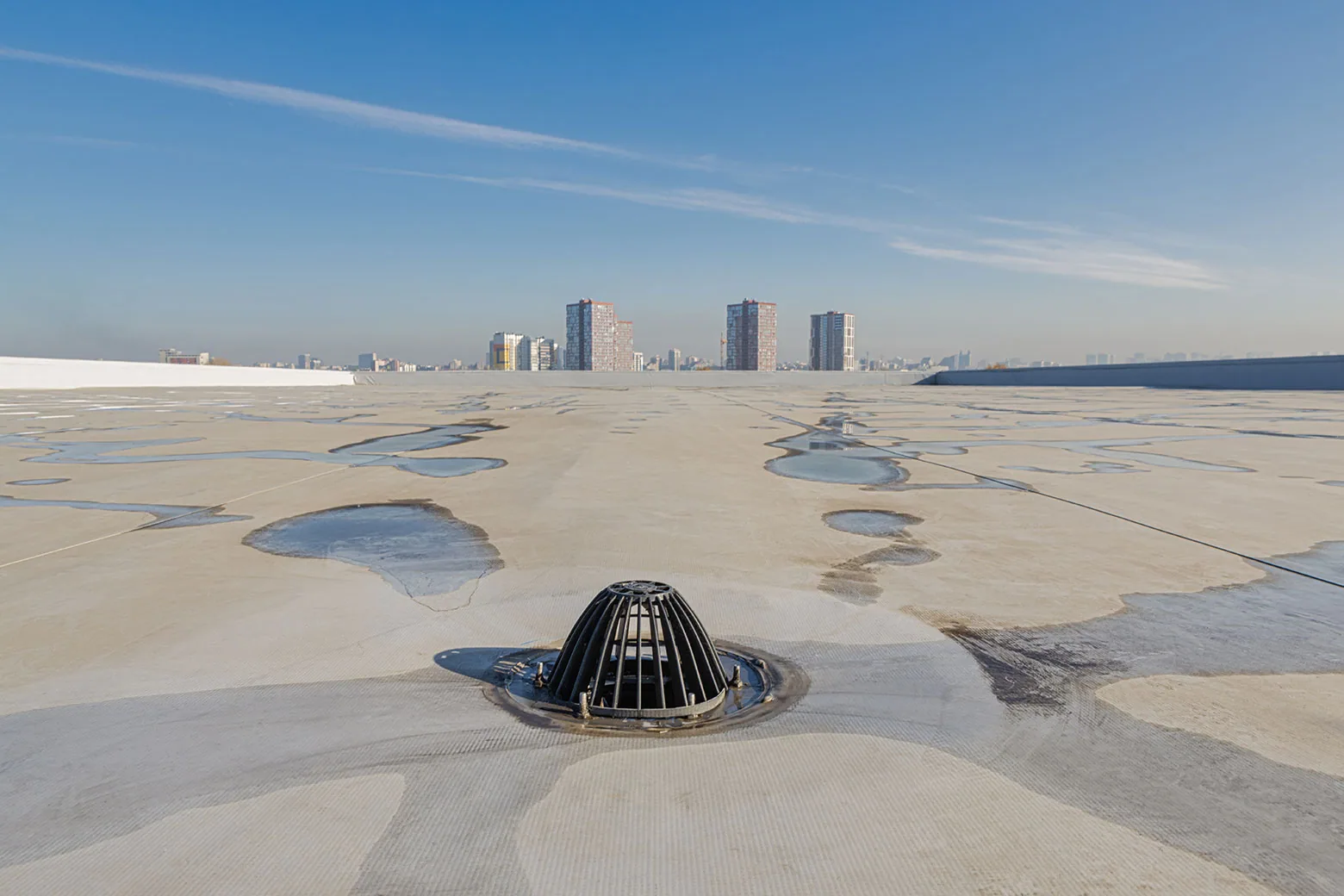
When we locate the entry point, the permanent repair must match the roof system and restore the full detail. A membrane patch needs clean, sound material around it. A curb repair may require rebuilding the base flashing and termination, not just sealing the visible corner. Drain work can include clearing the bowl, resetting a ring, replacing a damaged component, or correcting a low spot that sends water elsewhere. We explain which parts of the assembly will be repaired and where moisture has already affected interior materials.
If the roof is actively leaking and the permanent repair cannot be completed at once, we install temporary protection appropriate to the condition and weather. A tarp or dry-in must be secured safely and checked as conditions change. Temporary measures keep water from continuing to enter while materials, access, or weather windows are arranged; they do not substitute for a compatible permanent repair. If an emergency call is needed, use emergency roof repair for the immediate response path.
Protect the Space Below
Leak response often happens above occupied space. The manager identifies equipment that must stay dry, rooms where water is near electrical systems, and any area that needs temporary relocation. We coordinate roof access with building security and set a clear work zone below. If a tenant is open for business or a production area cannot stop, the crew keeps movement controlled and updates the site contact before opening any area that may release water or debris.
Once the leak source is repaired, we inspect the interior side for wet insulation, damaged ceiling materials, and conditions that could continue to affect operations. The roof repair and interior restoration are separate scopes, but the manager should know how they connect. We note whether drying, material replacement, or another inspection is required, then return after the next significant rain when the condition warrants confirmation.
What Changes the Repair Scope
Leak repair cost depends on how difficult the entry point is to isolate, the roof system, access height, the number of details involved, wet insulation, and whether work can proceed in current weather. A straightforward flashing correction differs from an investigation that requires opening several roof layers or protecting a sensitive room. We separate exploratory work from the permanent correction so the owner understands what is included before the crew proceeds beyond the first approved area.
One leak can point to a local defect; recurring water in different rooms may indicate a wider drainage or membrane problem. We look for that pattern before recommending repeated service calls. When the inspection finds multiple deteriorated seams or widespread wet material, a larger repair or replacement assessment may be more useful. Our drain and scupper work addresses the water route, while a planned roof repair can cover other confirmed defects.
Commercial Roofing Questions
Why is the ceiling leak not directly under the roof opening?
Water can follow a deck flute, framing member, conduit, or insulation before it reaches a ceiling. We compare interior staining with the roof plan and inspect likely transitions above it. The source is confirmed at the roof detail, not assumed from the room where the water appears.
Can you find a leak when it is not raining?
Yes. Prior weather, staining, moisture readings, and visible roof defects can narrow the search between storms. If those clues do not isolate the entry point, we may recommend controlled testing or a closer opening with approval rather than applying sealant at random.
What should our staff do while water is entering the building?
Protect people first and keep clear of wet electrical equipment. Move contents if safe, contain water where practical, and contact us with the affected room and active conditions. We coordinate immediate roof protection and the permanent repair after the site is safe to access.
How do you know whether wet insulation must be removed?
The material's condition and the extent of moisture decide the boundary. We use readings and, when needed, an approved core opening to verify the assembly. Saturated or damaged insulation is addressed before a repair covers it, and the quantity is documented for approval.
Will a sealant bead permanently stop the leak?
Only when the defect is a compatible sealant failure and the surrounding detail is sound. A leak through a seam, drain, curb, or wall transition needs that assembly repaired correctly. We identify the entry mechanism before choosing the material.
Related Roofing Work