Commercial PVC Roofing in Conroe, TX
Inspect and repair commercial PVC roofing in Conroe, TX. We verify membrane identity, welds, flashing, chemical exposure, attachment, and drainage.
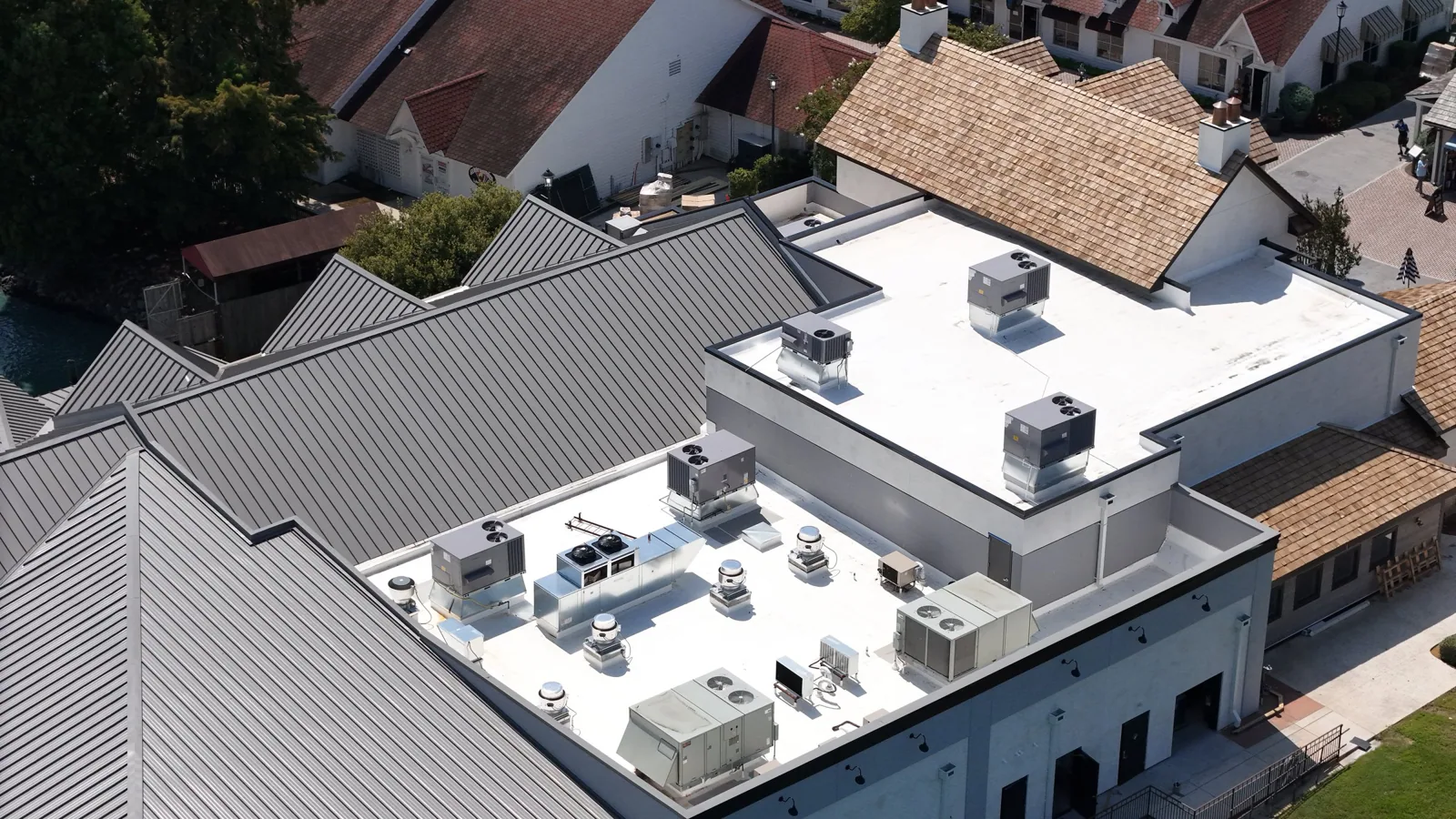
Grease, process discharge, and rooftop service can place a PVC membrane in a different environment from a roof with only office equipment. The right repair starts by confirming the sheet and what has contacted it. We inspect welds, flashing, attachment, drains, and the surface around exhaust or equipment before choosing a compatible method. Conroe Park North includes food processing and manufacturing operations, while Deison Technology Park includes research, office, and manufacturing uses. Those settings make operational coordination relevant, but neither fact tells us which roof is installed or what condition it is in. We verify the assembly at the building, then set the repair limit from what the roof shows.
Identify exposure before treating the surface
PVC is a thermoplastic membrane with heat-welded seams, but compatibility still depends on the specific sheet, surface condition, and product requirements. Grease, oils, solvents, cleaners, and exhaust deposits can affect the membrane or the bond of a repair material. We look for discoloration, swelling, softening, brittleness, surface residue, and changes near kitchen exhausts or process equipment. A mark alone does not prove a chemical attack; we compare the area with the system documentation and ask what discharge or cleaning has occurred. If an unknown coating or cleaner is present, remove a small sample or use an approved test method before a larger repair. We do not cover contamination with a patch. The commercial roof inspection identifies the membrane, exposure zone, and details that need closer verification.
Check the weld through the full repair area
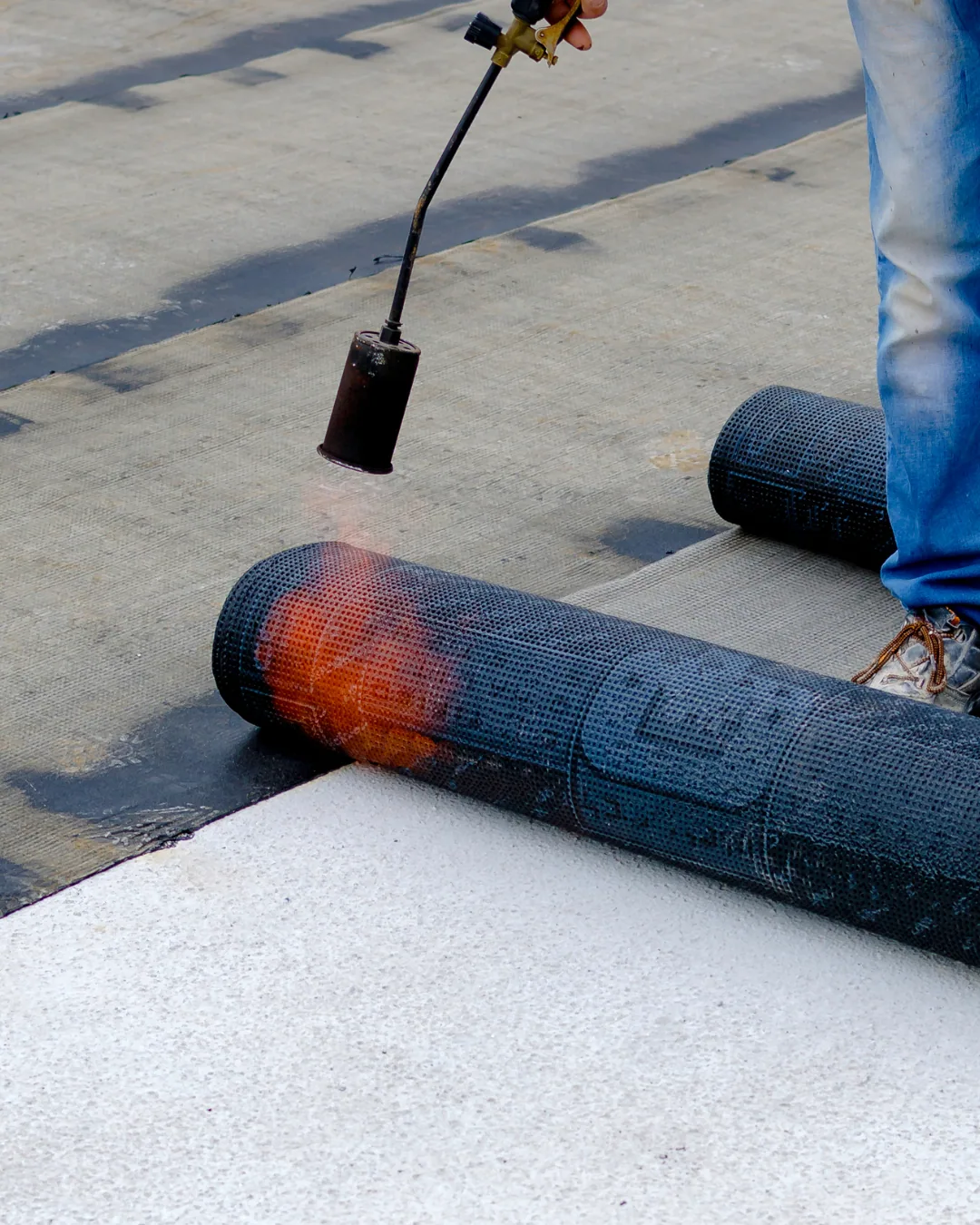
A PVC lap has to be clean enough to form a continuous weld. We inspect the full seam length, corners, end laps, patches, and flashing where the membrane turns up a curb or wall. A probe can find an open edge, while a test weld helps evaluate whether the surface can accept heat and pressure. The detail around a pipe boot or drain bowl may need a different repair piece than a straight field seam. If a previous patch has several layers, identify which sheet is stable before cutting through it. We prepare to sound membrane, complete the weld, and check the finished connection. A seam-failure correction can address an isolated opening; contamination, shrinkage, or weak attachment may require a wider boundary. We also inspect adjacent insulation where water may have entered. A roof can appear dry at the surface while moisture remains below. Testing or a controlled opening should be considered when the result could change removal quantities. The work record names the section inspected, the method used, and any layer that could not be verified.
Rebuild flashing at curbs and penetrations
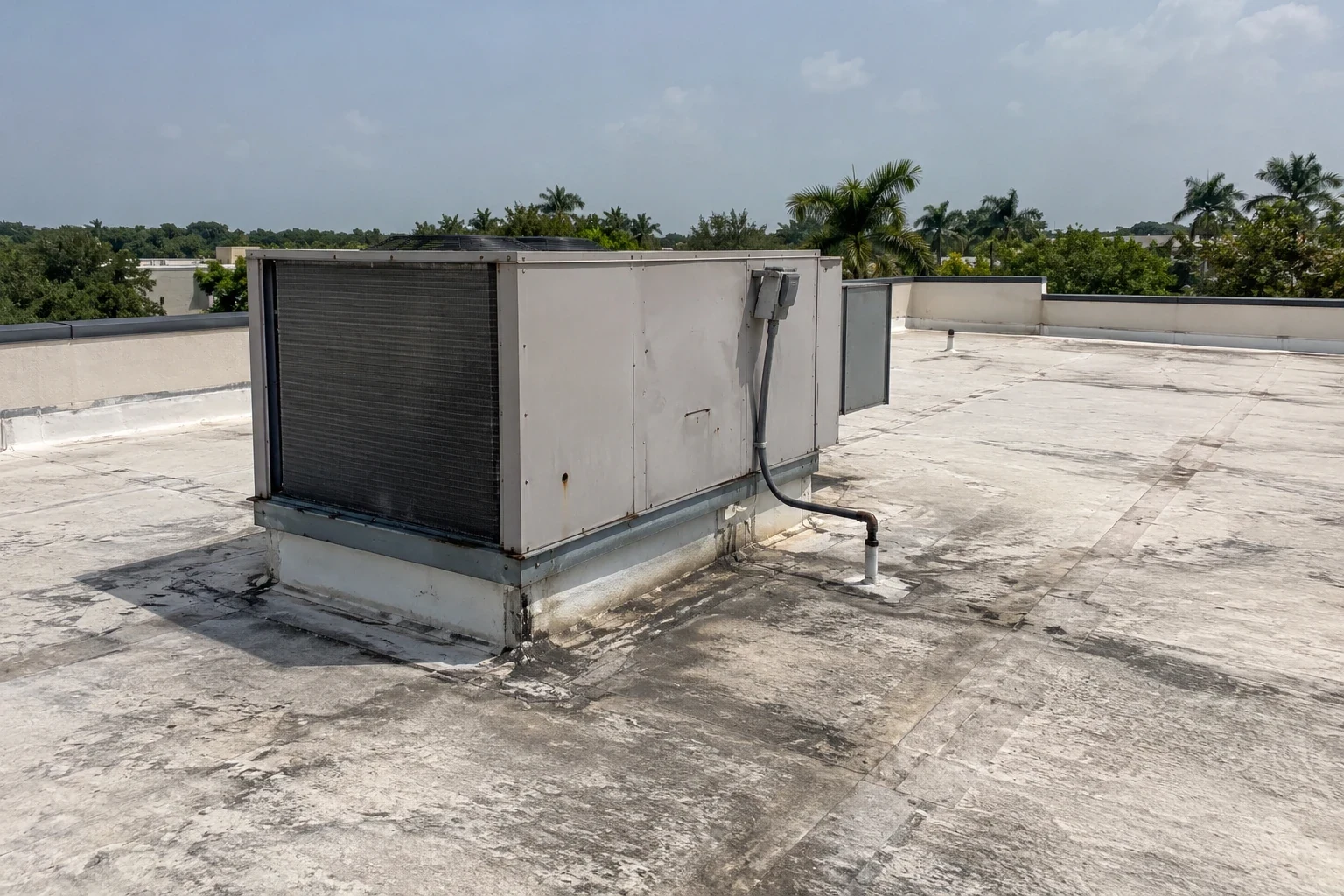
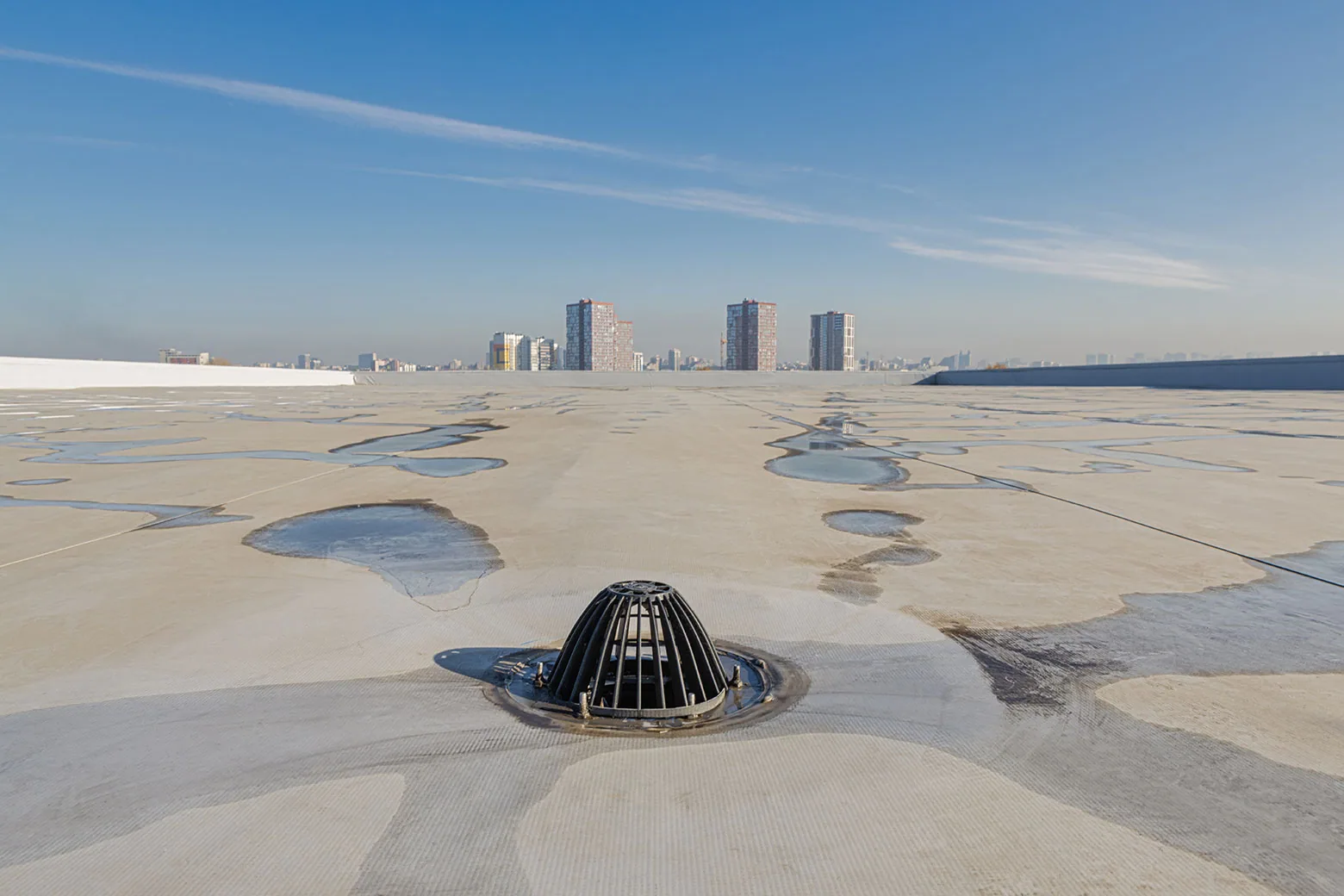
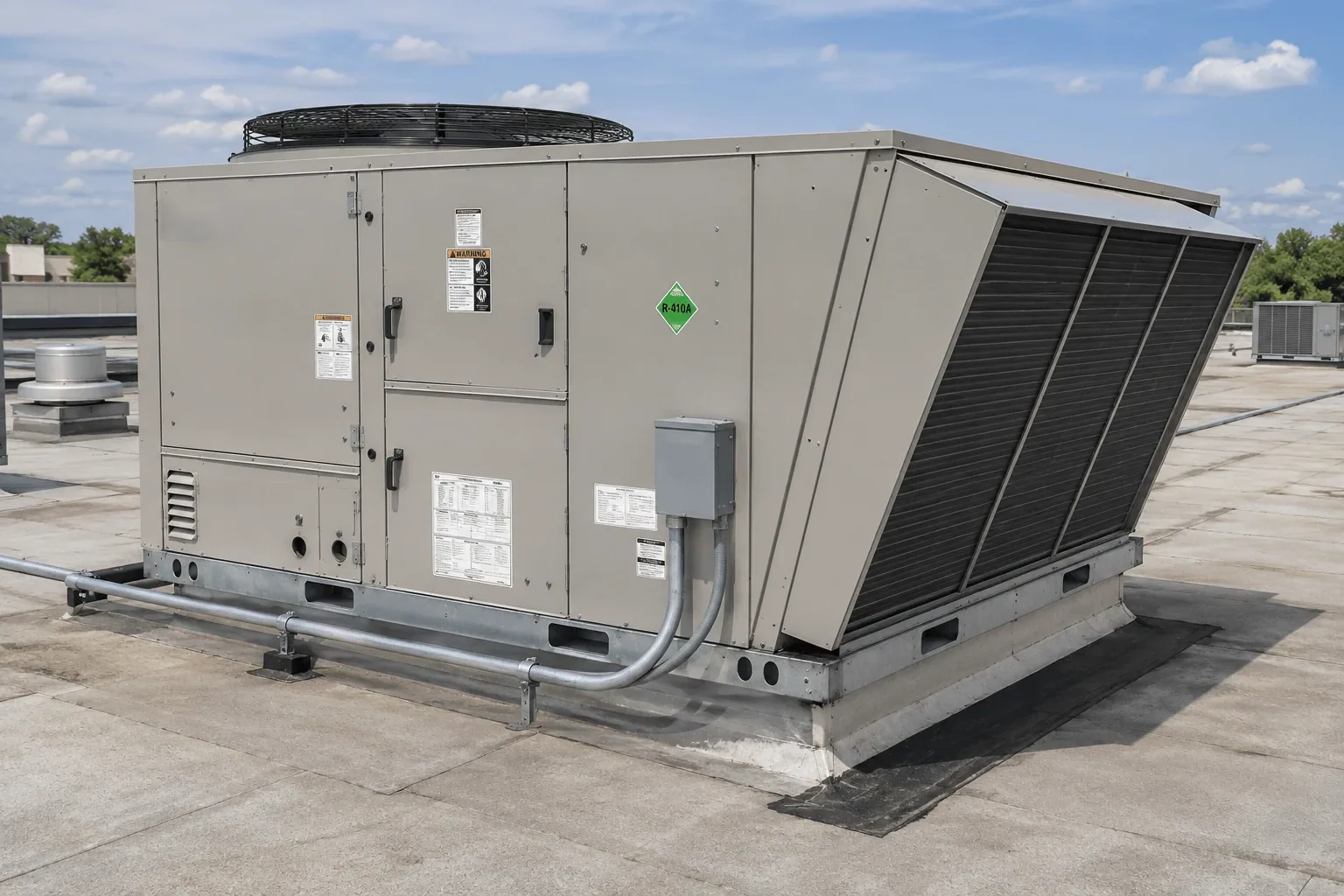
Curbs, pipes, drains, parapets, and wall transitions interrupt the membrane and give water more edges to cross. We examine the PVC flashing for split corners, weak welds, loose termination, trapped dirt, and movement around the supported equipment. At a curb, the sheet should rise and terminate at the designed height with compatible securement. At a drain, the membrane interface has to work with the bowl and clamping assembly. At a parapet, counterflashing and edge metal need a continuous relationship with the sheet. Sealant may protect a designed joint, but it does not replace a failed weld or loose termination. Conroe's heat and humidity can stress exposed details over time; Houston Intercontinental's normal July and August highs are near 95 degrees, giving a nearby regional measure of summer exposure. We inspect actual material and drainage at the property instead of reading condition from a weather average. An outlet review can accompany PVC work when ponding or blockage is reported. If rooftop equipment has changed, a curb and support inspection can coordinate the roof connection with the mechanical scope.
Compare PVC with nearby system options
PVC and TPO are both thermoplastic membranes, but they are distinct products with their own formulation, accessories, and repair specifications. A PVC surface should not receive a TPO patch merely because both systems use heat welding. KEE products also have their own manufacturer requirements. We identify the installed membrane and use matching or approved materials for seams, flashing, and field repairs. If the property has a mixed roof or later addition, map the boundary where materials change and check how each sheet meets the other. A TPO assembly or a KEE/PVC-alloy system is reviewed on its own terms. The repair proposal explains compatibility, preparation, and tie-in, rather than treating color or a tenant description as system identification. If a PVC section is coated, determine the coating type and whether the surface can be cleaned and prepared for the planned detail. A manufacturer-specific specification can determine whether a primer or different method is needed. We preserve the unverified portions as open questions instead of extending one test result across the roof.
Coordinate Conroe work with site operations
Conroe Park North's food processing, warehouse, and freight uses can affect access, staging, and the time available to open a roof section. A plant contact confirms what exhaust or process equipment can be paused and whether interior space needs protection. At Deison Technology Park, the mix of research, office, and manufacturing uses likewise calls for a building-specific access plan. The site name does not tell us whether a particular property has an active kitchen exhaust, chemical discharge, or PVC system. In October 1997, an F0 tornado crossed Conroe and a second tornado tracked near Cut and Shoot; that history supports checking exposed edges after a reported storm, not presuming damage. Regional storms can bring wind and intense rain, so daily work ends with a secure seam, open drain, and protected transition. If conditions turn wet, a weld or adhesive detail waits until it can be made under the required installation conditions. For a manufacturing property, the operations contact should identify sensitive equipment and shift changes before work. A Deison Technology Park visit still requires confirmation of the individual building, roof access, and approved work window.
Decide between repair and broader renewal
A repair can be appropriate when a seam, penetration, or exhaust detail is isolated and the surrounding PVC remains sound. Repeated weld failures, widespread surface change, wet insulation, or loose edge attachment can point to a larger project. We map the confirmed condition, identify tests that could change the boundary, and compare repair with recover or tear-off. Recovery depends on moisture, existing layers, attachment, roof height, drainage, and code requirements. Tear-off exposes the assembly but requires weather protection, removal, and a plan for the interior below. A different membrane system is not a default substitute; each option has to fit the deck, building, and maintenance needs. For comparison, a replacement scope should list drains, curbs, edges, and equipment interfaces along with field membrane. The estimate identifies what is measured, what remains concealed, and how added removal will be approved. When the owner needs an interim repair, document what it protects, what risk remains, and when the roof should be reviewed again. This provides a practical capital decision without presenting a local patch as a full-system renewal.
Commercial Roofing Questions
How do you confirm that the roof is PVC?
We review available product records and inspect membrane markings, seams, flashing, and field conditions. If the sheet cannot be identified confidently, the report names the evidence needed before repair materials are ordered.
Can TPO repair material be used on PVC?
No assumption should be made from appearance. PVC and TPO have different product requirements, so we identify the installed system and use a compatible repair method.
What if exhaust residue or grease is on the membrane?
We identify the source and affected surface, clean or test it as the product requires, and confirm a sound weld area. Contaminated or altered material may need to be removed.
Will a PVC repair fix wet insulation below the sheet?
A weld closes a membrane opening but does not dry concealed material. We test suspect areas and extend removal when confirmed moisture changes the repair boundary.
How should work around process equipment be scheduled?
The property contact confirms shutdowns, escorts, staging, interior protection, and shift limits. We set a roof section that can be secured before the approved work window ends.
Related Roofing Work