Commercial KEE Roofing in Conroe, TX
Review commercial KEE roofing in Conroe, TX. We inspect seams, transitions, substrate, drainage, and repair history before recommending a roof scope.
KEE membranes combine PVC with a ketone ethylene ester modifier, but the name alone does not establish what is installed on a building. We identify the sheet, reinforcement, attachment, seams, and prior repairs before choosing a repair or renewal path. In Conroe, heat and sudden heavy rain put visible stress on roof transitions and drainage; the actual assembly still determines the right response. Conroe Park North includes freight, food processing, warehousing, and manufacturing uses, while Deison Technology Park includes planned office and research activity and life-sciences manufacturing. Those settings make access and interior protection relevant, but they do not tell us a particular roof's condition.
Confirm what the KEE label means on this roof
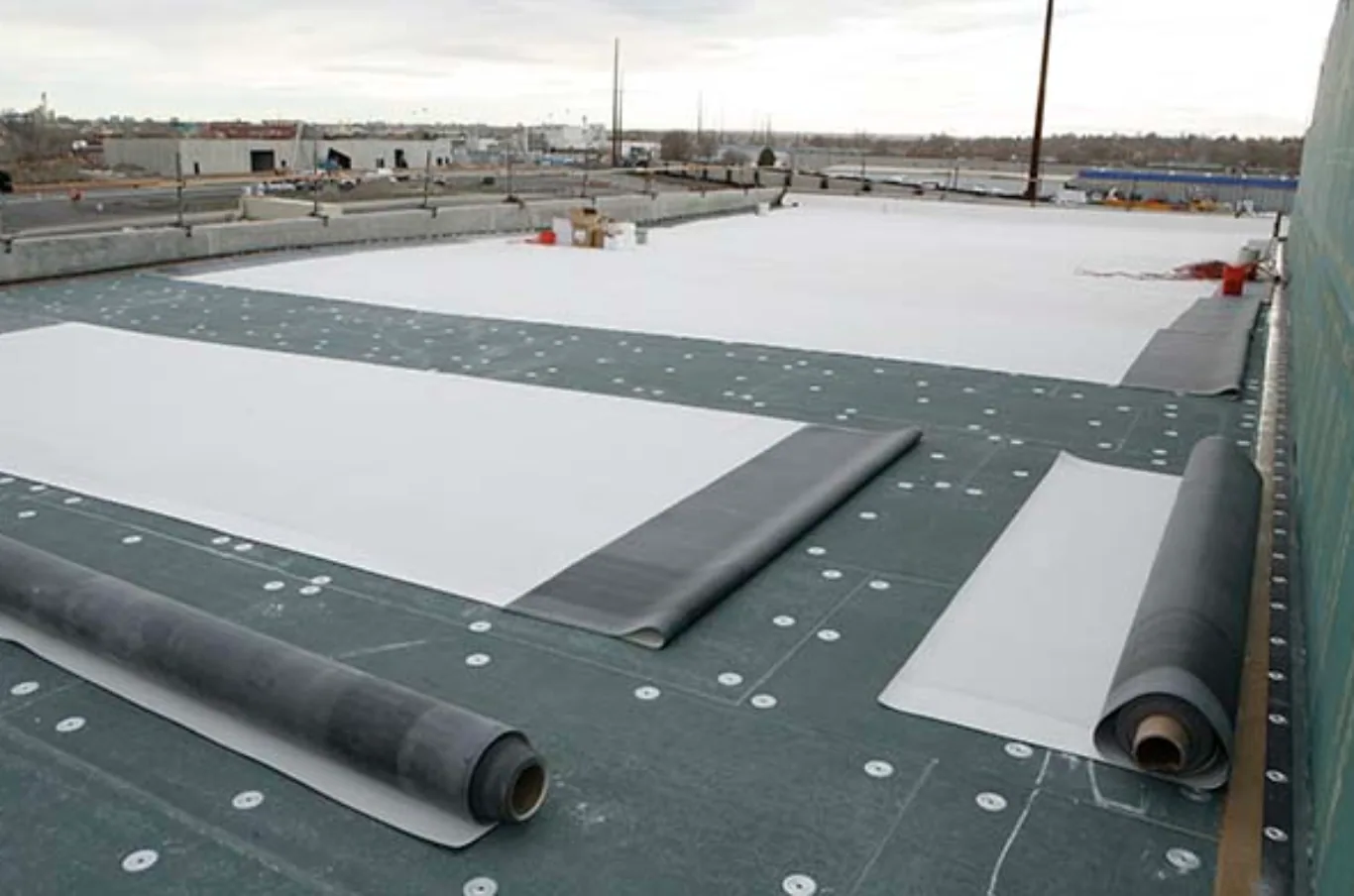
KEE is associated with thermoplastic PVC roofing, yet products and installed assemblies vary. We look for manufacturer markings, project records, seam layout, reinforcement clues, and accessory details. That identification matters before ordering a patch, primer, cleaner, or coating. A material that appears similar may not form the intended bond or weld with the existing sheet. We note whether the field membrane is mechanically attached, adhered, or part of a different assembly, then inspect how it is secured at perimeters and penetrations. When a roof has sections installed at different times, map each area separately.
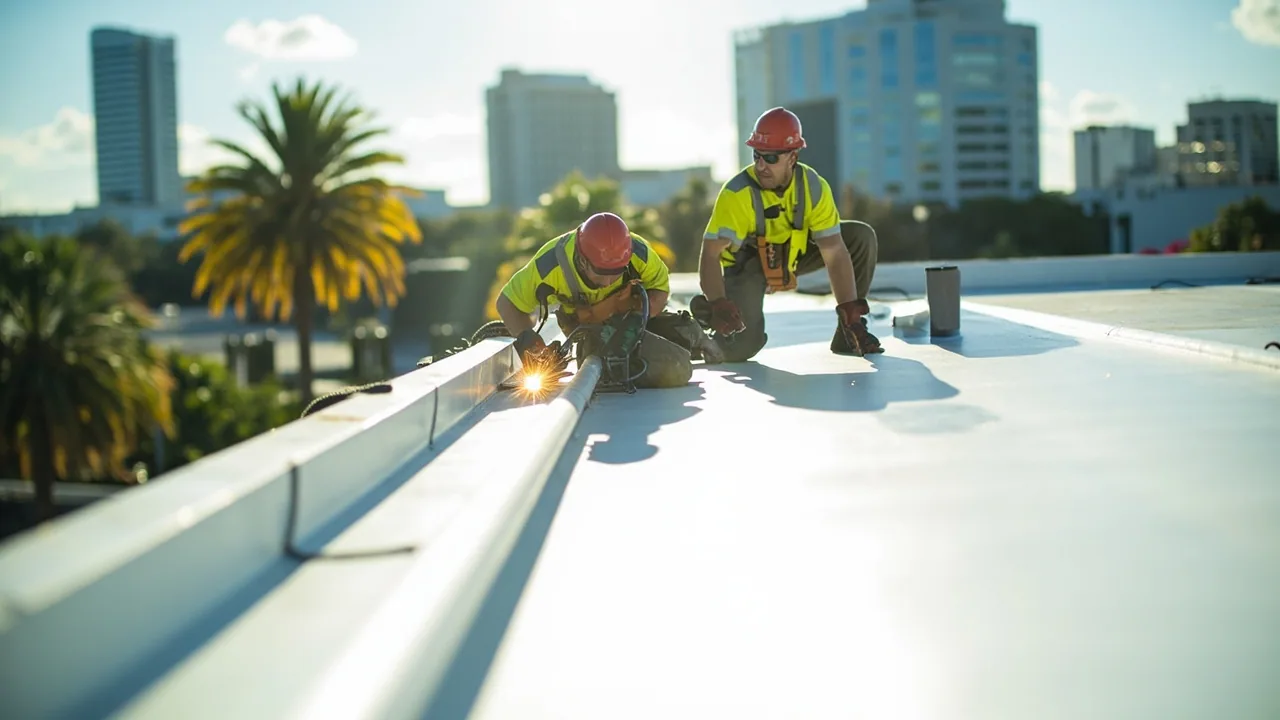
For a thermoplastic seam, the repair may involve heat-welding a compatible piece after appropriate cleaning and preparation. If the roof has overlays or asphaltic residue, identify those layers before selecting a product. When adjacent areas are PVC roofing or TPO roofing, inspect each material and transition on its own. Their shared thermoplastic category does not make every accessory or repair method interchangeable.
Test seams and corners where water can enter
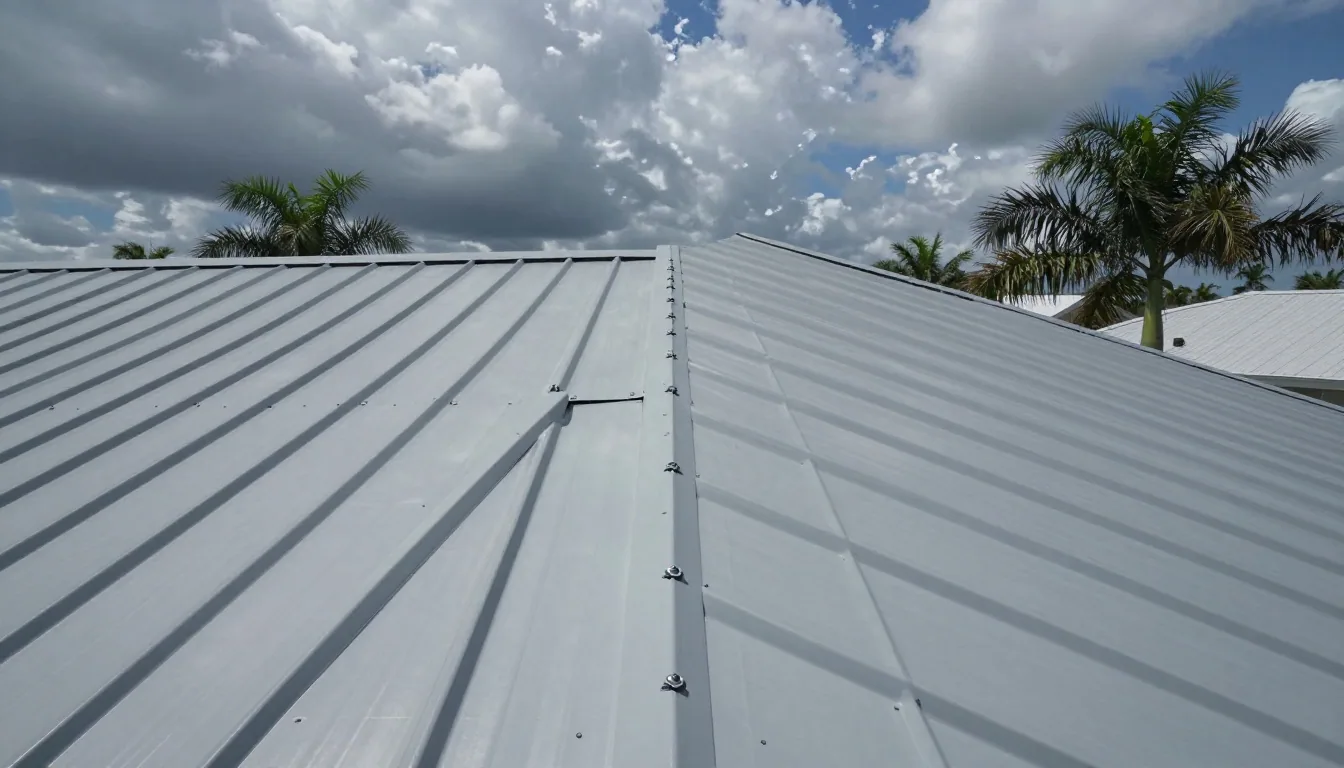
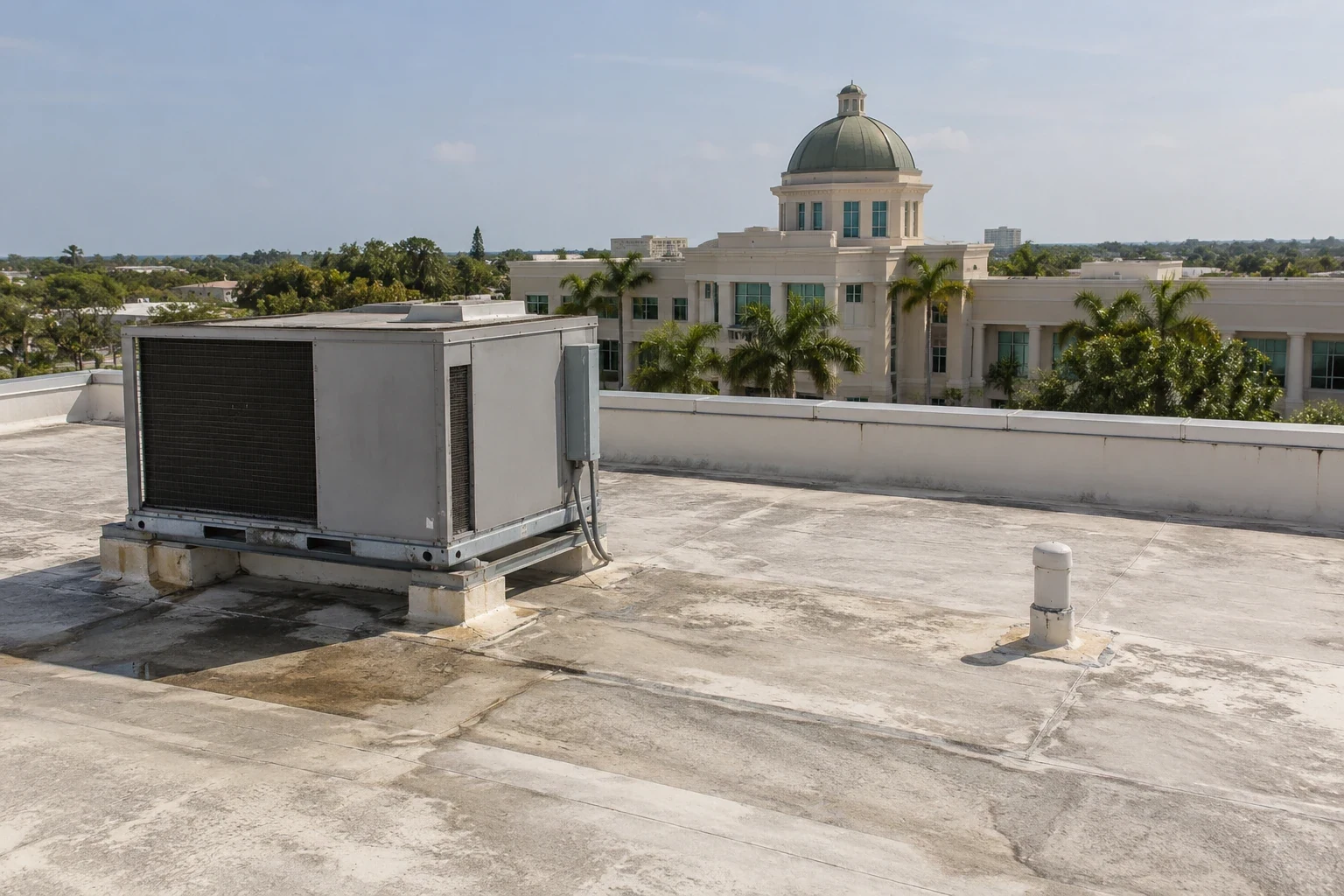
Seams deserve a close look at terminations, corners, patches, and changes in plane. We examine whether the weld is continuous, whether a probe finds an open edge, and whether the membrane is clean enough for a repair. A short gap beside a curb can admit water even when most of the roof is intact. At inside corners, the patch geometry and reinforcement have to fit the movement and drainage pattern. A visible bead of sealant can conceal a defect without rebuilding the seam. We define repair limits by the material that remains stable, then record the surrounding laps and transitions so repeated failures can be compared over time.
Conroe's October 1997 storm history includes a tornado crossing the city and another track near Cut and Shoot. That regional history can prompt a careful inspection after a reported event, but it cannot prove wind damage at an individual property. We check the roof itself for displaced edge details, open seams, punctures, and fresh impact evidence, and we distinguish those observations from older wear. If the concern is broader than a single membrane joint, a seam-failure assessment should identify which connection failed and what repair can restore it. A commercial roof inspection can also document adjacent conditions that affect the recommendation.
Follow water across the full roof zone
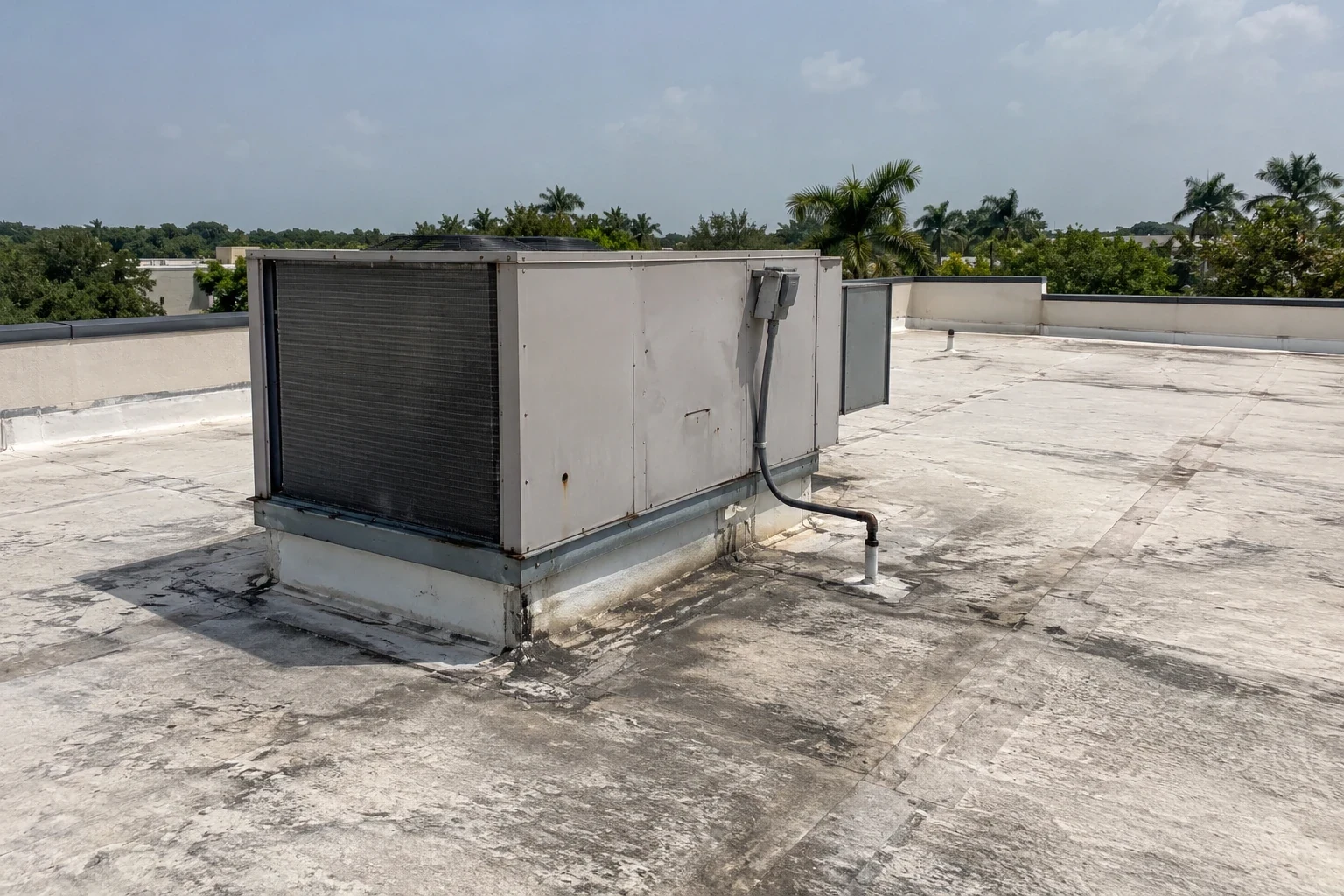
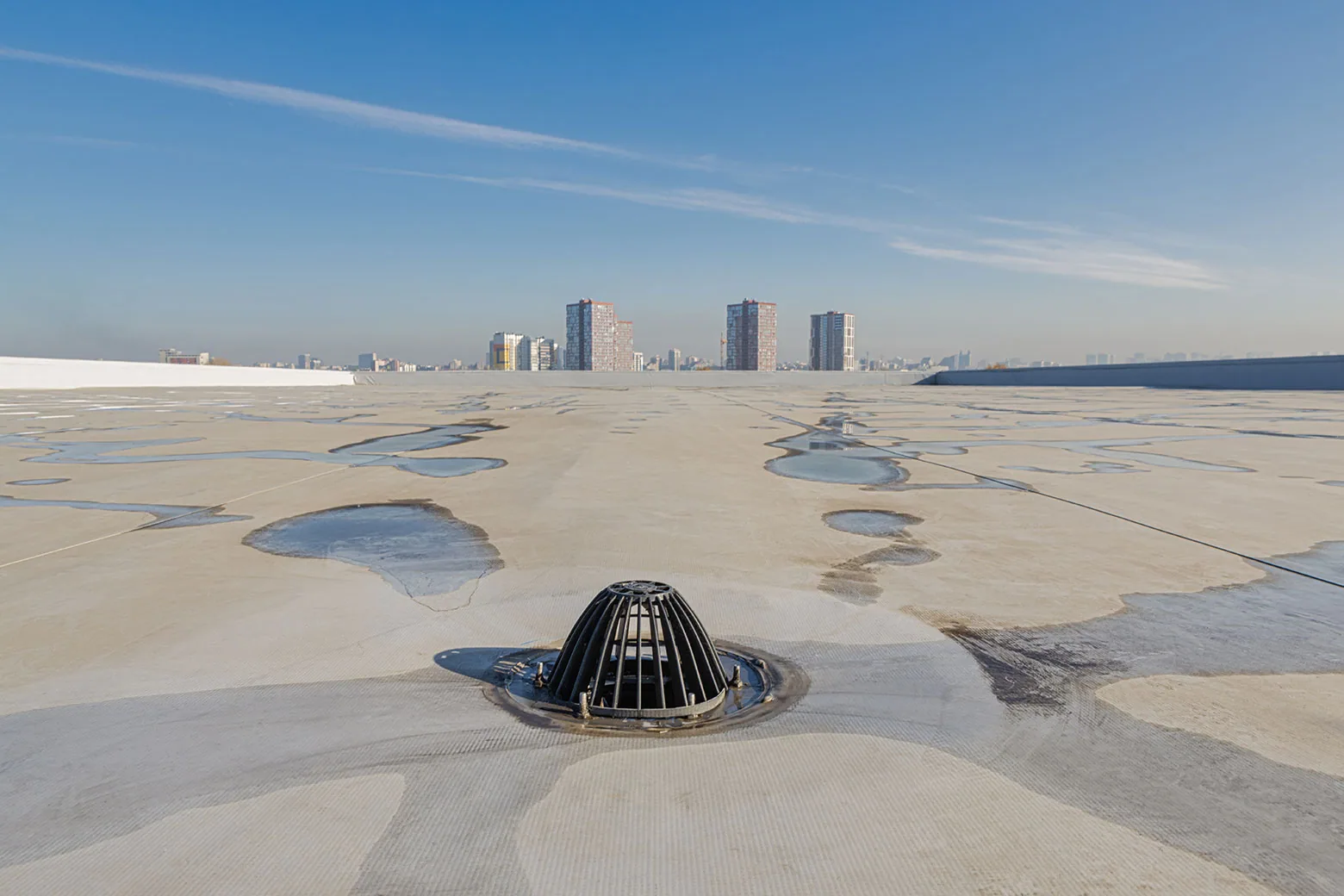
Standing water may come from a blocked outlet, a low area, a compressed substrate, or a drainage layout that no longer moves water as intended. We inspect drains, scuppers, overflows, crickets, and the membrane around each bowl or opening. Check whether debris is restricting flow and whether the membrane termination remains secure. Water can travel below the sheet before it appears indoors, so an interior stain does not pinpoint the source. We compare the reported location with roof slopes and nearby penetrations, then use moisture testing or a controlled opening when the result could change the repair boundary. A repair scope should separate confirmed wet material from areas that remain unverified. The roof-drain and scupper review may be useful when an outlet is part of the problem, but clearing a drain does not repair a failed weld.
Hot, humid weather and strong rain can compress the time between a drainage problem and an interior report. We plan adhesive, cleaning, and welding work around the actual roof condition and the selected product's requirements. If the surface is wet or contaminated, protect the opening and return when the necessary installation conditions are available.
Check attachment and material below the membrane
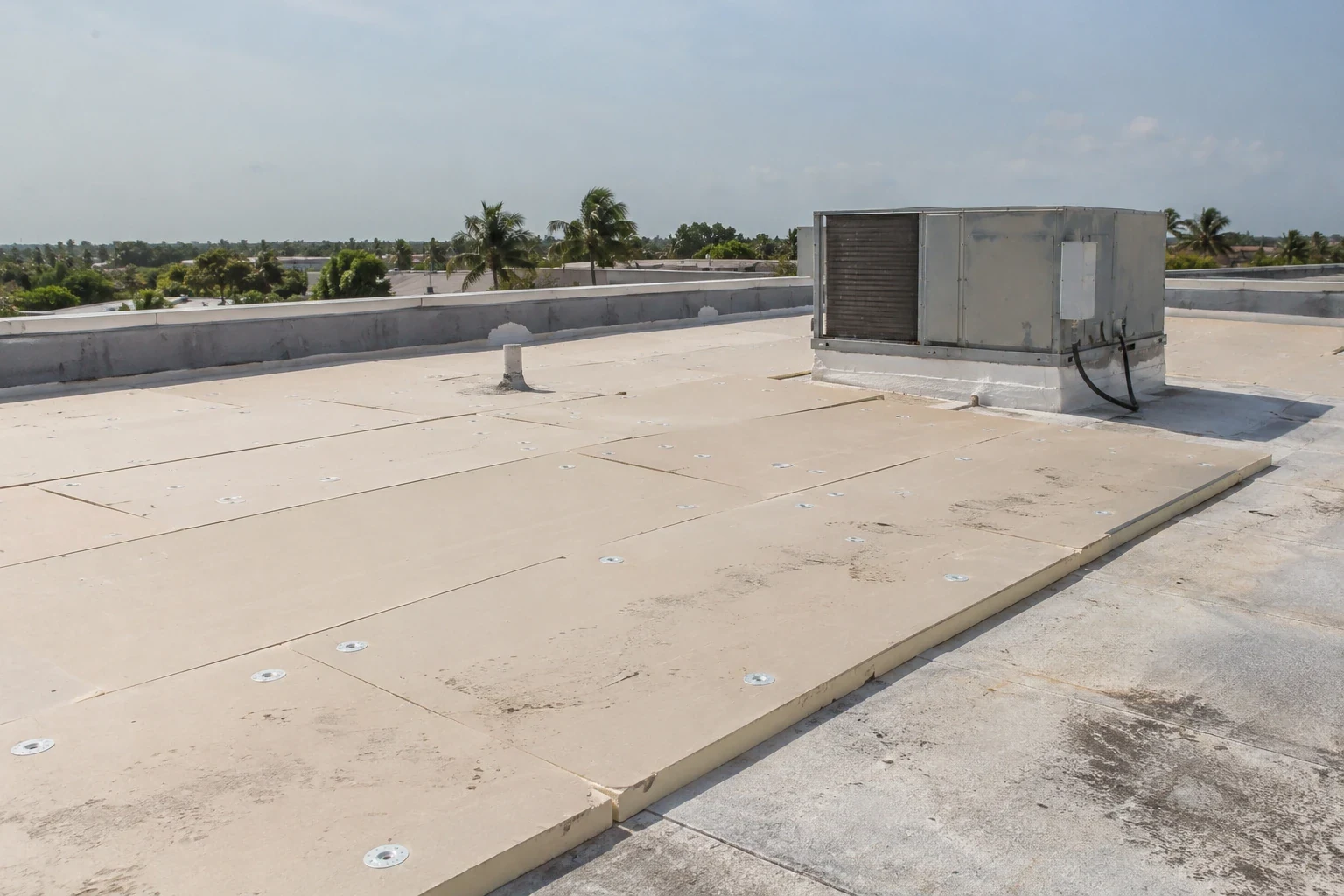
A watertight surface detail can still fail if the layers beneath it are wet, soft, or poorly attached. We look for movement, deflection, loose cover board, fastener patterns, and changes around curbs or roof edges. If the roof assembly can be safely accessed, a small opening may answer whether wet insulation extends beyond the visible leak. Moisture readings should be interpreted alongside the roof's layers and field conditions. A cover-board and insulation check can help identify whether a local membrane repair is enough or whether the base needs attention.
Attachment review also matters near roof edges, where pressure and movement can concentrate. We inspect terminations, coping, fascia, and the membrane tie-in rather than treating exposed metal as separate from the roof. A Conroe Park North area can align those findings with the membrane scope. Where the assembly includes a coating or prior recover, record the visible layers and confirm that future work is suitable for the surface. If a hidden condition remains uncertain, say what test or opening would resolve it instead of presenting a guess as a repair requirement.
Stage the work around Conroe operations
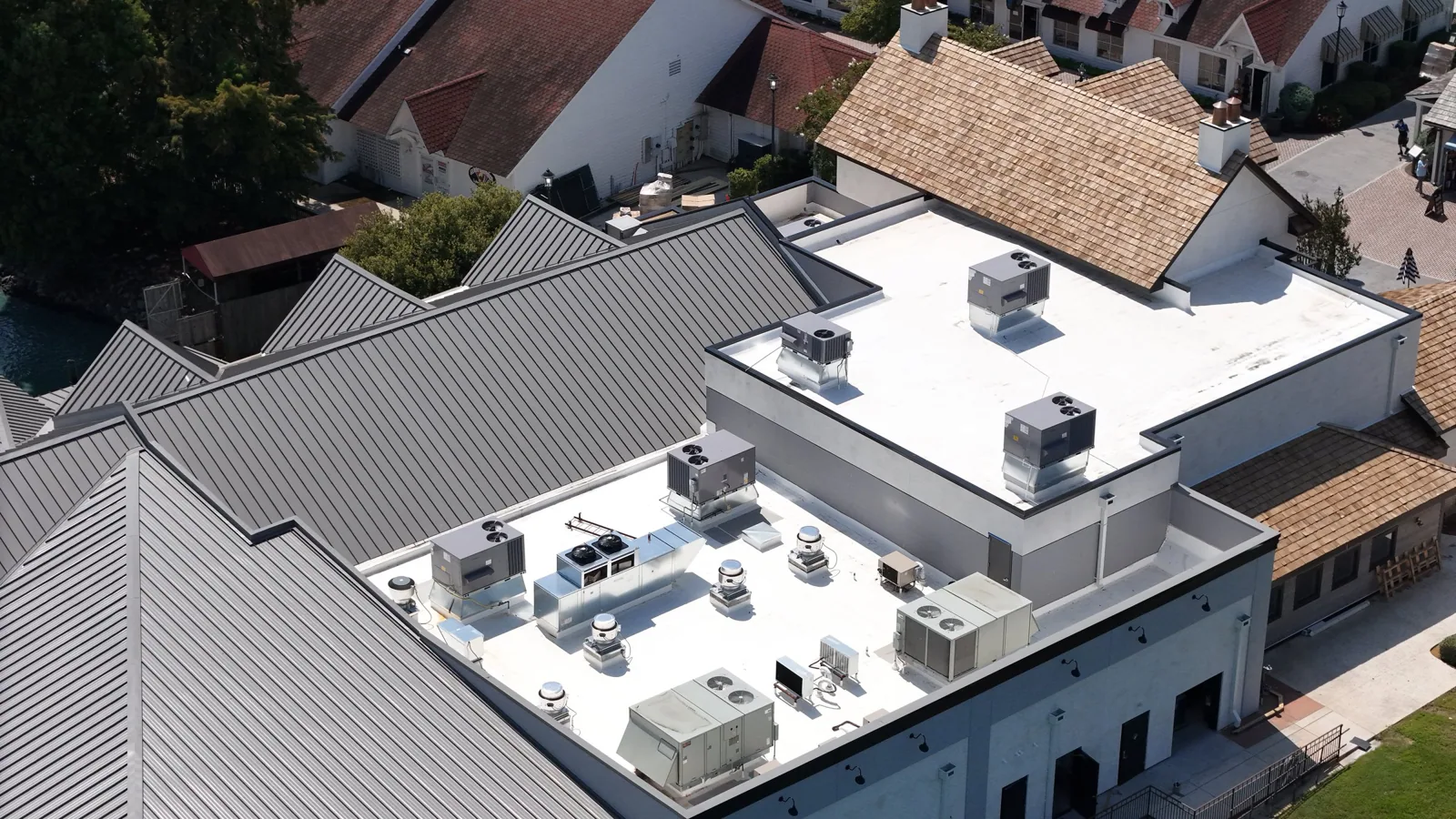
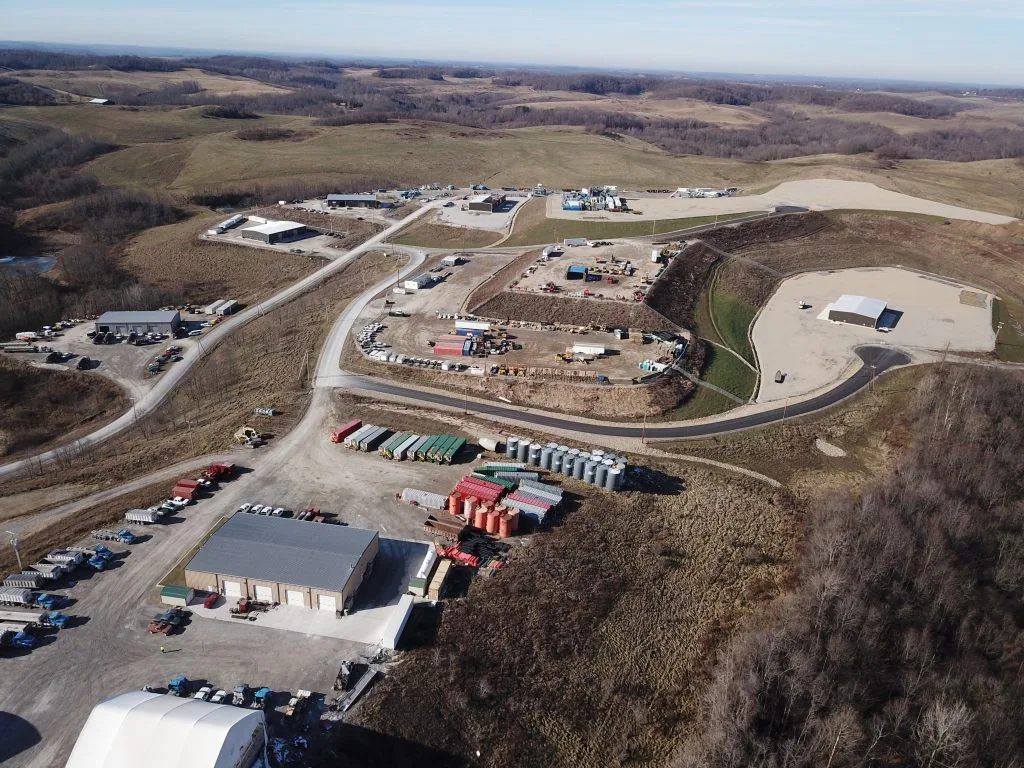
A roof repair can affect deliveries, production, customers, or rooms below the work area. At Conroe Park North, the documented mix of freight, food processing, warehousing, and manufacturing means a site contact should coordinate staging and protected access before material is brought up. Deison Technology Park has a different mix that includes office and research planning alongside life-sciences manufacturing. Confirm the active use and any sensitive interior zone at the property instead of assuming the park description applies to every tenant. The roof plan should mark work areas, access routes, the daily opening limit, and the person who approves a change if concealed damage appears.
For an occupied building, phased work can limit disruption by completing and securing defined zones before moving equipment. A phased occupied-building plan can help owners compare access and sequencing options. If a repair expands into removal, account for temporary dry-in, debris handling, and the time needed to restore the membrane. Weather can change that sequence quickly.
Choose a repair boundary that matches the evidence
A limited puncture or failed weld may be repairable when the surrounding KEE sheet, attachment, insulation, and transitions remain stable. Repeated seam openings, broad moisture, deteriorated flashing, or widespread movement can change the economics. A recover option needs a dry, secure base and a system approved for the existing assembly. Tear-off can reveal concealed conditions but adds removal, disposal, dry-in, and interior-protection steps. A commercial replacement proposal should spell out removal limits, tie-ins, drains, curbs, material assumptions, and contingencies for hidden layers. That lets an owner compare it fairly with a repair scope.
Closeout should name the roof zone, KEE material or compatible components installed, preparation completed, photographs, and any test results.
Commercial Roofing Questions
How do you confirm that a roof is KEE?
We review product markings, records, seam details, and the installed layers. If those do not establish the membrane, a controlled investigation may be needed before selecting repair materials.
Can a KEE seam be repaired without replacing the roof?
Often a localized weld or compatible patch can address a limited defect when the nearby sheet and substrate remain sound. We inspect the surrounding assembly before setting that boundary.
Does ponding water mean the KEE membrane has failed?
No. Ponding calls for a drainage and slope review, plus inspection of the membrane and seams where water remains. The roof condition determines whether repair is needed.
Can you coat a KEE roof?
A coating requires confirmation of membrane condition, surface preparation, compatibility, and moisture. It is one possible scope only when the existing assembly supports it.
What should a KEE roofing closeout include?
The closeout should identify the work zone, materials, seam or flashing repairs, photographs, test results, and any condition left outside the completed scope.
Related Roofing Work