Cold Storage Roofing in Conroe, TX
Inspect cold storage roofs in Conroe, TX. We trace moisture, review vapor control, insulation, drains, penetrations, and refrigeration operations.
A cold-room leak can be difficult to separate from condensation. Moisture at the ceiling may come from the roof, a discontinuity in the air or vapor-control layers, or an interior condition near refrigeration equipment. In Conroe's humid climate, temperature differences make that distinction especially important. Conroe Park North includes food processing, medical-device production, warehousing, and freight; the specific building's roof assembly and operating profile determine where inspection begins.
Trace water before opening the roof
Map where water appears and when it occurs. A drip that follows rain may point to a roof opening, while moisture tied to a defrost cycle or a temperature change can call for a closer look at the interior environment. Neither timing alone proves the cause. We compare facility logs, roof slopes, drains, curbs, and the location of the wet area. Water may move within insulation or along the deck before it becomes visible below.
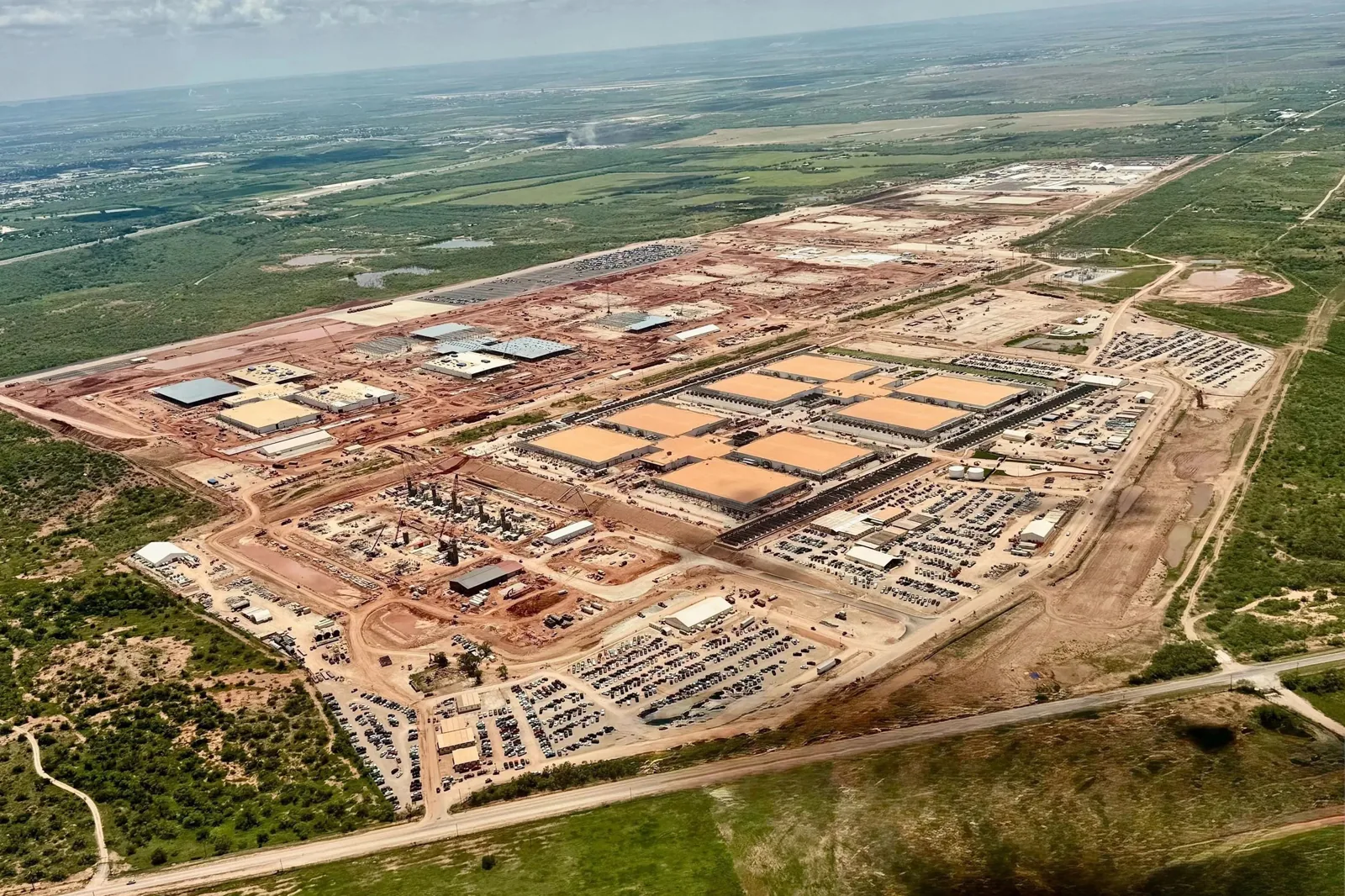
Conroe Park North's industrial mix includes food processing and medical-device production, alongside warehousing and distribution. These are area uses, not a description of any particular building's temperature or hygiene requirements. The facility manager identifies controlled rooms, product zones, refrigeration equipment, and access restrictions. A commercial roof inspection can map roof-side conditions, while an infrared moisture survey may help locate suspect wet areas. Temperature patterns need field confirmation before they define a removal quantity.
Review every layer that controls moisture
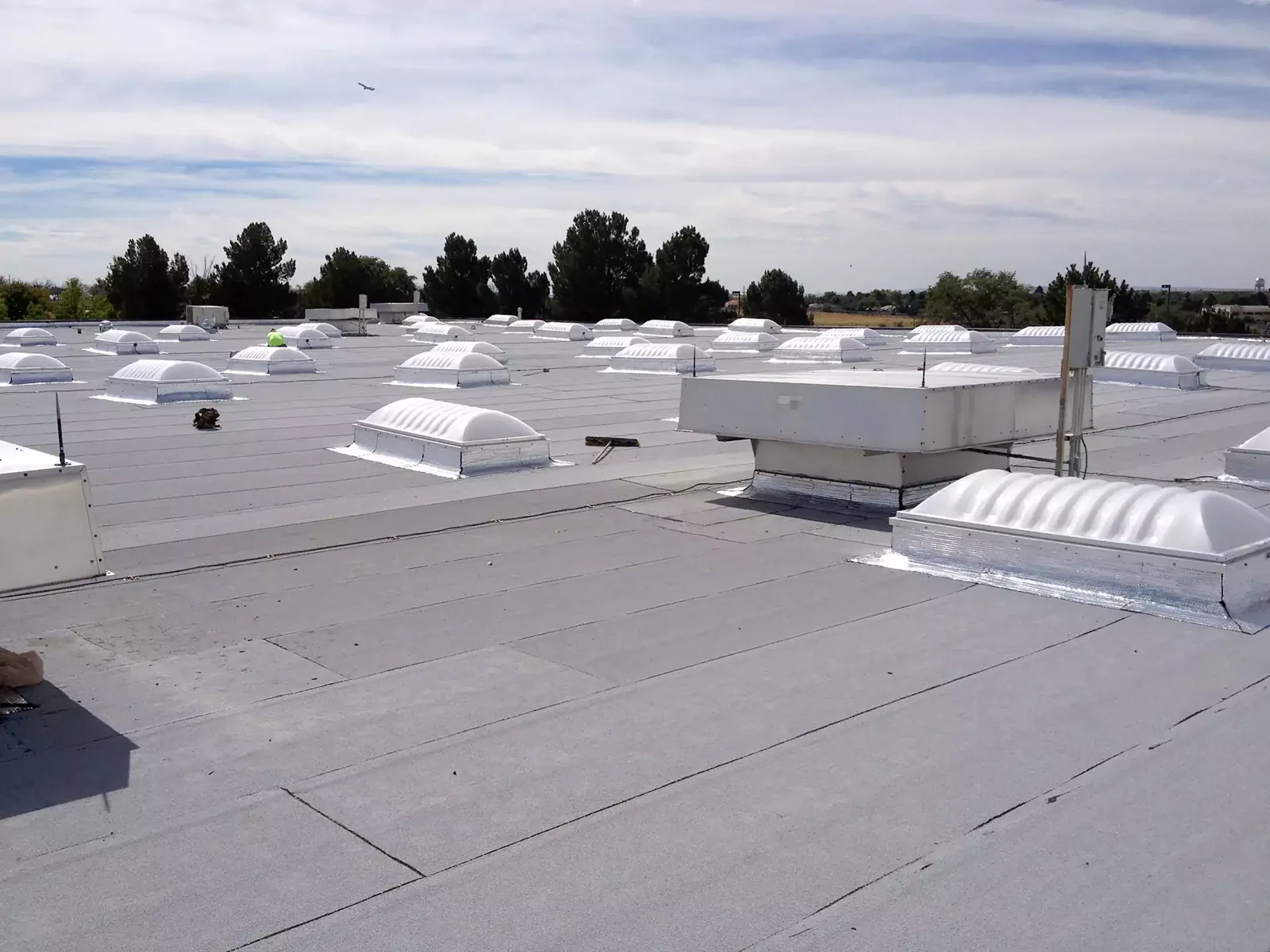
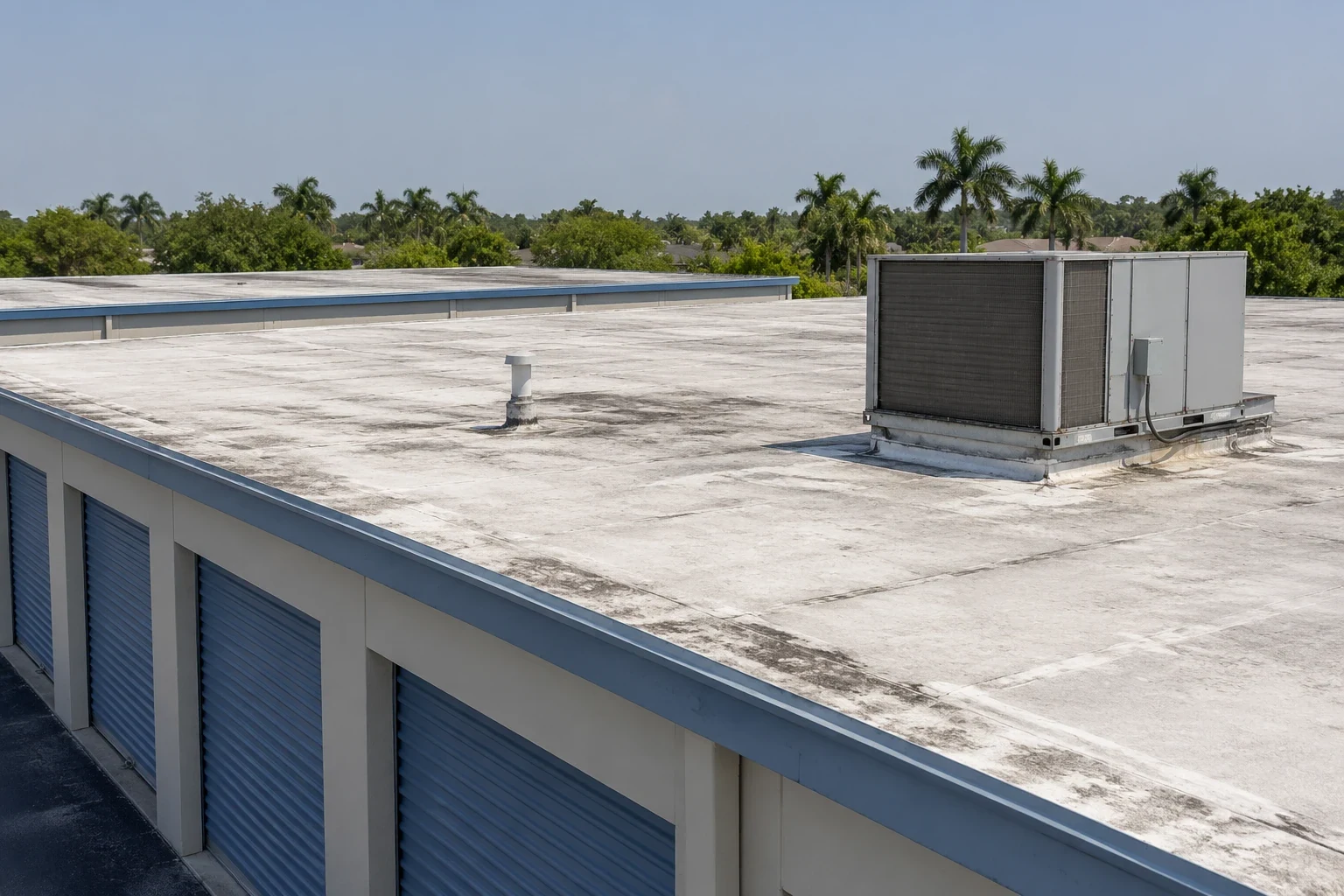
A cold-storage roof may rely on membrane, insulation, air control, vapor retarder, cover board, and deck as one assembly. The roof's performance depends on continuity at seams, curbs, wall interfaces, and penetrations. A cut or open flashing can let warm humid air reach a cold surface, where condensation may form. A damaged vapor-control layer or wet insulation can also affect performance even if the outer membrane appears mostly intact. We identify the installed materials and where each transition can be inspected.
If a test opening is needed, choose a location that can answer a decision: is insulation wet, is the air/vapor layer continuous, or does removal need to extend beyond the visible drip? Mark the test point and repair the opening with compatible layers. Do not describe a whole roof as dry based on one sample. If the room stays cold during the work, coordinate how the opening is protected and how the roof is restored before the next operating cycle.
Protect product zones and refrigeration service
Before roof work, identify the room or process area below each planned opening. Confirm whether product must be relocated, whether refrigeration can stay in service, and who approves access to a controlled room. Keep loading doors, forklifts, and service routes clear. A roof opening above a receiving area may have different consequences from one above a utility corridor. The work plan names the interior protection, access barrier, and person who can approve an expanded opening if concealed moisture changes the scope.
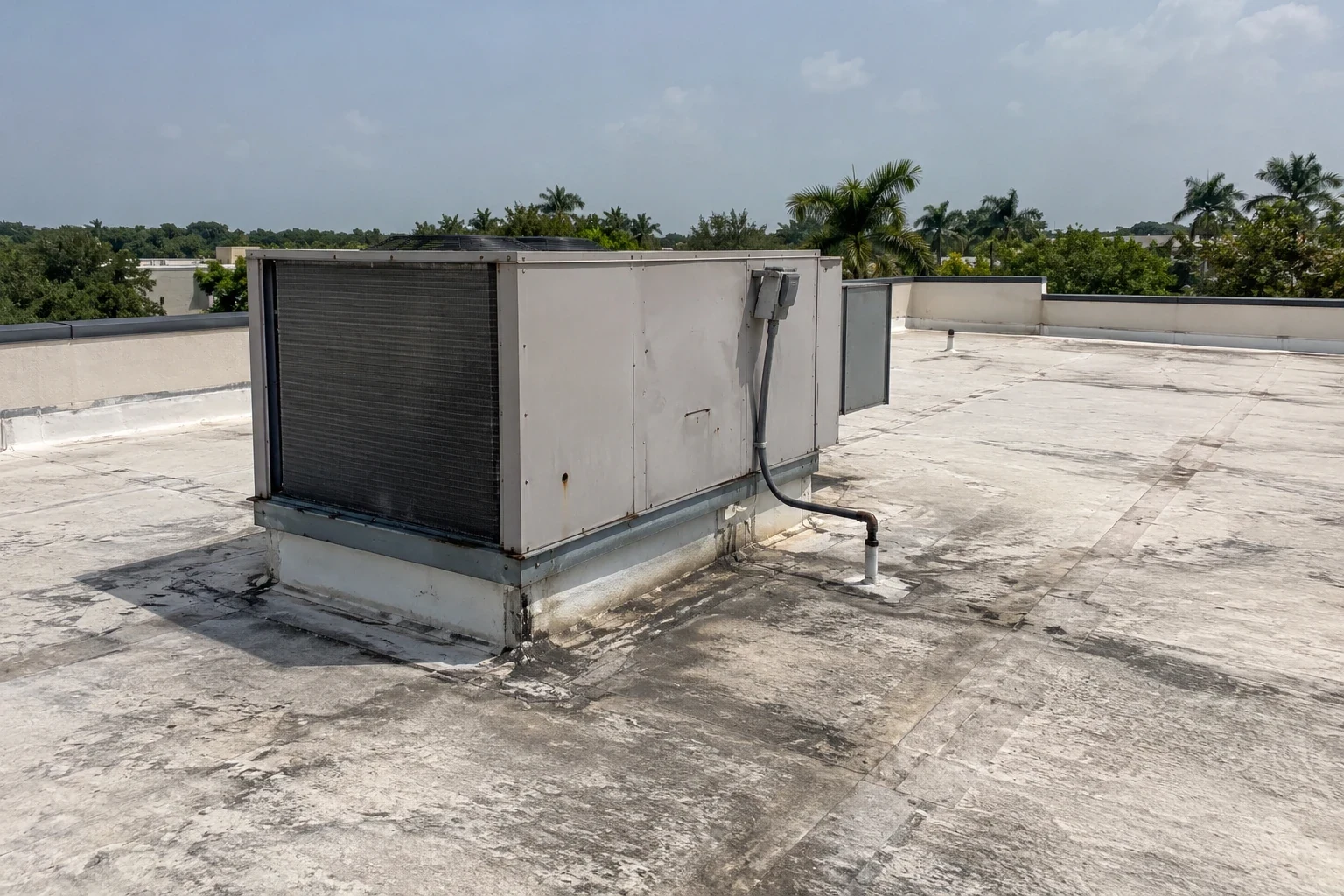
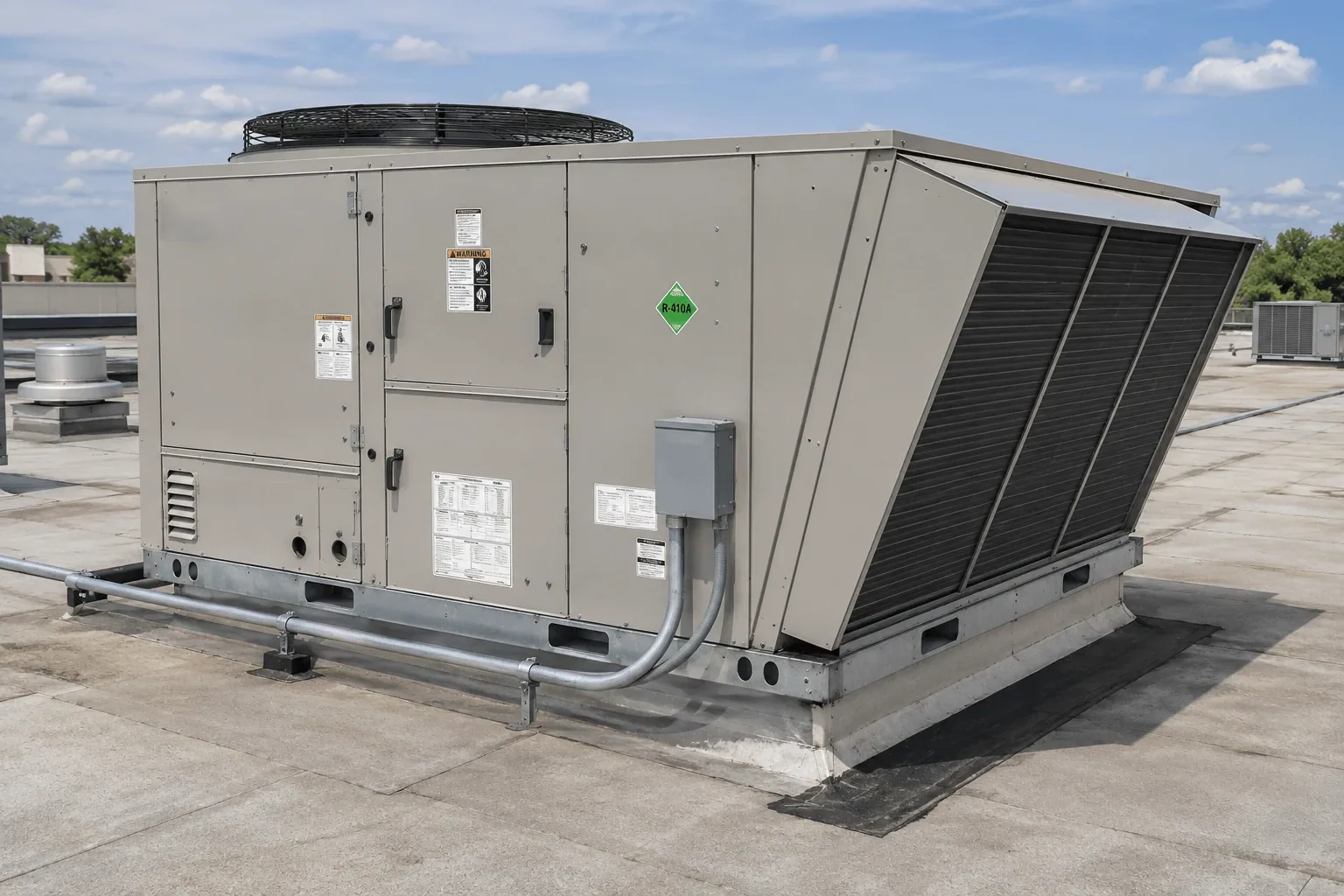
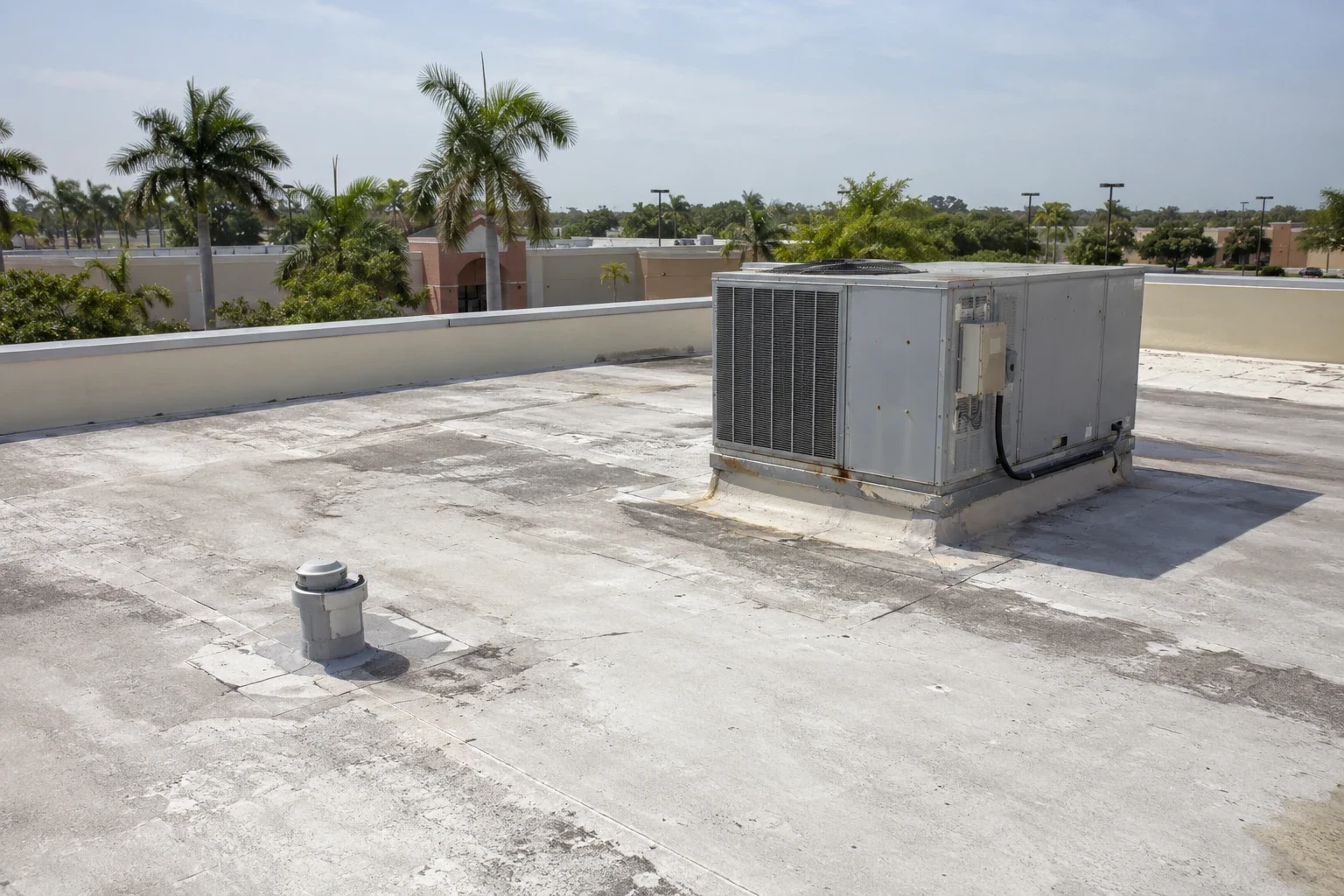
Roof-mounted condensers, exhausts, conduits, and refrigerant lines need room for service after repair. Coordinate any shutdown or equipment movement with the responsible vendor. A curb flashing must seal to the roof while keeping service clearances intact. Phased work can limit how much roof is open at one time, but each shift still needs a weather-tight stop. A curb and equipment-support review can coordinate roofing with equipment access without transferring roof-system decisions to the refrigeration contractor.
Keep drainage reliable in heat and heavy rain
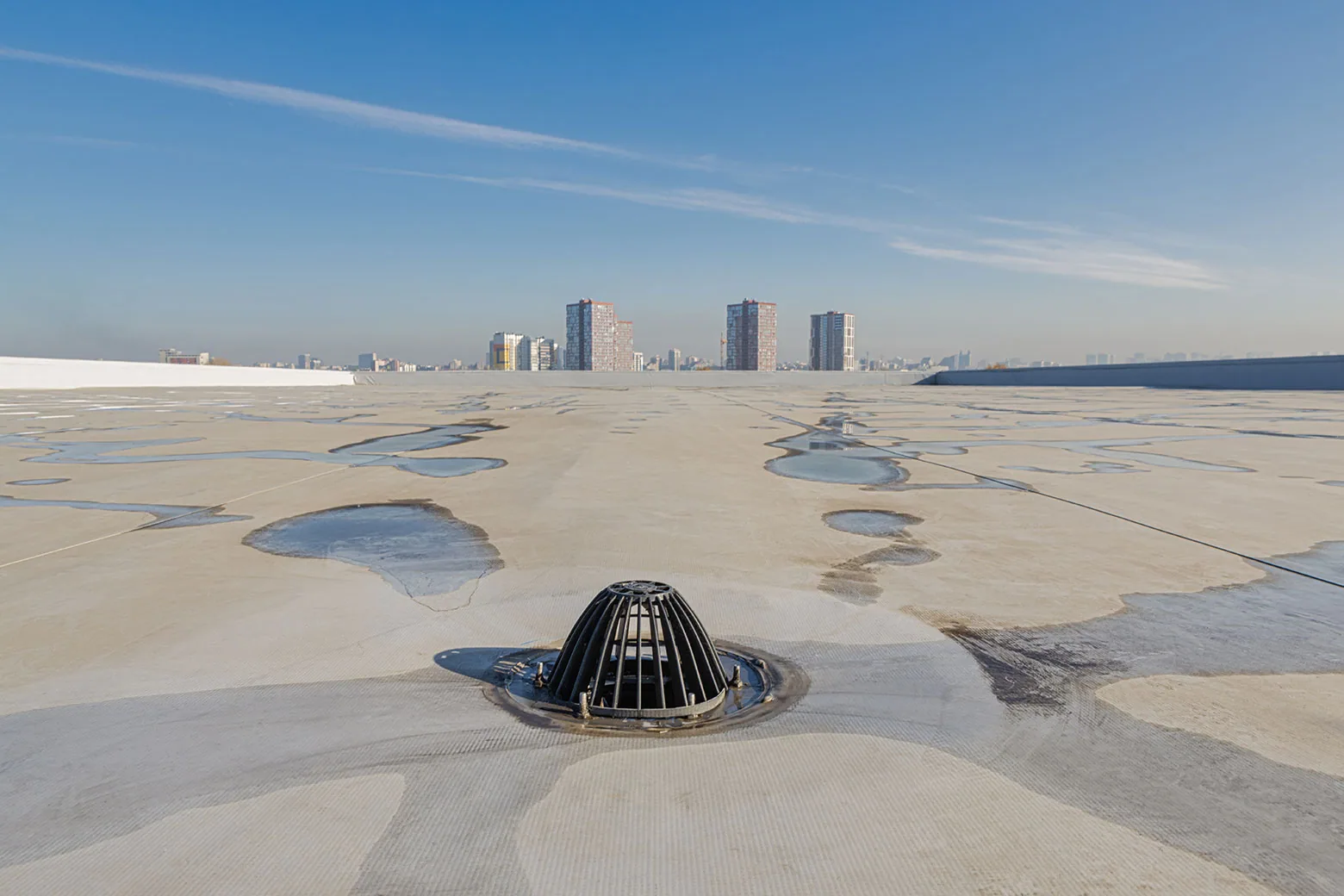
Cold buildings still need clear drains, scuppers, overflows, and a continuous membrane connection around each outlet. Debris or ice may not be the only reason water remains; insulation settlement or roof geometry can create a low area. We inspect the outlet and the surface around it, then compare ponding with wet interior zones and roof slopes. A drainage assessment can identify outlet maintenance or repair needs, while saturated insulation requires its own removal limit.
Lone Star Executive Airport, just north of Conroe, is the local climate station. Nearby Houston Intercontinental averages July and August highs of 94.5 and 94.9 degrees, a regional indicator of sustained summer heat. Humidity and intense rainfall affect roof materials and work windows, but the building's interior temperature remains specific to its operation. We check actual roof and substrate conditions before application. If a surface is wet, protect the opening and return when material requirements can be met.
Separate regional flooding from roof damage
During Hurricane Harvey, Lake Conroe reached record pool elevations; the record release contributed to major downstream flooding in Montgomery County. That history belongs to regional flood context and does not establish water entry at a cold-storage roof. The roof inspection should distinguish yard or building flood exposure from membrane leaks, condensation, or drain backup. Document actual water lines, roof openings, interior reports, and any test result rather than assigning cause from the event alone.
An October 1997 F0 tornado crossed Conroe, and a second tornado tracked along Highway 105 near Cut and Shoot. After any reported severe weather, we inspect actual membrane, edge, curb, and rooftop-equipment conditions. A roof assessment can document displaced details where evidence supports it. These regional events do not prove that a specific facility was struck or flooded.
Select repair materials for the existing assembly
A patch or flashing needs to match the roof membrane, substrate, and temperature conditions at the facility. Clean, dry material and compatible primer or adhesive matter; condensation, frost, or contamination can undermine a bond. We inspect whether previous coating, asphalt residue, or an overlay changes the surface. If one section uses a different membrane from another addition, map both before specifying material. A grocery-store roof plan may involve refrigeration and food areas too, while a distribution-center scope brings loading and inventory into the sequencing discussion.
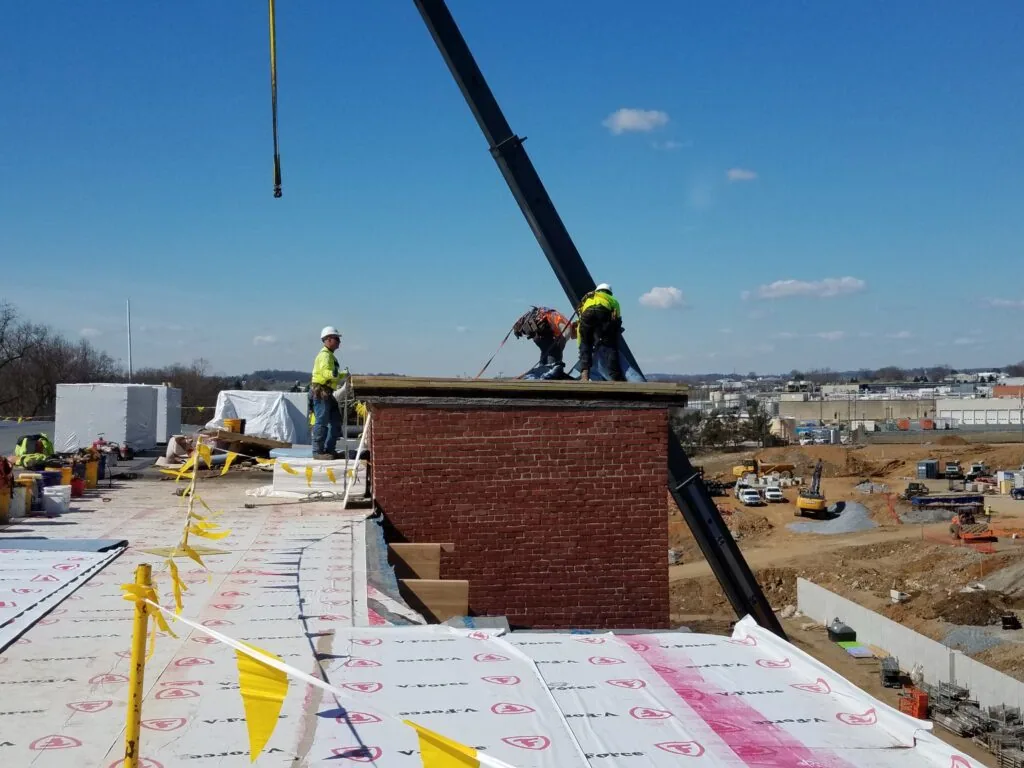
Local repair may be enough when the leak is isolated and nearby insulation and vapor control remain serviceable. Broad wet material, repeated seam failure, or damaged deck can make selective removal or replacement a better comparison. The scope should say which layers will be removed and restored, how the vapor-control plane is tied in, and how the cold interior is protected during the opening. A replacement proposal should identify drains, wall transitions, equipment curbs, and any conditions still requiring a test.
Keep the cold-room roof record useful
Closeout should connect each roof zone to the interior area, materials removed or installed, test findings, photographs, and operating restrictions. Note whether wet insulation was confirmed or suspected and whether the vapor retarder could be inspected. If an opening was limited, identify the boundary and any return test. A follow-up can compare the same locations after normal refrigeration cycles and rainfall resume.
For a facility near Conroe Park North, local industrial activity includes food processing, manufacturing, and distribution, but the property's procedures set its roofing sequence. The records can be shared with operations and refrigeration staff so roof repairs remain coordinated with equipment maintenance. Adjacent warehouse buildings may need separate review, and findings stay specific to the structure inspected. This gives the next facility manager a dated baseline without claiming hidden layers were confirmed where no opening or test was performed.
Commercial Roofing Questions
Can condensation look like a roof leak?
Yes. We compare moisture timing, interior conditions, refrigeration logs, roof details, and test results before deciding whether water entered through the roof.
How do you check insulation above a cold room?
We inspect visible areas and use targeted readings or a controlled opening when the result could change the removal boundary. The report identifies exactly where material was tested.
Can refrigeration stay on during roof repairs?
That depends on the affected zone and the facility's operating requirements. The facility contact and equipment vendor define any shutdown, product protection, or room access limits.
Does Harvey history mean a Conroe facility flooded?
No. Lake Conroe's record release contributed to downstream flooding in Montgomery County, but the condition at a specific building requires its own inspection.
When does a cold-storage roof need replacement?
Widespread wet insulation, failed vapor control, repeated leaks, or deck problems may justify a broader scope. We map confirmed conditions and testing needs before comparing options.
Related Roofing Work