Commercial Roofing for Property Management Companies in Conroe, TX
Help Conroe property managers route roof calls, compare building conditions, coordinate tenants, and plan repairs across commercial portfolios.
A property manager can receive the same-day roof report from a tenant, owner, maintenance vendor, and leasing team, each describing a different part of one leak. The useful next step is to connect the call to a building, roof zone, prior work order, and person authorized to approve access. Conroe's commercial portfolio spans districts such as Conroe Park North, with industrial employers and warehouses, and Downtown Conroe, where business, housing, and civic uses sit together. Those places show why a manager may need different access and tenant plans across one portfolio. A roof recommendation still has to come from the property inspected, not from the neighborhood label.
Turn roof calls into a consistent intake record
Start each report with the property name, building, interior location, time noticed, whether water is active, and what access or contents are at risk. Ask whether the report follows rain, cleaning, equipment service, or an earlier repair. The manager can add the tenant contact and urgency without asking that person to diagnose the roof. A photo from inside can help locate the room, but the roof source must be checked by someone with approved access.
For portfolios with many sites, a standard intake record makes comparisons possible. It also prevents a vague “roof leak” work order from hiding a different problem at each property. A roof condition report can tie observations to a roof area and list what remains untested. A commercial roof inspection can document a larger section when calls recur or the manager needs a base condition record. The scope should state who has authority to order work and which tenant receives scheduling updates.
Coordinate access across tenants and vendors
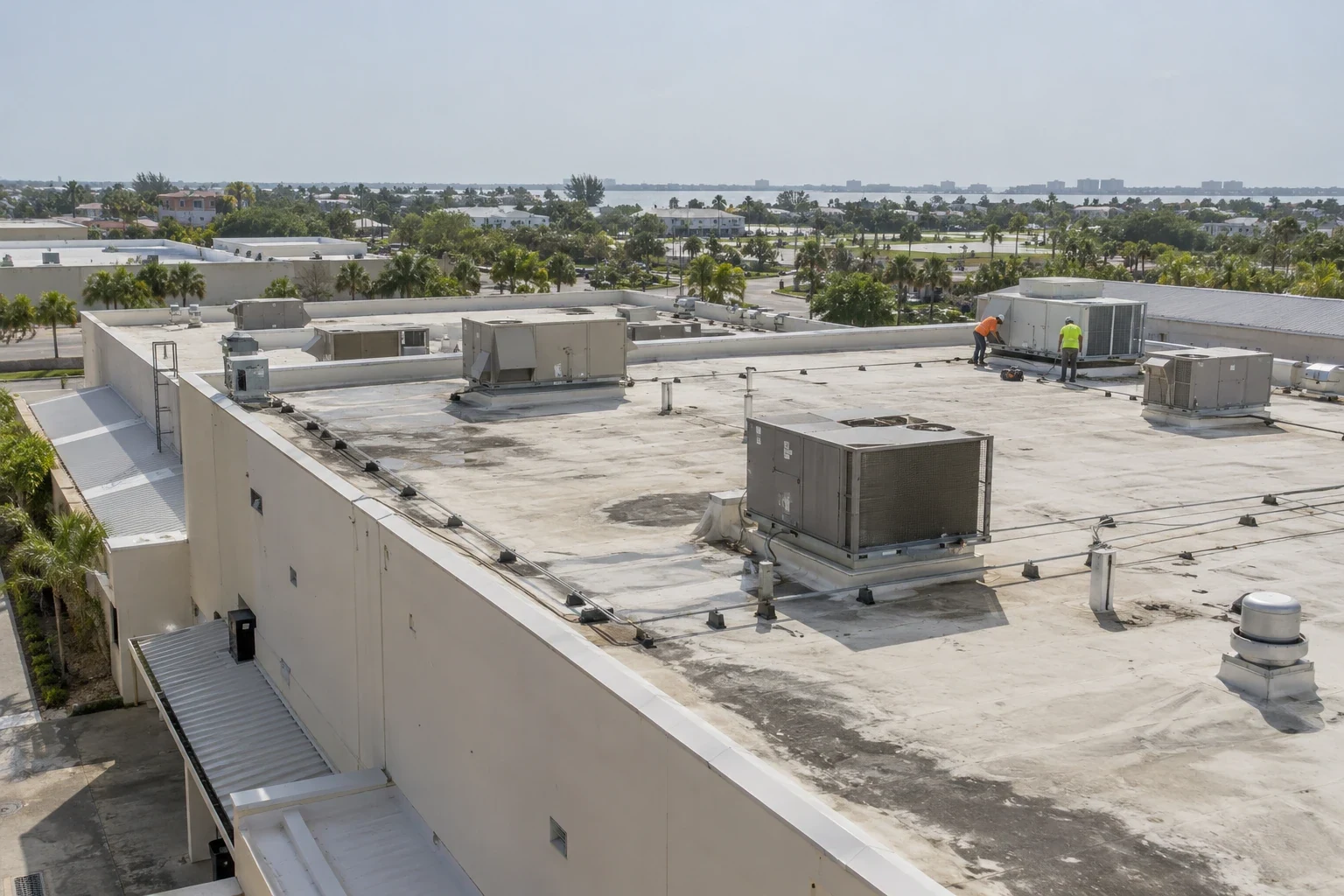
One roof may sit above several leases, common areas, and service routes. The manager can set notice timing, keys, escorts, delivery windows, parking controls, and any room that cannot be entered without a tenant present. We confirm where a ladder or lift can go and whether a tenant's equipment contractor needs to be present at a curb or service line. A building access plan should name the approved contact so crews do not seek instructions from unrelated occupants.
When a project spans multiple suites, the owner or manager may need a phase plan that shows the area active each day, noise, temporary barriers, and the closeout point. Phased occupied-building roofing can reduce the footprint open at one time, subject to the property's safety and access rules. For managers who coordinate several owners or investment partners, real-estate investors and REITs covers the portfolio-level decision context; Managers handle tenant contacts, keys, and work approvals each day, then report building conditions to the owner through the agreed process. A completion note can include timing, route changes, and unresolved access.
Separate urgent leaks from capital planning
An active leak may need temporary protection first, while a roof with aging seams or recurring drain calls may belong in a planned repair or replacement discussion. A manager should keep those decisions distinct. The inspection record can identify the immediate hazard, roof section, visible damage, and limit of a temporary measure, then list longer-term options separately. That avoids turning every urgent call into a replacement recommendation or treating a temporary patch as full repair.
Conroe Park North covers 1,655 acres on FM 3083 and includes more than 40 companies across manufacturing, freight, food processing, warehousing, and related uses. That variety makes a single portfolio label a poor substitute for property-specific records. A multi-site roof program can rank buildings by documented condition and follow-up needs. A capital-planning review can help management align scope with ownership priorities, while the manager retains the access, tenant, and maintenance history for each site.
Make each inspection answer a property question
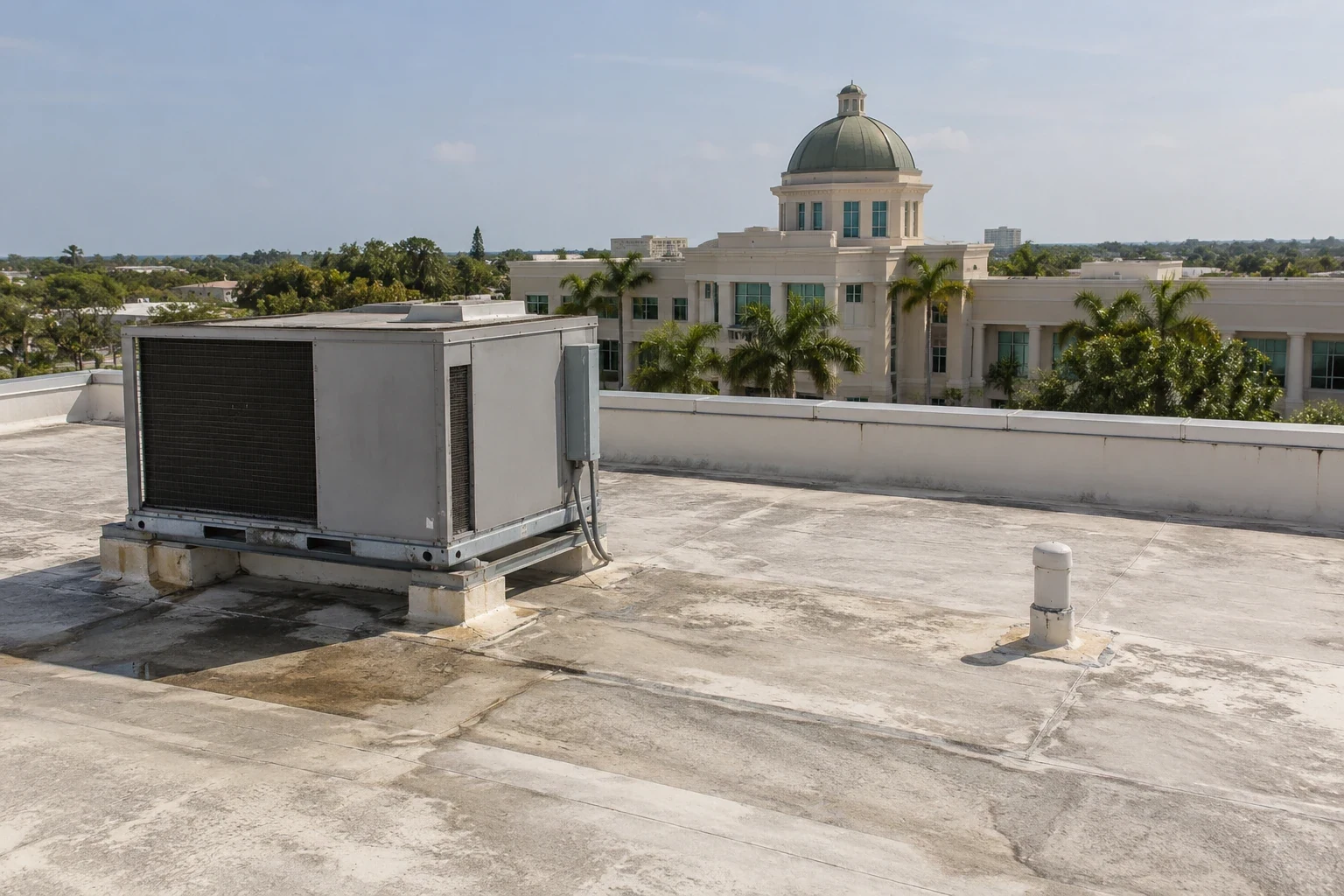
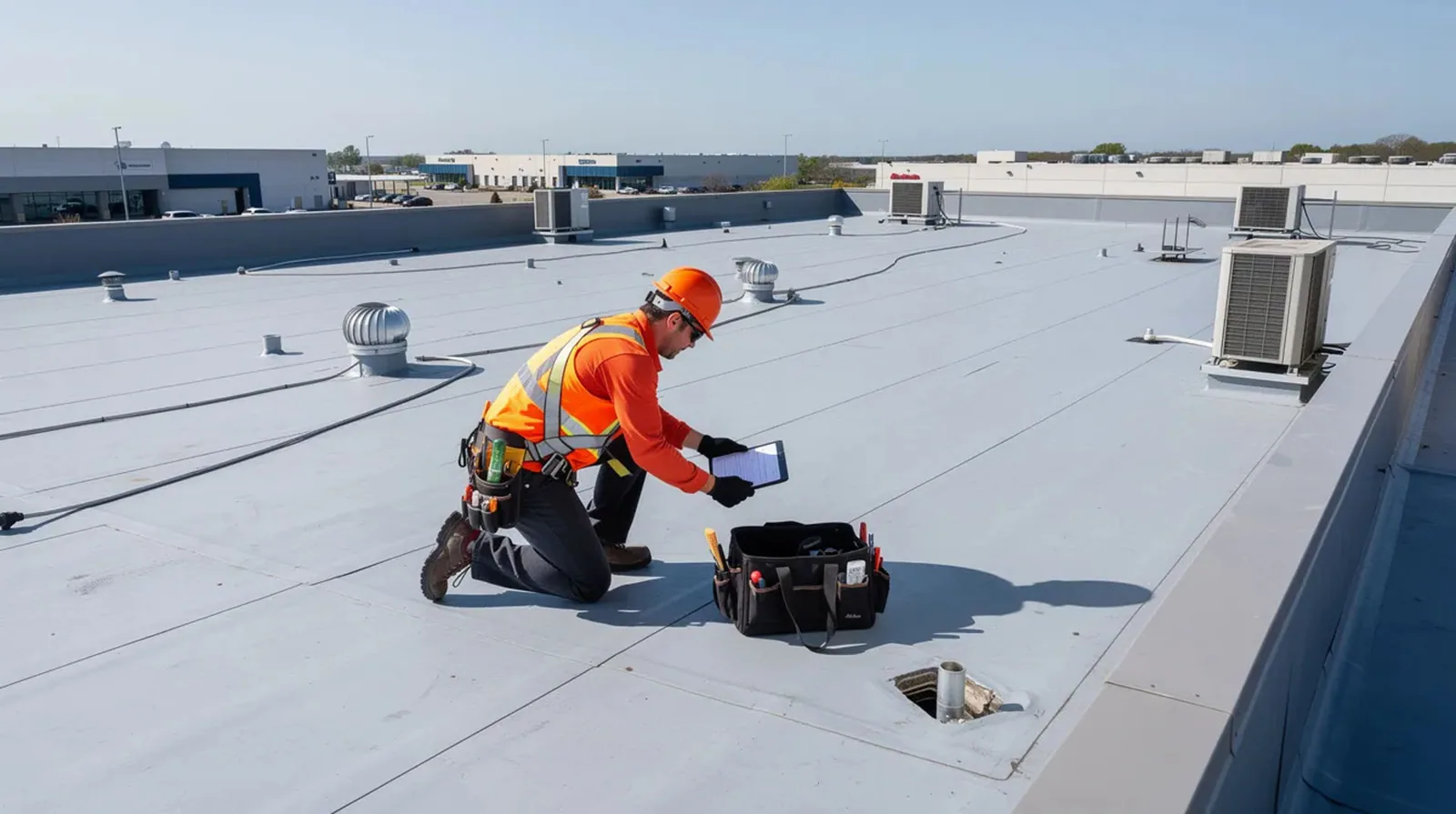
A useful inspection should answer the question raised by the work order. If the issue is a ceiling stain, locate the likely roof path. If water remains at an outlet, document the drain, overflow route, and nearby membrane. If several tenants report moisture, compare the reports with roof sections and previous repairs. We mark visible conditions and explain where a close inspection could not be completed because of access, safety, or equipment restrictions.
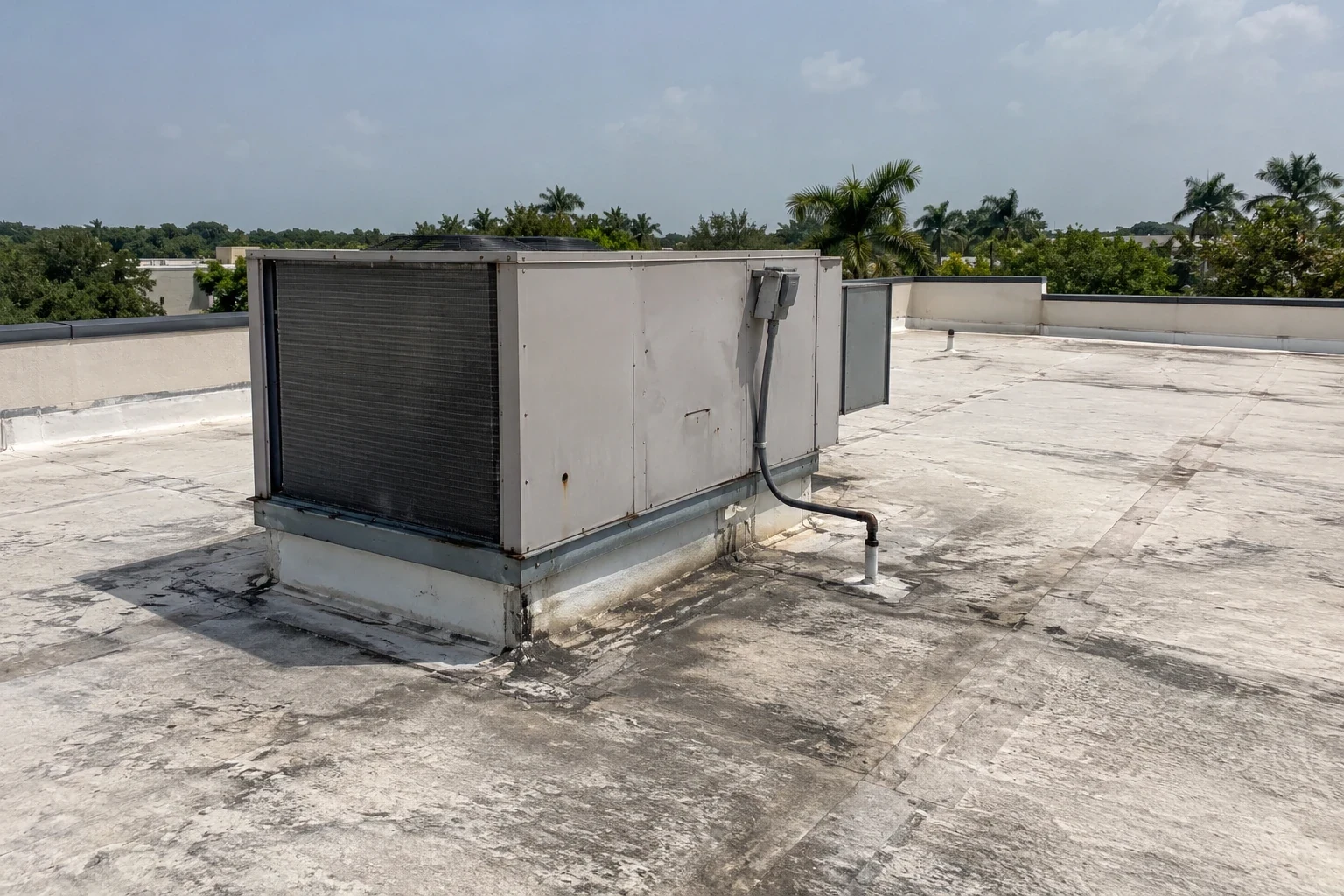
Conroe summers can put roof surfaces under sustained heat, and intense rain can interrupt work before an open section is sealed. Managers should set inspection and repair windows with a daily weather check, a stated exposed-area limit, and a contact who can confirm temporary protection. Drain and scupper service can address visible outlet issues; warehouse roofing covers one of the area's common industrial property types. Inspection findings should remain linked to the exact building and roof map. Record who accepted the report and when the next property review is due, so open items survive a staffing change.
Compare proposals by scope, not by headline
When two bids use different assumptions, the manager cannot compare their prices directly. One may include drains, edge details, and equipment curbs while another lists only membrane replacement. Review each roof section, preparation, materials, access, staging, protection, exclusions, and how hidden conditions will be documented. The proposal should also state which party approves a change and how work will be kept weather-tight during a delay.
For an active property, include the tenant notice plan, parking, loading, daily working area, and the handoff for each completed section. A commercial replacement scope should show those details instead of reducing the decision to a system name. If a general contractor is coordinating several trades, general-contractor roofing coordination covers that project relationship. A manager can then check that the roofer's responsibilities fit the owner's contract and building schedule.
Keep a roof file that follows the property
Store the latest roof plan, inspection photos, repair invoices, warranty documents, leak calls, and follow-up items under the property and roof section. Note the date, contractor, material, work boundary, and whether the roof was opened or only viewed. If a drain, wall, or mechanical condition requires another vendor, track that referral separately. The next manager should be able to tell whether the item was completed or remains a recommendation.
Downtown Conroe's plan combines commercial redevelopment with housing and civic uses, while Grand Central Park is a master-planned community with shopping and dining. A portfolio can include properties in very different contexts, but every roof file should use the same building-level discipline. Downtown Conroe is one service area for commercial roof visits. Scheduled maintenance can keep visible conditions current, with access and reporting coordinated through the property manager.
Commercial Roofing Questions
What should a property manager include in a roof work order?
Record the property and building, interior location, time noticed, active water status, tenant contact, access rules, and any prior repair reference. The roofer can then inspect a defined area rather than guess from a short description.
Can roof inspections be coordinated across several properties?
Yes. A program can use a shared condition format while keeping each building's roof map, findings, access limits, and priorities separate. The owner or manager decides which properties proceed first.
How should an urgent repair relate to replacement planning?
Document the temporary measure and the immediate hazard separately from long-term condition findings. A later replacement decision should use the inspected assembly, repair history, and ownership priorities.
Who coordinates tenant notices during reroofing?
Property management identifies the notice contact, timing, access route, and any tenant-specific limits. The contractor should provide a clear work sequence and update the manager when it changes.
What makes two roofing bids comparable?
Compare the same buildings and roof areas, preparation, materials, details, staging, protection, exclusions, and approval process for concealed conditions. Price alone does not show whether scopes match.
Related Roofing Work