Commercial Roof Repair in Conroe, TX
Repair commercial roof seams, flashing, drains, and membrane damage in Conroe with a mapped scope that protects building operations.
A repair holds when it reaches the defect and the material around it can still do its job. A patch placed over a moving seam or loose flashing may look finished, then separate under the next hot cycle or hard rain. In Conroe, heat and severe weather put a premium on finding the cause before choosing the repair. We inspect the membrane, seams, flashing, drains, and edge details, then mark each repair area and the reason for the work. That approach serves mixed-use properties around Downtown Conroe as well as larger employment buildings in the Tomball Business and Technology Park, where access and tenant schedules influence how the work is completed.
Find the Point of Failure
Water can enter at a seam, travel over a deck, and appear well away from the opening. We follow the path from the interior symptom to the roof detail, checking for splits, loose laps, failed sealant, punctures, cracked pitch pans, displaced counterflashing, and blocked drainage. The repair needs to address the mechanism, not only cover the place where water became visible. If a curb has separated because its base moves, sealing the top edge without rebuilding the transition leaves the same force in place.
We also inspect nearby material. A sound membrane gives a patch a stable boundary. Brittle, contaminated, or wet material may not bond reliably, and a repair can fail if its limits are set too tightly. Our commercial roof inspection documents the surrounding condition so the owner can see whether one detail is isolated or part of a wider pattern.
Repair the Whole Detail
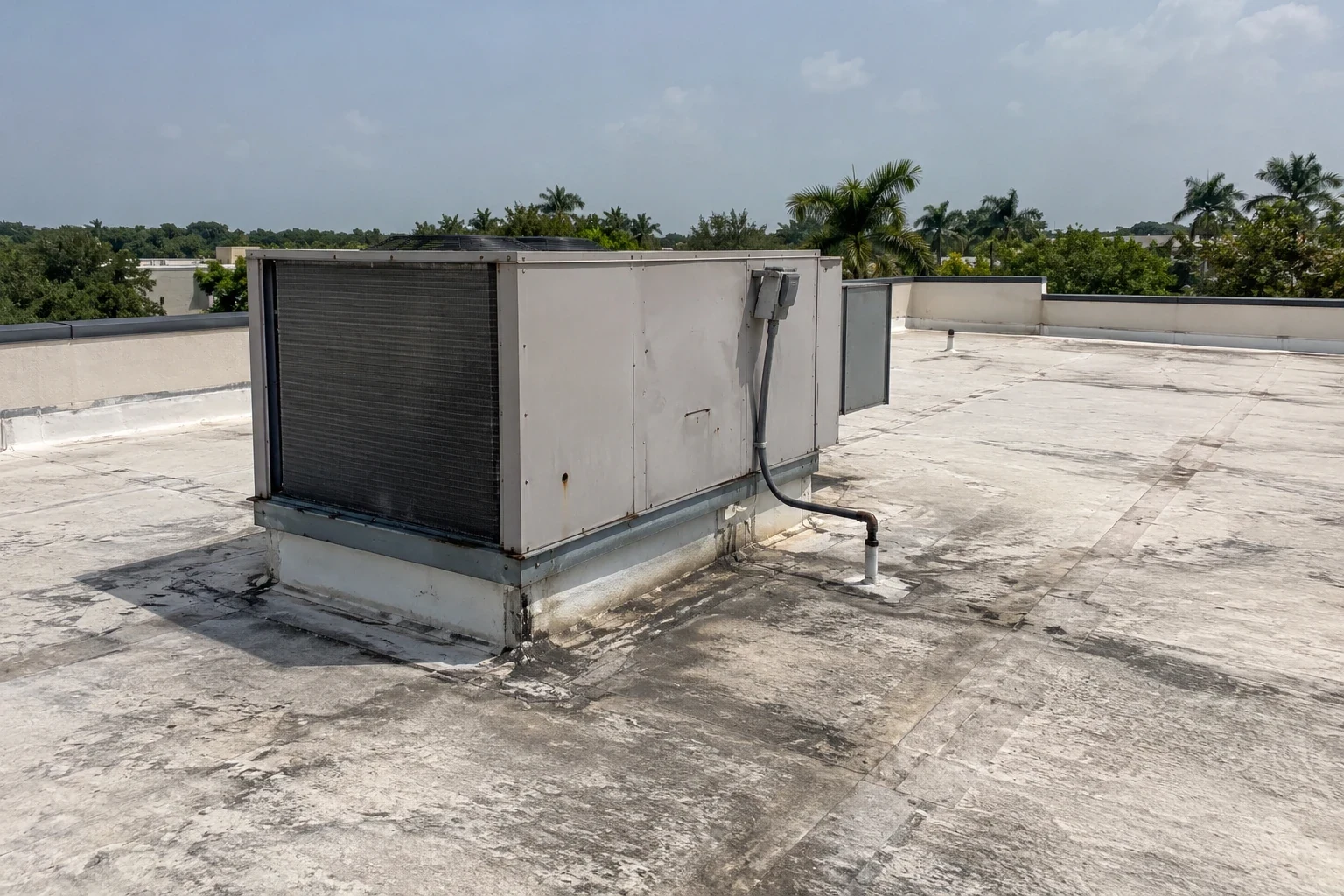
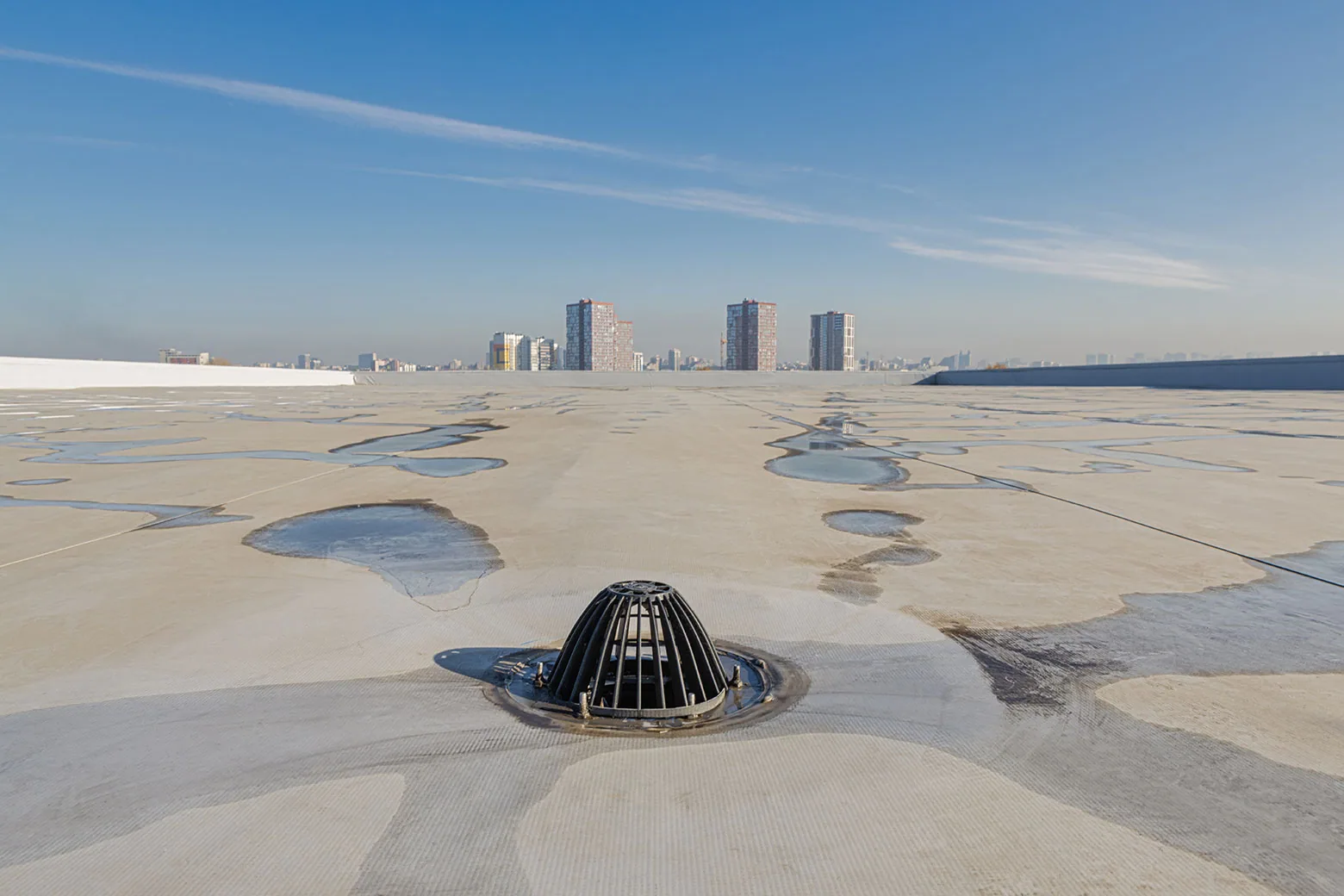
Each repair has a boundary. A seam repair includes enough sound membrane on both sides to form a dependable bond. Flashing repair includes the base, corners, vertical face, and termination where water can pass behind the visible seal. A drain repair may require clearing the bowl, resetting a clamping ring, replacing a damaged flange, or correcting a nearby low area. The right method depends on the roof system and the condition found, not on what materials happen to be in the truck.
We match repair materials to the existing membrane and follow the system requirements for cleaning, primer, adhesive, reinforcement, cure time, and weather limits. A liquid coating or sealant is useful only when the substrate and detail are appropriate for it. For a puncture in a single-ply roof, a compatible membrane patch with properly prepared edges is often more reliable than a generic cover. Where an edge-metal repair or drain and scupper repair is needed, those details are included rather than left as future maintenance.
Heat and Storm Exposure
Temperature changes can work a small defect into a larger opening. July and August daily highs at nearby Houston Intercontinental average near 95 degrees, keeping heat a work-planning issue. Regional normals at Houston Intercontinental put average July and August highs near 95 degrees. That heat can soften some materials, increase movement, and make surface preparation harder during the hottest part of a workday. A repair plan accounts for shade, substrate temperature, and the product's application window.
Severe weather adds separate checks. An F0 tornado crossed Conroe in 1997, with a second track near Cut and Shoot along Highway 105. After a wind or hail report, we inspect perimeter metal, rooftop equipment, membrane seams, punctures, and flashing transitions for signs of impact or movement. The event record does not prove a particular roof was damaged; it helps explain why an owner may schedule a focused inspection. For buildings in Montgomery or Willis, we use the facts for the market carefully and assess the actual property on site.
Repairs Around Operations
Repair work is usually narrower than replacement, but access still determines the plan. We confirm how the crew reaches the roof, where tools can be staged, whether ladders or lifts affect a drive lane, and how workers remain separated from tenants and customers below. Managers tell us about loading hours, patient or classroom schedules, sensitive equipment, and doors that must stay clear. Those details shape the order in which we open and close roof areas.
Before work starts, we identify the repair limits, expected duration, temporary protection, and the interior area to watch during the next rain. If the defect is active, we can set a safe temporary measure while the permanent materials and conditions are prepared. The crew records what was repaired and any adjacent condition that should be monitored. A manager should know whether the work corrected the leak source, protected a vulnerable detail, or only stabilized the area until a larger project is ready.
When a Repair Stops Making Sense
Price depends on the number and type of details, roof access, the amount of damaged material, preparation needed, and whether work must happen outside normal operating hours. A straightforward puncture differs from a drain rebuild with wet insulation around it. We describe labor, materials, access equipment, temporary protection, and any exploratory opening separately so the estimate shows what the owner is buying.
One repair does not decide the future of the whole roof. Repeated leaks at different locations, widespread seam failure, or moisture across several sections can point toward a larger scope. We flag that pattern with photographs and explain whether continued maintenance remains reasonable. A replacement conversation is warranted when repair boundaries become difficult to isolate; our replacement assessment compares that path without treating every defect as a reason to tear off.
A Useful Repair Record
After the work, the manager receives a record of the roof area, defect, repair method, material used, and any limit that remains. We include photographs when they help identify a seam, curb, drain, or edge detail from the roof plan. The closeout should be clear enough for a future inspection to distinguish the new repair from older patches and show what changed.
We also point out conditions that could affect the repair later, such as debris returning to a drain, movement in connected metal, or adjacent wet insulation. Those are not generic warnings. They are observations tied to the roof section and the action that may be needed. If water returns, the record gives the next inspection a starting point instead of sending the manager back to guess at the source.
Commercial Roofing Questions
Why does a repair leak again after the surface was patched?
The patch may have missed the entry point, lacked a clean bonding surface, or covered a detail that keeps moving. We inspect the surrounding seam or flashing, trace the water path, and extend the repair to sound material. If moisture has spread underneath, the repair boundary may need to change.
Can you repair just one section while we plan a larger project?
A contained repair can protect a serviceable section while capital planning continues. We document the location and expected limits, then explain whether the repair is intended as a durable correction or temporary protection. The roof condition around it determines which description is accurate.
What roof details do you inspect after strong wind?
We check perimeter metal, seams, equipment curbs, flashing, and any loose or punctured membrane. Wind can shift a termination or lift a corner without creating an obvious interior stain. We record the actual damage found and separate it from unrelated wear.
How do you work around deliveries or customer access?
Access planning comes before staging. We coordinate roof entry, lift placement, work hours, and protected paths below with the site manager. If a drive lane or loading area must remain clear, the work sequence is adjusted to keep those operations moving.
What information should we receive after the repair?
The closeout should identify the location, defect, repair method, materials, and any remaining condition to monitor. We include roof references and photos where they make the location easier to find during the next inspection.
Related Roofing Work