Commercial Roofing in Grand Central Park, Conroe, TX
Commercial roof service for Grand Central Park in Conroe. We inspect drainage, membrane details, and work access around retail and dining activity.
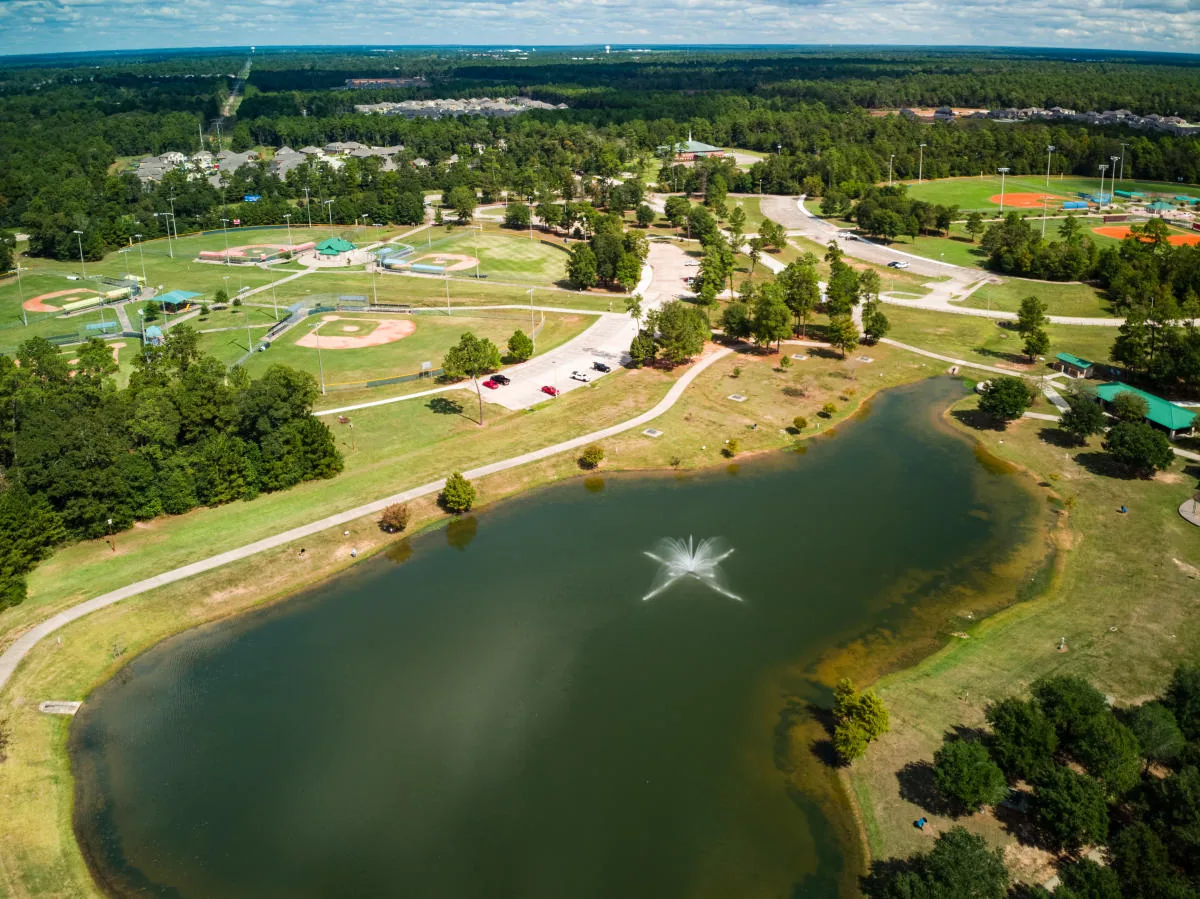
Retail and dining hours can put people below the roof well before the service crew arrives. Shopping and dining extend into Grand Central Park, part of Conroe's master-planned community, outside the downtown core; trails and nature access sit alongside those amenities. We plan commercial roofing around the property's operating hours, deliveries, and customer routes, then inspect the membrane, flashing, edges, and drain path. A quiet ceiling today does not prove that a seam or curb is dry. Conroe's sustained summer heat works on exposed details, while heavy rain tests every low point. The first step is a building-specific inspection, not an assumption about the roof based on the district's amenity mix.
Plan Around Open Hours
A commercial roof repair can affect a dining room, retail entrance, receiving area, or service corridor below. We ask which doors need to stay open, when deliveries arrive, whether the work area sits above customers, and which interior spaces require protection. Those answers guide lift placement and the size of each roof section. If the work includes removal, debris movement and noise need a schedule that fits the property's operating day.
Grand Central Park's shopping and dining amenities sit alongside trails and nature access. That mix makes pedestrian movement worth checking on site, but it does not establish a particular tenant layout or roof. We verify entrances, receiving doors, and the safe route below the planned work area before materials arrive. A Conroe Marketplace roofing plan involves another retail setting, while Downtown Conroe roof work may have different access constraints. At each property, the contact confirms the route and operating limits.
Follow Water from the Interior
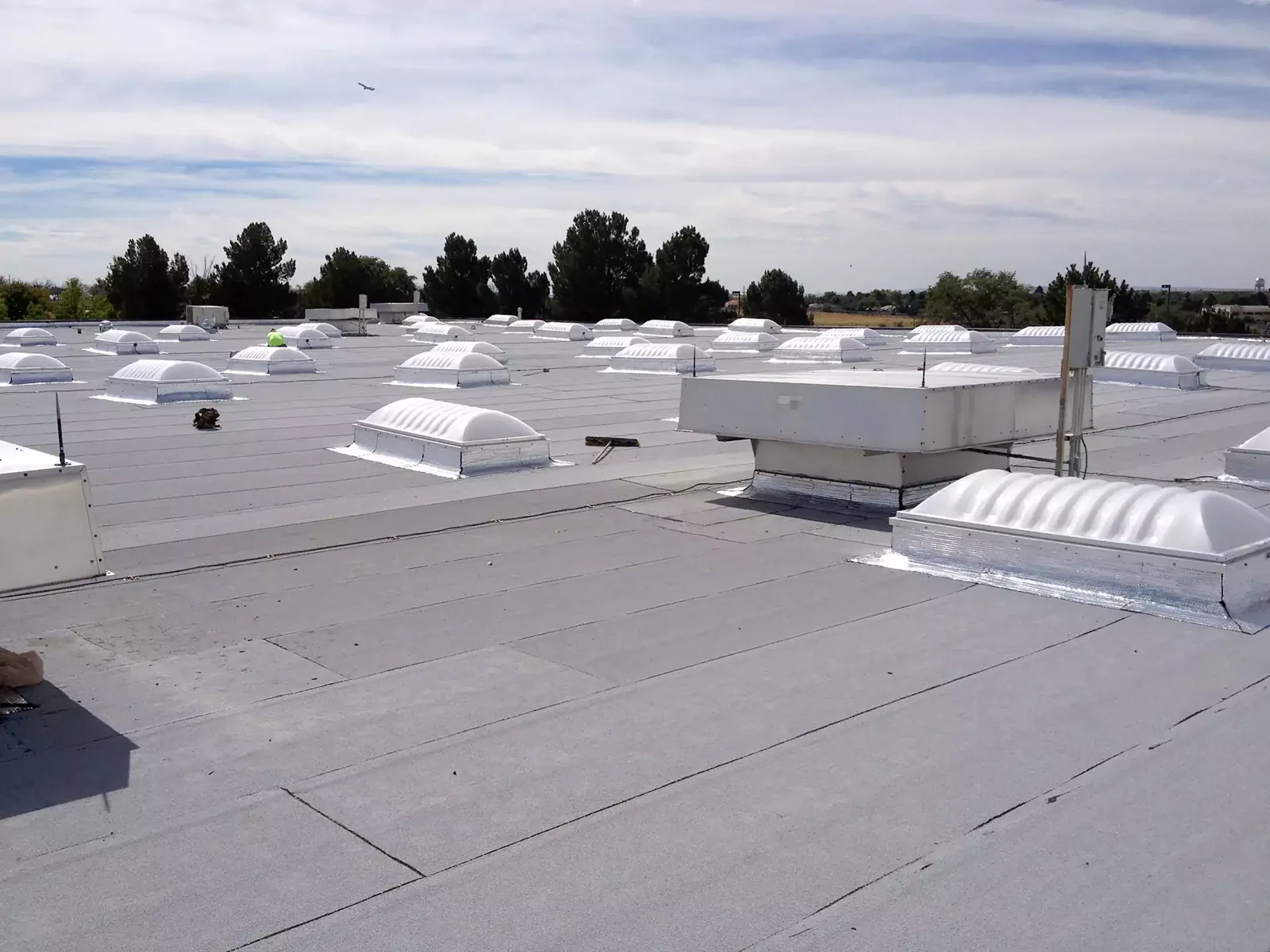
A ceiling spot may show where water finished its path, not where it entered. We compare the reported room with nearby roof seams, curb bases, pipe penetrations, parapets, drains, and scuppers. We look for loose flashing, open laps, surface cuts, and insulation that feels soft or appears displaced. If the membrane is intact above the stain, we continue checking the water path before selecting a repair. A commercial roof inspection maps what was reached and what remains concealed.
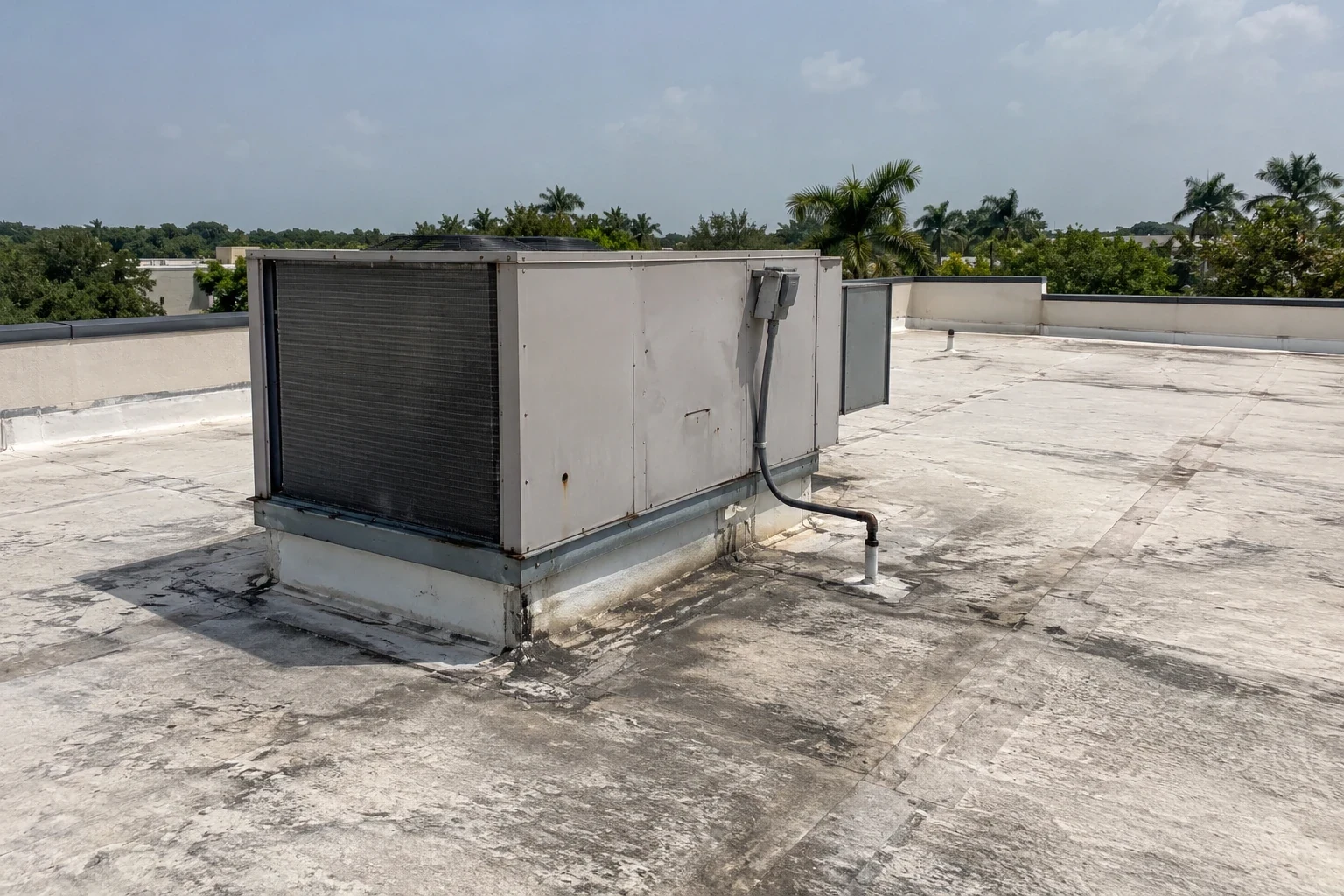
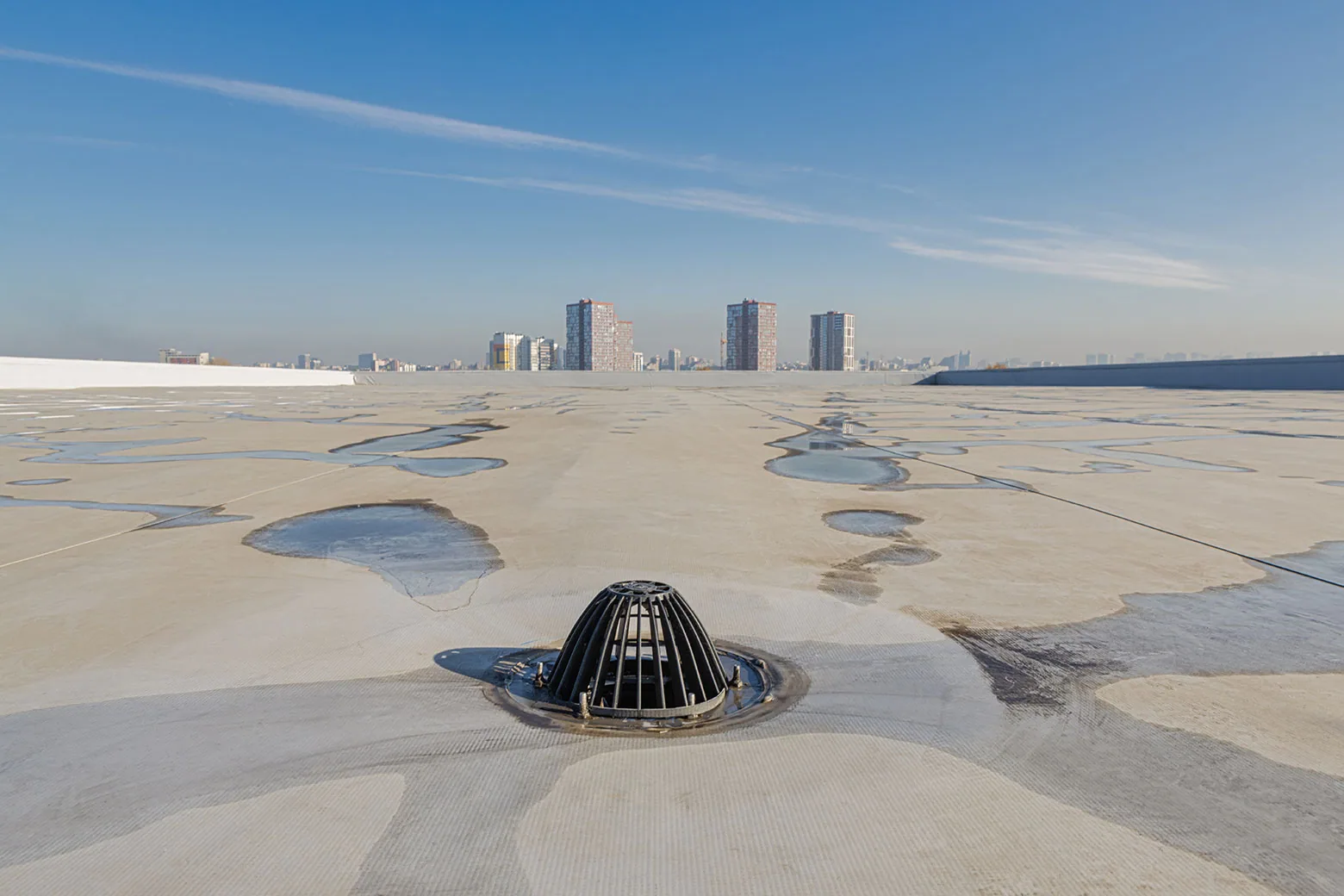
Retail and dining spaces may have equipment that changes roof access, but the building's own mechanical layout needs a walk. We check exhaust supports, conduit, service routes, and any newer penetration around the affected area. If the outlet is blocked, clearing it may restore flow; if the membrane connection is open, drainage work alone will not close the leak. A drain and scupper review separates those issues and keeps the proposal tied to observed conditions.
The Roof in Conroe's Weather
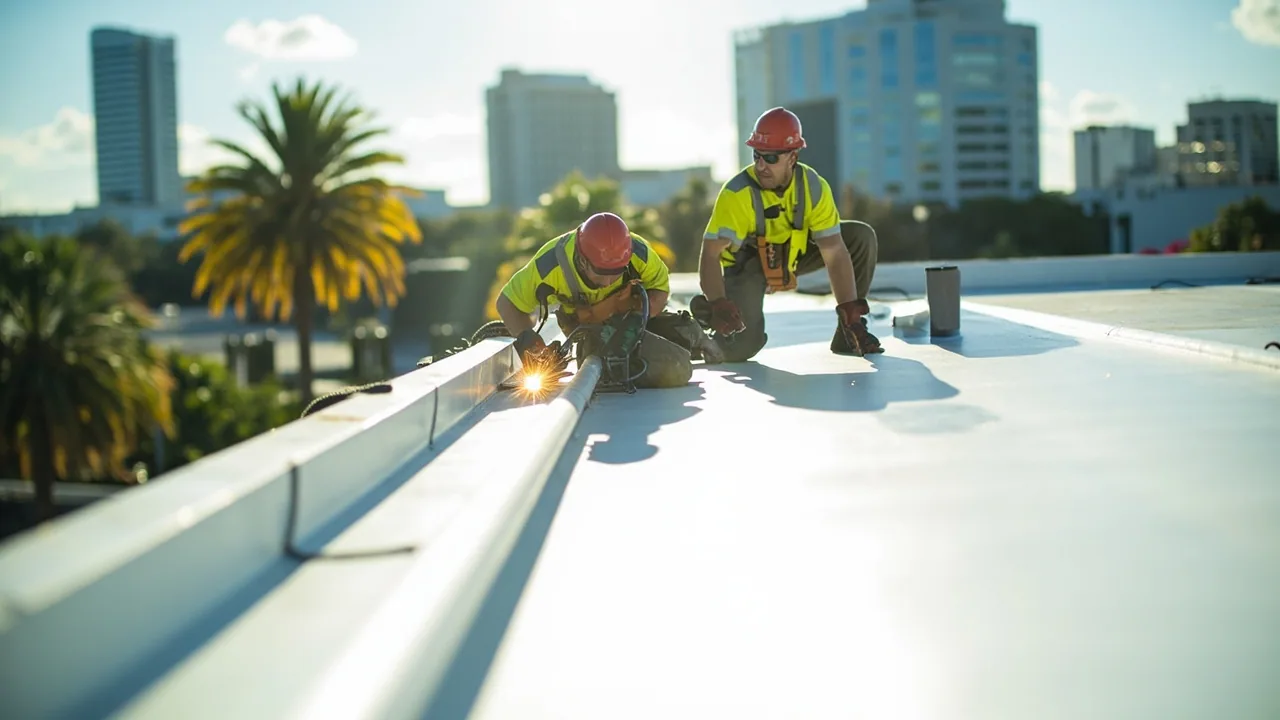
Nearby regional normals put July and August average highs near 95 degrees. That heat expands exposed roofing and metal in the afternoon; cooler periods pull them back. We inspect seam edges, curb flashing, fasteners, and perimeter metal for movement, brittle repairs, or openings. The condition of those details matters more than the label on the membrane. If a compatible weld or flashing repair can reach sound material, the work may remain local. Repeated separation calls for a wider review.
Conroe's observing station at Lone Star Executive Airport sits north of the city. Regional summer heat and intense rain shape the available work window, but a storm report does not prove a property was damaged. We document actual displacement, water entry, wet insulation, and open seams. Before leaving an active repair, the exposed area must be secured against the next rain. A PVC roof inspection follows its weld and flashing details; another system requires its own compatible repair method.
Choose Repair or Renewal
A single puncture, loose curb flashing, or isolated seam opening may fit a repair when nearby membrane, attachment, and insulation remain sound. Multiple leak calls, wet board, recurring failures, or loose edges can make a section-level project more practical. We map confirmed findings and mark areas that need testing. The written scope shows the repair limit, materials, tie-ins, and conditions that could change the work after a roof opening.
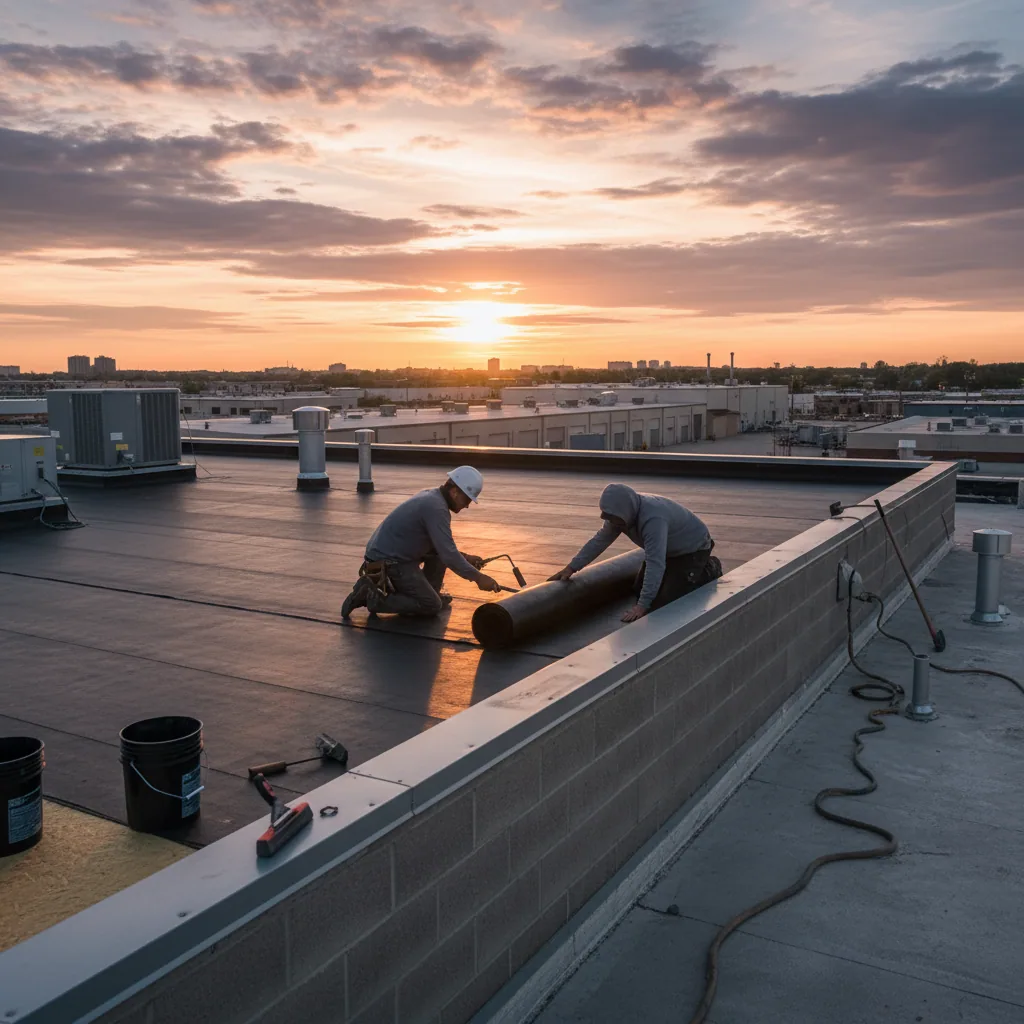
A recover requires checks for existing layers, moisture, attachment, deck capacity, drain height, and code. Timing also depends on material lead time, public access controls, and whether staging can avoid blocking deliveries. A new surface over a wet or unstable assembly can hide the problem. Tear-off exposes the deck, but it adds debris handling and more interior coordination. A replacement plan should include the membrane, edges, drains, penetrations, and daily closeout. For an active leak that cannot wait for a capital project, commercial roof repair can address the confirmed defect while the larger scope is prepared.
Control the Work Area
Before work begins, we confirm where materials can be staged, how a lift reaches the roof, and which customer or staff route remains available. If removal creates debris, the path below needs protection and a clear handoff. We divide the roof into areas that can be prepared, repaired, and secured before a weather change. A site contact receives a notice if a concealed condition or schedule shift changes the plan.
That sequence can preserve regular operations while keeping an exposed roof area manageable. For a larger job, we agree on noise periods, temporary access limits, daily closeout, and the point where work pauses for rain. A roof over an active retail or dining property needs clear communication about entrances and protection below, not a generic promise that business will continue unchanged. We record the work actually completed and any remaining area that needs testing.
Keep Inspection and Repair Together
Closeout should show the roof area, membrane or covering observed, repair material, photos, and any test result. A useful photo shows the flashing or seam and its position near an identifiable roof feature. We note whether the repair was permanent or temporary and state what was not opened. This helps the property manager distinguish a confirmed leak correction from a recommendation to investigate another section.
Grand Central Park is part of Conroe's shopping and dining mix alongside downtown and Conroe Marketplace. Those areas do not share a roof history, so maintenance records stay with the individual property. A roof condition report can keep the map, repair limit, and next review point together. After a hard rain or equipment visit, the next inspection can return to the same drain, curb, or field seam and check for a changed condition.
Commercial Roofing Questions
How do you schedule repairs around Grand Central Park retail hours?
We coordinate roof access, loading, lift placement, noise periods, and customer routes with the site contact. The repair is divided into areas that can be closed safely within the agreed window.
Does the district's shopping and dining mix identify a roof type?
Not by itself. The district's retail and dining uses describe local activity, while each property's membrane, deck, and leak path require an on-site check before materials are selected.
What do you check when a leak appears over a customer area?
We trace from the reported interior location to roof transitions, penetrations, drains, and nearby seams. Interior protection and access below are included in the work plan.
Can a repair be completed without closing the property?
The work window depends on roof access, noise, weather, and where the affected section sits. We coordinate staging and protection with the manager before opening the membrane.
What changes a repair into a replacement project?
Repeated defects, wet insulation, moving seams, or widespread flashing failure can expand the scope. We map confirmed conditions and explain what remains concealed before recommending renewal.
Related Roofing Work