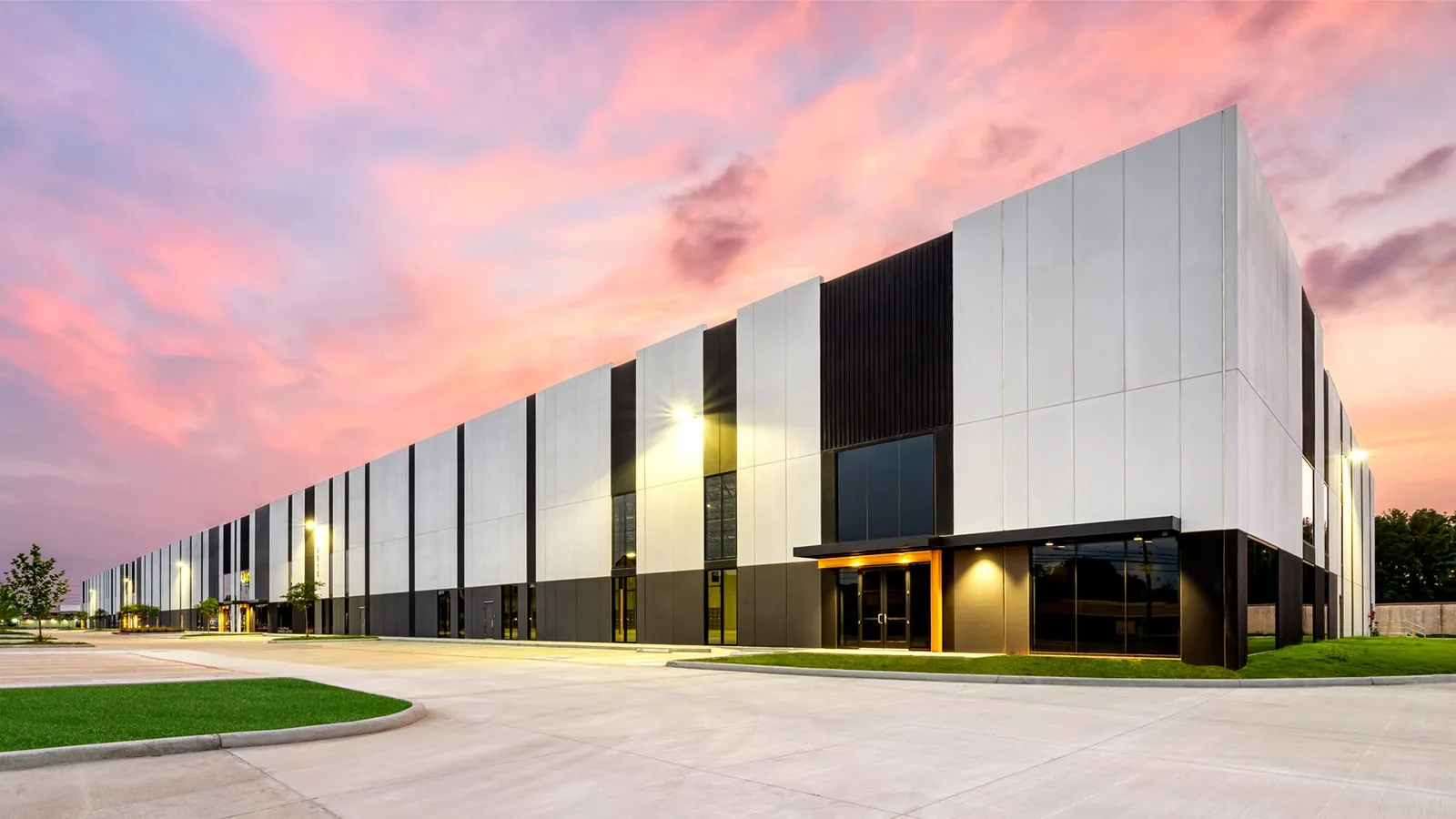
Data Center Roofing in Conroe, TX
Plan data center roof inspections in Conroe, TX. We review cooling equipment, penetrations, drainage, moisture, access, and operating continuity.
A roof opening over cooling equipment can create an operations issue before a ceiling leak appears. Data-center roofing therefore begins with the equipment map, access rules, and the roof assembly in each zone. Conroe's Deison Technology Park includes office, research, and life-sciences manufacturing context; it does not establish that a particular building houses data-center equipment. We inspect the actual facility and coordinate findings with the people responsible for cooling, power, and building access.
Coordinate roof access with cooling systems
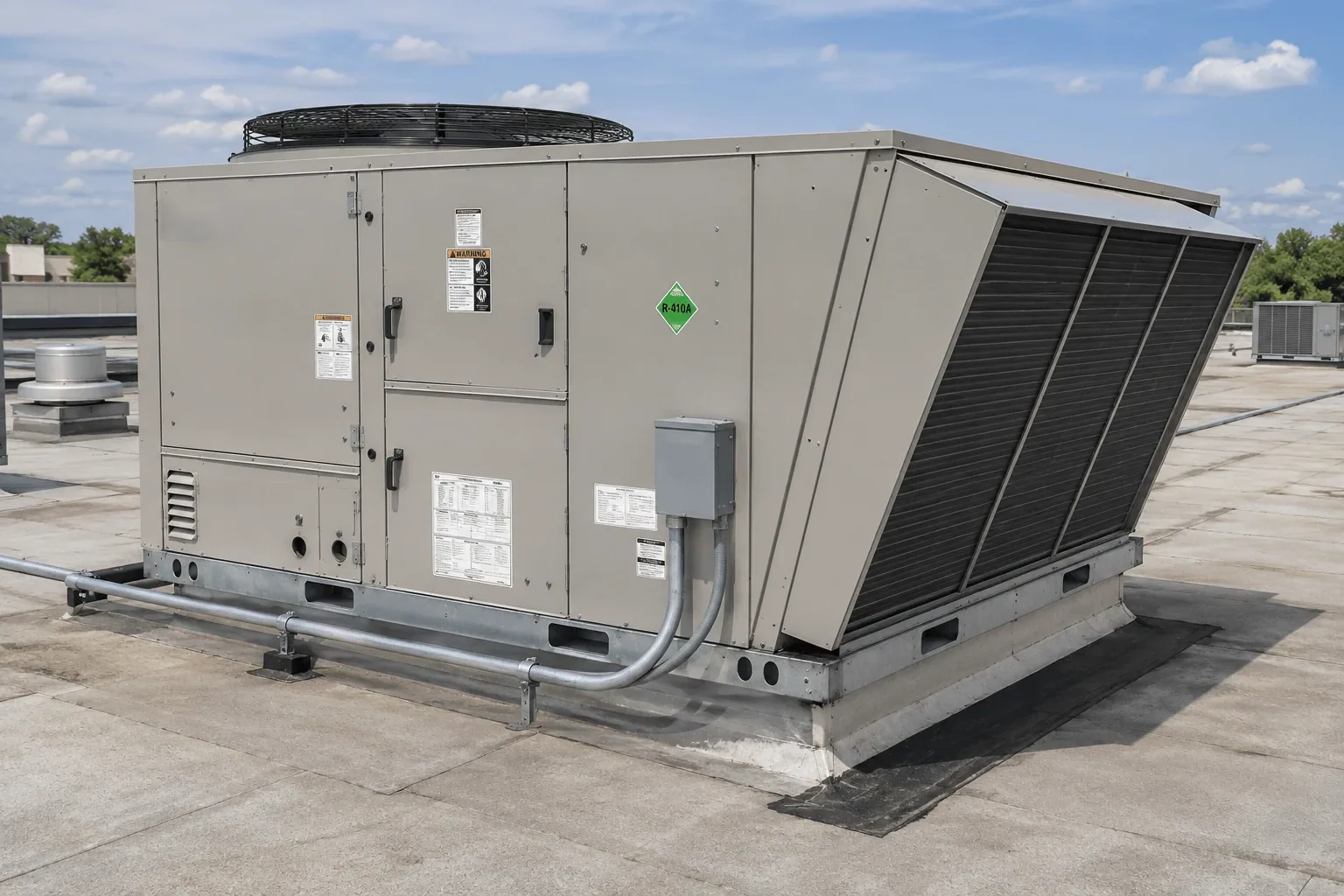
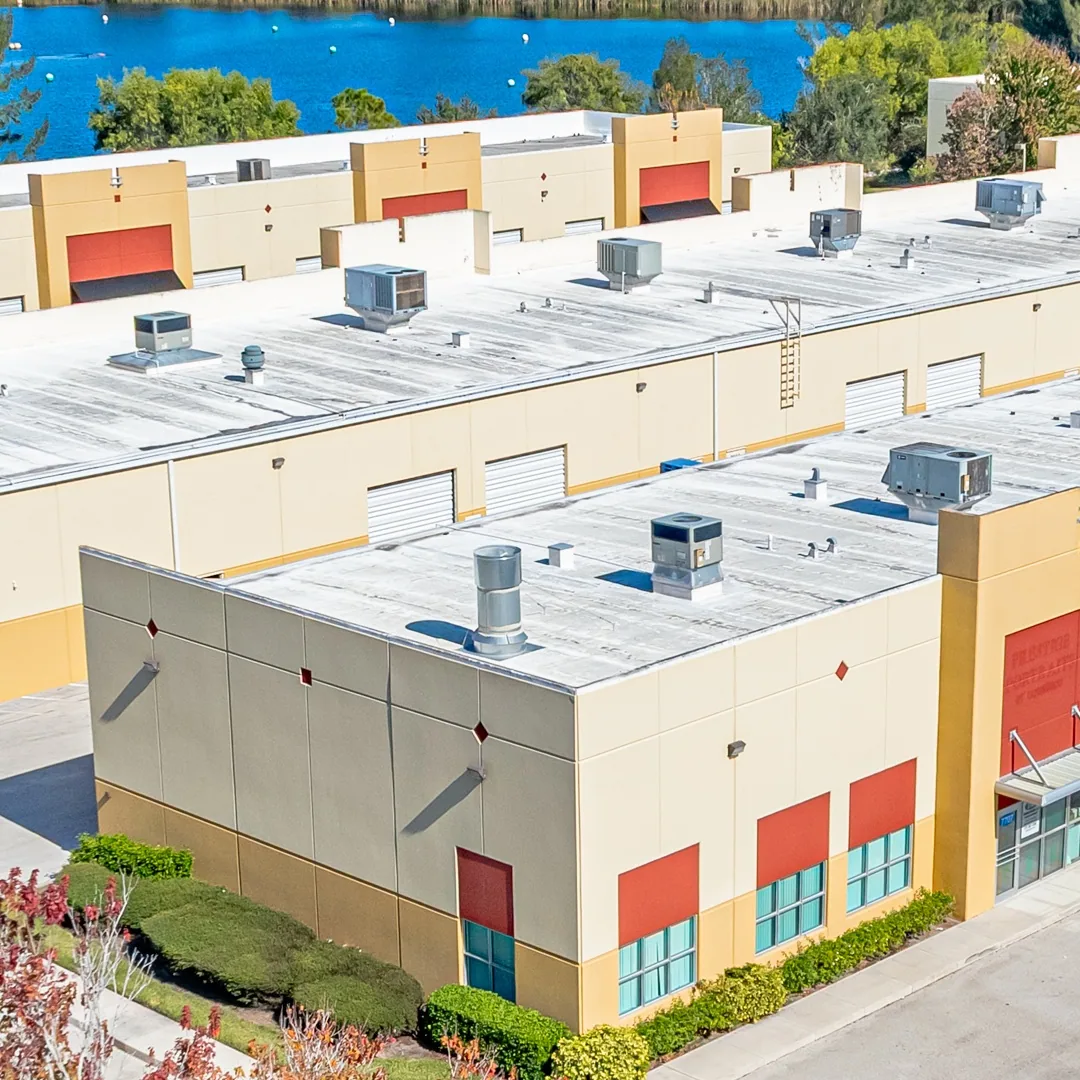
Rooftop condensers, exhaust fans, cable pathways, and equipment supports shape both the repair and the safe route to the work area. Before inspection, confirm which units must stay online, where service clearances need to remain open, and who can approve a vendor escort. A flashing repair should preserve equipment access while restoring the roof connection. If the system needs a planned shutdown or load transfer, that decision belongs with the facility operator and mechanical team before roofing begins.
Deison Technology Park is planned for corporate campus, research, and office activity, and includes VGXI's life-sciences manufacturing facility. Those are local building and employment facts, not a description of a nearby data center or its equipment. A property near Deison Technology Park still needs its own asset map and access protocol. Use the building's current equipment schedule to define inspection zones, then document any area hidden by screens, piping, or service platforms.
Trace water without interrupting the wrong zone
Water can travel beneath a roof membrane before appearing near a rack, electrical room, or ceiling tile. We compare the reported interior location with roof slope, seams, penetrations, drains, prior patches, and mechanical curb details. Record when the symptom appeared and whether it followed rain, maintenance, or an equipment event. The timing helps narrow the search; it does not replace inspection of the roof assembly.
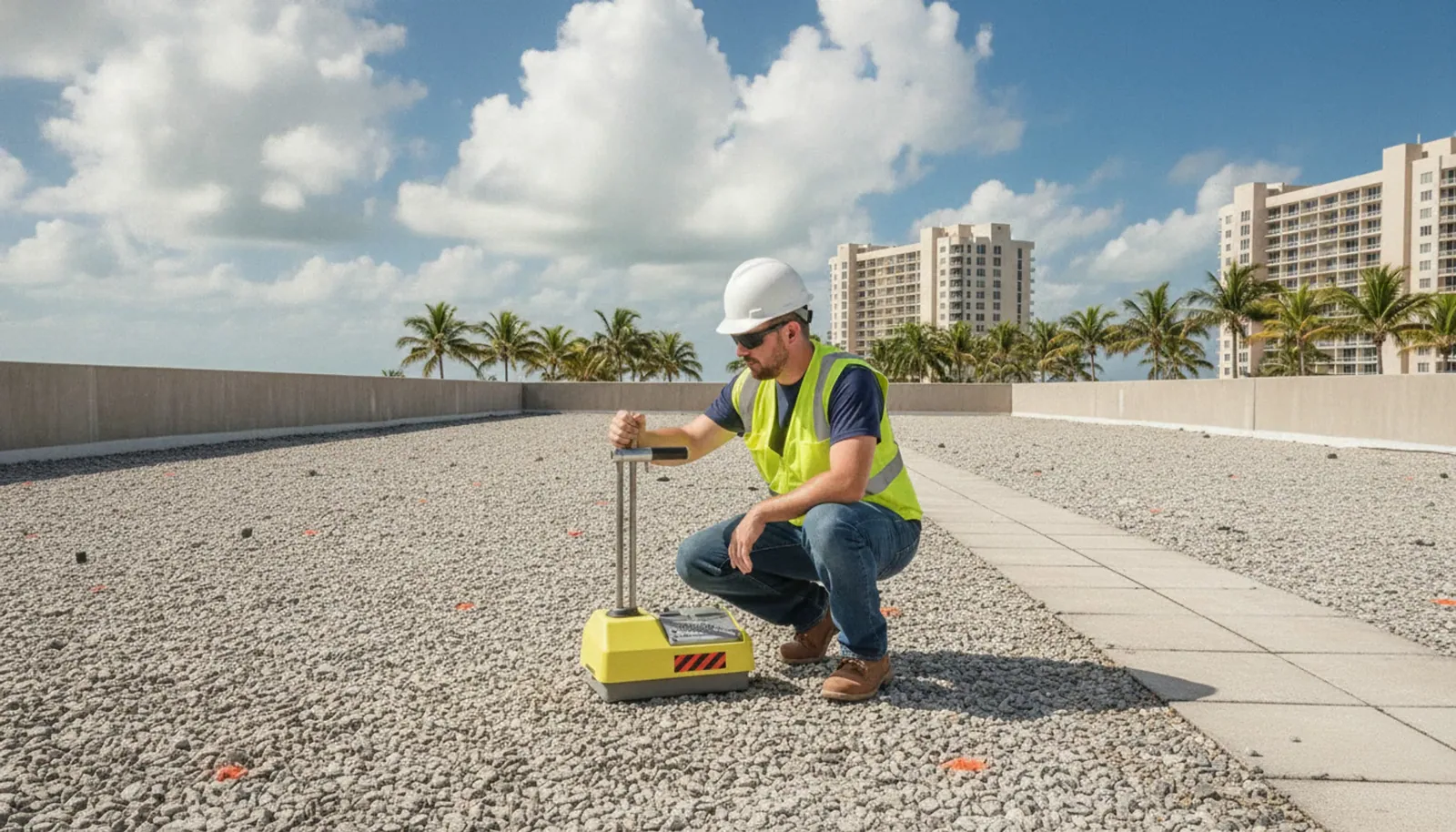
Where a leak is active, the facility contact identifies any room or equipment area that needs temporary protection. We set a safe work boundary, preserve access to operating equipment, and note the temporary measure separately from permanent repair. An inspection of the roof can map visible conditions and indicate whether testing is needed. Infrared moisture mapping may help locate suspect areas, but patterns require field confirmation before they set a removal boundary. A single test point cannot certify every roof zone.
Control penetrations and support details
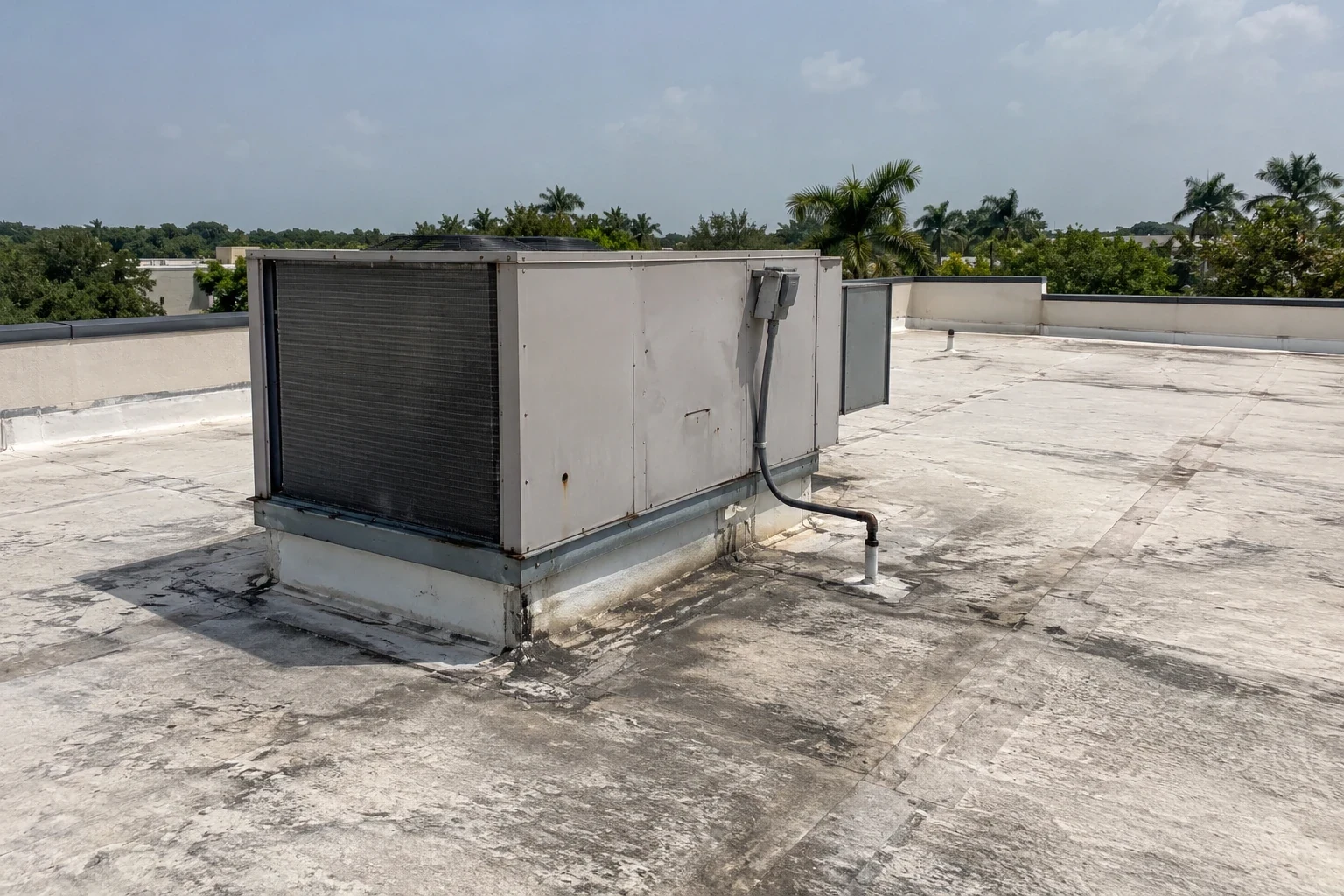
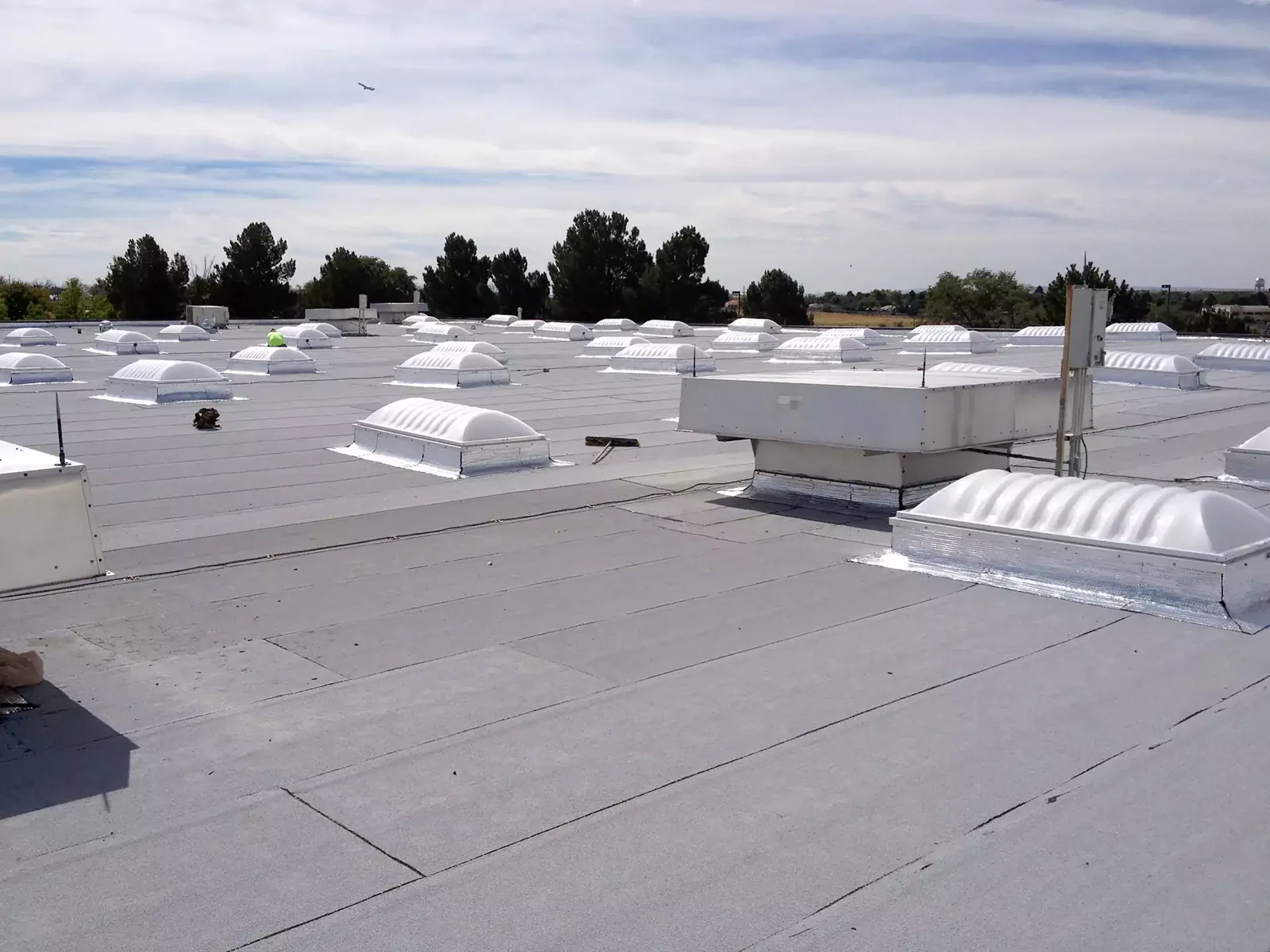
Conduit, refrigerant lines, ventilation, cable trays, and equipment supports can create repeated openings through the roof. Each detail needs flashing compatible with the installed membrane or panel system and enough room for service. Check abandoned curbs and supports too; a disconnected unit can leave a curb that still needs a permanent closure. If a service contractor installs new equipment, coordinate the final position and penetration before the roofer closes the surface.
Inspect the fasteners and membrane around the curb, not only the sealant bead at its edge. A cracked corner, loose termination, or unsupported line may move during vibration or service access. A curb and support review can coordinate the roof connection with equipment clearance. Data centers also benefit from a mapped route showing which parts of the roof can be crossed for maintenance. Use walk pads or designated paths where appropriate and keep drainage channels accessible around equipment.
Keep water moving around dense equipment
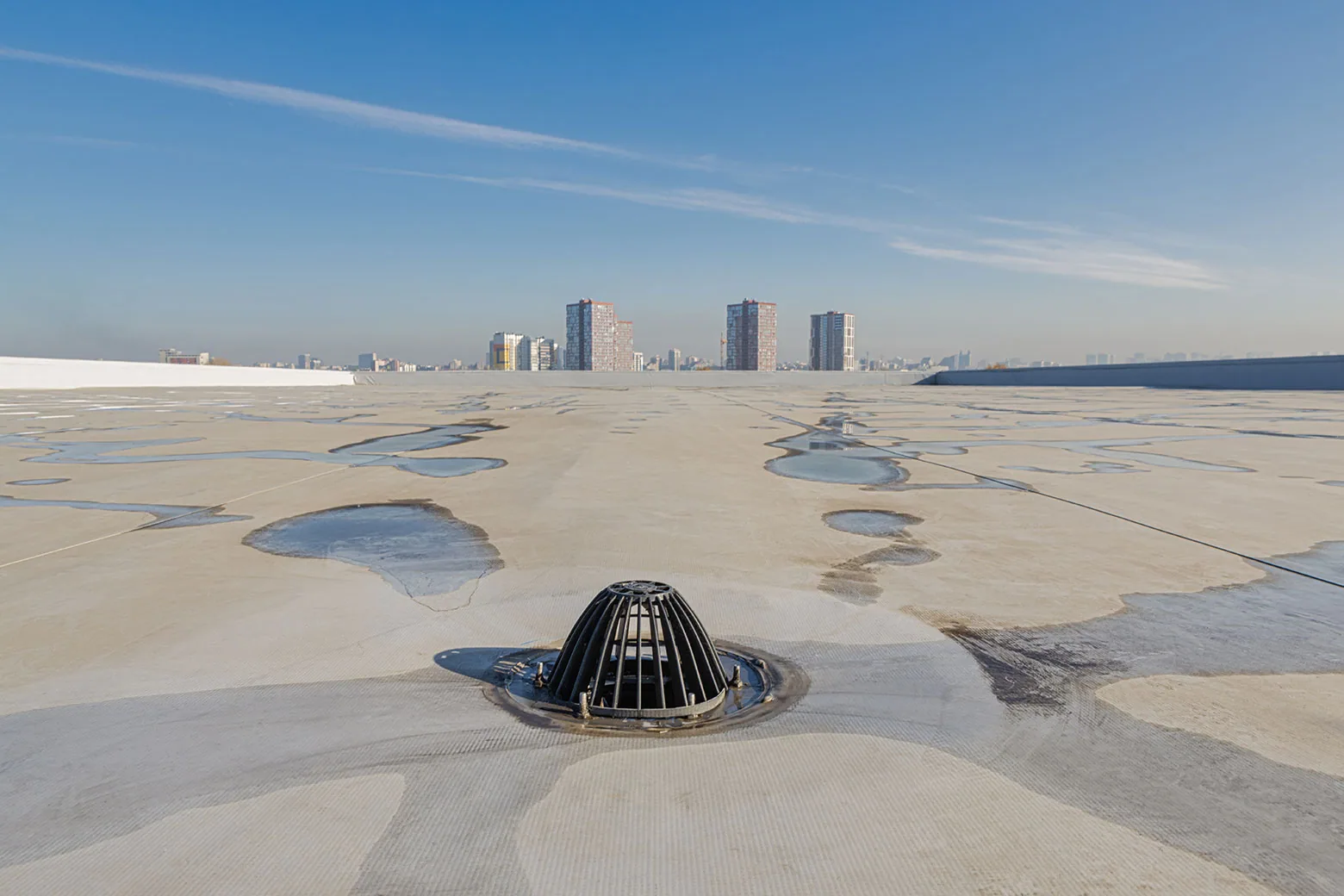
Equipment screens can hide drains and overflow paths. We check the outlet, membrane connection, nearby low points, and any debris that could hold water against seams or curbs. A high-density roof may require the site team to identify which pathways remain accessible between units. A drain and scupper inspection can address outlet conditions, while the membrane detail is scoped separately if a leak path is present.
Conroe's local climate station is at Lone Star Executive Airport. Summer heat and humid air make roof access and material application sensitive to actual surface conditions. Houston Intercontinental's July and August normal highs are near 95 degrees, but that regional measure does not substitute for a site reading. Before bonding or coating material, check temperature, moisture, and the product's installation limits. If a weather delay occurs, close the temporary work zone so water cannot reach equipment or concealed layers.
Use local context without assuming site conditions
Conroe Park North is a 1,655-acre employment area with manufacturing, freight, food processing, and warehousing among its uses. That industrial setting can involve different roof access and staging needs from Deison Technology Park's research and office planning. Neither district tells us what assembly is on the building under inspection. The facility contact supplies the actual operating plan, equipment list, and roof records.
During Hurricane Harvey, Lake Conroe reached record pool elevations and a record release contributed to downstream flooding in Montgomery County. This is regional water context, not proof that a data-center property flooded. Document water entry at the structure and inspect roof, walls, penetrations, and drainage separately from site flooding. If severe weather is reported, direct inspection establishes whether the roof has displaced seams, damaged flashing, or blocked outlets. Keep conclusions tied to the area reached and any test performed.
Set a repair window around facility operations
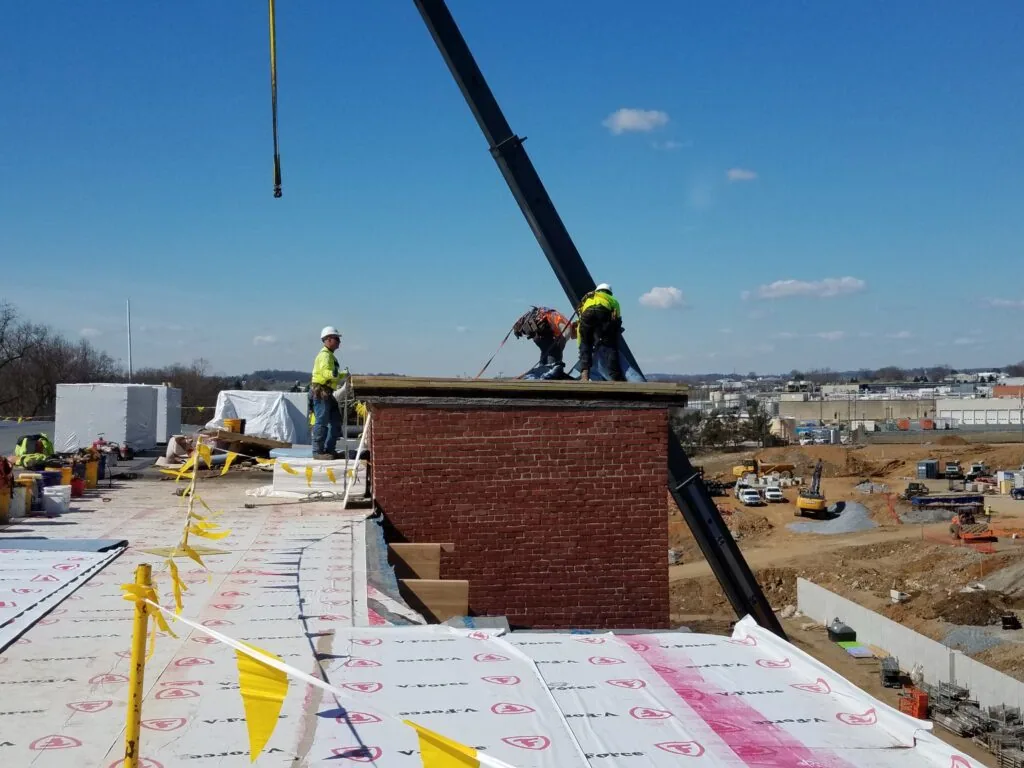
Roofing work may involve a lift, material staging, a controlled opening, or temporary protection near active cooling equipment. The work plan names who authorizes access, who can approve added removal, and how the area is handed back at the end of a shift. For an occupied facility, phased work can reduce the size of each opening, but it still needs a secure dry-in and an operations contact. Keep shutdowns, alarms, service clearances, and restricted routes under the facility's control.
Cost and timing depend on roof height, equipment density, penetration count, required escorts, testing, interior protection, and the allowable work window. A temporary roof response can address active exposure before a permanent decision is ready. The replacement scope should identify removal boundaries, insulation, curbs, drains, new flashing, and assumptions about hidden layers. A manufacturing roof assessment may address similar equipment and exhaust interfaces; an office roof scope may prioritize tenant access. Each recommendation follows the building inspected.
Keep roof evidence tied to the equipment map
Closeout should identify each work zone, system and material repaired, photographs, test results, and any section not reached. Tie roof photographs to equipment labels or plan references that the facility team can find later. Record temporary restrictions and confirm when walk paths, drains, and service clearances reopen. If testing found moisture only in a sample location, state that boundary rather than treating the result as a whole-roof conclusion.
For future maintenance, note equipment additions, vendor visits, curb modifications, and roof repairs by date. A later leak investigation can compare the same penetration or drain and determine whether the condition changed. Keep roof work records alongside but separate from mechanical commissioning and IT service records, so each file shows which team handled each interface. This makes the roof scope useful to the next facilities director without suggesting that a roof inspection tests the data equipment itself.
Commercial Roofing Questions
Can roof repairs take place while data equipment stays online?
The facility team defines service continuity, access, and any shutdown limits. We plan the roofing zone and temporary protection around those requirements.
How do you inspect a roof crowded with cooling equipment?
We use the equipment map, identify safe paths, inspect accessible curbs and seams, and record any areas blocked by screens or service clearances.
Does infrared scanning prove that a data-center roof is wet?
No. A scan can identify patterns for follow-up, but field checks or selective openings confirm whether insulation is wet.
What happens if a leak is above a critical room?
For a leak near a critical room, the facility contact identifies the affected area and protection rules. We trace the roof path and document temporary measures separately from permanent repair.
What should the roof closeout show?
It should connect repairs and tests to roof zones and equipment references, list materials, and identify any inaccessible or untested area.
Related Roofing Work