Commercial Roofing for Real Estate Investors and REITs in Conroe, TX
Evaluate Conroe commercial roofs for acquisition, capital planning, repair priority, and portfolio reporting with property-specific inspection evidence.
A roof can change the economics of an acquisition even when no active leak appears during a walkthrough. Investors need to know which sections were inspected, what was visible, what remains concealed, and whether a current estimate includes the same work as the next bid. Conroe offers a varied commercial base: Conroe Park North spans 1,655 acres with industrial employers, while Downtown Conroe planning combines commercial redevelopment with housing and civic uses. Those examples represent different asset contexts, not a claim about a particular listing. We assess each building and report the roof condition in a format that supports the investor's underwriting, repair, or capital decision.
Separate visual findings from due-diligence assumptions
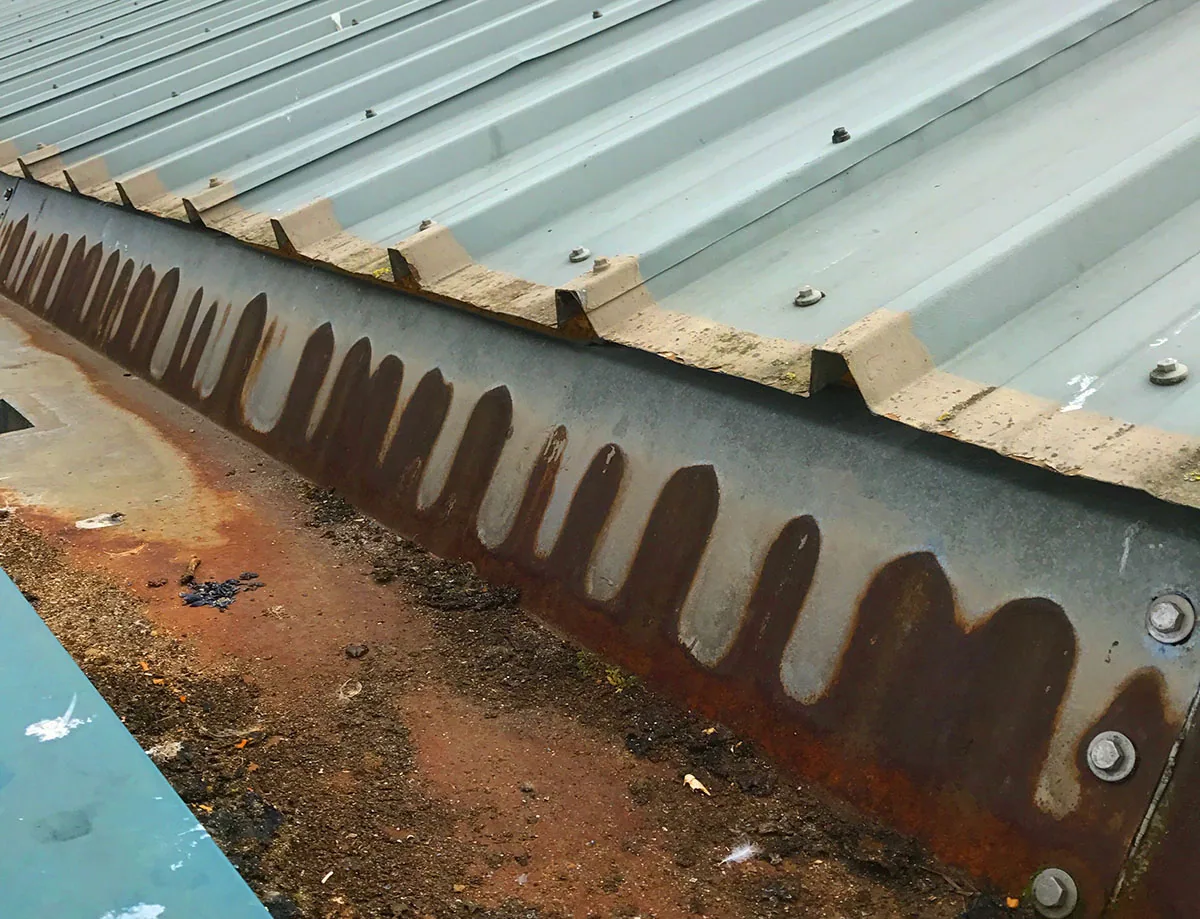
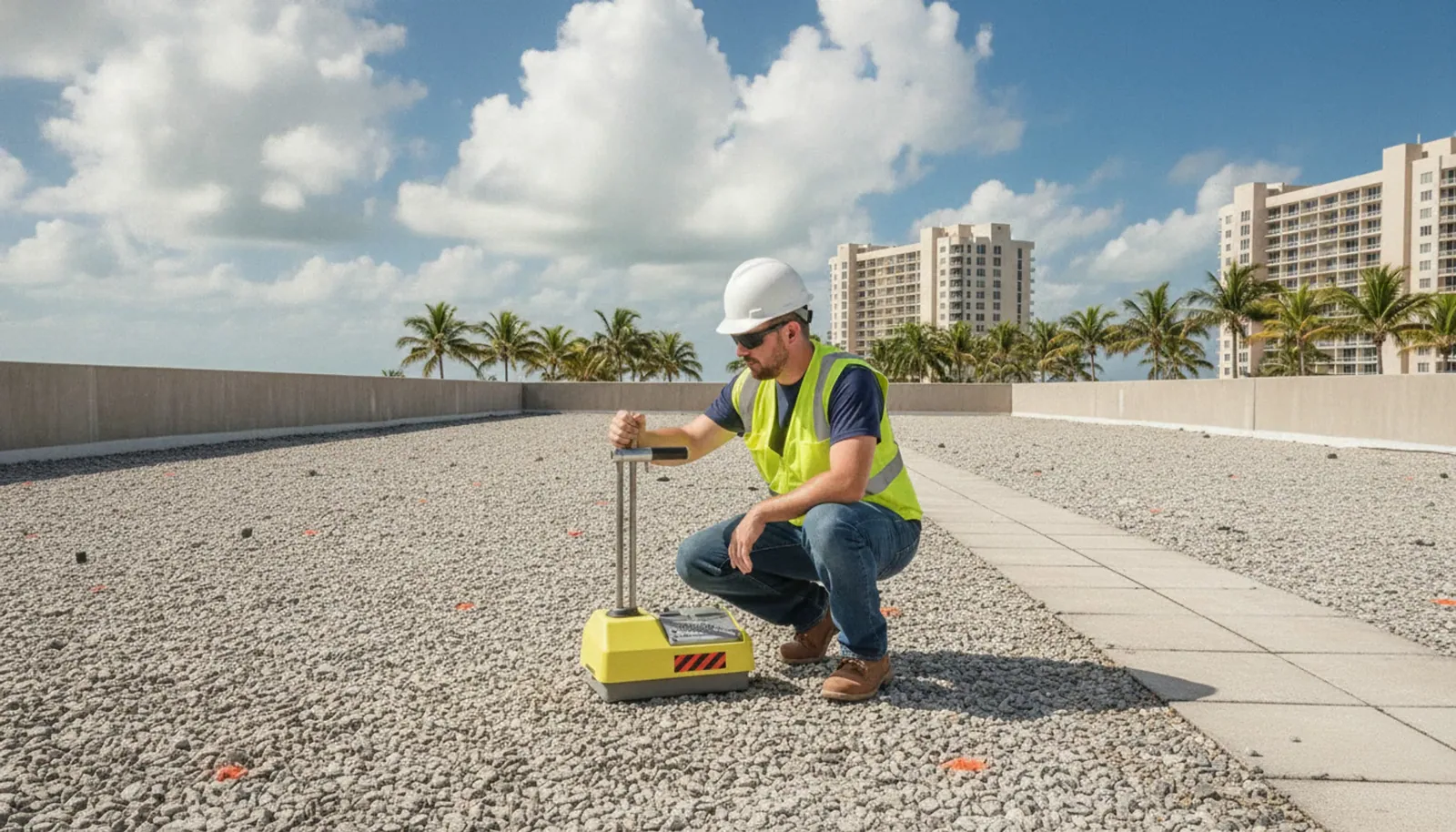
A fast property review may expose visible wear without determining moisture below the membrane or the condition of a concealed deck. A due-diligence scope should list the roof areas accessed, weather at the time, visible repairs, penetrations, edges, drains, and any area that could not be entered. It should also identify whether intrusive testing was included and what the results can establish. A roof report is one part of the asset review, not a substitute for structural, environmental, or legal diligence.
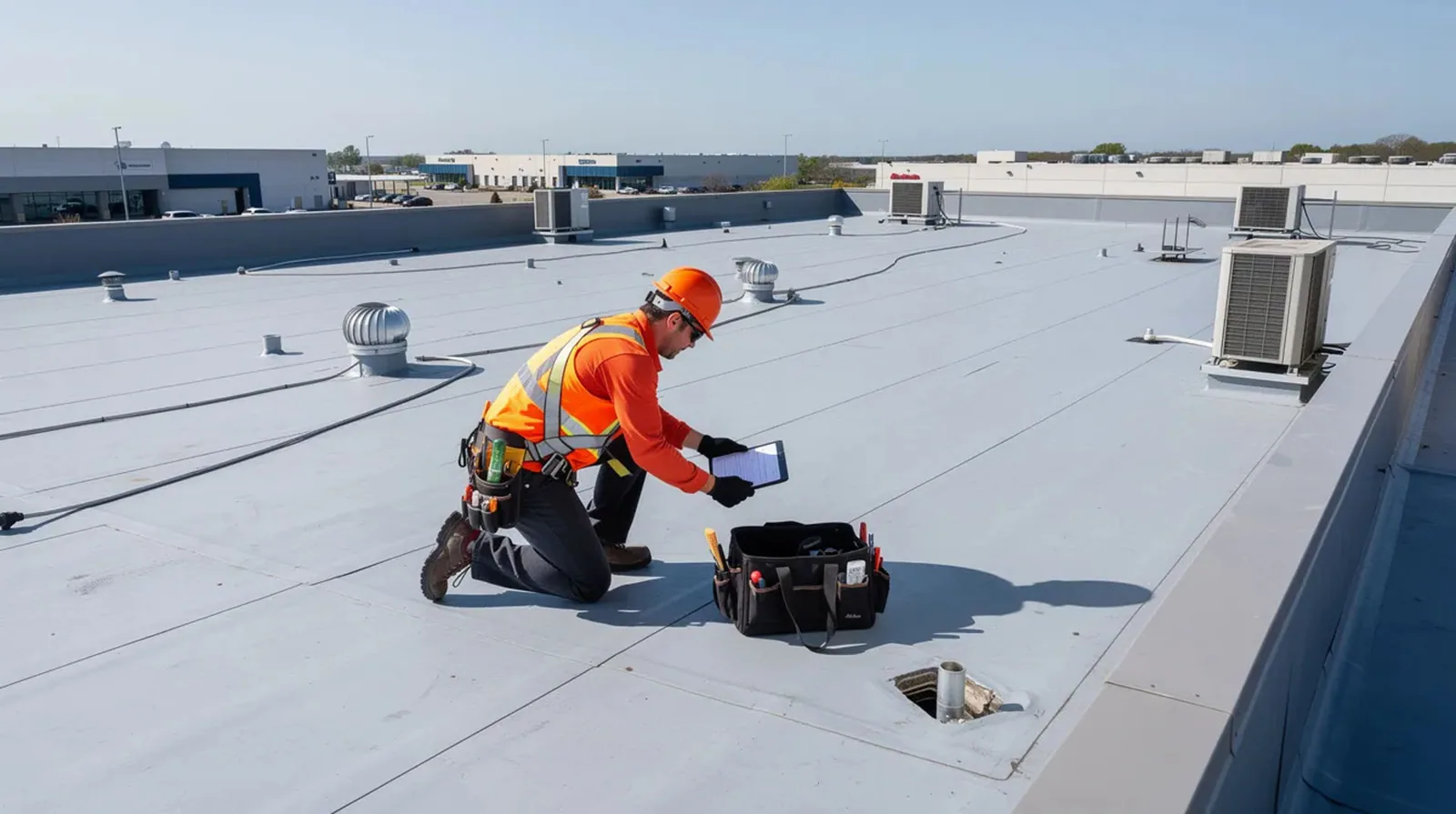
For an acquisition, ask the inspector to tie photographs and observations to a roof plan and distinguish immediate water control from longer-term renewal. A commercial roof inspection can provide the condition baseline, while a due-diligence roof survey can frame limitations and follow-up questions for the transaction team. Ownership can then request pricing against the same roof sections instead of comparing proposals with different assumptions.
Compare assets without flattening their differences
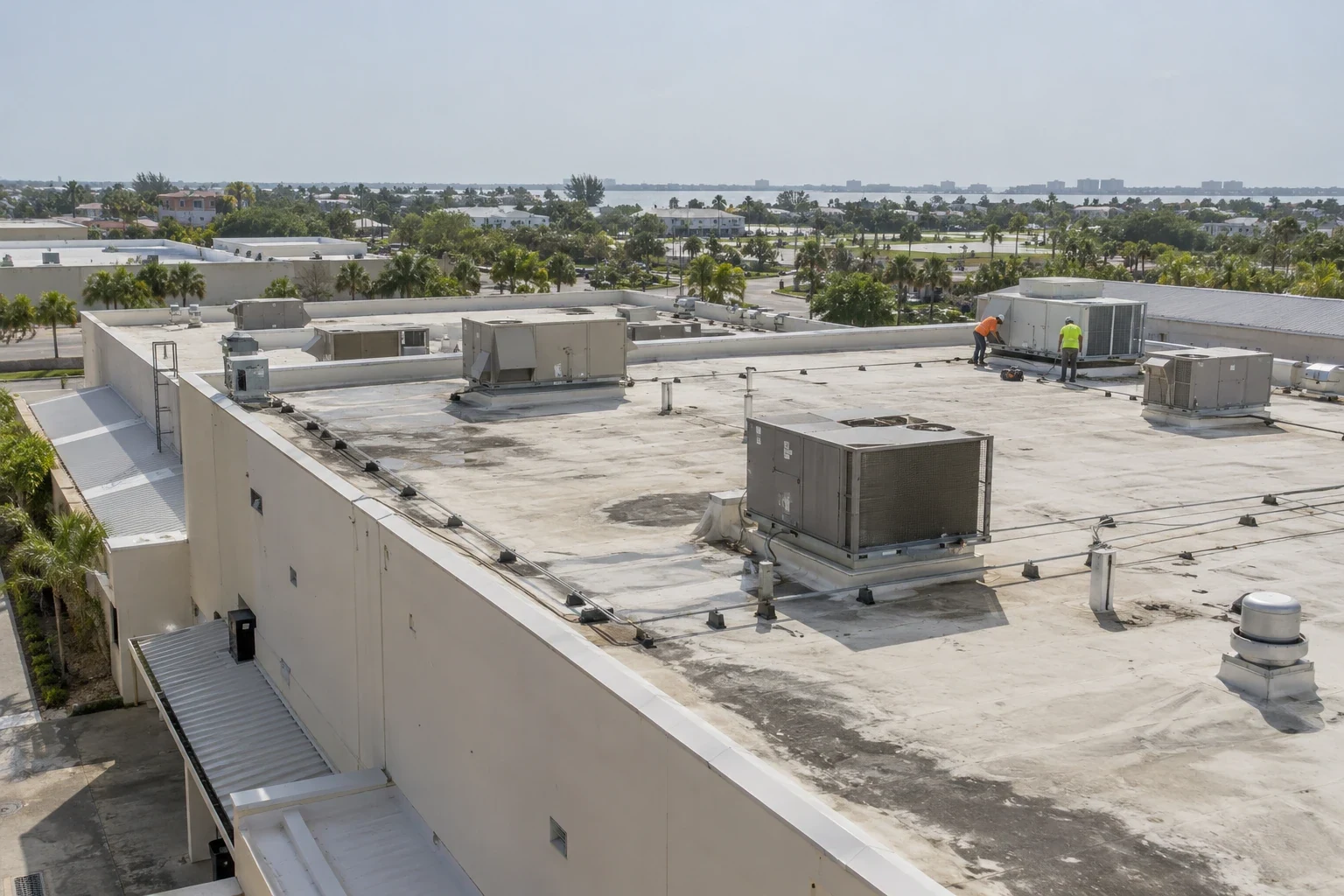
Portfolio reporting is useful only when each asset preserves its own roof area, system, age evidence, repair history, and access limits. A warehouse, office, retail site, and healthcare property do not have the same risk just because they share an ownership group. We can use a consistent inspection structure while keeping findings by building. The investor can then sort for active leaks, drainage issues, failed edges, or renewal candidates without losing the detail behind the ranking.
Investment teams can also flag the date and evidence source for each prior repair, then compare open conditions against the next inspection cycle. If a transaction closes before planned work, the handoff should list unpriced items and active temporary protection so the buyer does not mistake them for completed work. That separation helps the asset file support both underwriting and property operations.
Conroe Park North includes manufacturing, freight, food processing, warehousing, and distribution employers; NorthStar Industrial Park includes light-manufacturing and flex-office uses. The local industrial districts illustrate a range of building profiles. A multi-site roof program can standardize condition fields and review dates, while the property-specific report shows the physical roof sections that need action. Property management companies handle tenant contacts and work-order flow, so the investor can use a shared record with its operator rather than replace that process.
Rank capital work by condition and consequence
A short repair list and a long-term capital plan should not be mixed. A confirmed breach may need temporary protection followed by a defined repair; widespread aging belongs in the renewal forecast rather than the emergency work order. The estimate should state the area, work method, materials, staging, and exclusions so ownership can compare like with like. If a bid assumes dry insulation or a sound deck, make that assumption visible before approving the number.
Conroe's summer heat and heavy-rain exposure affect how much roof can be opened and how quickly a crew must close it. A portfolio schedule should reserve a weather buffer and set a daily dry-in limit, then use the project forecast for the actual work date. Roof capital planning can help organize renewal priorities with the inspection baseline. A replacement proposal should define which roof sections and transitions are included so the investor can track funding against actual scope.
Include tenant impact in the project comparison
Construction access can affect lease operations even if the repair is confined to the roof. An investor or asset manager should ask where materials will stage, whether deliveries or parking change, which tenants need notice, and how the building closes each day. For a multi-tenant property, the contractor should name the active zone and point of contact. For vacant property, the access route and security process still need an owner-side approval.
When occupied areas cannot be cleared, a phased reroof plan can show the order of work, temporary protection, and daily reopening. A claim review can also help separate a new weather event from prior roof wear, if a claim is being considered. Any coverage or claim determination remains with the carrier. The value to ownership is a repair record grounded in the site condition and a clearly bounded estimate.
Control scope changes and retain evidence
Before work begins, specify who can approve concealed-condition changes, what evidence supports the added work, and how schedule changes are communicated. A proposal should list drains, curbs, edge metal, penetrations, tear-off, disposal, temporary weather protection, and access assumptions. Photographs before and after a repair make it easier to compare the installed work with the approved scope.
At closeout, record the asset, building section, material installed, dates, limitations, and next inspection items. An owner can roll those records into a portfolio file without treating one property's warranty or condition as representative of another. General contractors coordinate trades and sequencing on larger jobs; ownership can make the roof responsibilities explicit in the contract. A dated photo, roof-zone mark, and repair description make future capital decisions more reliable than a general statement that the project is complete.
Use Conroe context without assuming a tenant or roof system
Conroe Park North is a major industrial park on FM 3083, about two miles east of I-45, with more than 40 companies and over 3,000 employees. Downtown Conroe is planned as a mix of commercial, residential, and civic activity. These facts can help an investor describe the surrounding market, but they do not confirm who occupies a building or what roof assembly is installed. Each property inspection should verify its use, access, drainage, and roof details.
Conroe Park North is a broader service area for commercial roof work. When comparing a local industrial property with downtown retail or office assets, preserve the building-level condition record. Scheduled roof maintenance can keep visible drainage and repair observations current, while an asset manager uses that information to plan inspection frequency and capital timing.
Commercial Roofing Questions
Can a roof inspection support acquisition due diligence?
Yes. The report can identify accessed areas, visible conditions, limitations, and recommended follow-up. It should distinguish a visual review from any intrusive moisture or structural testing not performed.
How should a REIT compare roofs across assets?
Use common condition fields but preserve each building's roof map, repair history, access limits, and system details. A portfolio rank is useful only when the supporting evidence stays attached to each asset.
Should an acquisition estimate include replacement?
It should identify the specific conditions supporting repair or renewal and price the same roof sections. A replacement assumption without inspection evidence can distort the comparison.
What should investors require at project closeout?
Keep the building and roof zone, work performed, materials, dated photos, approved changes, and open follow-up items in the asset record. That gives the next review a reliable starting point.
Can roof work be phased across occupied properties?
Often. The proposal should name the active area, tenant notice, access route, temporary protection, and daily handback. The property operator controls tenant coordination and site access.
Related Roofing Work