Commercial Warehouse Roofing in Conroe, TX
Plan warehouse roof inspections and repairs in Conroe, TX. We review drainage, loading zones, equipment, interior exposure, and roof-system condition.
A roof opening over stored goods can turn a maintenance call into an inventory and operations problem. The first step is to trace water from the affected bay to the actual roof detail, then define how crews can work without blocking loading. Conroe Park North combines freight, warehousing, food processing, and manufacturing across a large industrial district. That mix makes staging and dry-in important, but the individual building still determines roof assembly, leak path, and repair boundary.
Protect the loading pattern below the work
Warehouse work often depends on dock doors, forklift lanes, rack access, and delivery windows. We ask which bays must stay available, where material can be staged, and whether the lift or crane path crosses an active yard. A leak above a high rack may require a different interior protection plan from water over a clear aisle. Operations staff can identify stock that must move and any area that needs a temporary restriction before an opening is made.
Conroe Park North has four-lane concrete streets and city water and sewer, with the industrial area reached from FM 3083 and I-45. NorthStar Industrial Park includes warehouse, distribution, and flex-office uses; listed buildings include grade-level loading, office areas, and crane-equipped bays. Those details describe area infrastructure and building inventory, not the roof on a specific property. We confirm the site's actual loading approach, roof access, and equipment before setting the work window. An occupied-building sequence can define daily openings and secure stopping points when shipping continues during repairs.
Map a leak to a roof zone
A ceiling stain may sit below a deck flute or a curb far from the entry point. We compare the timing of the report with rainfall, roof slopes, seams, penetrations, drains, and earlier repairs. Photographs should connect the interior location to a roof-zone map, not just show a close-up of damaged material. If water is active, protect goods and electrical equipment while the roof inspection identifies where the assembly opened.
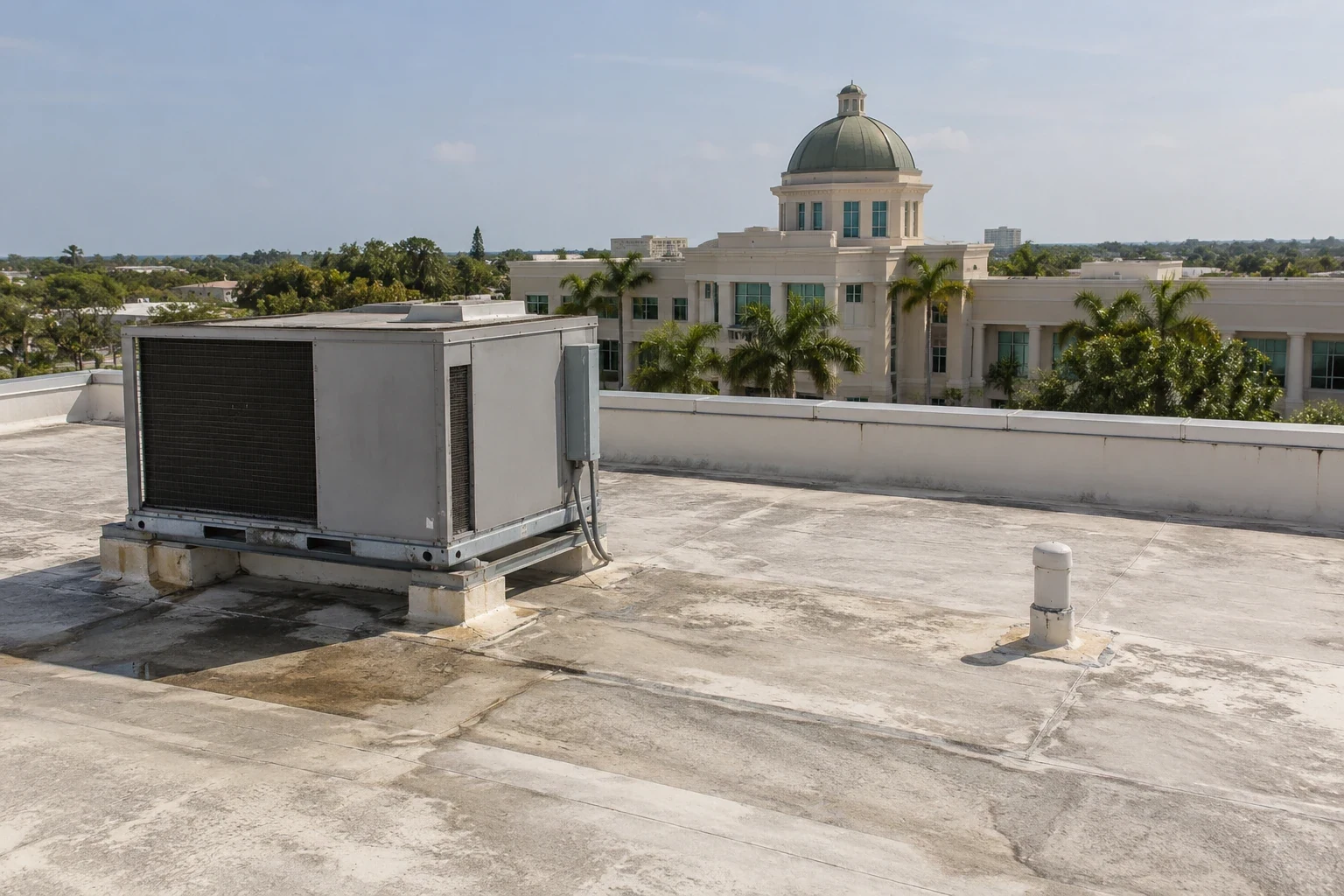
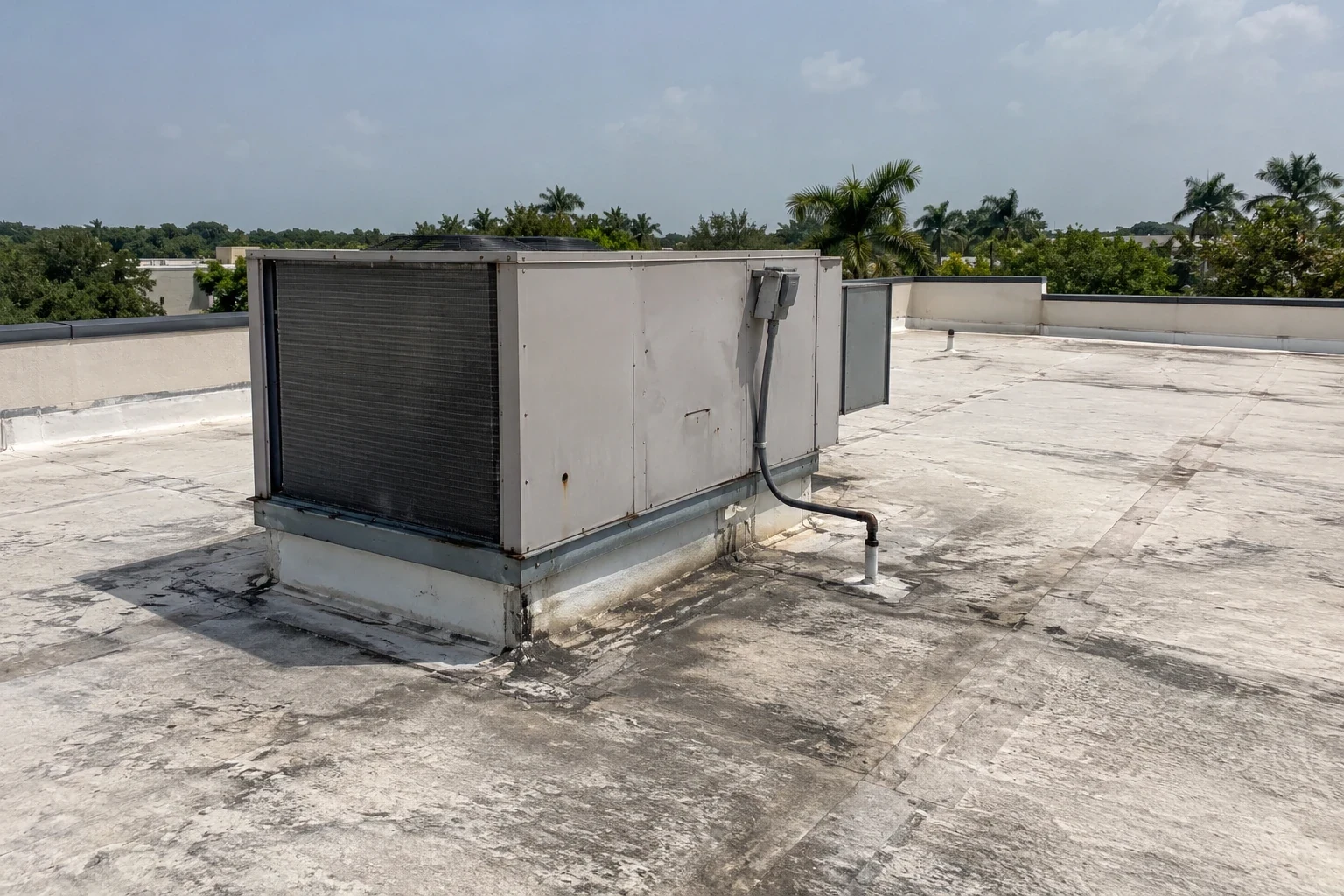
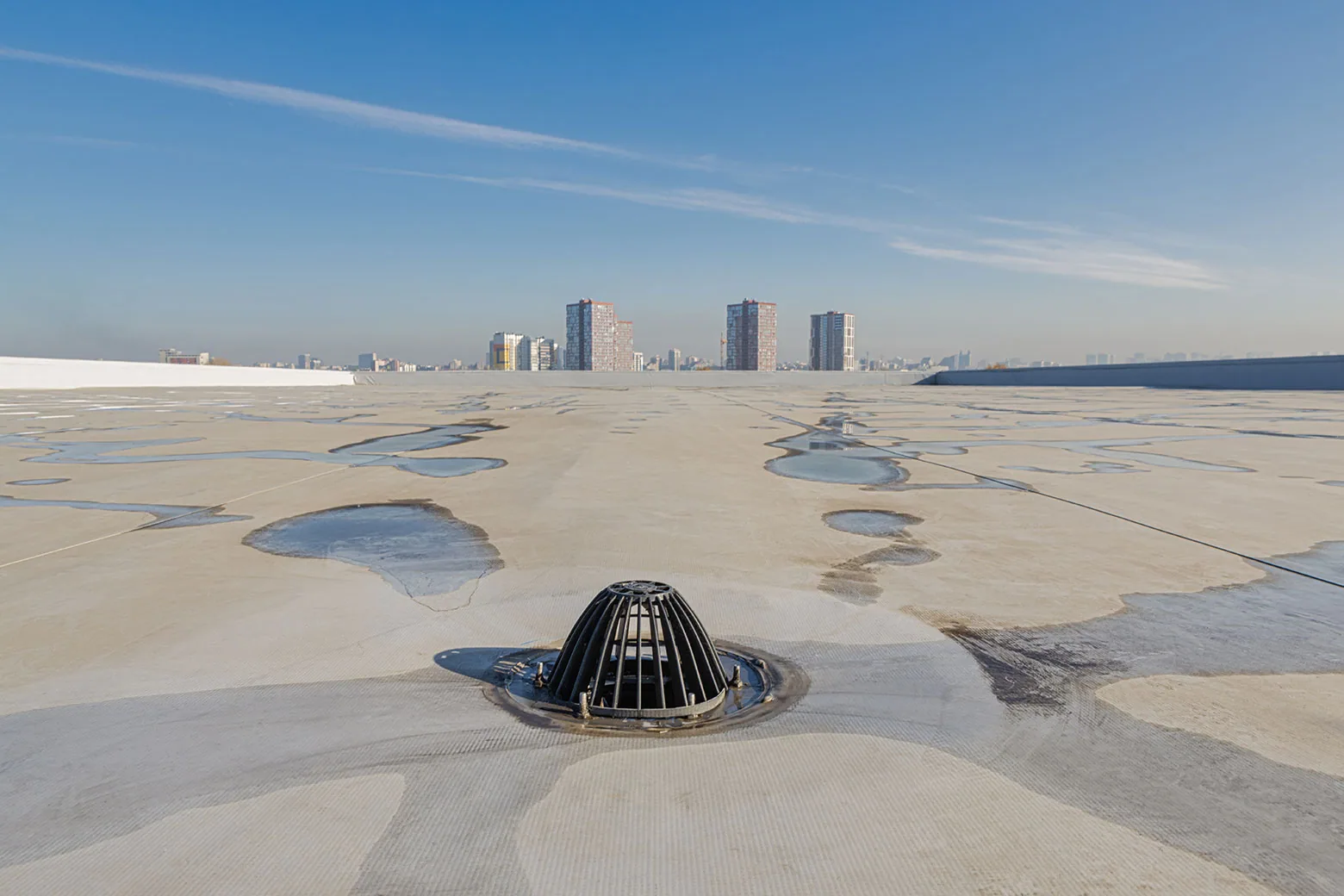
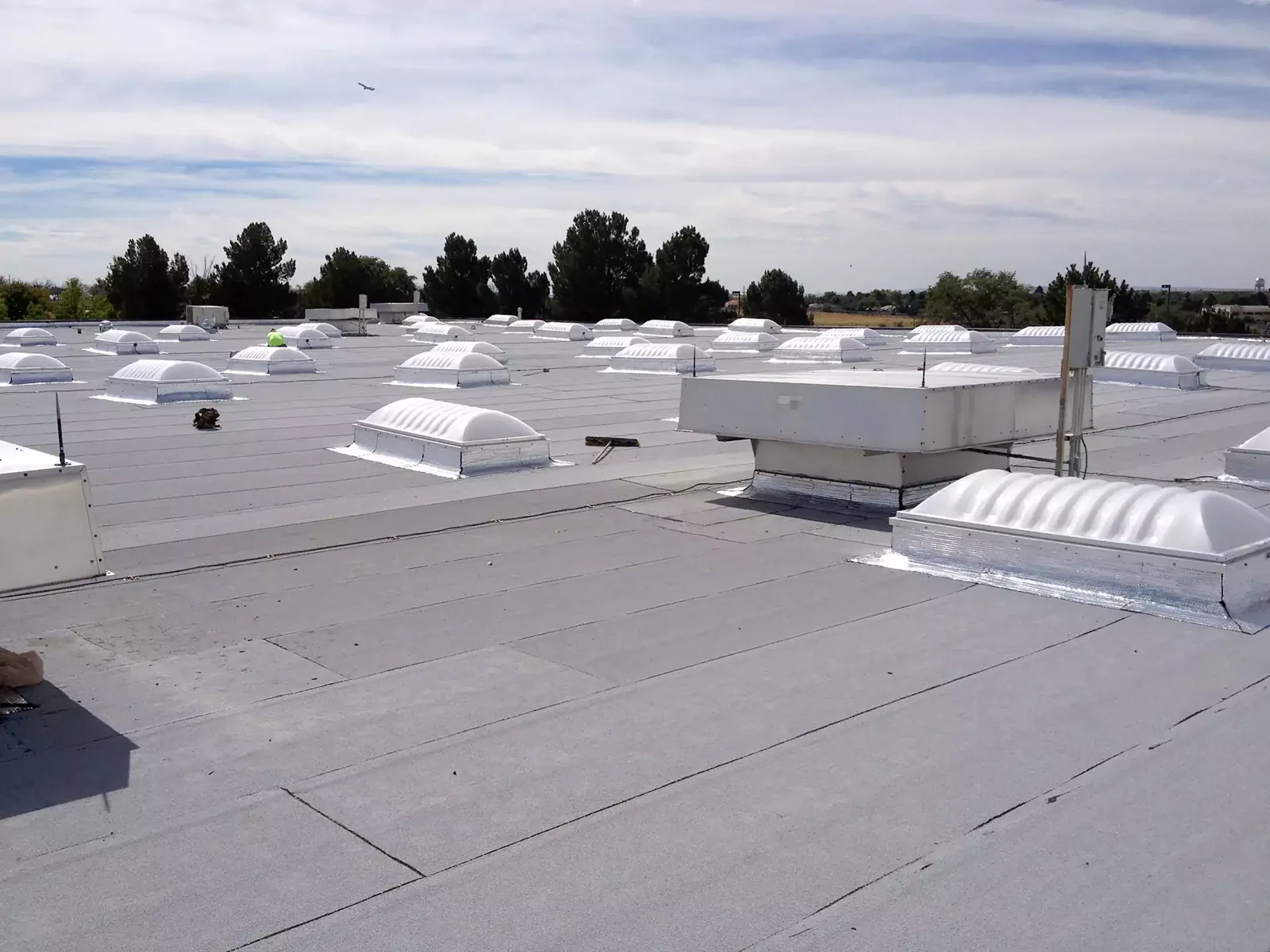
At a warehouse, rooftop units, vents, skylights, and conduit supports can interrupt otherwise open roof fields. Check the flashing at each transition and look for movement where equipment service has disturbed the membrane or metal. A commercial roof inspection can document the assembly, access limits, and suspected moisture areas. If a drain is blocked or water remains around an outlet, a drain and scupper review can address the water path alongside the membrane repair. Drain work and leak repair should remain distinct scope items.
Identify the assembly before selecting a patch
Warehouse roofs can use single-ply membranes, built-up layers, metal panels, foam, or a combination installed during additions. The building's use does not identify its system. We inspect product markings where available, seam construction, attachment, surfacing, and prior repairs before choosing a weld, adhesive, fastener, flashing, or coating. A compatible repair needs clean, stable material at its boundary. Sealant over an unknown surface can hide a defect and complicate the next service visit.
If moisture testing could change how much insulation is removed, mark the test locations and the limits of the result. A few readings do not establish that every bay is dry. We compare observed wet material with areas that remain concealed and set the opening boundary accordingly. Recovery may fit a dry, secure assembly; broad moisture, repeated seam failure, or a damaged deck can point to removal. A distribution-center roof scope shares some loading concerns, while a manufacturing-plant assessment may also need to coordinate production equipment and process areas.
Plan around Conroe heat and heavy rain
Lone Star Executive Airport, north of Conroe, provides local climate observations. Summer heat and humid air place recurring exposure on roof surfaces, sealants, and metal transitions. Regional normals from Houston Intercontinental show average July and August highs near 95 degrees, which gives useful context for material handling but does not replace conditions at the roof. Hot surfaces can affect safe access and product application. We check the actual surface and follow the selected system's installation limits.
Hurricane Harvey set a record pool elevation at Lake Conroe; the resulting record release was one contributor to downstream flooding in Montgomery County. That event is relevant to regional water planning, not proof that an individual warehouse flooded. After a storm or interior leak, inspect actual drains, low points, edges, and penetrations. The record should separate roof damage from yard drainage or other water exposure and identify which evidence supports each conclusion. A wind-damage inspection can document displaced components when roof-level findings support that scope.
Compare repair with a larger renewal
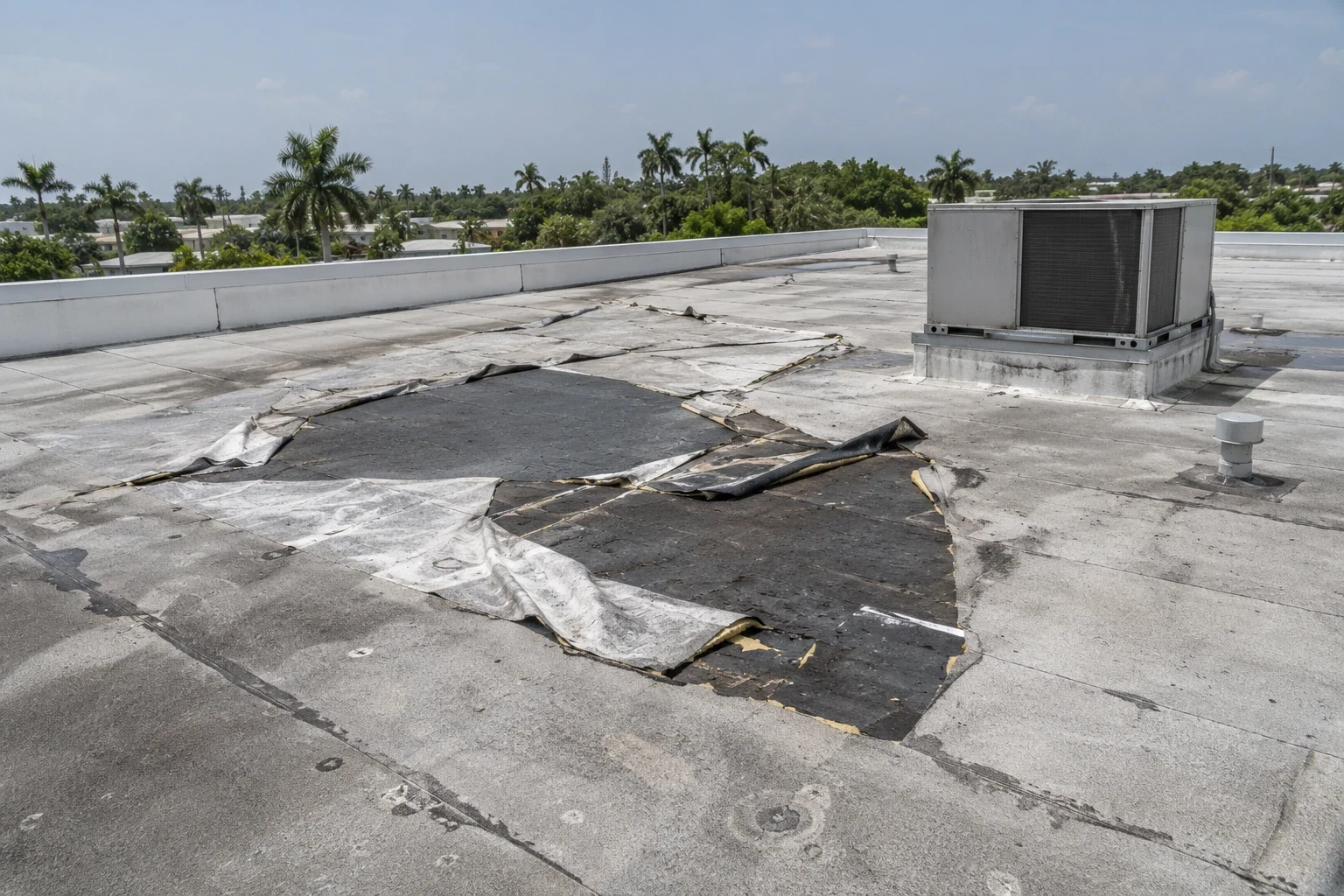
A puncture, open flashing, or isolated seam can support a focused repair when surrounding membrane, insulation, and attachment remain serviceable. Repeated leaks, widespread wet material, loose edge details, or a compromised deck can move the recommendation toward selective removal or replacement. We state what was confirmed, what still needs testing, and how far the proposed repair extends. The proposal should identify dry-in, removal, insulation, drains, curbs, and metal transitions rather than bundle them as an unspecified roof repair.
Cost and timing depend on roof height, access equipment, material lead time, test openings, debris handling, interior protection, and how much of the warehouse can remain in operation. A replacement scope should show tie-ins and any assumptions about hidden layers. For a property near Conroe Park North, freight and production activity may shape staging; the site's manager confirms its actual hours, traffic, and restricted zones. Closeout records repaired roof areas, materials, photos, and follow-up items so the next leak report can be compared with the same zone.
Keep drains and service paths visible
Routine checks should clear drains and scuppers, review prior patch edges, and look at penetrations after equipment work. Mark footpaths to rooftop units so technicians do not cross exposed seams or repeatedly step on vulnerable flashing. A service visit should note debris, water marks, loose fasteners, or coating wear by roof zone. These observations can help distinguish a new leak from a condition already under review. If ownership and operations are separate, identify who can approve a test opening, temporary dock restriction, and added removal. That keeps repair decisions moving when a concealed condition changes the scope.
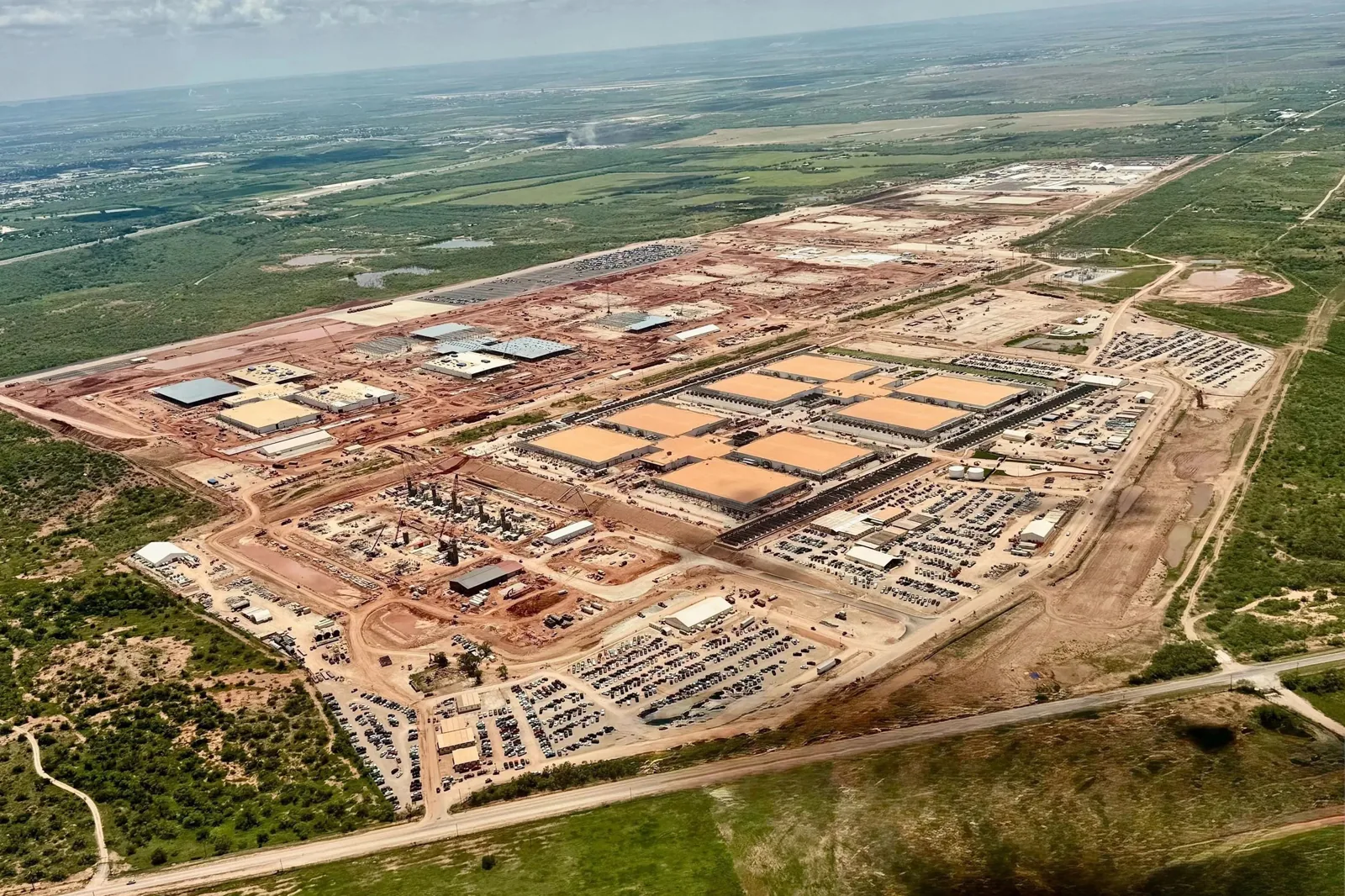
Conroe Park North has distribution and warehouse activity, with facilities of different floor areas. Floor area does not tell us roof area or condition, so inspect each structure directly. A maintenance log can also note delivery changes or new equipment that affects roof access. When testing or repairs require a dock restriction, share the expected period with operations and record when the lane reopens. That handoff keeps the roof plan connected to the building's loading schedule without treating a temporary protection measure as permanent work.
Commercial Roofing Questions
Can a warehouse stay open during roof repairs?
Often, if the work zone, loading routes, interior protection, and weather-tight daily stopping point are coordinated with operations.
What if water is over stored inventory?
Move or protect affected stock under the site's procedures while we inspect the roof above and trace the water path. The closeout separates interior protection from permanent roof repair.
How do you know whether a warehouse roof needs replacement?
Repeated leaks, confirmed wet insulation, poor attachment, or deck deterioration can support broader renewal. We map those findings and identify any test that could change the boundary.
Can you repair only one roof bay?
A focused repair may work when the surrounding assembly is dry and stable. We check nearby seams, penetrations, drainage, and attachment before setting the repair limit.
What affects warehouse roofing timing?
Roof access, lift and material staging, loading schedules, weather windows, equipment coordination, and concealed conditions all affect the sequence.
Related Roofing Work