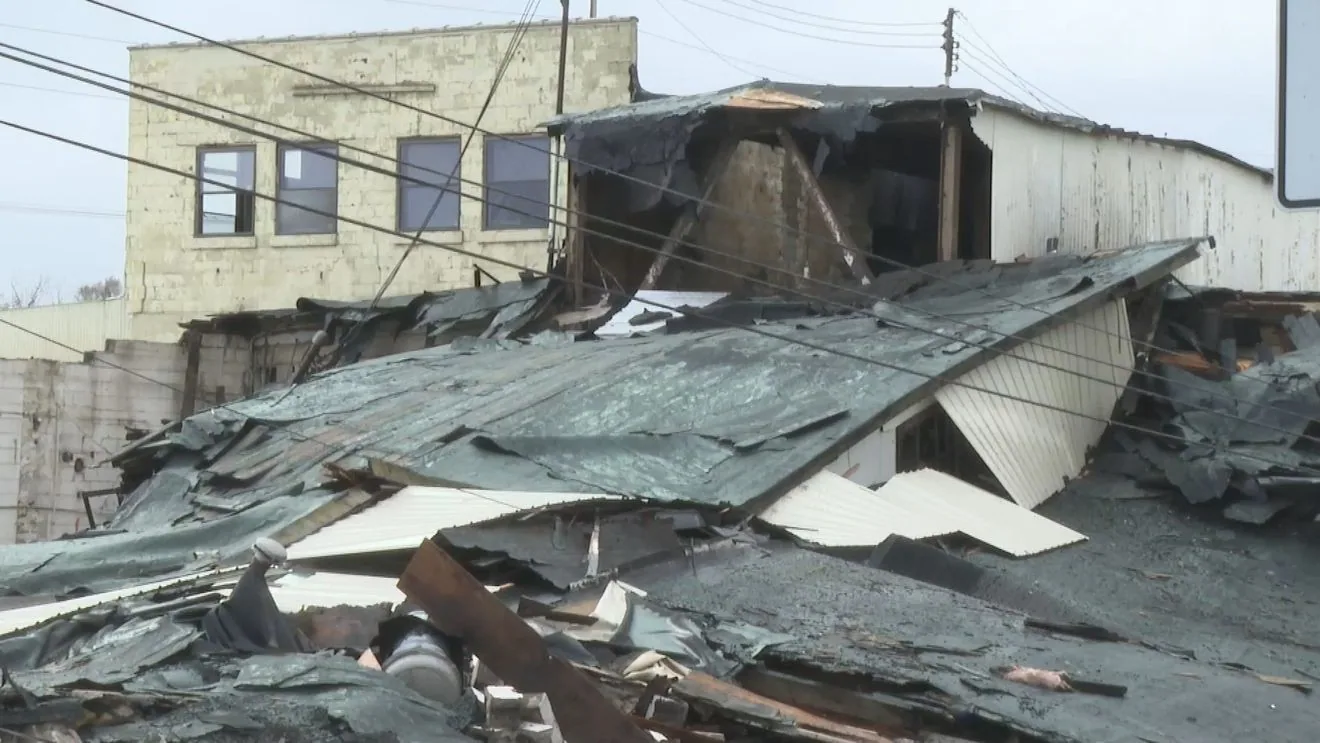
Wind Damage Roof Repair in Conroe, TX
Inspect wind-lifted edges, open seams, and displaced flashing in Conroe, then define temporary protection and a repair scope by roof section.
After a wind alert, a curled edge or lifted piece of metal deserves a closer look before the next rain reaches the roof. In October 1997, the Conroe Airport ASOS recorded a 57 mph southerly wind during the first storm of an outbreak that included a tornado over Conroe. The record describes a regional event, not a condition at a current building. We inspect the roof area named by the owner, then check nearby edges, seams, curbs, and drainage for changes that could admit water.
Start where wind can lift an exposed edge
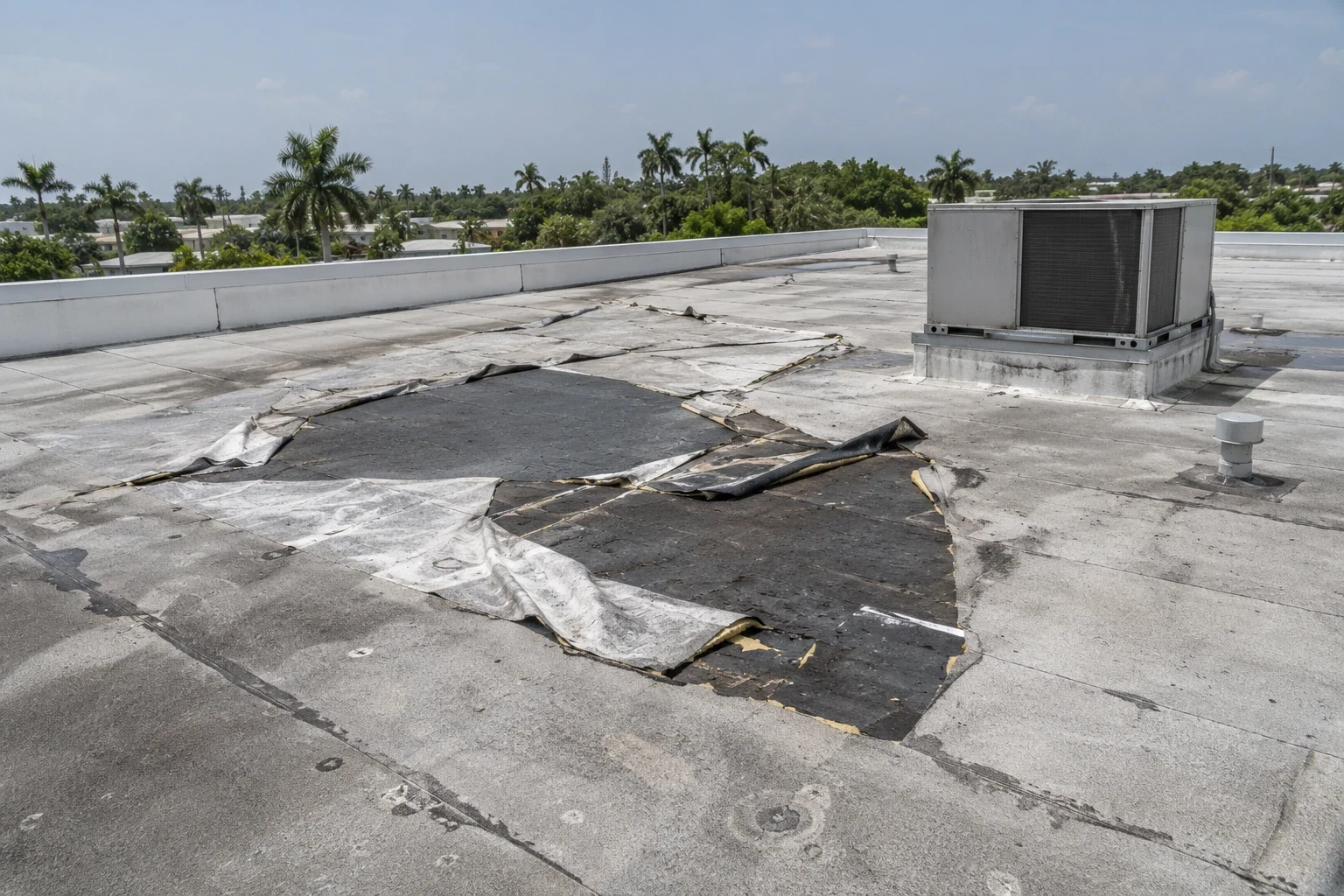
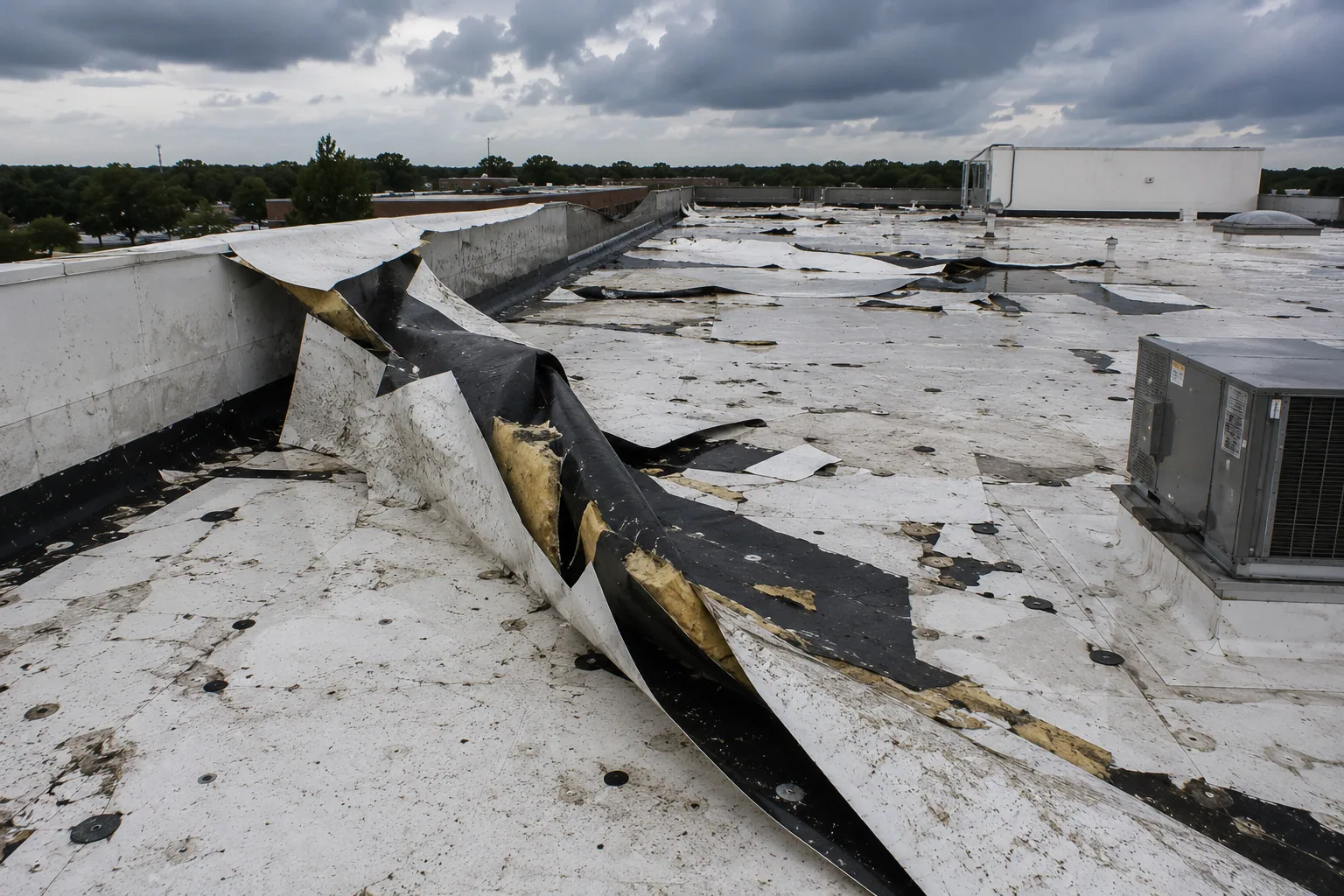
Wind damage often begins at a detail that already moves: edge metal, coping, a corner termination, a loose flashing leg, or a repair that no longer follows the membrane. We look for fasteners that have backed out, metal that has shifted, a seam that has opened, and debris impact around rooftop equipment. A photograph should show the detail close enough to assess and wide enough to locate it on a roof plan. That gives the property contact a usable repair boundary rather than a general note that the roof was affected.
A commercial roof inspection records visible changes and the sections we could reach. If the building has an active leak, we trace water from the interior report toward roof seams, transitions, and penetrations; the opening may be uphill or offset from the ceiling mark. The local weather station at Lone Star Executive Airport and Conroe’s severe-weather history help frame the inspection window. Neither replaces a building-level review of the material, attachment, and current condition.
Keep wind exposure from becoming a leak path
A loosened edge can let wind-driven rain reach the roof assembly even when the field membrane looks intact. Water may run under a flashing leg, cross insulation, and appear inside at a distant joint. We inspect the adjoining membrane, corner transitions, roof-to-wall details, and any nearby equipment curb before choosing a patch. If water is still entering, we can place limited temporary protection and record where it begins and ends. The temporary measure should have an inspection date and a clear boundary so it is not mistaken for permanent work.
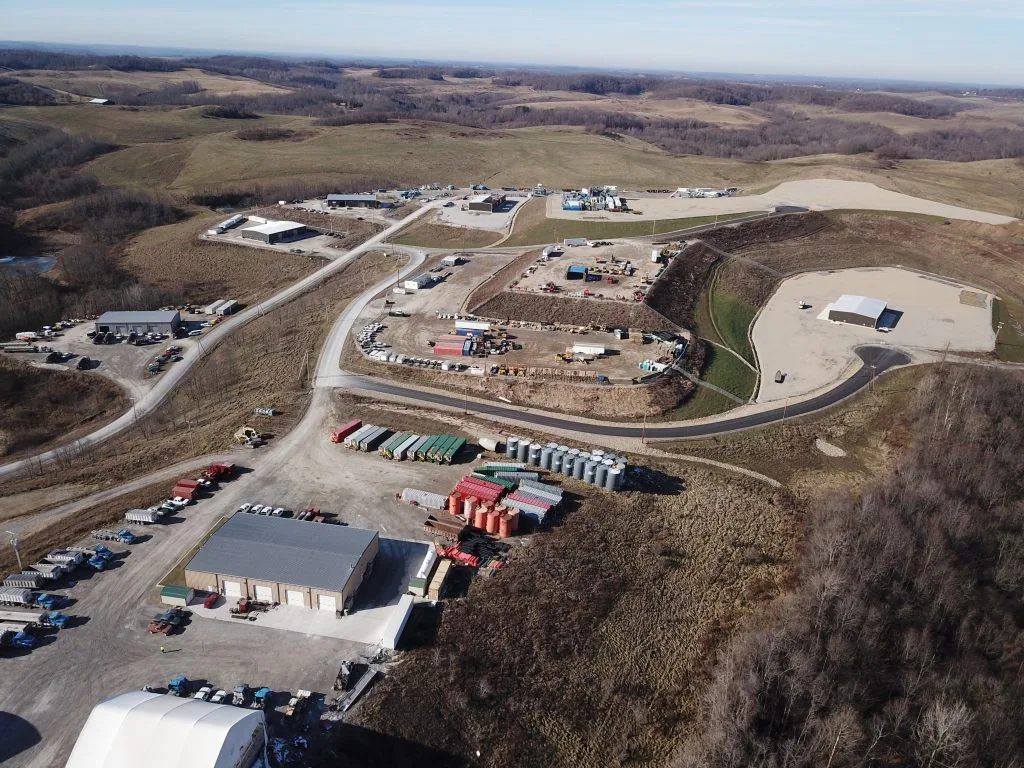
NorthStar Industrial Park lists HVAC warehouse, manufacturing and assembly space, grade-level loading, office areas, and crane-equipped bays. When a wind-related leak affects an industrial operation, the facilities lead should identify protected inventory, a dock or production lane, and the roof access route before crews arrive. Emergency roof response can address active exposure while the permanent repair is scoped. NorthStar Industrial Park is a broad service area for those commercial visits.
Use a safe hold point before opening material
A repair crew should not pull back a large area just to find one loose detail. We mark the visible boundary, test adhesion or attachment where appropriate, and open only what the inspection supports. If a patch, cover, or fastener replacement will protect the building until permanent work, the property contact needs to know what surface remains exposed and what conditions require a return call. An unstable metal edge or loose component may also need to be secured before anyone works near it.
Surface heat and sudden rainfall affect how long a roof can remain open. The work plan should name the maximum exposure area, closure method, material limits, and who confirms dry-in before the crew leaves. Phased work at an occupied building can keep the active section defined while staff, tenants, or production continue below. The superintendent or facilities lead should know the shutdown signal if wind or rain changes the planned access window.
Repair the detail that moved, then check its neighbors
A lifted edge may need reattachment and compatible flashing work; a split seam may require a welded or adhered repair suited to the membrane. Displaced coping can involve both roof termination and wall interface. We identify the actual assembly before selecting material because a generic sealant bead can hide movement without restoring the detail. If the membrane is brittle, wet, or separated across multiple sections, a local patch may not be the full answer. The report should separate confirmed repair from broader condition concerns.
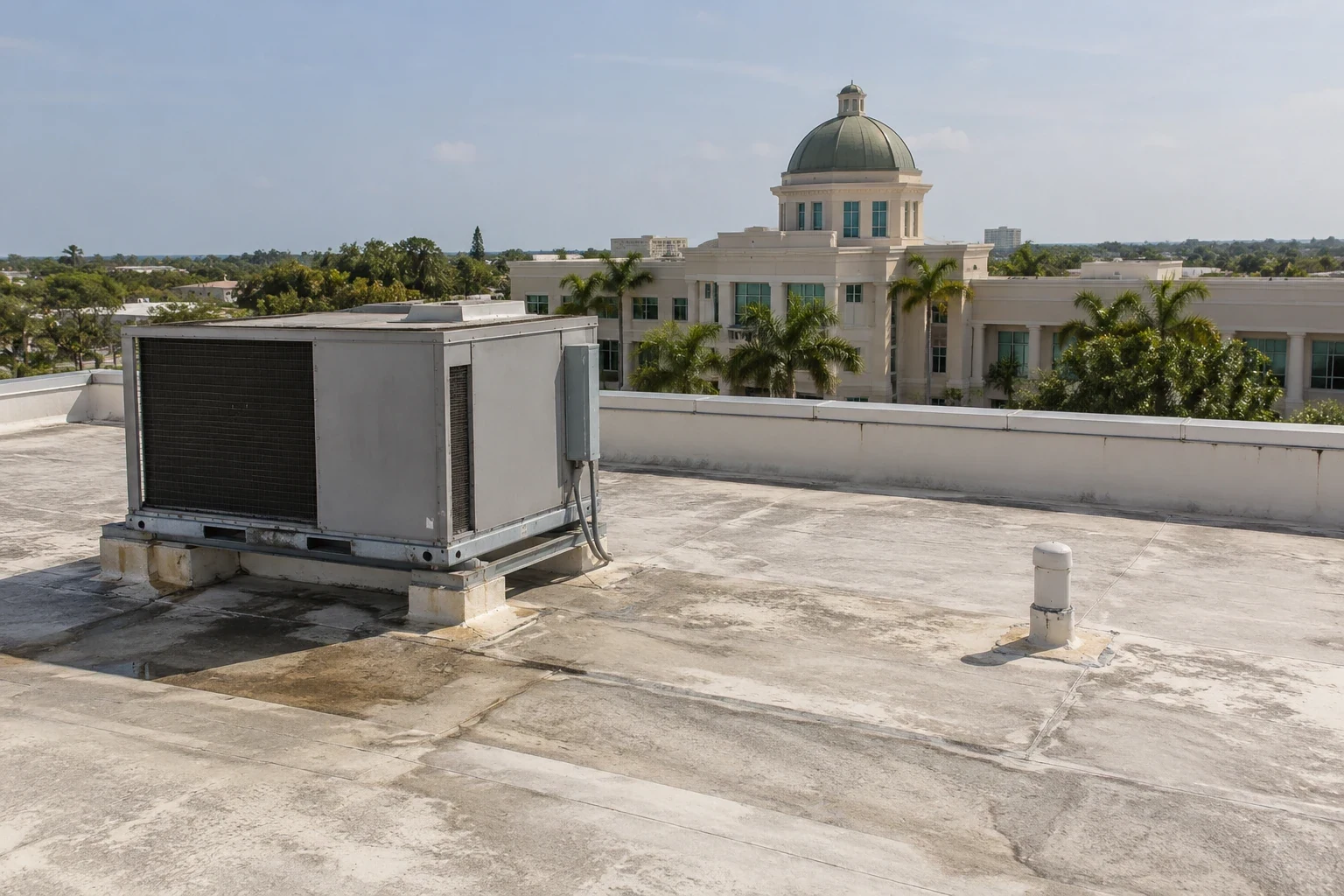
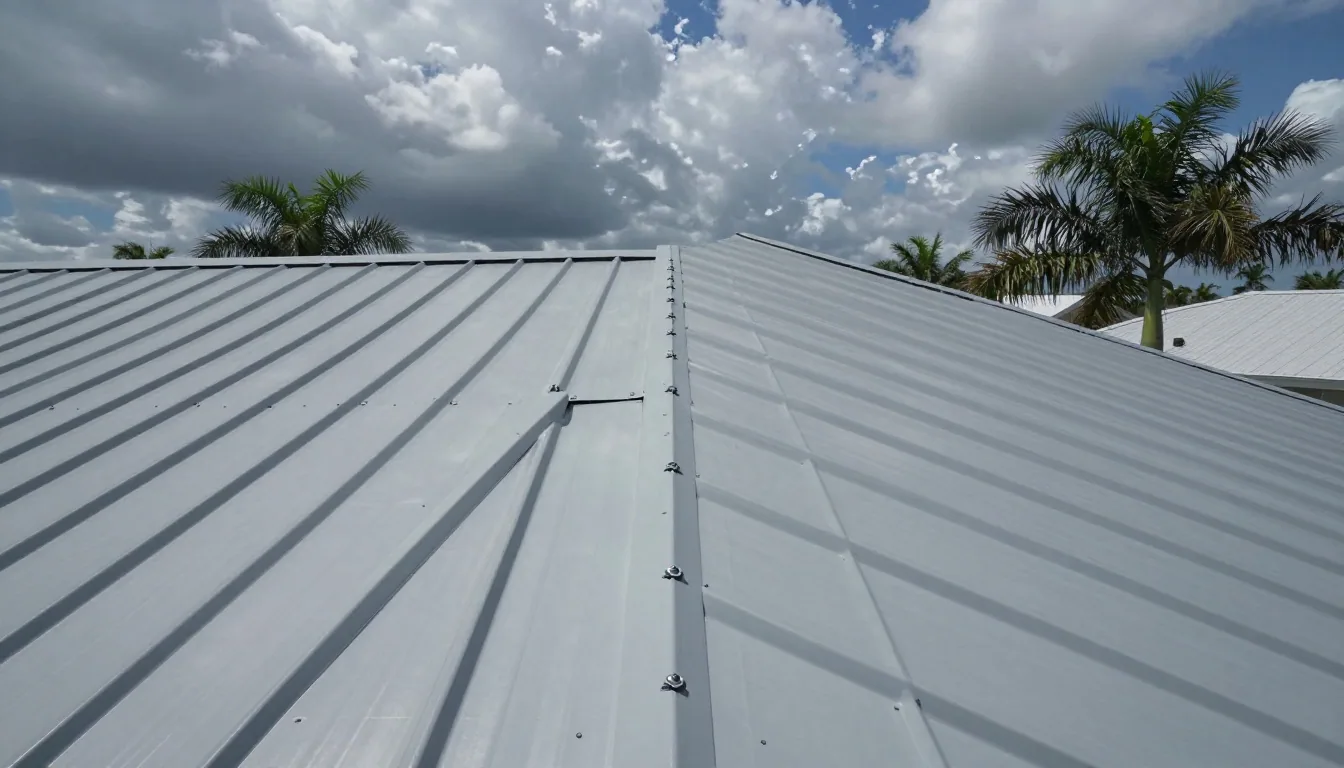
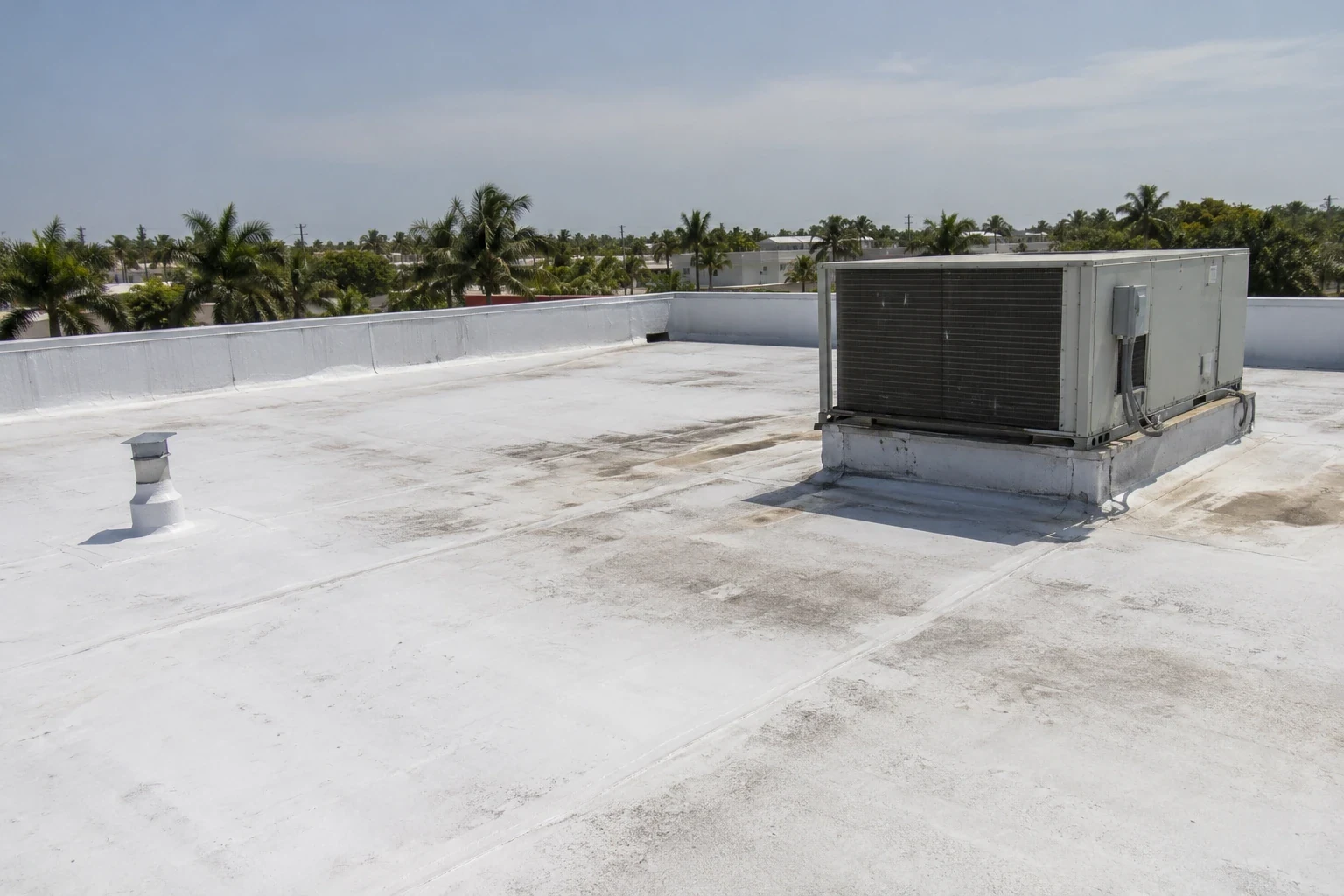
TPO membrane repair uses system-compatible seam work, while metal roofs need attention to panel movement, fastener points, and transitions. A wind event may also expose loose rooftop components that belong to another trade. We document the roof interface and coordinate with the equipment vendor rather than altering machinery. Flashing repair may address a shifted wall or curb transition, and seam repair covers a separate membrane condition. The estimate should state which one is present.
Connect each observation to the reported date
For a storm-related request, record when the condition was reported, what the owner noticed, where the crew inspected, and what was visible. Dated photographs should distinguish fresh displacement from an older patch or weathered seam when the inspection can make that distinction. If debris blocks a drain or equipment obscures a detail, note the limit and propose the next inspection step. A weather report can establish when a hazard occurred; the roof record explains what was found at this property.
Conroe’s 1997 storm history includes a tornado over the city and another along Highway 105 near Cut and Shoot. A building on the same regional map may have different roof exposure, age, and attachment. Insurance-restoration documentation can organize event observations, temporary measures, and permanent repair scope without making a coverage decision. The property owner or insurer determines policy treatment. Our role is to describe the roof, the work required, and any condition that still needs review.
Set the return check before the next weather shift
A completed wind repair should leave a record of the roof section, detail repaired, materials used, photographs, and any item that remains open. If temporary protection stays in place, list its limits and the date for permanent work. Check the repaired edge or seam after the next suitable weather window, particularly when a larger transition was secured. The owner can use that visit to confirm the repair remains attached and nearby drainage is clear.
Wind can expose multiple defects across a large roof, but a single site inspection should not turn that possibility into a broad replacement recommendation. We compare the damaged area with surrounding membrane, attachment, insulation, and drainage, then explain whether the repair boundary is local or needs more testing. A photo-based roof condition report can preserve that distinction for later maintenance. Send the building location, reported date, active leak status, affected operation, and roof access contact so we can set a useful first visit.
Commercial Roofing Questions
What should a property manager check after a wind alert?
Look for new water, loose exterior metal, debris, and changes around roof equipment from a safe location. Report the building, affected area, time noticed, and whether water is still entering so the roof inspection can start in the right zone.
Can a lifted edge be repaired without replacing the roof?
That depends on the attachment, adjacent membrane, moisture, and how far the movement extends. We inspect the transition and show the repair boundary before recommending a larger scope.
How soon should temporary protection be replaced?
The protection record should name its limits and the planned return date. We schedule permanent work after confirming the detail, material, access, and weather window.
Does a regional wind report prove a building has roof damage?
No. It supplies timing and weather context. The roof itself must be inspected for displaced edges, seams, flashing, punctures, or water entry.
What should the repair closeout include?
The roof section, detail repaired, materials, dated photos, remaining conditions, and any return check. That gives the owner a clear record tied to the reported event.
Related Roofing Work