Commercial Roofing for Insurance Restoration in Conroe, TX
Document commercial roof damage in Conroe with dated observations, repair boundaries, moisture findings, and a clear sequence for temporary and permanent work.
A storm report and a roof claim are two different records. The first describes weather; the second needs building-specific evidence showing what was observed, where it was found, and what work could address it. During the first storm of the October 1997 outbreak, a 57 mph southerly wind occurred at the Conroe airport, while another tornado track passed near Cut and Shoot along Highway 105. During Harvey, record Lake Conroe pool levels led to a release that worsened flooding downstream in Montgomery County. These are regional history; a current claim still needs property-level observations.
Separate the reported event from roof findings
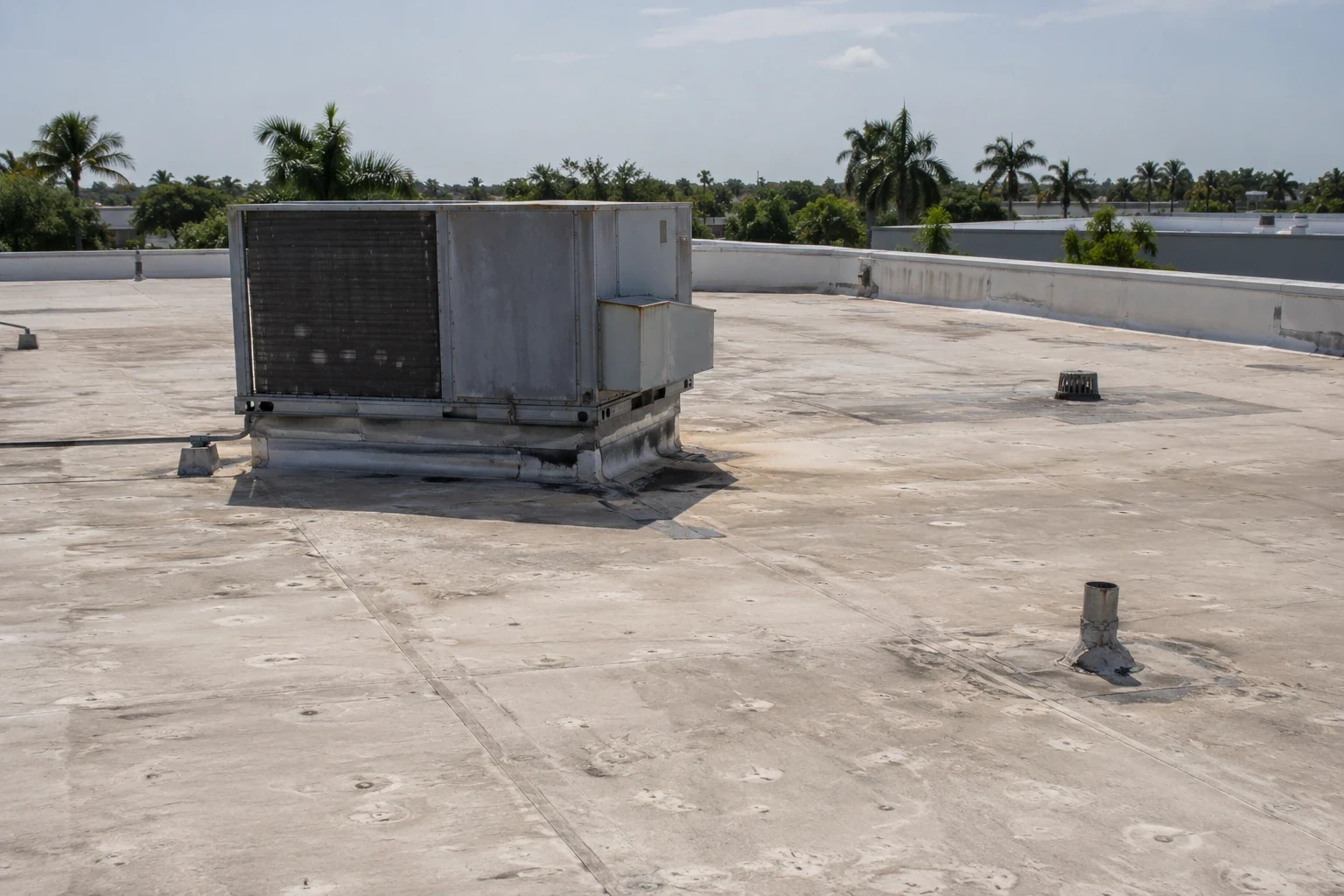
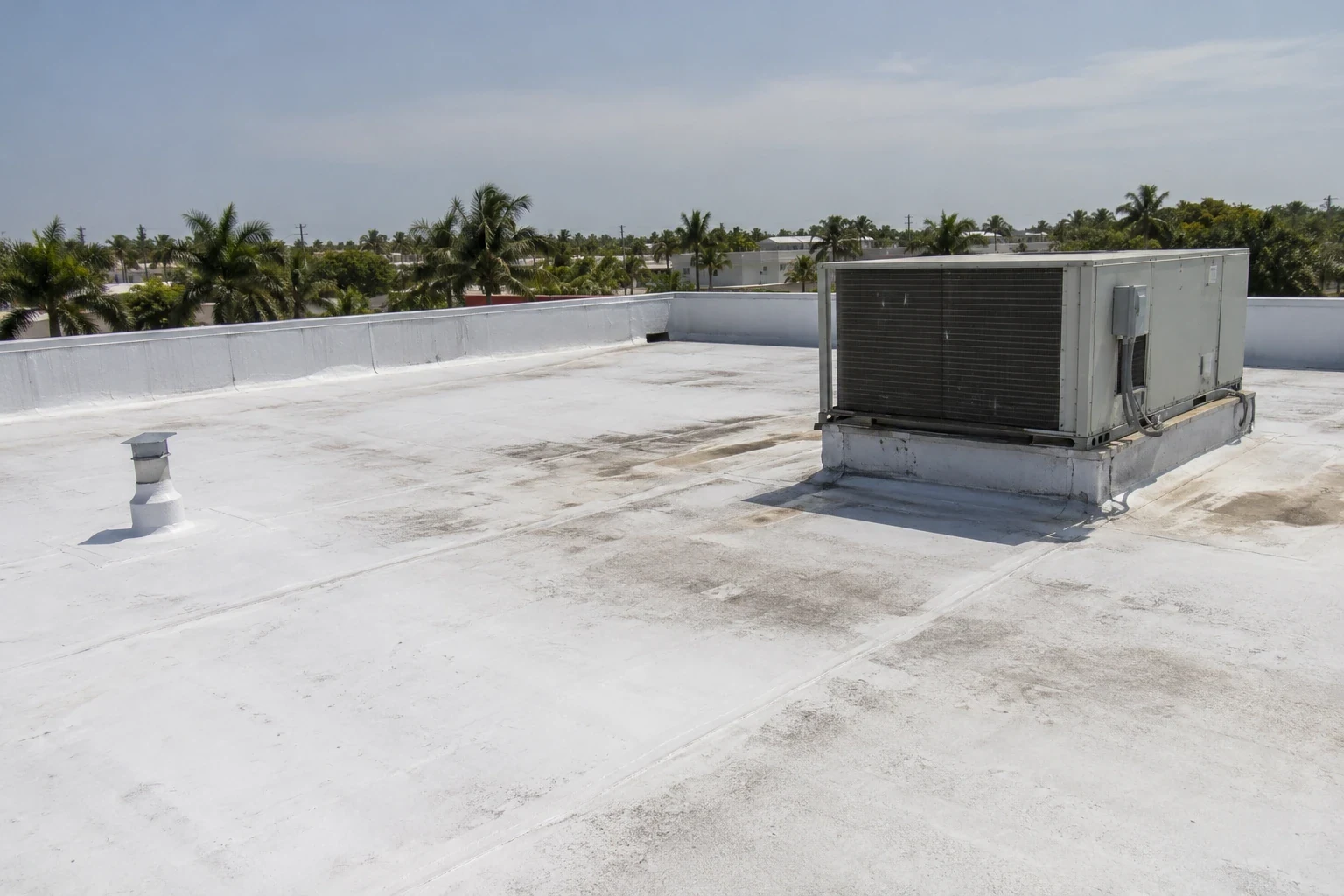
For an adjuster or restoration manager, the first useful record identifies the insured property, roof section, reported event date, interior symptom, and conditions visible during inspection. We photograph the membrane, seams, edges, drains, penetrations, and related interior evidence that is accessible. Each photo should have a location and direction so another reviewer can find the same condition. A general weather report cannot substitute for that building-level observation.
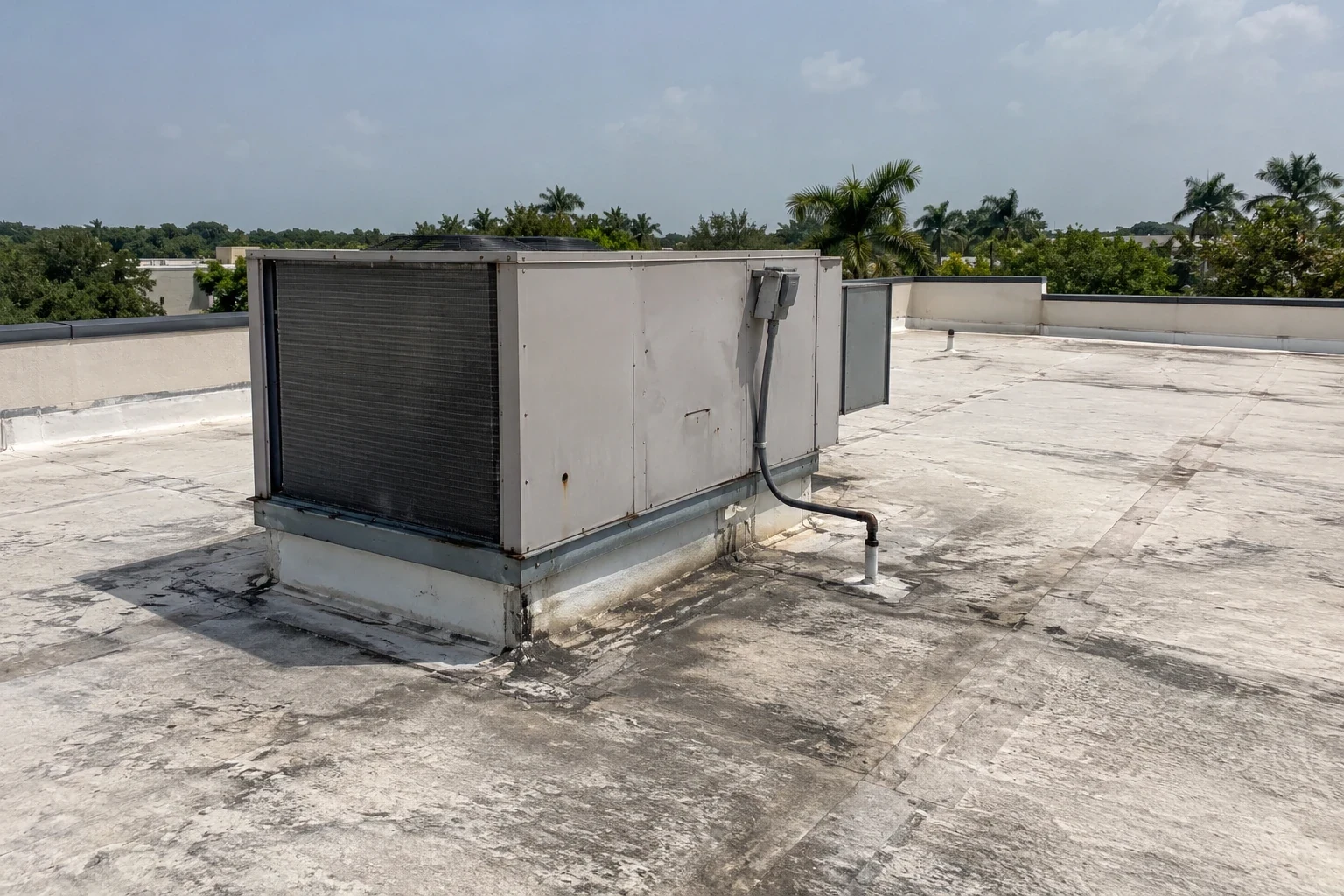
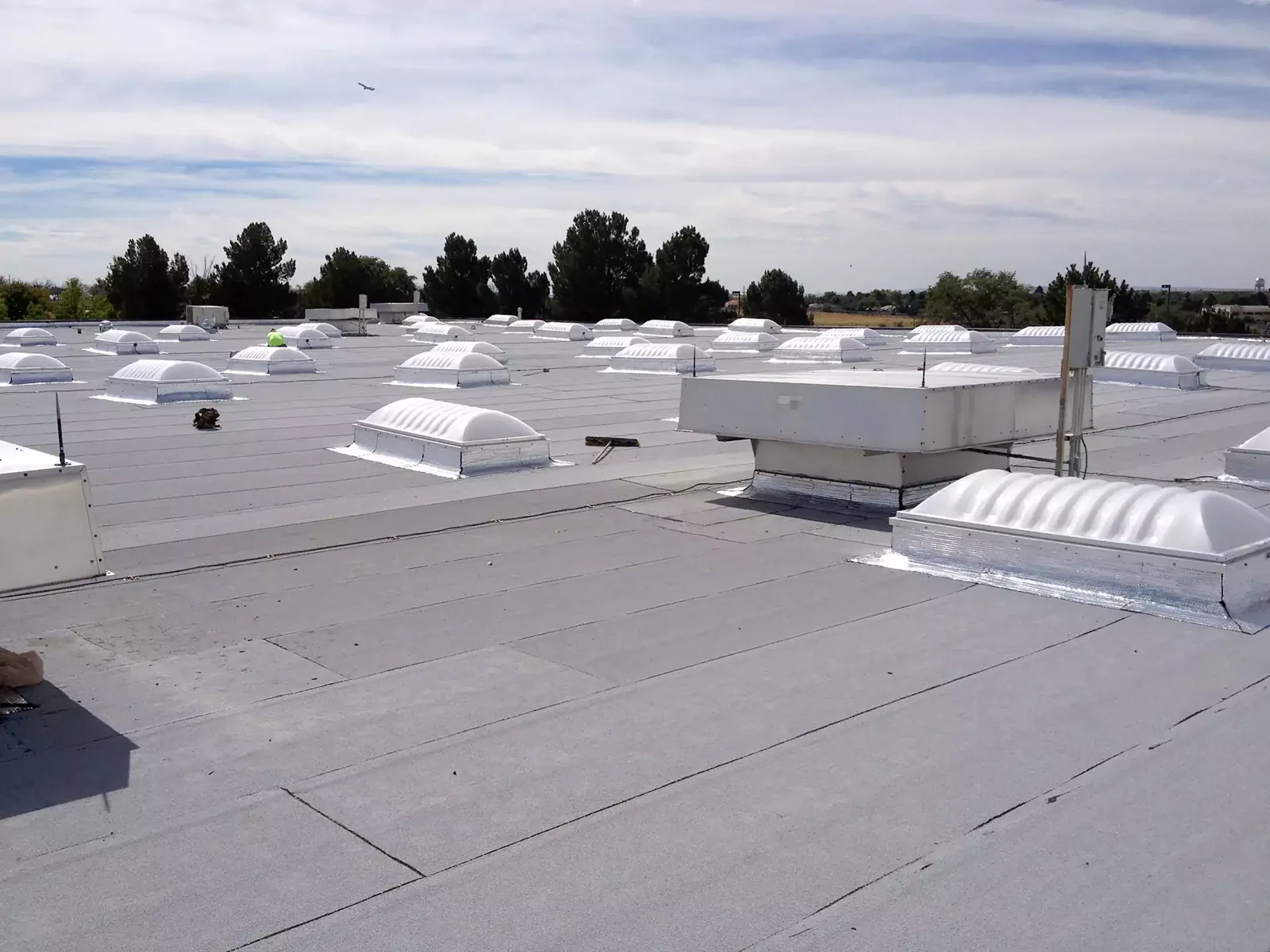
Conroe Park North includes industrial, warehouse, distribution, food-processing, and manufacturing uses along FM 3083 near I-45. Those building operations can affect access, stored materials, production hours, and where water would create a service interruption. The business-park facts do not identify the roof construction at an individual property. A commercial roof inspection can establish visible conditions and flag areas that need a closer test. General contractors may coordinate temporary protection and repair sequencing when the building is already under restoration work.
Control active water without hiding the condition
When water is entering, the first step is to protect people, contents, and operations, then keep the temporary measure limited to what is necessary. We record the location and materials used before covering a damaged area where safe access allows it. A tarp or temporary patch can reduce immediate exposure. Record its location, material, installation time, and next check, then inspect the roof before defining permanent work.
Conroe sees intense rainfall among the severe-weather hazards identified for Southeast Texas. A drain restriction, separated seam, puncture, or damaged flashing can each admit water, and the ceiling mark may be offset from the roof entry. Drain and scupper inspection helps distinguish an outlet problem from membrane or flashing damage. If rain continues, we state what area received temporary protection and which roof zone remains open for follow-up rather than describing an unfinished measure as a permanent repair.
Describe what the evidence supports
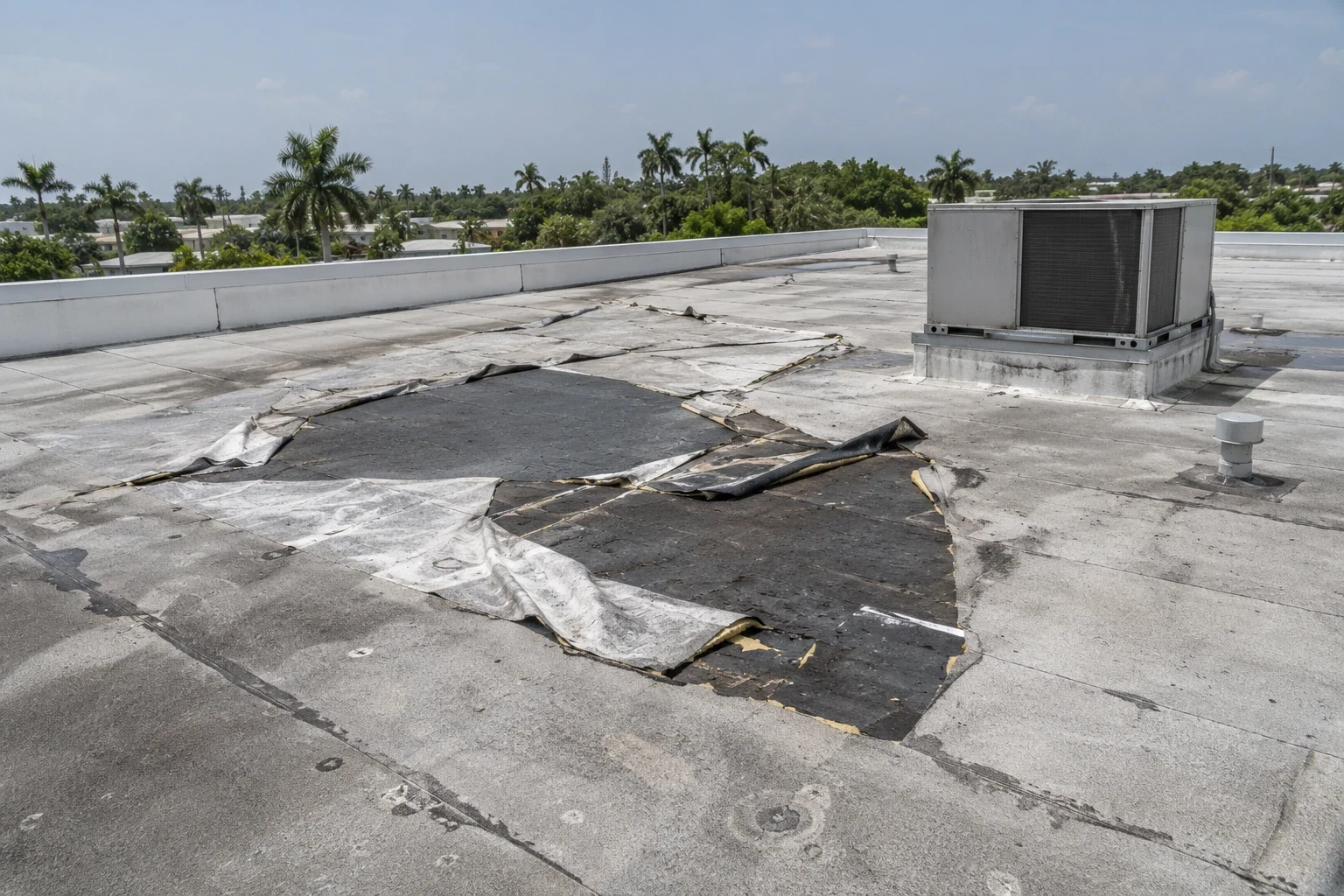
Wind-related movement may leave lifted edge metal, displaced flashing, or opened seams; hail can leave impact evidence on exposed components; water entry may also come from a drain or an older detail that failed during a storm. We photograph the condition and note the limits of what can be seen. If the assembly needs a test opening, moisture survey, or destructive review, that step should be identified separately with the location and approval path.
Nearby Houston climate normals show July and August average highs near 95 degrees, which helps explain why membrane movement and surface heat matter in Conroe-area roof maintenance. The inspection still has to distinguish long-term wear from a reported event using the actual material, repair history, and observed damage. An infrared moisture survey may help locate temperature patterns that warrant confirmation; it does not identify water content by itself. A condition report can organize photos, measurements, observations, and recommended next steps for review.
Show the repair boundary and alternatives
A claim file is easier to evaluate when the repair area is distinct from surrounding maintenance. We identify which seams, flashing, membrane, insulation, or edge sections are included, then list adjacent conditions that were visible but are not part of the proposed repair. If wet insulation or deck damage extends past the opening, we record the additional area before it is covered and request direction on the next step. That keeps the scope tied to the field evidence.
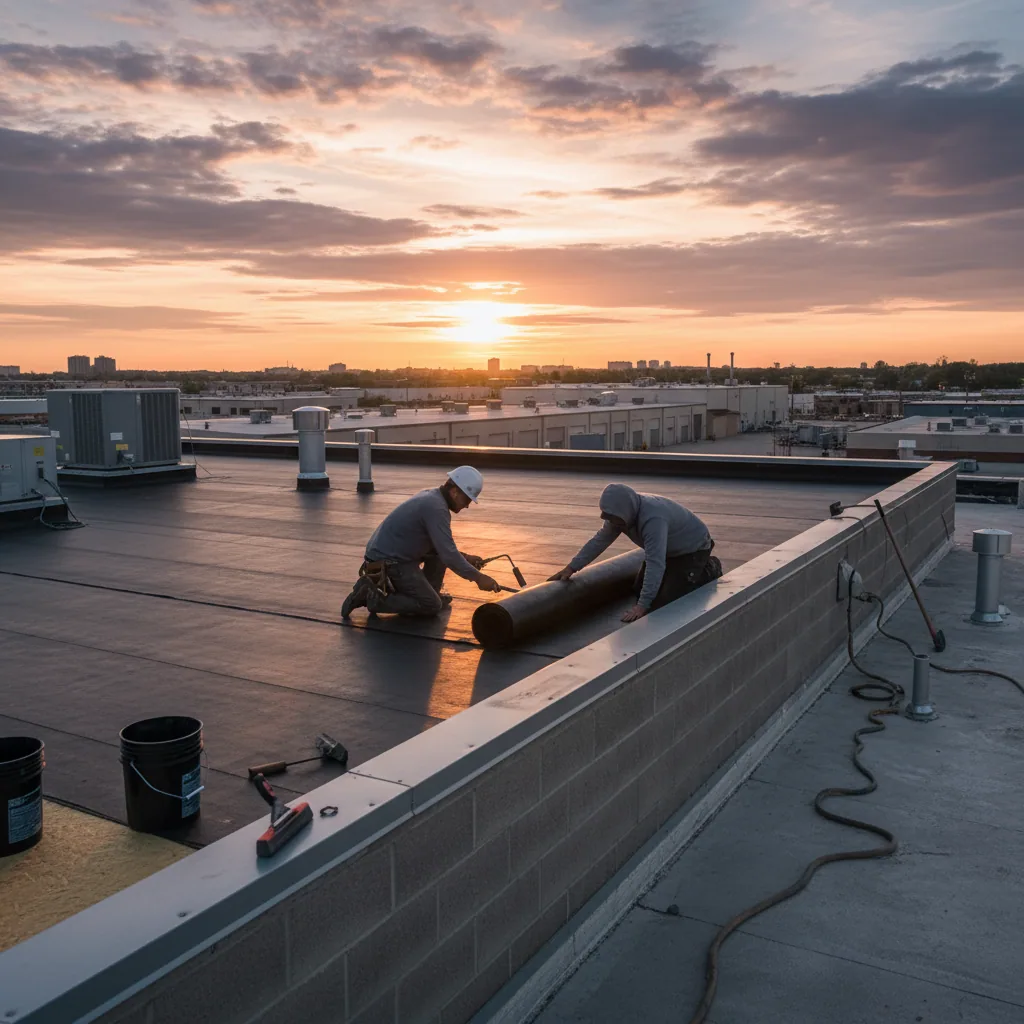
The appropriate remedy may be a localized patch, a flashing replacement, removal of wet material, or a larger section of restoration. Those choices depend on assembly compatibility, moisture, attachment, drainage, and how far the damage continues. Wind-damage repair addresses documented wind effects, while hail-damage review focuses on impact evidence. A broader roof decision can be compared with replacement scope only when the inspection supports that discussion. Coverage and payment decisions remain with the policy parties.
Keep adjuster, owner, and repair records aligned
Before work starts, confirm who can approve access, testing, temporary protection, and permanent repairs. The property manager may control the roof hatch; the tenant can identify interior effects; an adjuster may need advance notice for a reinspection. A shared date-and-time record reduces confusion when conditions change between visits. We can provide photographs, a roof-zone sketch, material descriptions, and a written scope, but we do not decide policy coverage or promise a claim outcome.
Montgomery County properties range from manufacturing sites in Conroe Park North to mixed-use destinations such as The Woodlands Town Center, where offices, lodging, dining, healthcare, and entertainment share a district. The operating contact and restoration schedule differ by building. Property-management teams can help align owner approval with tenant access, and emergency roof response can address active exposure while the permanent scope is reviewed. Keep each action, approval, and remaining question tied to its own roof zone.
Close with a record that supports the next decision
A complete closeout identifies the date, affected roof section, work performed, materials, photographs before and after, temporary steps, exclusions, and any condition still requiring review. If the repair depends on dry weather, state when a return inspection is planned. If an interior finish or mechanical item belongs to another trade, identify that boundary without treating it as completed roofing work. These distinctions help the owner and claim team compare the repair with the original observations.
The next rain can test whether the repaired path is closed, but it does not replace the closeout photos or make unrelated roof areas part of the repair. If water appears elsewhere, start a new observation with its own location and date. The new report should not inherit a cause without matching roof evidence. For restoration work in Conroe, send the event date, property contact, current access limits, reported interior area, and any temporary measures already installed. We will inspect the relevant roof sections and document a repair scope based on current conditions. At turnover, include a roof-zone sketch with numbered photo references, dates, and work not authorized. A claim reviewer can then compare the proposed repair with a specific observed detail and return with targeted questions instead of reopening a broad scope.
Commercial Roofing Questions
Does a storm report prove that a roof was damaged?
No. It establishes regional weather context. We inspect the actual roof and record the location, condition, photographs, and limitations before describing a repair.
Can you document damage for an adjuster?
We can provide dated observations, photos, a roof-zone sketch, material descriptions, and a repair scope. Policy interpretation and coverage decisions remain with the insurer and policyholder.
Should temporary protection be included in the permanent scope?
It should be shown separately. The record needs to state what was covered, where, when it was installed, and what follow-up inspection or permanent work remains.
What if moisture extends beyond the visible opening?
We mark the additional area, document the test or opening, and request direction before covering it. The repair boundary can change when field evidence shows concealed wet material or deck damage.
How do you distinguish maintenance from event damage?
The material condition, repair history, location, and observed signs are compared with the reported event. We describe what the inspection supports and identify uncertainty instead of assigning a cause from the weather report alone.
Related Roofing Work