Commercial EPDM Roofing in Conroe, TX
Repair or replace commercial EPDM roofing in Conroe, TX. We inspect seam tape, flashing, shrinkage, attachment, drainage, and concealed moisture.
On an EPDM roof, a seam can separate slowly before the ceiling below gives any warning. Heat works on exposed sheets, perimeter details, and adhesive bonds; a hard rain tests the lap and every penetration at once. We identify the membrane, seam method, attachment, and previous repairs before deciding whether to reseal, patch, or replace a section. Conroe Park North includes warehousing, freight, food processing, and manufacturing operations, where access and interior protection are practical parts of the scope. We inspect the actual roof rather than infer its material from a property use or service address.
Read the lap before reaching for sealant
EPDM seams may use tape, splice adhesive, or a system-specific flashing detail. The repair depends on which connection is present and whether the sheet can accept a new bond. We clean and prepare the lap, inspect for dirt, oxidation, fishmouths, wrinkles, and adhesive failure, then test the repair method where the surface condition is uncertain. A bead over the seam edge can hide a gap without restoring the bond. We carry a repair to stable membrane and check the full transition at corners and penetrations. If an earlier patch has covered the original seam, identify its layers before cutting. A seam repair should state what was opened, how the new detail ties into the sheet, and what part remains under observation. On a large roof, mark each lap on the zone map so a repeated problem does not get priced as a series of unrelated spots.
Look for sheet pull and perimeter stress
EPDM shrinkage can put strain on flashings, edge metal, corners, and terminations. We check whether the sheet remains secure at the perimeter and whether the membrane has pulled away from a wall, curb, or drain. A lifted corner can expose the seam or fastening line beneath it. The repair should restore attachment and flashing, not just stretch the sheet back across a gap. We look at field wrinkles and fishmouths as clues, but the repair boundary comes from the condition of the assembly. If an area is tight around several curbs or has moved at multiple edges, review the original attachment and substrate before patching. In the October 1997 Conroe storm record, a tornado crossed the city and another tracked near Cut and Shoot. That history is a reason to inspect actual perimeter details after a reported event, not to presume wind damage at a particular roof. A coping and edge review can check metal and membrane termination together.
Check drains, boots, and roof transitions
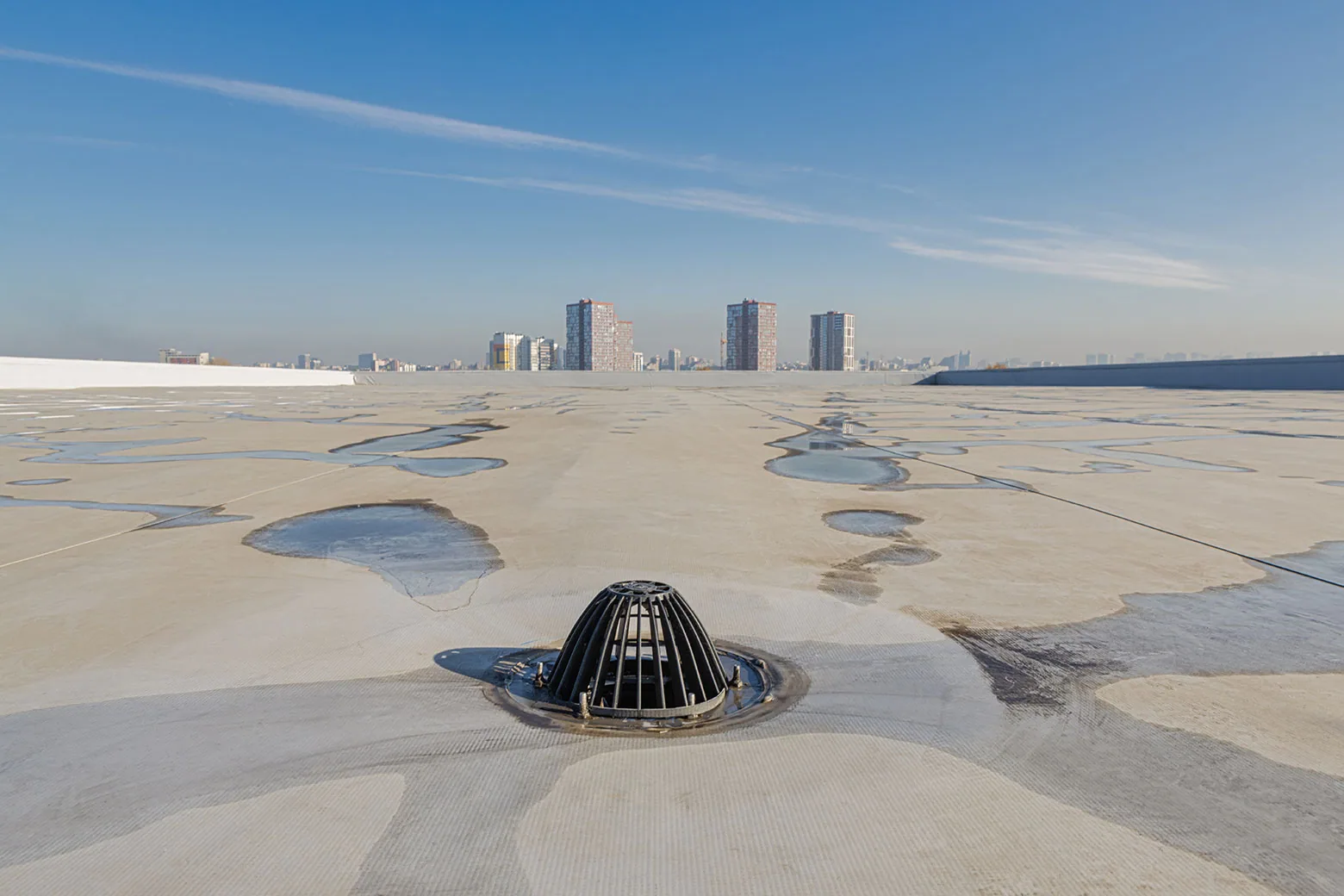
A water mark under a roof does not identify which seam or penetration admitted it. We compare the interior report with EPDM laps, pipe boots, curbs, wall flashings, drain bowls, and previous patches. Water can travel along the deck or beneath the sheet before appearing inside. At a pipe, the boot and clamp need a secure bond and enough movement allowance. At a drain, inspect the membrane termination and bowl rather than treating the strainer as the whole connection. If moisture readings suggest water under the assembly, test the area that could change the removal limit. The roof plan should distinguish what was visible from what still requires an opening. A drain inspection can be part of the same visit when water remains near an outlet, but drainage work does not replace a leaking lap repair. Conroe summer rain can quickly reveal a blocked overflow or low spot, while Houston Intercontinental's near-95-degree July and August normal highs provide regional context for material exposure. We identify actual conditions at the property, including whether the roof was dry enough for adhesion testing.
Match EPDM repairs to the sheet and substrate
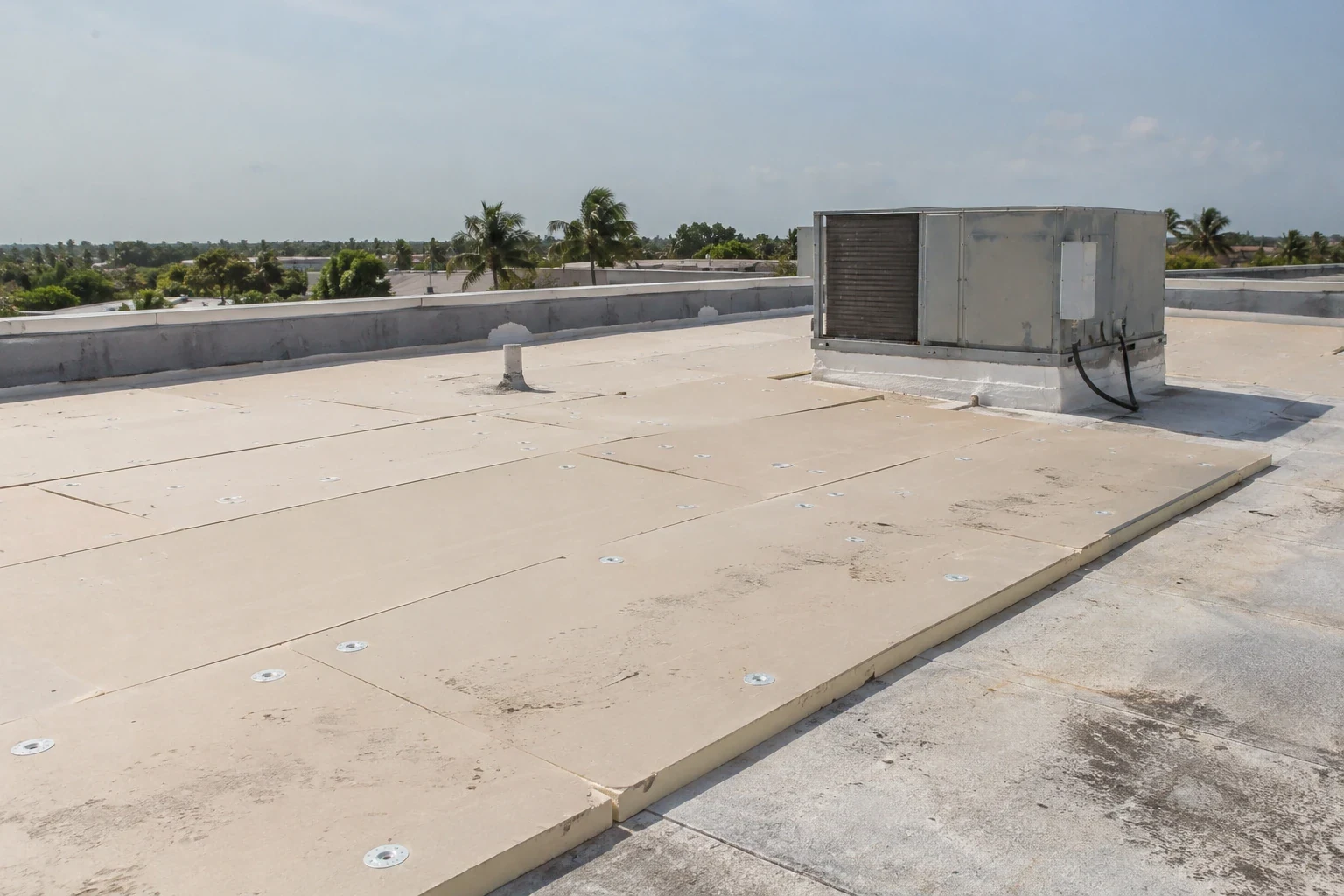
EPDM is not repaired with every membrane patch that looks similar. The sheet thickness, reinforcement if present, surface treatment, seam chemistry, and age affect preparation. We identify the existing material and confirm that the patch, adhesive, tape, and primer are compatible. A coating over the sheet may require separate preparation, while asphaltic contamination can complicate a bond. We also inspect the insulation and cover board when accessible. Wet board or a soft deck can prevent a durable repair even when the surface seam closes. A cover-board and insulation check can define what needs replacement below the membrane. An EPDM roof may share a building with PVC or TPO sections, but those systems use different accessories and repair methods. Map the seam where one assembly ends and another begins. A PVC roof and TPO roof need their own material and transition review. The written scope should identify the membrane being repaired, the preparation performed, the connection made, and any test result supporting the work. If the system cannot be verified from markings or the roof file, a small investigation may be needed before ordering material.
Plan the work around the property
Conroe Park North's mix of freight, food processing, warehousing, and manufacturing can place deliveries, equipment, or active production below roof work. A site contact confirms access, staging, and any interior protection needed before removal begins. For an office or research building at Deison Technology Park, the schedule and equipment controls may differ; the actual property manager sets those conditions. During Hurricane Harvey, Lake Conroe reached record pool elevations, followed by a record release that contributed to downstream flooding in Montgomery County. That event is relevant to water planning, but it does not establish that a specific building flooded. We inspect the roof's drains, low points, and interior reports at the site. A Conroe Park North roof visit still needs its own building and roof-zone identification. The work plan defines the daily opening limit, how the sheet will be protected if conditions change, and who receives a closeout update. Phased work can keep operating areas available while each EPDM section is removed and closed.
Repair the section or renew the assembly
A localized seam split or punctured sheet can be repaired if the surrounding membrane, insulation, and attachment remain serviceable. Repeated lap failures, pulled perimeter details, broad moisture, or multiple brittle patches may require a wider scope. We separate confirmed defects from suspected conditions and recommend testing when results could change the repair boundary. A recover review considers moisture, layer count, attachment, drainage, roof height, and applicable code. Tear-off gives access to the concealed assembly but involves disposal, dry-in, interior safeguards, and added staging. For a warehouse roof, operations may need a clear path for loading while the roofing phase moves. A replacement proposal should show seam and perimeter tie-ins, drains, curbs, material removal, and assumptions about hidden layers. The owner can compare that with a defined repair without mistaking a temporary patch for a renewed system.
Commercial Roofing Questions
What causes an EPDM seam to open?
The lap can lose bond from contamination, aging, movement, or an earlier repair that did not reach stable material. We inspect the full connection and nearby attachment before setting a patch boundary.
Can you put a coating over an EPDM roof?
That depends on the specific sheet, surface treatment, coating product, and preparation. We verify compatibility and moisture first, and compare coating with repair or replacement when the assembly is not suitable.
Does a pulled edge mean the whole roof must be replaced?
Not by itself. We check the attachment, perimeter, insulation, and nearby seams to determine whether movement is isolated or extends across the roof section.
How do you handle water under the membrane?
We identify suspect zones and use testing or a controlled opening when it can change the removal limit. Confirmed wet insulation is separated from areas that remain unverified.
What does EPDM repair closeout include?
The record should show the roof zone, seam or flashing repaired, compatible materials, photos, test results, and any remaining area that needs a later review.
Related Roofing Work