Commercial Rooftop Equipment Curbs and Supports in Conroe, TX
Repair and flash commercial rooftop curbs and supports in Conroe, TX. We trace leaks, coordinate equipment access, and tie repairs to the roof system.
A curb can stay dry for years, then start leaking after a unit is replaced or its service path changes. In Conroe, heat moves exposed metal and sealants while hard rain tests every raised corner and roof opening. The repair has to connect the equipment detail to the membrane, not just cover the visible gap. We inspect the curb, support, flashing, drainage around it, and the roof section below before setting a repair boundary. Properties near Conroe Park North and Deison Technology Park span freight, manufacturing, research, and office uses, so equipment access and the hours below the roof affect how the work is staged.
Start at the curb, then follow the water
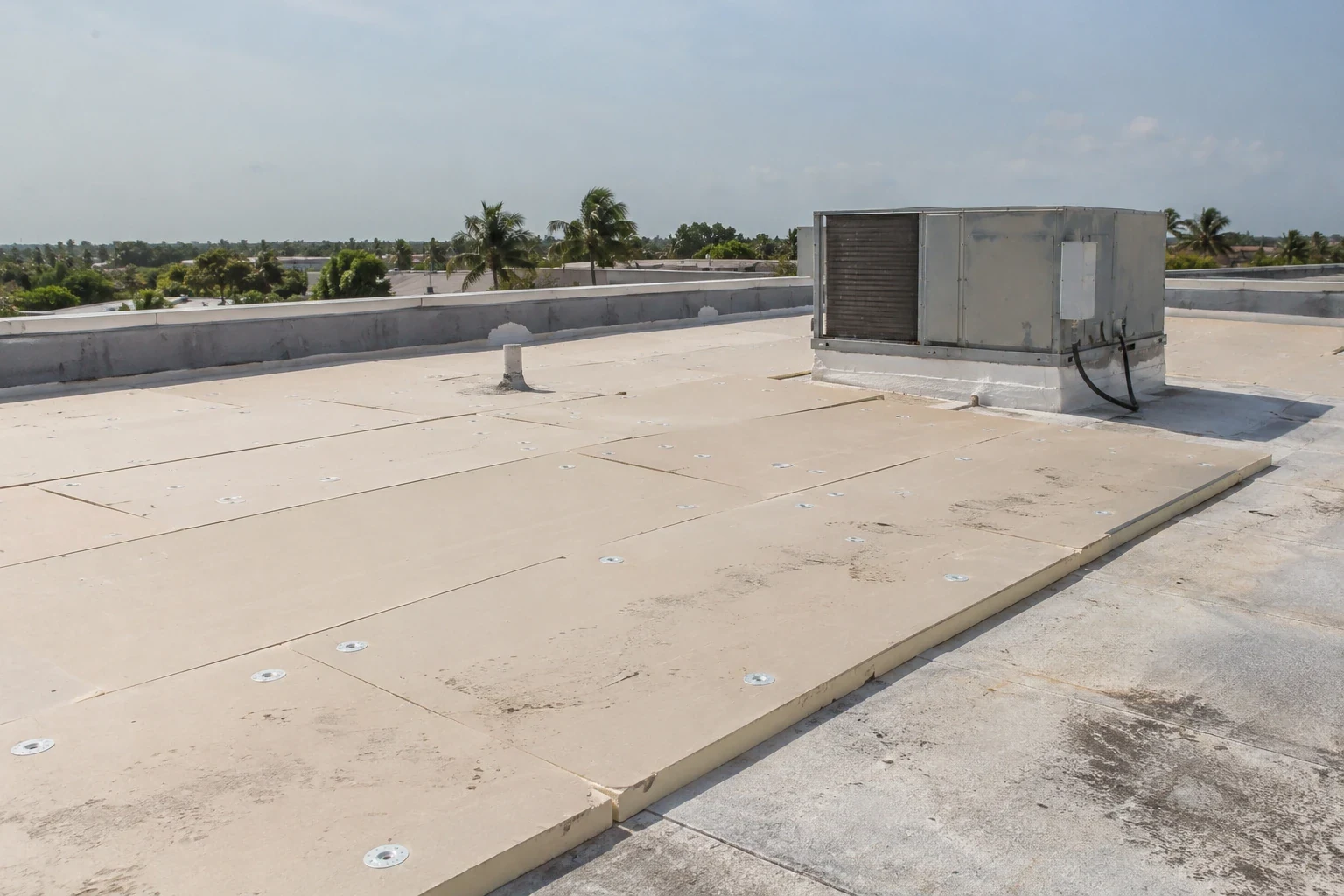
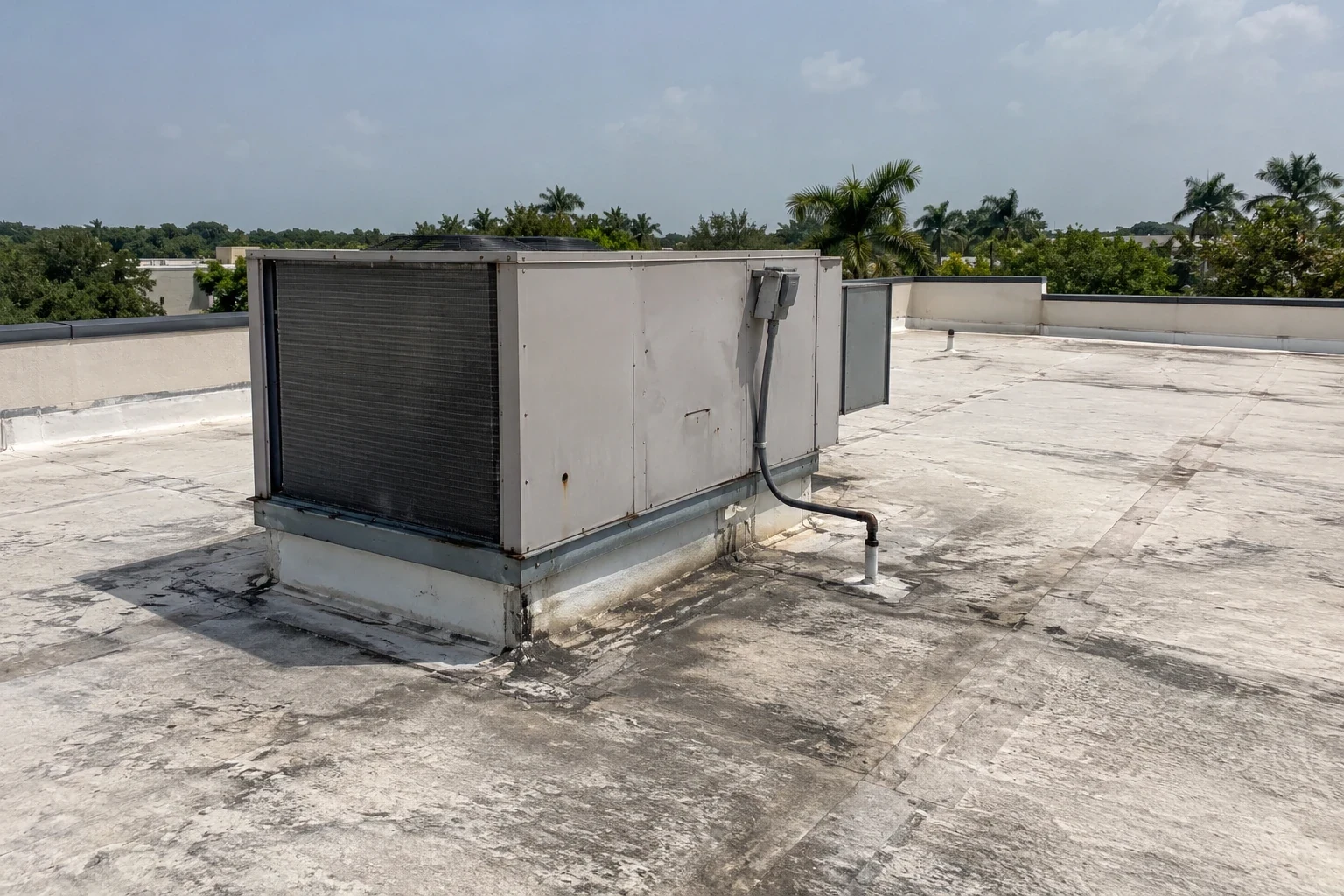
Water around a rooftop unit may enter at a corner, travel beneath the membrane, and appear far from the curb. We check the curb height, cap, corners, fasteners, counterflashing, membrane turn-up, and the condition of the seal at each transition. The unit itself may be sound while its curb flashing has split or pulled away. We also inspect the surrounding roof for ponding, seams, drains, and older patches that could change the likely entry path. A commercial roof inspection records the assembly and visible conditions before repair material is selected. If the curb is hidden by a screen or piping, we identify the access needed to see the connection rather than treating the unseen side as sound. Photos should show the whole curb and the close detail, with the roof zone labeled so a later visit can return to the same corner. When interior staining is reported, compare its timing and location with the roof map, but do not use a ceiling mark alone to set the repair area. That first check tells us whether the problem belongs at one flashing joint, the curb itself, or a broader section.
Match the flashing to the installed roof
A metal curb on a single-ply roof needs a different tie-in from a curb on modified bitumen or a standing-seam assembly. We identify the membrane or panel, attachment, existing flashing, and any coating or prior repair before cutting or covering material. On a thermoplastic membrane, a compatible flashing detail may be heat welded; the surface must be clean and the weld tested. On metal, panel movement and the curb's placement relative to seams affect how the transition can be rebuilt. Fasteners should not create a new path through the roof field, and sealant alone is not a substitute for a secure flashing connection. For a TPO roof, the membrane and curb detail need a compatible welded connection. If the assembly includes wet insulation or a deteriorated deck, the scope has to reach stable material before the new flashing closes the opening. A cover board and insulation review can help define that removal boundary where concealed layers are in question. We keep the equipment replacement scope separate from roof restoration unless the same project authorizes both. That makes it clear which trade owns the unit, which work repairs the weather barrier, and where one scope hands off to the next.
Coordinate the unit and roof work
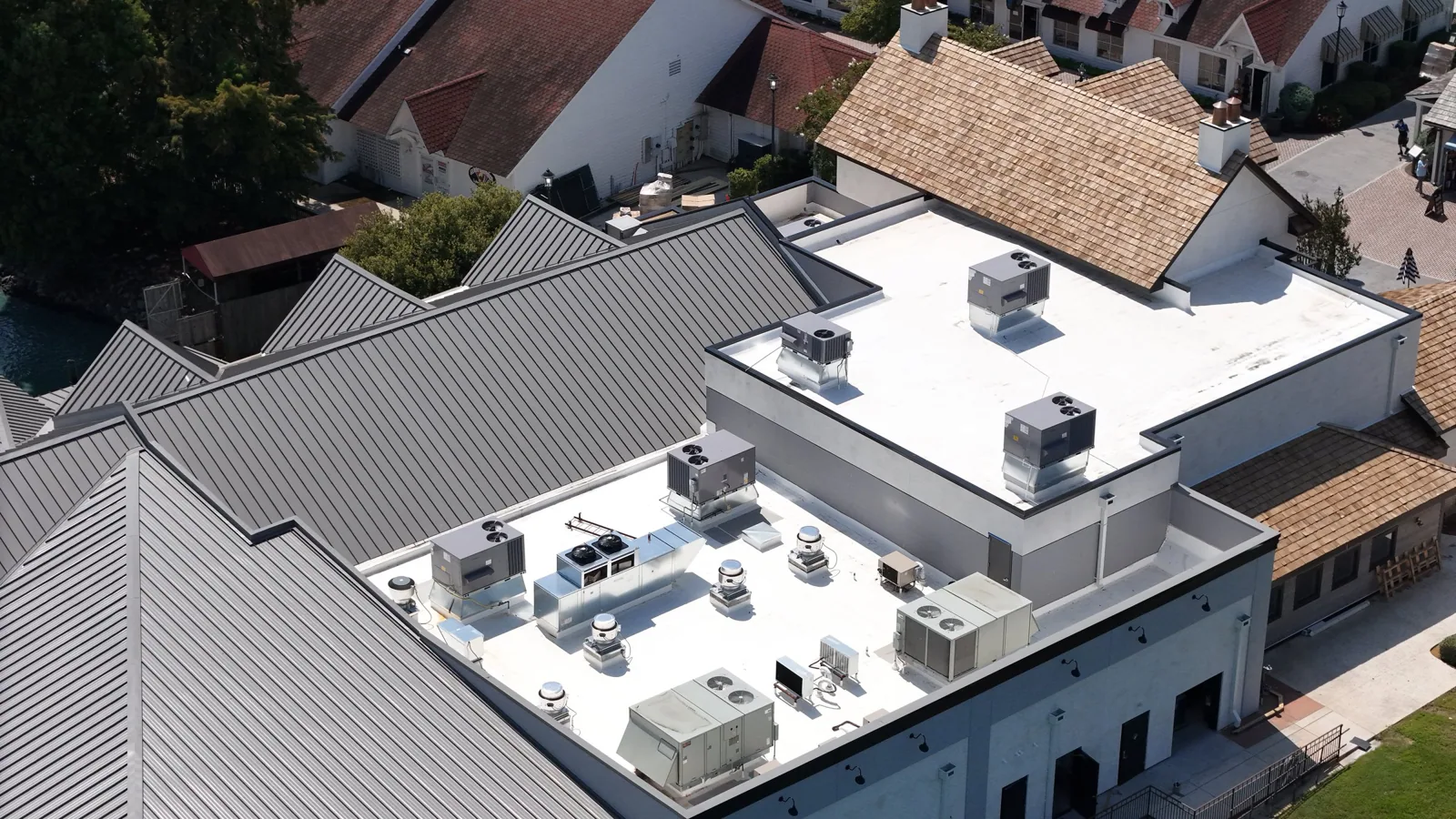
Curbs often have to remain connected to ventilation, cooling, exhaust, or process equipment while the roof is repaired. Before mobilization, we confirm who can shut down the unit, who controls electrical or mechanical access, where a lift or crane can stand, and whether the opening can be protected between shifts. A rooftop support may carry a pipe, conduit, walkway, or unit frame; its load and condition should be understood before it is moved. We do not assume that a support can be cut, raised, or re-fastened without coordination. If equipment must be lifted, its contractor and the roofer should agree on the sequence and temporary protection. A roof serving a data center may need a particularly controlled access and shutdown window, while a warehouse or production space can have dock and process constraints below. Those are operating questions for the actual property, not conclusions drawn from its name. The scope identifies the roof area opened, the dry-in point for each shift, the path around equipment, and who accepts the completed flashing. That coordination reduces the chance that one trade finishes a unit change while leaving an exposed roof connection for another visit.
Keep heat and heavy rain in the sequence
North Texas summer temperatures put repeated movement into exposed metal details, and Conroe's intense rain can expose a low curb corner or a blocked path around equipment. A rain report does not prove that a particular unit detail failed. We inspect the actual roof, check whether runoff can reach the drain or scupper, and note whether debris or a support interrupts that path. The 1997 tornado record includes an event over Conroe, which makes perimeter and rooftop attachments reasonable items to inspect after a reported severe-weather event; it does not establish damage at a particular building. When the roof is wet, access and adhesion work may need to wait until safe, dry conditions return. We coordinate temporary protection if water is active and define the next inspection step. A drain and scupper check can be part of the same visit when ponding surrounds a curb. On sites along the Conroe Park North service area, material delivery and equipment access can compete with freight activity. We confirm the property's own loading and staging rules instead of assuming a shared park-wide schedule. Each workday ends with a weather-tight curb detail and a clear note about what remains open.
Set the repair limit before pricing
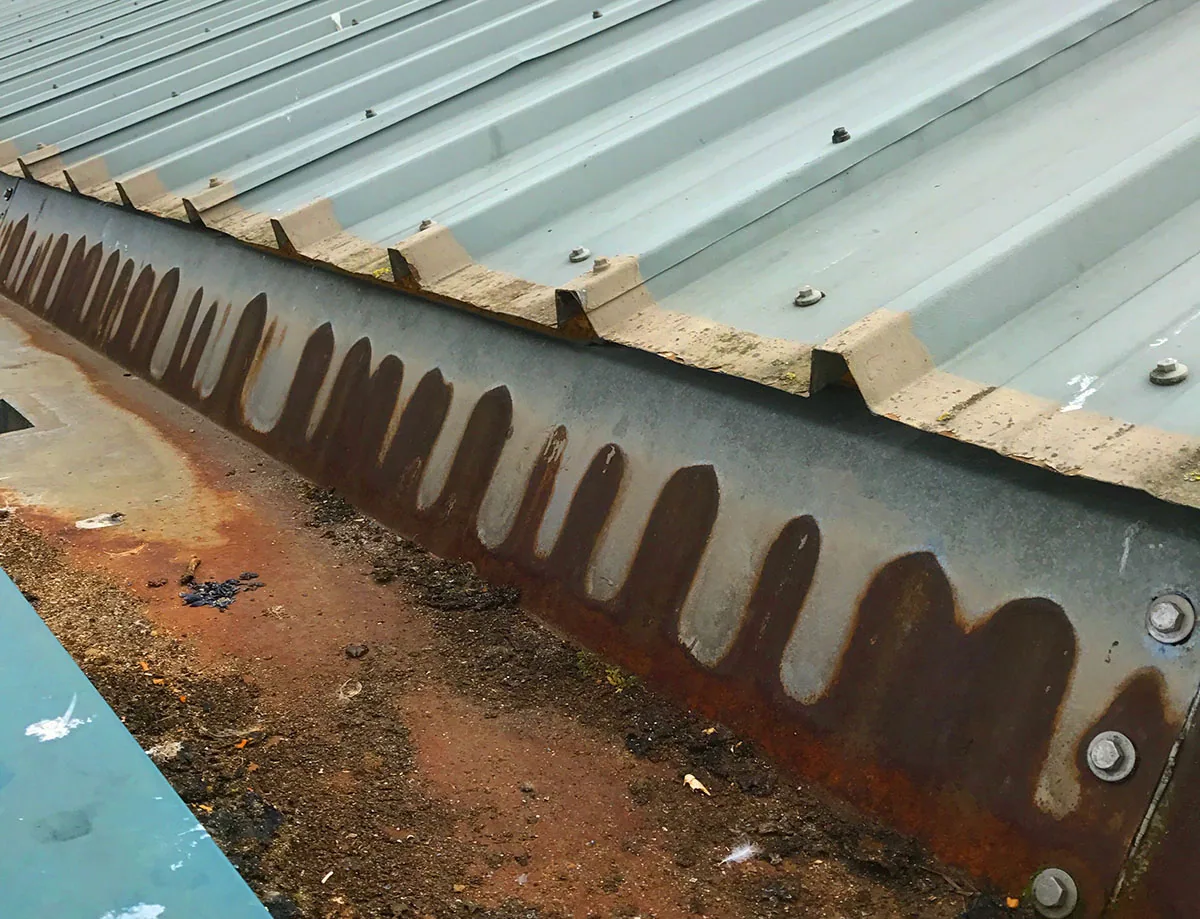
A single split corner with dry, attached material nearby can support a focused flashing repair. A curb with movement, recurring leakage, wet insulation, or corrosion at several sides may require a larger opening and a rebuilt transition. We separate the visible defect from concealed conditions that need testing. The estimate states whether it includes new curb metal, membrane flashing, insulation, deck repair, sealant, equipment lifting, or mechanical reconnection. If the curb is too low for the intended roof build-up or blocks drainage, the scope may need a design change rather than a patch. We explain which conditions could alter the quantity after opening and how approval works before additional material is removed. A roof condition report can retain photographs, repair limits, and follow-up observations alongside the property record. If several units share one roof, each curb gets its own identification so one repair does not stand in for an inspection of the others. A manager can then compare a localized repair with planned roof renewal, schedule unit work around occupancy, and preserve a weather-tight stopping point. The next review should return to the same corner, fasteners, and membrane tie-in rather than only checking whether the room below stayed dry.
Commercial Roofing Questions
Why does water appear beside a rooftop unit after the unit was serviced?
A service visit can disturb flashing, fasteners, or a nearby membrane seam. We inspect the curb and surrounding roof to find the actual opening, then separate roof repair from mechanical work.
Can you repair flashing without shutting the equipment down?
The roof detail and required access decide that. We coordinate with the equipment contact and define any shutdown, lift, or protected work window before opening the curb area.
What if the curb has rust or the membrane is wet below it?
We identify the affected metal and test or open the roof where needed. The repair boundary extends to stable material, and the estimate states any deck, insulation, or curb replacement that may be required.
Does sealant around the curb solve a recurring leak?
Sealant can be part of a compatible detail, but it cannot replace loose flashing or a failed membrane connection. We check the full transition and drainage path before choosing a repair.
What should be in the closeout after a curb repair?
The record should show the unit, roof zone, materials, flashing completed, photos, and any follow-up inspection. It should also state whether the mechanical contractor completed its separate work.
Related Roofing Work