Grocery Store Roofing in Conroe, TX
Protect Conroe grocery operations with roof leak tracing, refrigeration coordination, drain checks, and repair scopes planned around deliveries and store hours.
A drip above a grocery aisle can put product, flooring, and customer movement at risk while staff try to keep refrigeration and deliveries running. The source may be far from the wet ceiling tile, especially where roof drains, refrigeration penetrations, or a loading canopy interrupt the membrane. We start with the affected aisle or back-room area and ask which systems and routes must remain available during inspection. Conroe Marketplace is identified as a local shopping and dining area outside downtown. Conroe Park North has a separate industrial mix that includes food processing, freight, warehousing, and distribution. Those local uses show varied commercial demands; they do not establish conditions at a specific grocery store.
Protect food handling and store circulation
Store management should identify the affected department, any product that needs to be moved, delivery hours, receiving access, and the route customers use around the work zone. The facilities contact can also identify refrigeration or ventilation equipment that must stay active and the service vendor authorized to work on it. We confirm where the crew can stage, what doors or lanes require clearance, and how the manager will receive an update if a condition changes the planned area.
Roofing work should not interrupt a food-service system by surprise. We coordinate access with store leadership and leave equipment changes to the responsible technician. If the work touches a public aisle or receiving area, the scope should identify temporary barriers and the time needed to restore normal movement. Phased work in an open store can divide a larger project into sections, but the manager determines whether any aisle or department must be closed for safety.
Inspect refrigeration curbs and service penetrations
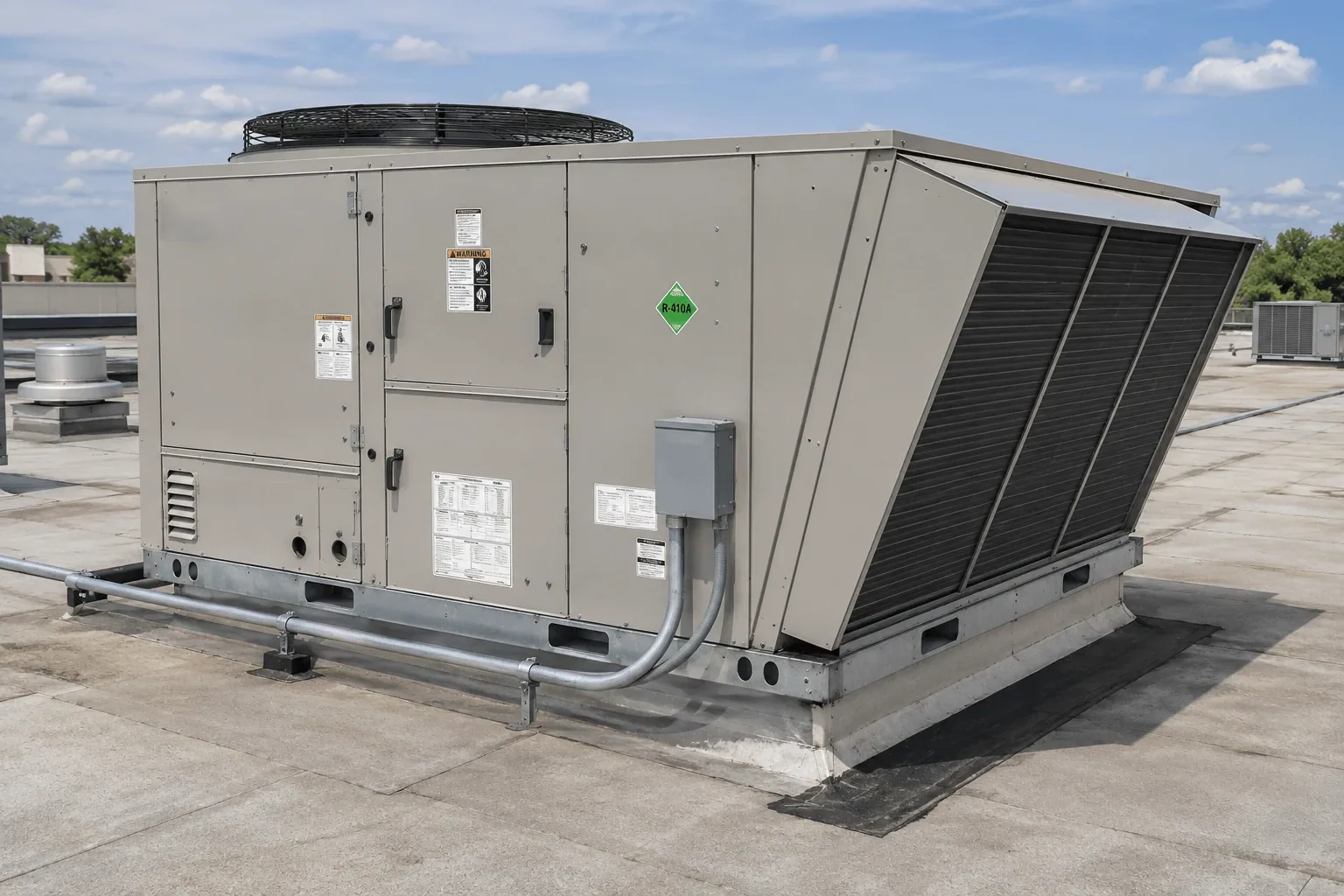
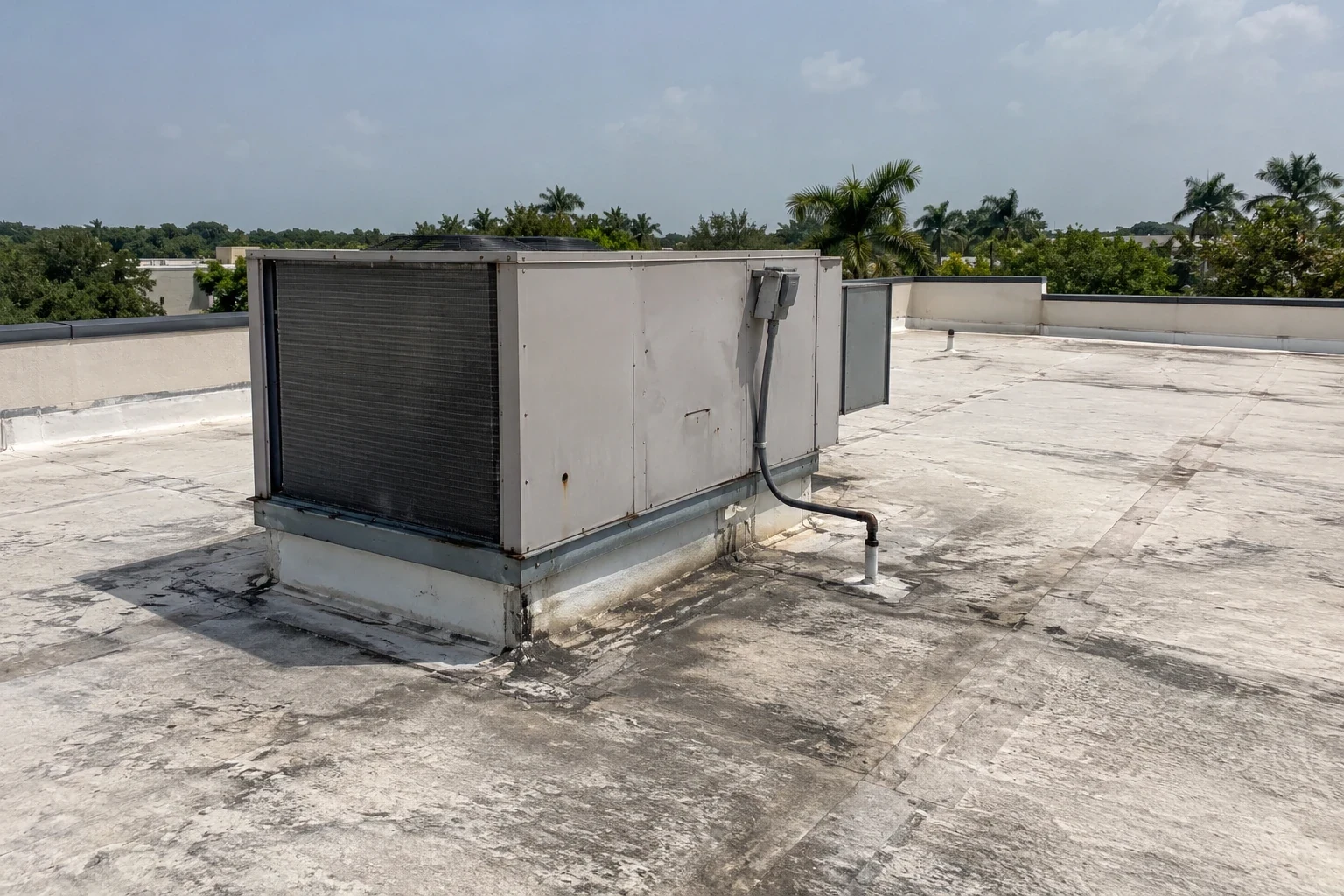
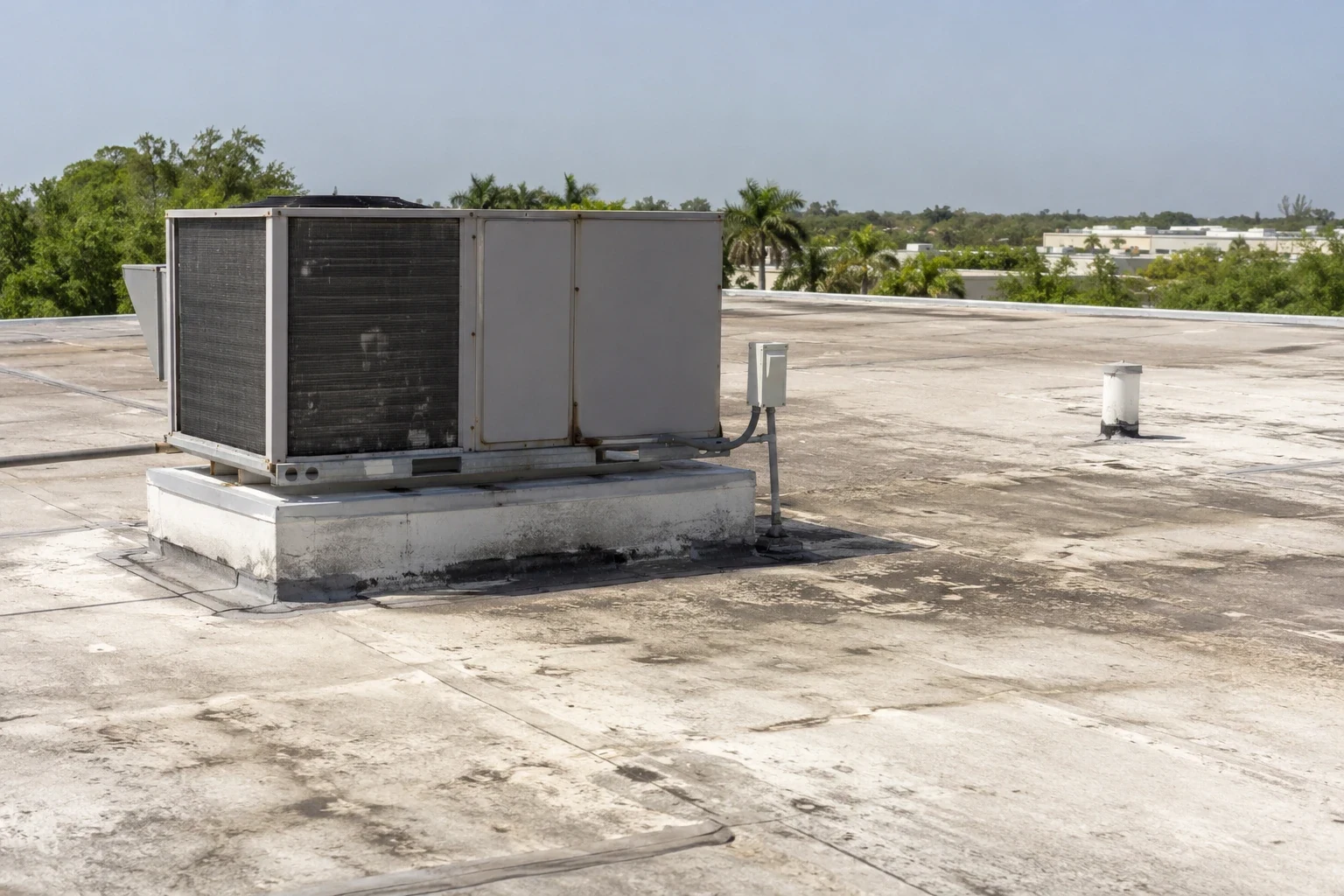
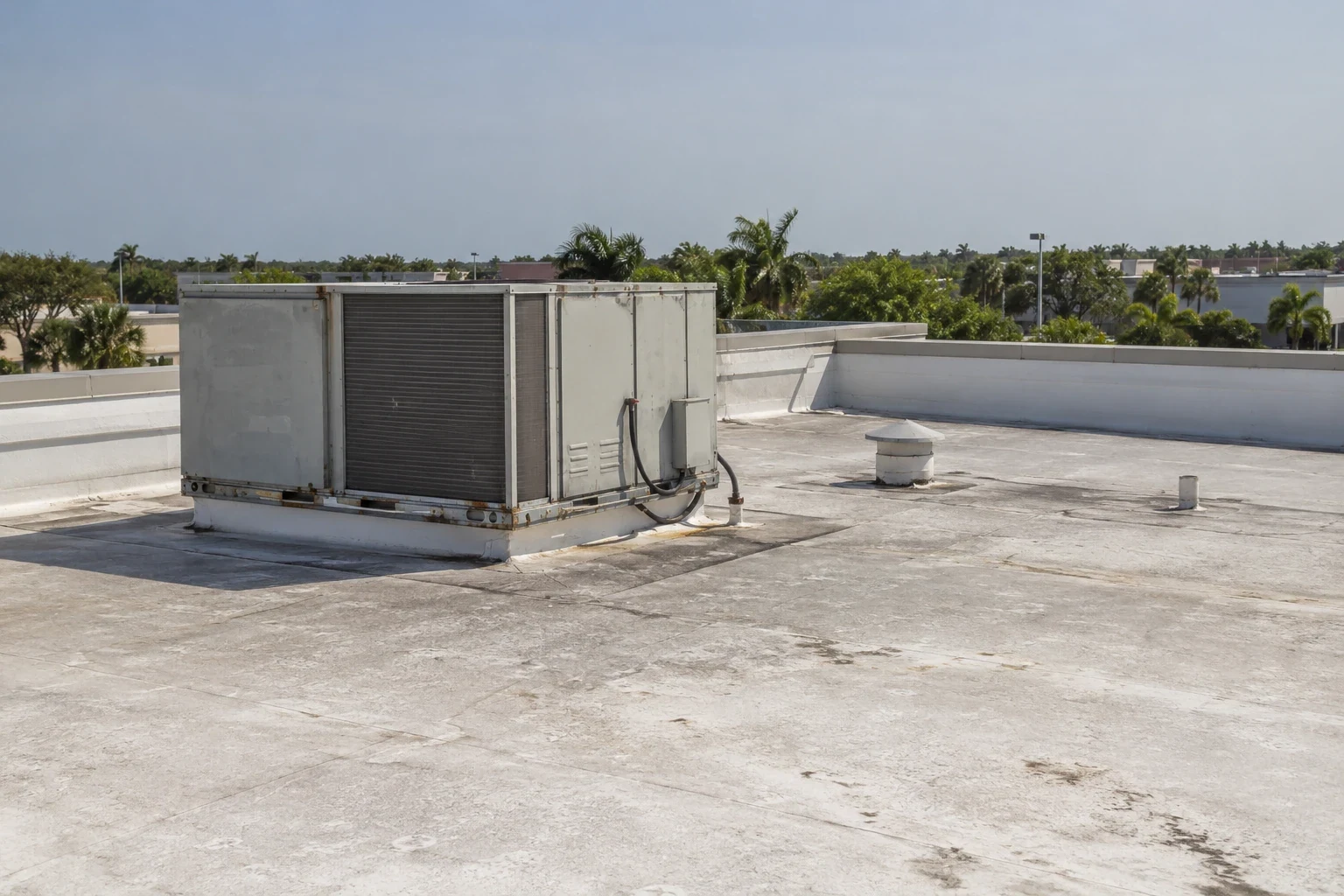
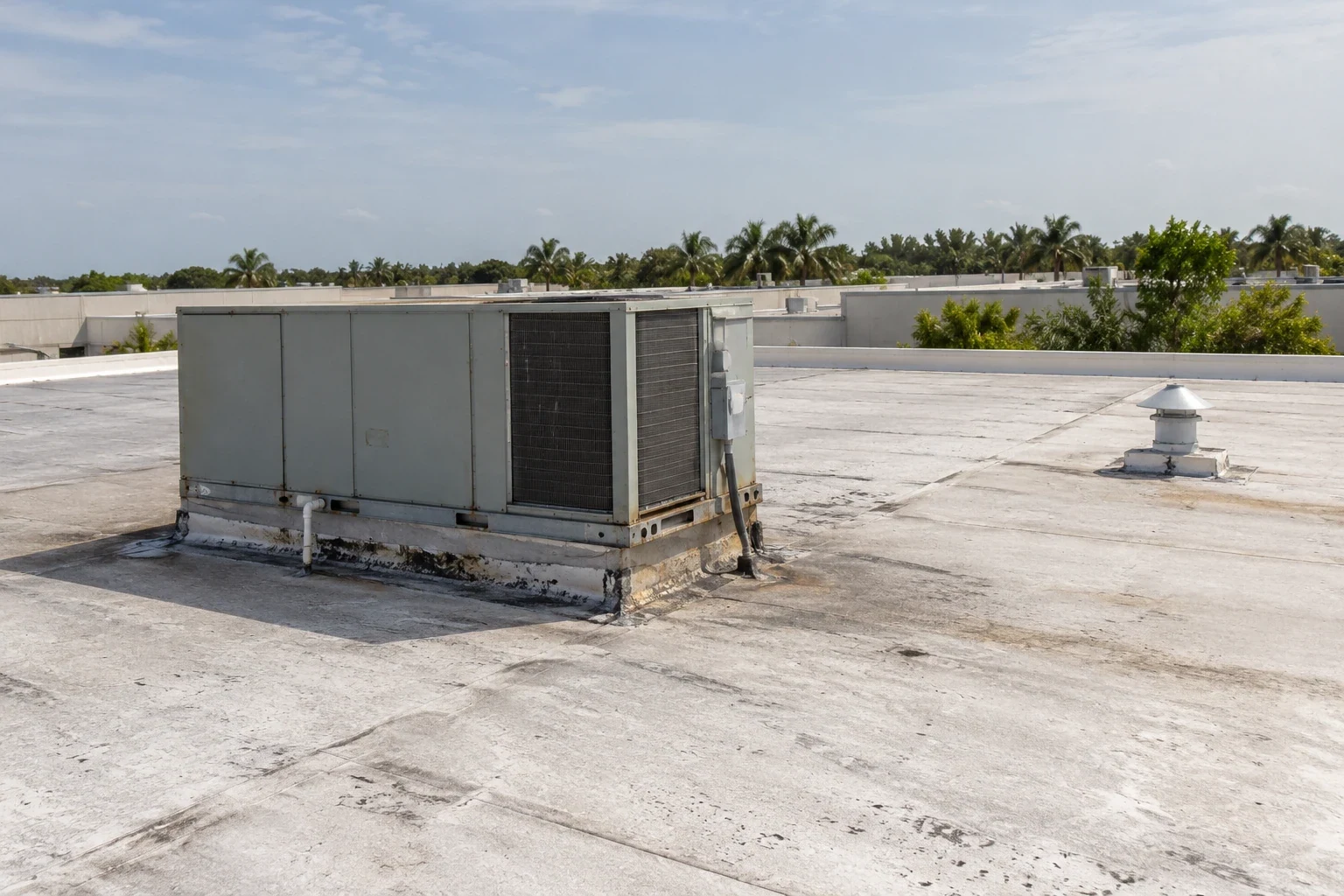
Refrigeration lines, ventilation, exhaust, and electrical service may pass through a grocery roof. Each opening has its own curb, sleeve, flashing, or support condition. We inspect the visible detail around the reported leak and ask the store's facilities lead or refrigeration contractor to identify equipment that requires access or shutdown coordination. The roofer does not disconnect a line or move a unit without direction from the trade responsible for it.
Water near a curb can come from the curb flashing, an adjacent seam, a nearby drain, or a wall transition. We trace the roof area rather than apply sealant based only on the ceiling location. Roof curb and support review is useful when the equipment mount, clearance, or flashing needs a closer look. A commercial roof inspection can document the surrounding assembly and help separate a localized defect from recurring moisture across several roof zones.
Keep drains and overflow paths in working order
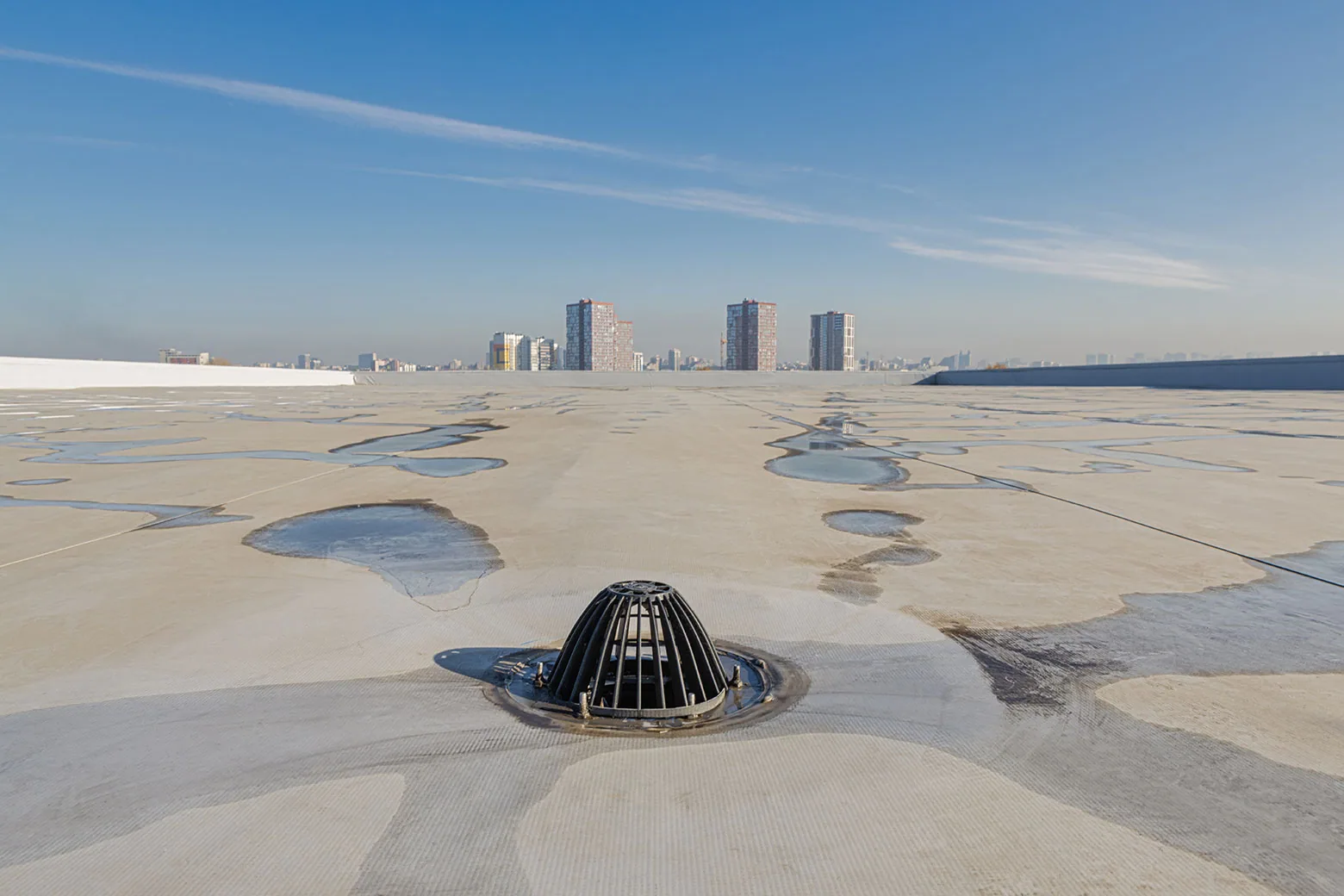
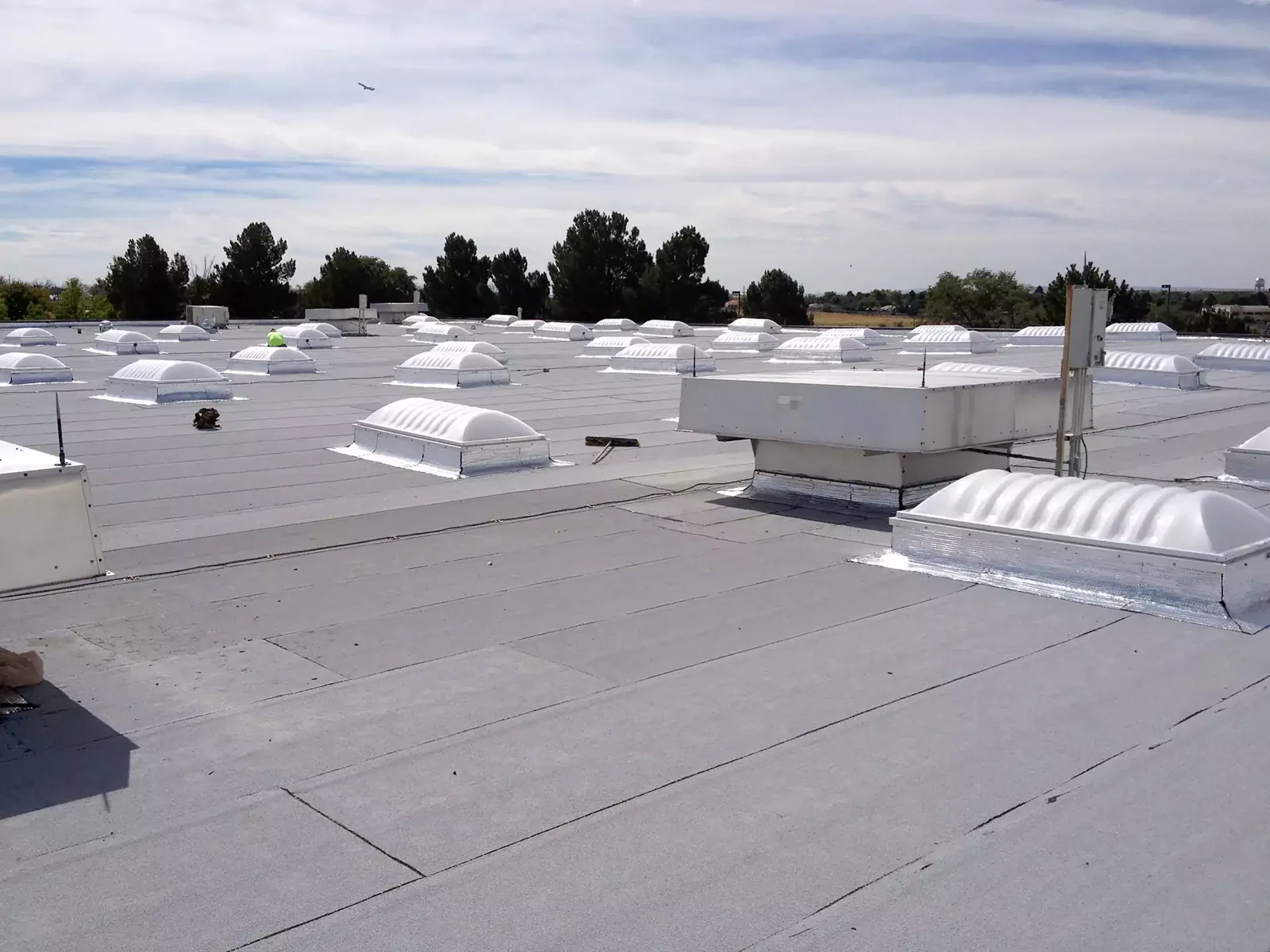
Grocery roofs can collect packaging debris, leaves, and other material near low points or drain strainers. We inspect accessible drains, scuppers, strainers, and visible discharge points for blockage, damage, or water that is not moving as expected. Standing water may lengthen exposure at seams and details, but it does not by itself prove a membrane failure. The inspection should distinguish a cleanout need from a damaged component or a broader drainage question.
During a heavy shower, water at a loading canopy or service area may show a different path than water above the sales floor. A maintenance report can list the area, drain, and any interior symptom so the next visit has a defined starting point. Drain and scupper service addresses the visible drainage details. For a larger store with neighboring tenants, shopping-center roofing discusses shared property access; a grocery scope must also account for product handling and the refrigeration system.
Fit roof work to Conroe's heat and rain
Weather can place a grocery roof and the store's cold-chain operations under the same time pressure. Before removing material, the crew sets a small enough work boundary to close the roof if rain approaches. Store management should know which receiving lane or customer entrance may be affected and whether refrigeration service must stay available. A delay notice should name the affected section and next update time so staff can adjust product or delivery handling.
After heavy rain, the inspection can follow the water path from the interior report toward drains, curbs, and roof edges. The goal is to distinguish an active opening from water that is simply moving through an earlier wet area. Conroe's local employment mix includes food processing and distribution at Conroe Park North, while Conroe Marketplace provides shopping and dining context outside downtown. Those facts describe nearby activity, not a particular store's roof. We keep the assessment tied to its own observed material, equipment, and drainage.
Compare a service repair with wider renewal
A small opening at a curb or seam may be repaired when surrounding materials remain stable. More frequent calls, wet insulation across several areas, or worn edges may call for a larger review. Recover work depends on the existing layers, moisture, structure, drainage, and applicable requirements. Tear-off reveals concealed conditions but requires a plan for debris, dry-in, customer access, and stock protection. A proposal should describe the conditions supporting each option rather than assume that every leak means full replacement.
For ownership review, the scope can list roof zones, product or department impact, drains, penetrations, equipment clearances, staging, and the process for approving hidden-condition changes. A replacement scope can be compared with a targeted repair on the same roof map. Conroe Marketplace is a shopping and dining area outside downtown; a roof visit in the district is scheduled with the property contact and confirmed for the actual building.
Give the next store manager a clear roof history
Store staffing and facilities vendors can change, so the closeout should preserve essential roof information. Record the inspected section, the leak location reported, the repair performed, materials used, photographs, and any limit to what could be accessed. If the refrigeration contractor needs to review a curb or line, note the handoff and avoid calling that condition resolved before the other trade reports back. A record of the roof zone helps the next manager assess a fresh report without assuming it matches an earlier event.
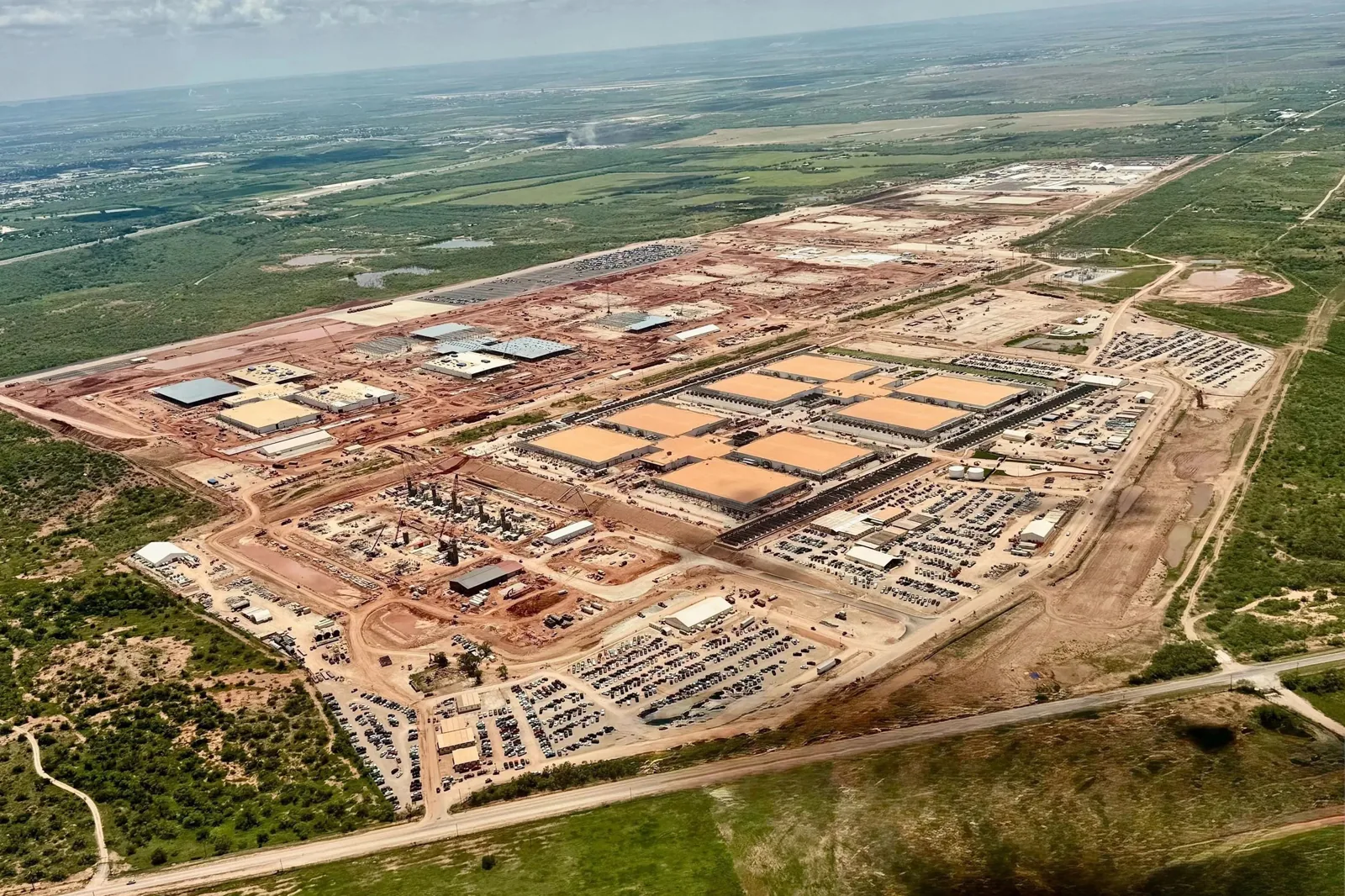
Conroe Park North's industrial roster spans food processing, freight, manufacturing, and distribution, while grocery operations add perishable inventory and cold-chain concerns. These are distinct activities in the local economy. Scheduled roof maintenance can track visible drains, edge details, and prior repair areas at the store. For a different large-format retail building, big-box retail roofing focuses on sales-floor and loading access; recommendations for a grocery site stay tied to its equipment and inspection findings.
Commercial Roofing Questions
Can roofing take place while a grocery store is open?
It can when management approves access, barriers, customer routes, delivery windows, and any affected department. The facilities lead should also identify refrigeration or ventilation constraints before work starts.
What should staff do when a leak reaches food or a sales area?
Follow the store's safety and food-handling procedures, move people and product from active water, and notify the facility contact. Share the aisle or room, time noticed, and whether the leak continues.
Will the roofer shut down refrigeration equipment?
No equipment change should happen without direction from the store's facilities team or its refrigeration contractor. We coordinate roof access and flashing work with the responsible service provider.
How do you check a leak near a refrigeration curb?
We inspect the visible curb, nearby seams, penetrations, drains, and transitions that could feed water to the reported area. The ceiling location alone does not define the repair limit.
When is a larger grocery roof project justified?
Repeated leaks across zones, broad wet insulation, or several deteriorated details may warrant comparing repair and renewal. Inspection evidence and store operating needs shape the scope.
Related Roofing Work