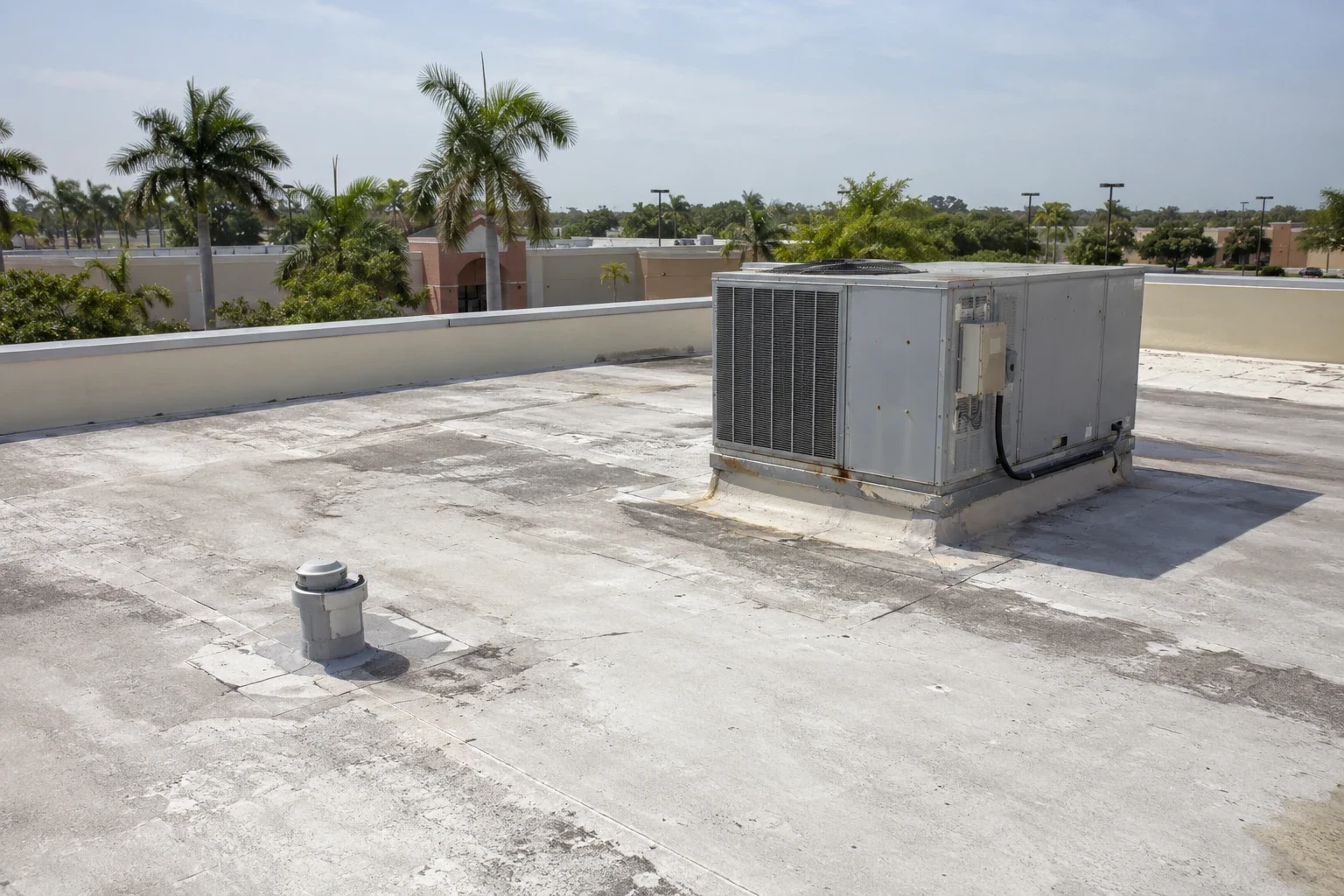
Shopping Center Roofing in Conroe, TX
Manage shopping-center roofing in Conroe with tenant coordination, leak tracing, drain review, and repair or renewal scopes tied to each roof zone.
A water stain over one storefront can disrupt a tenant while the actual opening sits several bays away. In a shopping center, the roof scope also affects parking, deliveries, customer paths, and neighboring suites. The useful first step is to identify the affected tenant and roof section, then set a safe inspection route that does not cut across an active entrance. Conroe Marketplace is identified locally as a shopping and dining area outside downtown, while the Downtown Conroe plan describes a mixed-use district with commercial redevelopment, housing, and civic activity. These settings offer local context, not proof of a specific tenant or roof condition. We base the repair boundary on the property we inspect.
Connect tenant reports to the landlord's roof map
Property managers often receive leak calls from people who do not control roof access. The report should include suite, interior location, time noticed, whether water is active, and any merchandise, electrical equipment, or ceiling materials at risk. The manager can then identify the roof keyholder and the maintenance contact authorized to approve work. We compare the suite with the roof plan, drainage path, penetrations, wall transitions, and nearby repair records before defining the work area.
Several storefronts may share a membrane and drainage path even when their leases assign different interior responsibilities. The scope should name which roof zones are included and where the contractor's work stops. We also coordinate temporary barriers, delivery windows, and lift placement with center management so a repair does not narrow customer access unexpectedly. A commercial roof inspection can document visible conditions across shared sections; if a replacement is warranted, a phased occupied-center sequence can identify tenant notice, work hours, and the daily dry-in point.
Follow the water path across adjoining suites
A ceiling tile near a demising wall may be wet because of a seam, curb, drain, or roof-to-wall transition farther upslope. We check the reported area and the details that can feed water toward it, then note what was visible and what remains concealed. If the roof is divided into additions or separate sections, differences in slope and material can change the path. A photograph of the stain alone cannot set a repair limit.
Drainage is especially important when the same tenant reports a leak after heavy rain. We look for blocked strainers, debris, damaged scuppers, standing water, and visible changes in the drainage path. Drain and scupper service can help sort a maintenance restriction from a membrane or slope concern. If a moisture pattern is not clear, a targeted moisture survey may identify areas for follow-up, but temperature readings need to be interpreted with the roof construction and confirmed as appropriate.
Keep customer and service access predictable
Shopping-center work affects people who may not know a project is underway. The property contact can set approved hours, truck access, dumpster location, pedestrian detours, and signage rules. We confirm whether roof access crosses a restaurant patio, loading lane, or storefront entrance and then keep the work boundary visible. A center with more than one building may need separate work windows so deliveries and customer traffic remain legible.
Conroe Marketplace is a verified local shopping and dining area outside the downtown core. Downtown Conroe's plan divides the center into five districts and pairs commercial redevelopment with housing and civic activity. Those distinct settings show why access cannot be assumed from a generic retail plan. We coordinate around the specific center's circulation and the manager's operating calendar. A Conroe Marketplace roof visit is scheduled with the relevant property contact; the page describes an area, not a claim about a particular store.
Plan for hot roof surfaces and heavy rain
A shopping center has to coordinate roof access with tenants when rain changes a work window. Management should know which suite sits below the open section, what temporary protection is in place, and who can authorize a pause. The schedule can also identify whether a canopy, loading lane, or public walkway needs a short closure. We set a daily limit on exposed material and confirm how the roof will be secured before leaving.
Drainage checks can be planned before wet weather when conditions allow safe access. We inspect accessible outlets and low points, note debris or damaged parts, and keep roof slope concerns separate from simple clearing. Conroe Marketplace is identified as a shopping and dining destination outside downtown; a retail center's own operating plan determines delivery and customer circulation. The Downtown Conroe plan addresses mixed commercial and civic uses in a separate area. A drain review records the visible condition, while a leak or ponding finding may require a wider roof assessment.
Choose a repair boundary or broader renewal
A center's roof decision often crosses lease lines, multiple suites, and shared access. Start with the mapped defect and establish whether the affected membrane is limited to one section or continues across adjoining bays. A repair can be efficient when the surrounding surface is stable. If interior calls recur across tenants or roof materials show broader decline, ownership can price a center-wide review. An overlay is considered only when the existing build-up and moisture condition support it; removal exposes hidden layers but takes more staging and debris control.
For comparison, the scope should define the property boundary, individual roof zones, drain and edge details, tenant notice, loading areas, and who authorizes changes. A replacement proposal can separate costs by section so ownership can set priorities. A single-tenant retail building follows a different circulation plan; big-box retail roofing addresses its sales-floor and receiving needs. The inspection should show what was seen, what was not opened, and how a later phase will connect to the current work.
Keep tenant calls attached to the roof record
A center manager may change while tenants stay in place. The roof record should make the last repair easy to find: date, building, roof section, tenant report, photographs, material used, and any limitation on the work. It should identify a drain or transition that needs follow-up rather than imply that the full roof was tested. A grocery-store roof has its own delivery and refrigeration demands, while a shared center needs suite-by-suite tracking.
Routine observations help identify changing conditions before a small maintenance item reaches several suites. Preventive roof maintenance can list accessible drains, edge details, penetrations, and prior repairs during scheduled visits. We keep recommendations tied to actual observations and avoid promising that maintenance prevents all leaks. Conroe has commercial shopping areas both in and outside downtown; the same inspection process can serve those different settings while the schedule, tenant notice, and roof boundaries remain property-specific.
Commercial Roofing Questions
Who should report a shopping-center roof leak?
The tenant can notify property management with the suite, room, time, and current condition. Management can route roof access through its designated contact and tell us about merchandise, customer paths, or equipment needing protection.
Can roofing work happen while stores are open?
Often, when the work zone, truck route, signage, and noise window are coordinated with center management. A large repair may need a temporary entrance adjustment or off-hour phase that should be identified before mobilization.
Does a leak above one suite mean its roof area needs replacement?
No. The source may be a seam, penetration, drain, transition, or another detail that feeds water to the interior. Inspection findings and the surrounding material condition define whether a local repair or broader review makes sense.
How do you inspect drainage at a retail center?
We review accessible drains, scuppers, strainers, low areas, and visible discharge paths, then document blockages or damage. A standing-water report may also require review of slope and membrane details.
What should a center roof proposal include?
It should name buildings and roof zones, work limits, drains and edge details, access and tenant controls, materials, weather protection, exclusions, and the process for approving concealed-condition work.
Related Roofing Work