Big-Box Retail Roofing in Conroe, TX
Protect big-box retail operations in Conroe with clear roof-zone scopes, loading-area coordination, drainage review, and repair plans for active stores.
A leak on a big-box sales floor can force merchandise moves and aisle controls before anyone knows the source, while receiving still needs a route. A large footprint can have several roof sections, changes in deck or membrane, and equipment clusters that make one stain a poor guide to the full repair. We start with the affected aisle or back-of-house zone, the store contact, and the access route. Conroe Marketplace is a local shopping and dining area outside downtown, while The Woodlands Town Center combines retail with office, hotel, healthcare, and entertainment uses. The mix of retail, office, hotel, healthcare, and entertainment uses makes receiving access, occupied areas, and delivery timing key inputs to a store roof plan.
Keep sales and receiving routes usable
Before an inspection, store management can identify receiving hours, customer entrances, high-traffic aisles, stockroom access, and any area that cannot be blocked during the visit. We confirm whether a lift can use a service lane and where tools or removed material may be staged. A retail manager should name the person who approves temporary barriers, aisle closures, and changes to a delivery window. That prevents a roof task from becoming an unplanned interruption at the front door or loading dock.
For a large building, the access plan should match the roof zones in the inspection record. A dock-side leak may involve a different slope or drainage path than a sales-floor report. We mark each work area, state which doors or lanes are affected, and restore the agreed access at closeout. Phased work in an occupied store can sequence sections so stock and customer activity remain separated from roofing. The store's own operations lead decides whether a work window fits the daily schedule.
Divide a large roof into inspectable areas
Roof area alone does not explain how a building is assembled. A store may have additions, loading canopies, different membrane sections, or roof levels connected by interior construction. We use accessible plans, visible transitions, and the reported room or aisle to set a roof-zone map. The inspection checks seams, curbs, penetrations, drains, wall transitions, and visible evidence of earlier work. We record which section was inspected and whether any area was hidden or unsafe to reach.
A ceiling stain can sit below a path that begins several bays away. Water may move along a deck flute or insulation joint before it appears on the sales floor. A commercial roof inspection helps connect reported symptoms to roof details and identify whether the issue appears local or repeated across the building. If a grocery tenant shares the site, grocery-store roofing adds refrigeration and food-handling priorities; those systems should not be assumed in a general retail building.
Check drains and rooftop service clearances
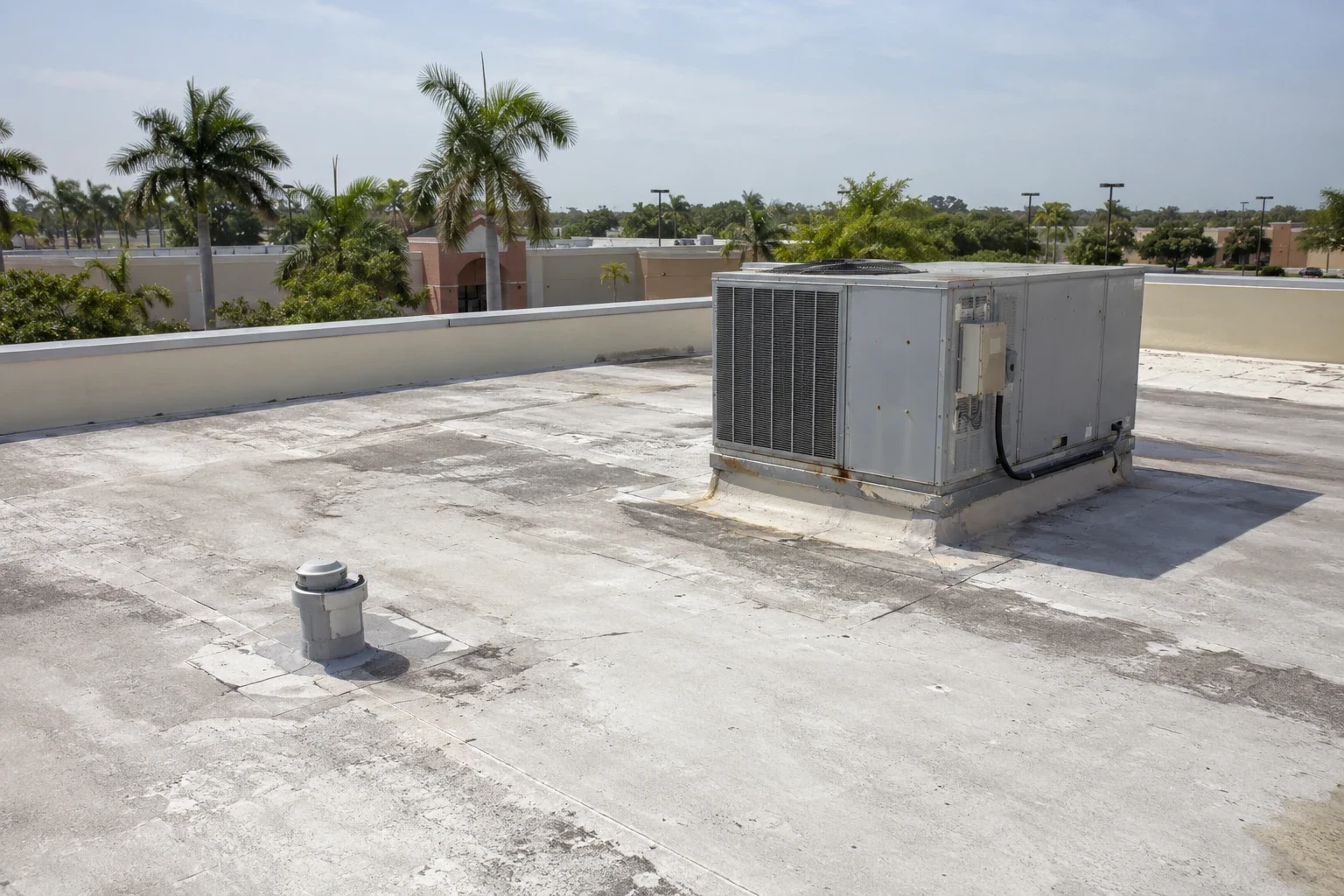
Large roof sections need a clear drainage path. We look at accessible drains, strainers, scuppers, low areas, and visible discharge points for debris or damage. Water remaining around a low point can prolong wetting and make a small defect harder to isolate. A blockage may be a maintenance item, while poor slope or a damaged roof detail calls for a broader review. Drain and scupper service documents the observed condition without assuming that every ponded area has the same cause.
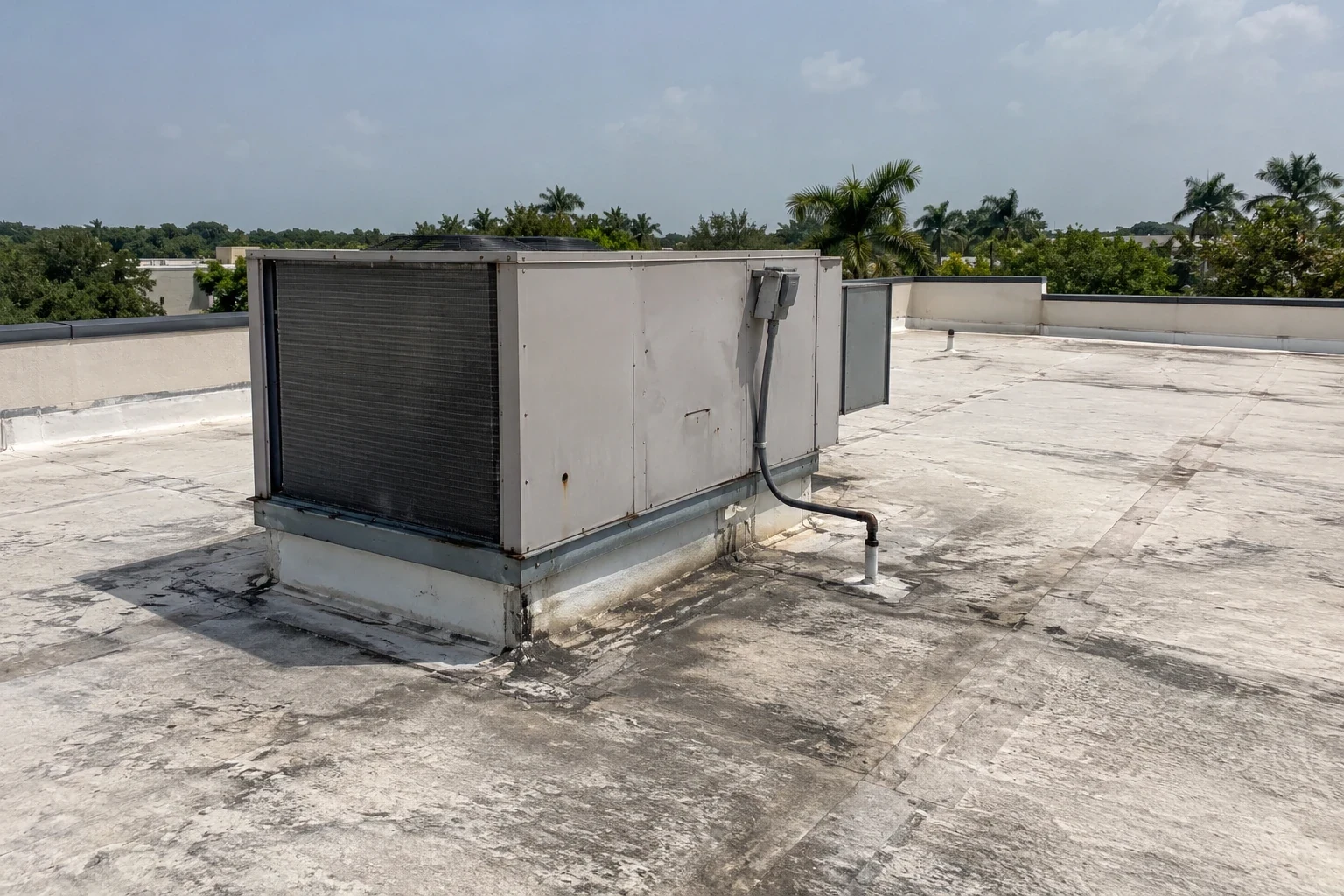
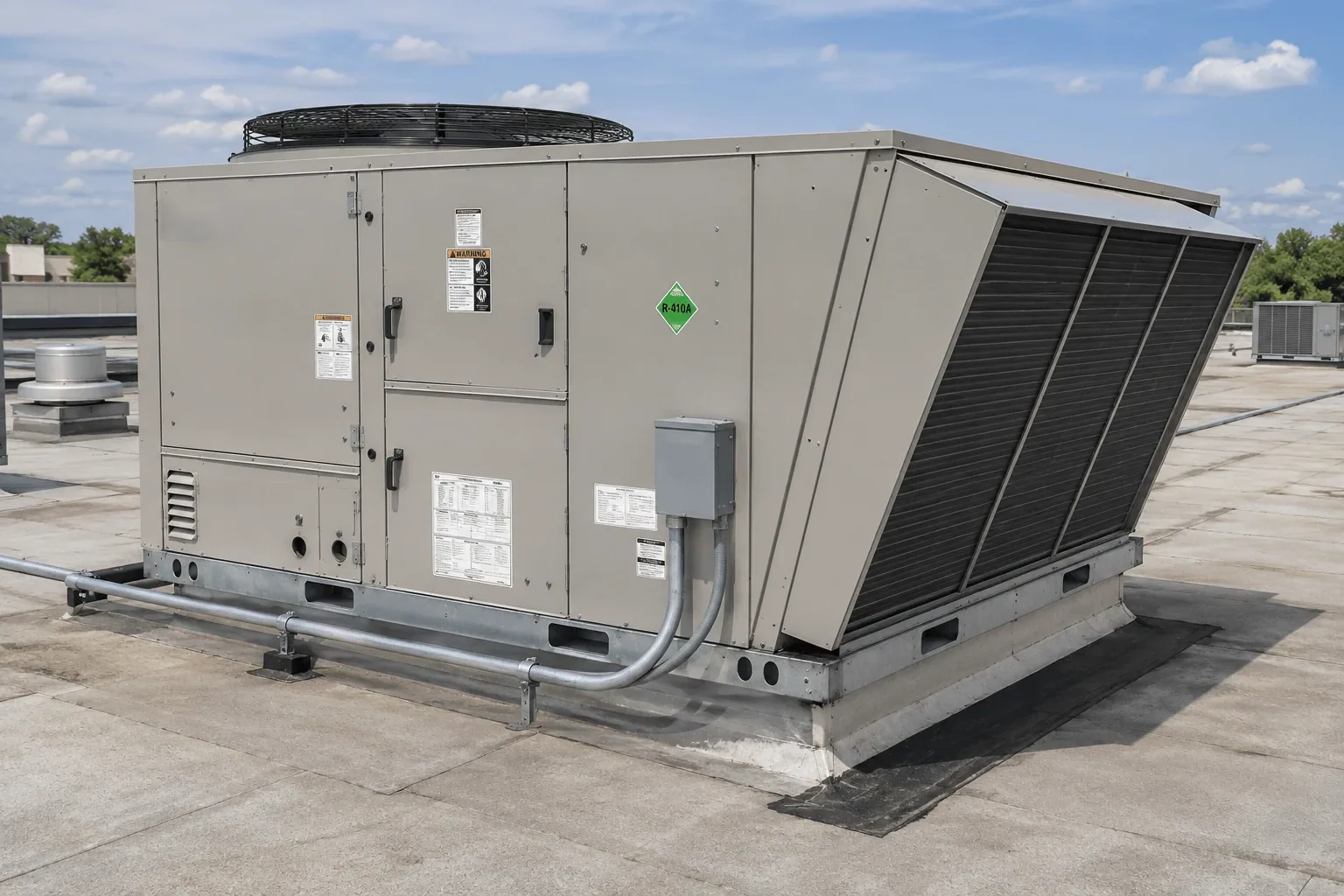
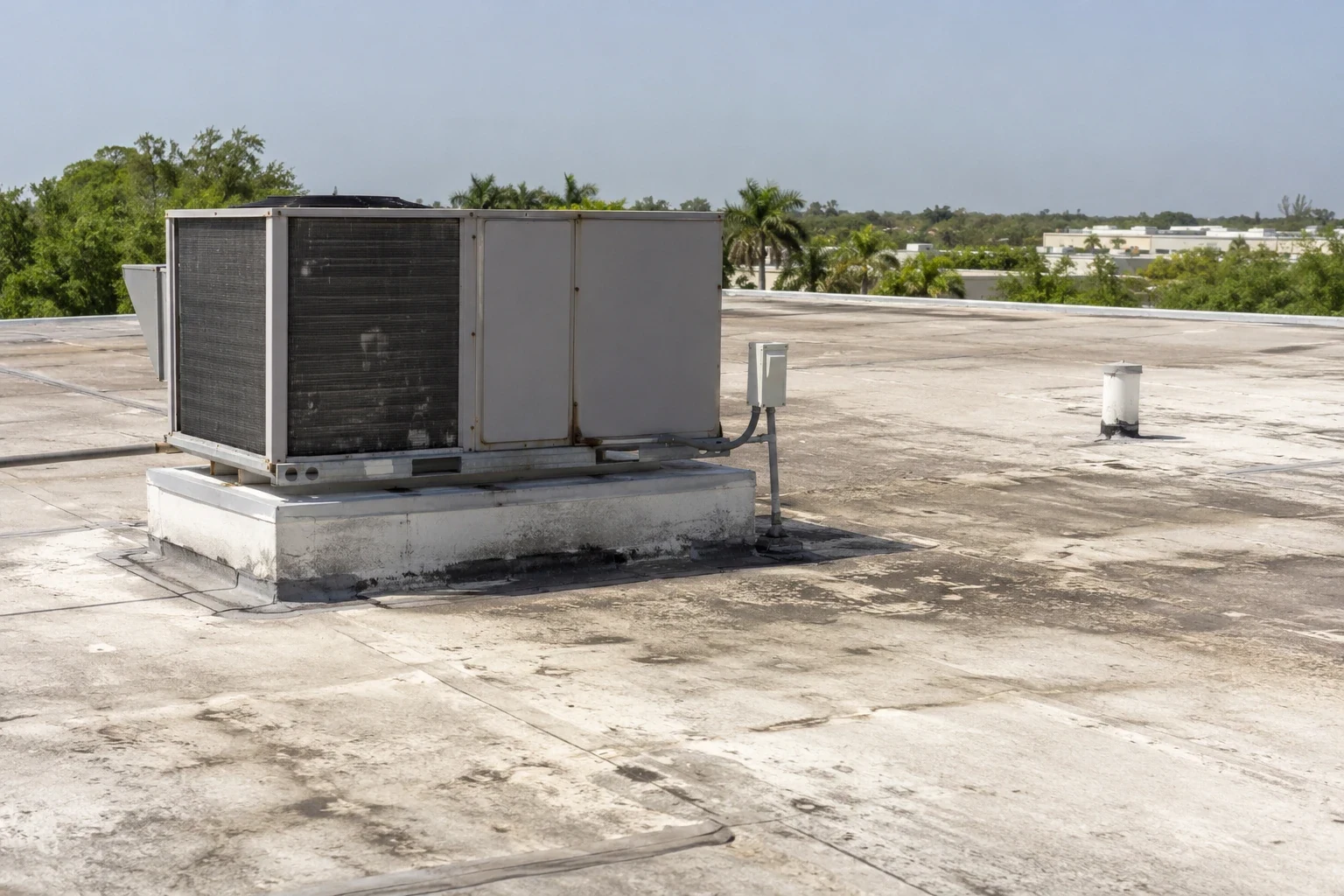
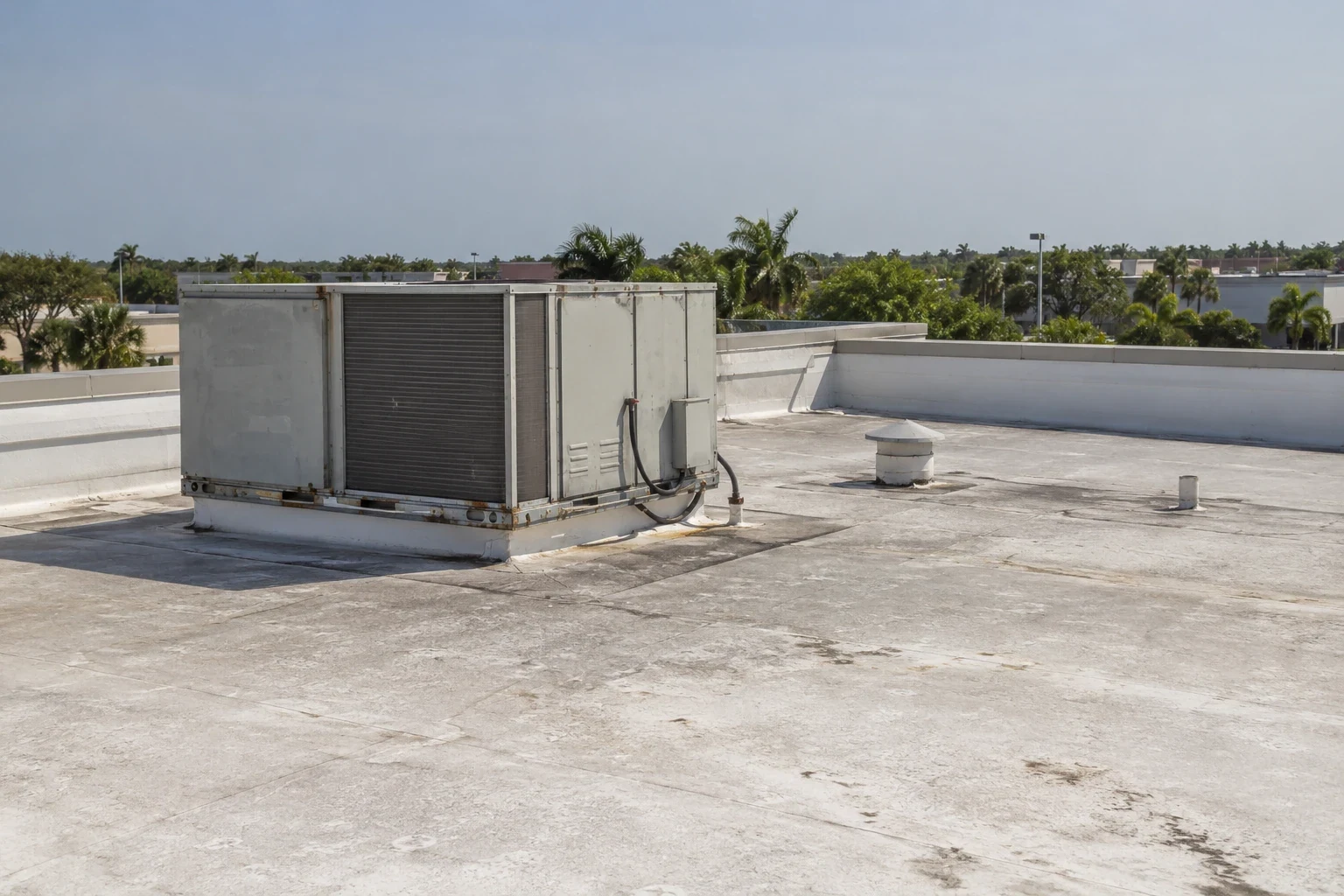
Big-box roofs can also support HVAC, exhaust, communications, or other equipment, but the actual inventory depends on the store. The facilities contact or service vendor identifies any unit that must stay active or remain accessible. We do not shut down, disconnect, or move equipment on our own. We map the curb and nearby flashing, then coordinate the repair boundary with the people who service the system. Equipment-curb review can clarify whether a flashing detail, mounting point, or access clearance belongs in the roofing scope.
Set the work window against Conroe heat and rain
Large retail roofs can expose crews to long stretches of hot membrane with few shaded access points. The store and roofing lead should agree on a start window, work/rest plan, and the section that can be opened without risking an incomplete closeout. Rain may also affect deliveries, temporary barriers, and the route customers use from the parking lot. We set a practical limit for exposed material and report any change before the manager has to adjust store operations.
Weather review begins with the forecast and the building's drainage condition. We look for blocked outlets, loose edge details, or past repairs in the intended work area, then confirm that temporary protection can carry the section through a delay. Conroe Marketplace serves local shopping and dining, while The Woodlands Town Center combines several commercial uses. For a specific store, inspect its own drains, low points, edge details, and prior repairs, then record the roof zone and next action.
Compare a local repair with full renewal
Store leadership should compare the cost of returning to a troublesome zone with the operational cost of repeated aisle moves. If one defect is contained and the surrounding roof is stable, a defined repair may restore the affected area. If several sections show active wear or water reports cluster across the sales floor and dock, a larger scope can be more practical. Any added roof layer must suit the existing construction and loading; removing old material takes more time but exposes the deck and insulation for inspection.
Build the bid around the store map: sales floor, receiving, stockroom, entrances, mechanical curbs, and drainage sections. The document should mark the work boundary and explain how the crew will protect merchandise and reopen the lane. A replacement scope gives the operator an apples-to-apples comparison with repair. A multi-tenant property uses a different notice chain; shopping-center roofing covers shared storefront access, while one store team controls this building's hours and receiving plan.
Give store leadership a usable closeout
After the crew leaves, the store contact should know which roof zone was addressed, what material was installed, what photos document the work, and whether another trade has an open item. A short closeout note can identify limits such as a concealed area that was not opened or a drain that needs follow-up. That lets facilities staff compare the next leak with the correct section instead of assuming the whole roof received the same treatment.
At Conroe Marketplace, plan visits around receiving, deliveries, and occupied entrances. Scheduled maintenance can track accessible drains and visible details over time; for each store, keep the inspection tied to its roof zones and the next operating window.
Commercial Roofing Questions
Can roofing take place while a big-box store is open?
It can when management approves hours, loading access, barriers, and the roof section involved. A project may need a quieter window or a staged closure, depending on the work and the store's operating schedule.
How do you locate a leak on a large retail roof?
We compare the reported aisle or back-room area with accessible roof zones, seams, curbs, drains, transitions, and prior repairs. Water may travel before it appears inside, so the stain does not set the repair boundary by itself.
Do you coordinate roof work around loading docks?
Yes. The store contact identifies receiving windows, vehicle routes, and staging limits. The scope should say when a lane or dock edge is affected and who approves any schedule change.
When does a store need more than a repair?
Repeated leaks in separate zones, widespread moisture, or multiple deteriorated details can justify comparing broader renewal options. Inspection findings determine whether repair, recover, or tear-off fits the actual assembly.
What should the closeout include?
It should list roof zones inspected or repaired, materials, dated photos, access or weather limitations, and follow-up items. That record helps store facilities staff direct the next inspection.
Related Roofing Work