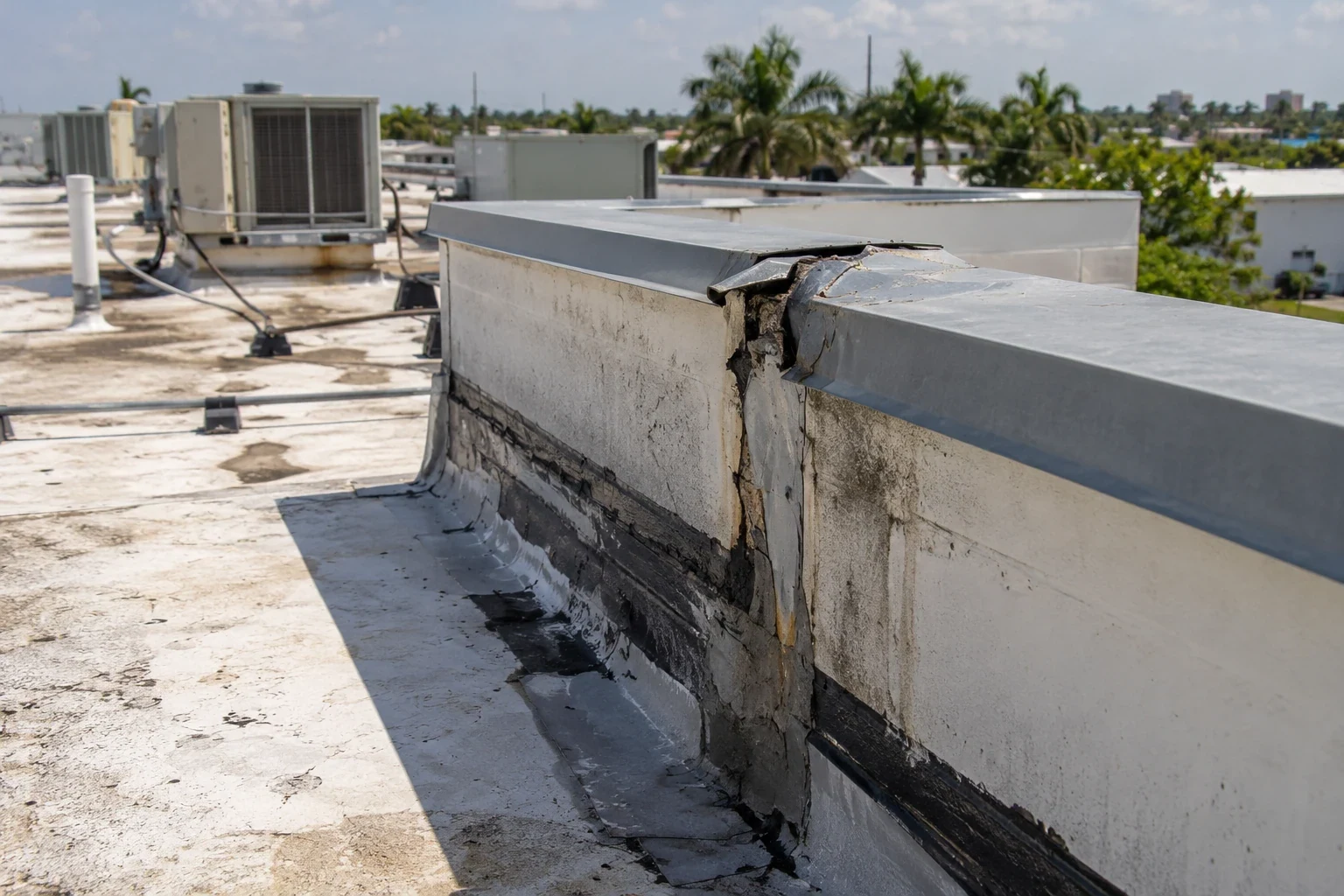
Commercial Roof Membrane Puncture Repair in Conroe, TX
Find and repair commercial roof punctures in Conroe, then check insulation, nearby seams, and equipment paths before closing the work order.
A screw, dropped tool, sharp package corner, or service cart can leave a small opening that is hard to see from the roof hatch. The membrane may look dry while water has already moved into insulation or along a deck joint. We inspect the reported route, mark punctures and scuffs, and check nearby seams and penetrations before choosing a patch. The repair has to fit the roof material and reach sound surface beyond the opening, not simply cover a visible mark.
Reconstruct how the roof was used
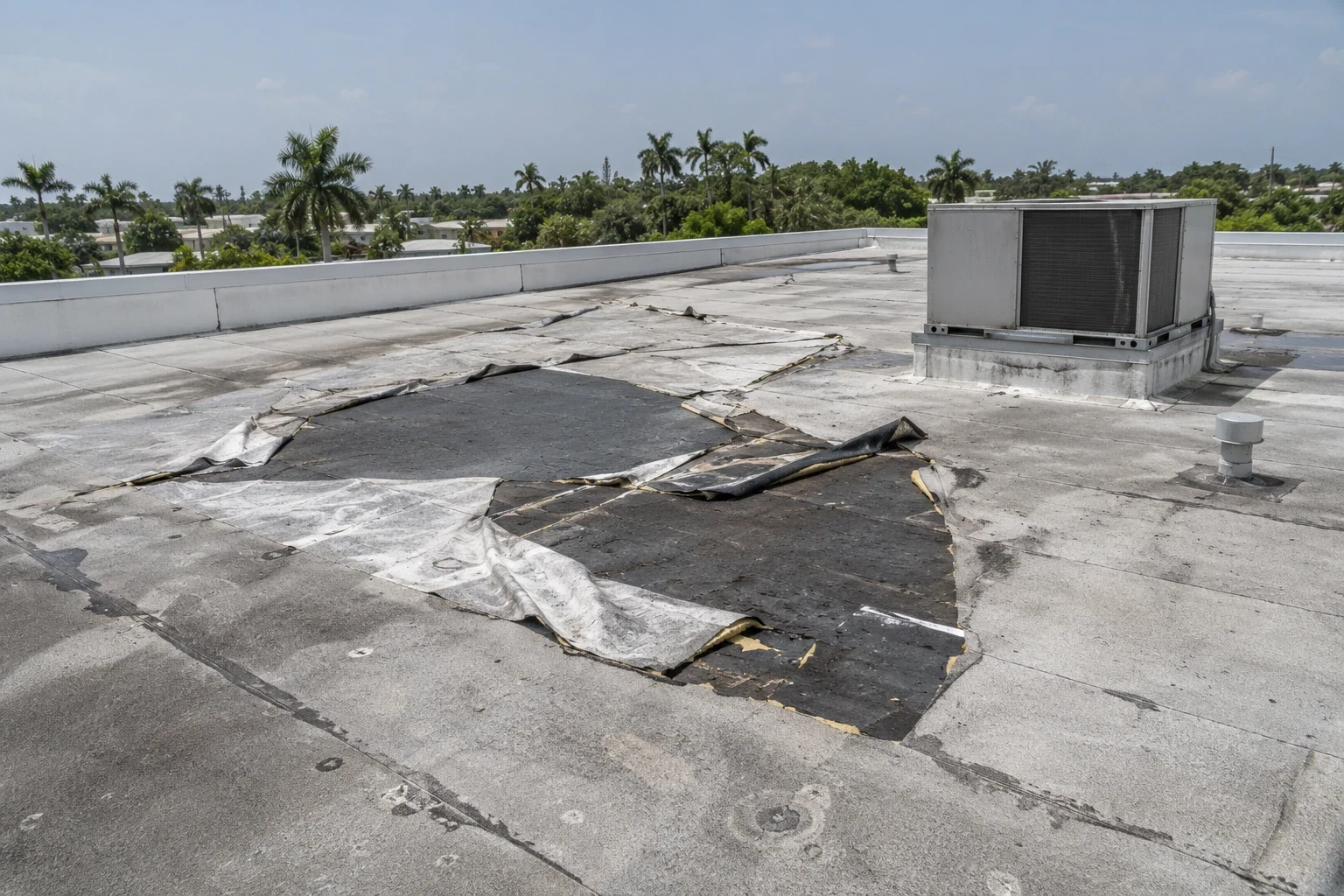
Start with the last service visit, equipment change, or material movement across the roof. We ask which hatch, ladder, service lane, and unit were involved, then walk that path where it is safe. Look for a cut, indentation, exposed reinforcement, abrasion, or patch with a lifted edge. A close photo shows the defect; a second view locates it beside a curb, pipe, drain, or walkway. That context helps distinguish a puncture from a seam problem or an older repair.
Deison Technology Park covers 248 acres off FM 1484 and includes corporate, research, office, and manufacturing uses. Equipment service can bring repeated foot traffic across the roof; walk the route with the facilities lead and mark the sections that need a protective walkway. A commercial roof inspection can map the affected section before repair. Deison Technology Park is a regional service location for commercial work; the building walk identifies the membrane and any restricted zones.
Check whether the opening reaches the insulation
A puncture can be visible without admitting much water, or it can channel moisture below the sheet after a hard rain. We inspect the cut edge, surrounding bond, substrate, and any nearby repair. If the insulation feels soft or the interior symptom extends beyond the surface mark, the scope may need a moisture survey or a controlled opening. We state what has been confirmed and what remains concealed. That keeps a patch estimate separate from any added removal supported by later evidence.
Conroe’s summer heat and heavy rain make the timing of an open repair important. The crew should identify how much material can be removed, how the area will be kept dry, and what temporary cover is available if a storm interrupts. An infrared survey may locate temperature patterns that warrant confirmation, but it does not by itself prove water below the membrane. If drainage is restricted near the puncture, drain service can be evaluated separately from the hole repair.
Use a patch suited to the roof system
Preparation matters. The surface may need cleaning, drying, removal of loose material, and a check that the sheet around the puncture can accept a repair. Thermoplastic membranes can use compatible welded patches; adhered systems need materials and preparation approved for that assembly. Metal panels, spray foam, and coated roofs require different repairs. We identify the system before putting a material on it, and we avoid a quick sealant dab when the opening or surrounding sheet needs a proper patch.
The patch should extend onto sound material with rounded or shaped corners where the system calls for them. We check edge adhesion or weld quality and record the repair dimensions. TPO roof repairs use compatible membrane and seam techniques. If the opening sits near a split lap, seam repair may be needed for that joint too. Wind-damage inspection addresses displaced edges or loose details when a storm also affected the roof.
Give service crews a safe route across the roof
After a repair, the traffic route deserves attention. A walkway can protect a membrane where people service equipment, but it must be placed so it does not block drains or hide a detail requiring inspection. The owner should identify recurring service paths and tell mechanical or electrical vendors where the approved route begins and ends. If a sharp tool or fastener caused damage, the property can use a collection tray and material-control practice to prevent the same condition on a later visit.
Conroe Park North has manufacturing, freight, food-processing, and warehouse employers along FM 3083. Those uses can bring regular roof access for equipment work, though no park-wide assumption tells us where traffic occurs on an individual roof. Warehouse roof planning may consider loading and service access, while general contractors can coordinate temporary protection when several trades share the roof. The service log should name the route, date, and repair zone so later visits do not repeat the same mistake.
Separate one puncture from a larger membrane concern
A small, isolated puncture in sound material may support a localized patch. Multiple cuts, widespread abrasion, degraded sheet, or wet insulation across a larger area can change the recommendation. Repair cost depends on access, system compatibility, the area to be opened, moisture findings, and whether another trade must relocate equipment or provide a shutdown. The estimate should say which holes are included, which test is optional, and how concealed conditions will be priced if found.
A roof with repeated foot traffic may need a defined service route or protective walkway in addition to the immediate patch. Emergency response can limit active water entry while a permanent repair is organized. If punctures recur in several roof zones, we compare the repair list with seam, flashing, and drainage findings instead of assuming one cause. Each defect remains tied to its own photo and roof map, allowing the owner to separate a vendor-related opening from ordinary aging or a storm-related condition.
Record the opening and the finished patch
Closeout includes the roof location, suspected cause if known, material, preparation, patch size, photographs before and after, and any follow-up inspection. If we opened the assembly, note the area examined and what was replaced. If a test was not performed, make that boundary clear. The property manager can add the service vendor and date to the roof file, then confirm the walkway or equipment route for future visits. Keep the route visible on the current roof plan so a new vendor can follow it without crossing a repaired section.
Conroe’s regional economy includes large industrial and research facilities, but the repair record must stay specific to the building. We do not infer an assembly from the property’s use. A roof condition report can keep the image and repair boundary tied to the roof plan. Send the building, roof-system information if known, likely traffic route, interior symptom, and service access limits; we will inspect the puncture and recommend the next repair step based on the material in place.
Commercial Roofing Questions
Can a small puncture cause a large interior leak?
It can, depending on the assembly, drainage path, and time before discovery. We compare the surface opening with interior reports and check whether moisture has spread below the membrane.
How do you tell a puncture from a seam split?
The shape and location of the defect, sheet edges, weld or adhesive bond, and surrounding wear help distinguish them. We inspect nearby joints before selecting a patch.
Can a service walkway be added after a puncture?
Yes, if the roof assembly and route support it. The walkway must protect frequent access points without covering drains or details that need future inspection.
Do you replace insulation under every roof puncture?
No. We remove material when testing or an opening confirms damage that needs replacement. The estimate identifies confirmed work separately from an optional investigation.
What should be in the puncture repair record?
Roof-zone location, material, patch dimensions, before-and-after photos, any opened layers, and follow-up conditions. Add the service visit that may have caused the damage when that information is available.
Related Roofing Work