Tornado Damage Roof Repair in Conroe, TX
Inspect tornado-related commercial roof damage in Conroe, secure exposed areas, and document openings, debris impacts, and repairs by roof section.
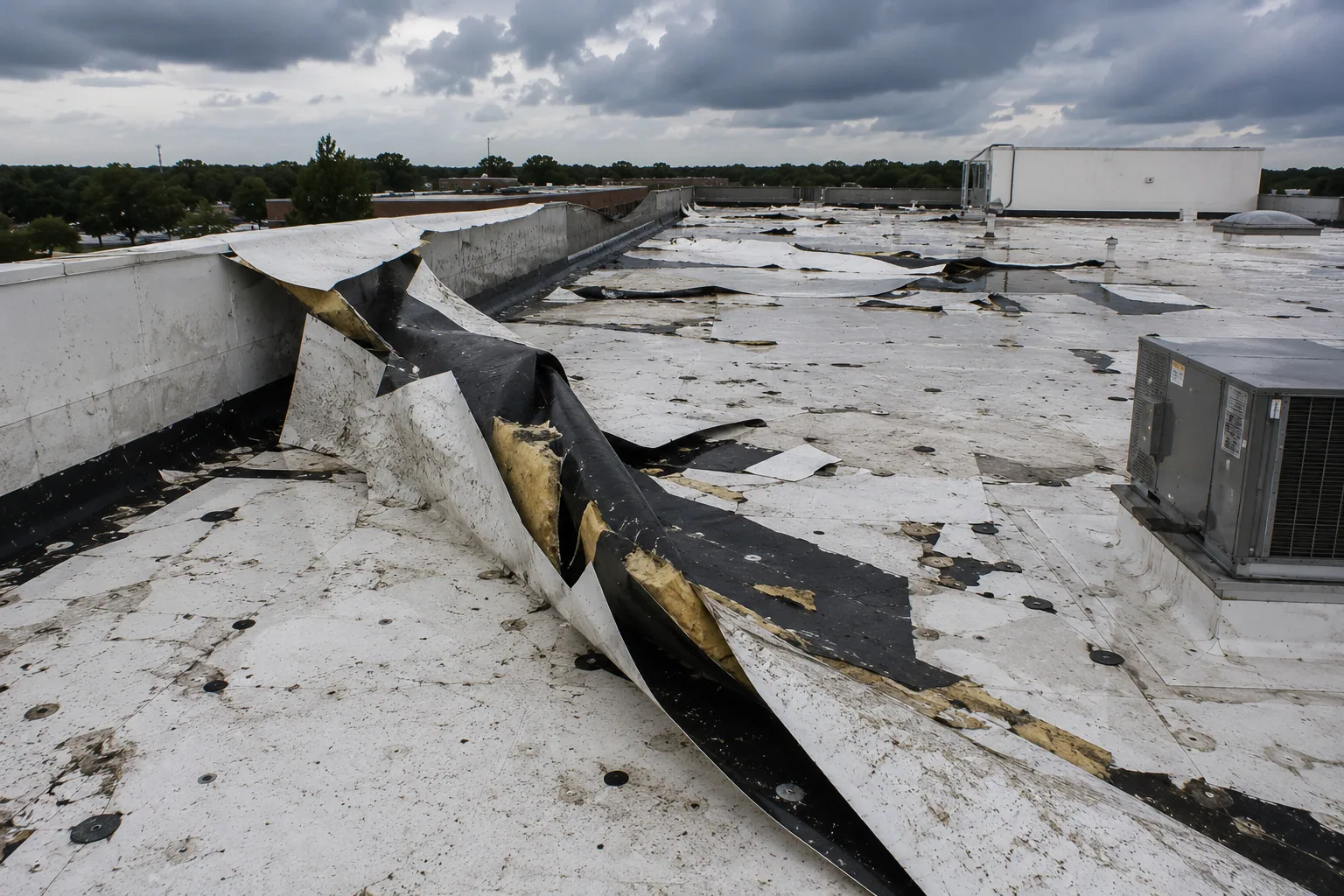
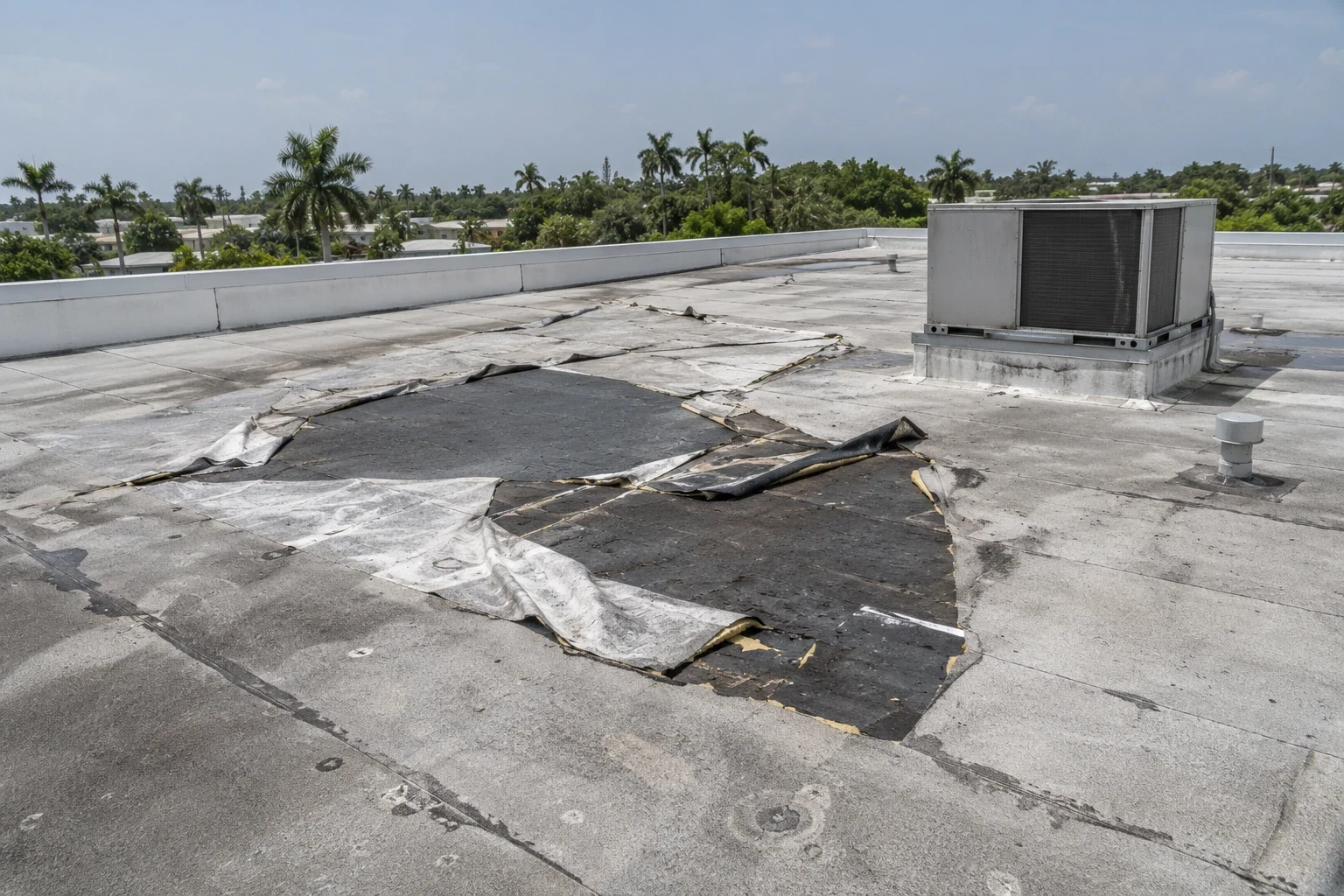
A tornado can leave the roof with a missing edge panel, punctured membrane, displaced equipment screen, or debris impact that is difficult to see from grade. An October 1997 outbreak included an F0 tornado over Conroe and another track near Cut and Shoot along Highway 105. After a reported tornado, we document displaced edge metal, punctures, debris impacts, and openings before setting the permanent repair boundary. A current property still needs its own inspection: we map the reported area, check nearby details, and secure active openings before choosing the permanent repair.
Confirm the structure and access route first
Before a roof walk, verify the building has been released for access and identify any unstable roof deck, parapet, power line, or equipment that remains restricted. Tornado debris can make ladders, hatches, and roof paths unsafe. We coordinate with the property contact about the approved entry point, fall protection, and any area that requires a structural review first. If a surface cannot be reached safely, the report says so and identifies the next way to evaluate it.
Conroe Park North includes warehouses, manufacturing, food processing, freight, and other active operations on FM 3083. A damaged roof above loading or production may need barriers below while emergency work proceeds. Emergency roof response can secure an active opening once access is safe. Conroe Park North is a broad industrial district; the actual work route and roof condition are property-specific.
Map every opening before temporary work
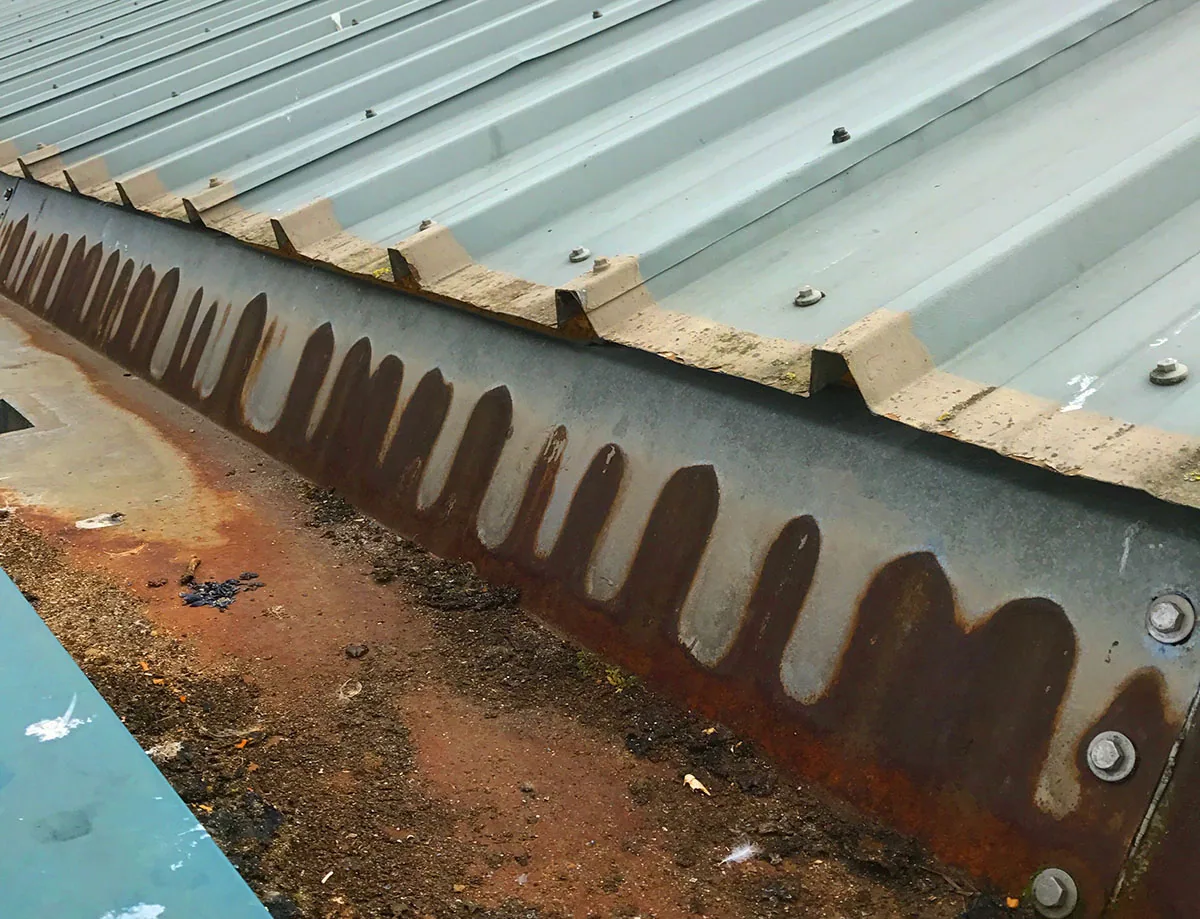
We inspect perimeter metal, corners, seams, flashings, penetrations, equipment screens, and areas where debris may have struck the membrane. A close photo should show the material failure; a second image should show the roof zone and nearby water paths. Note loose components that could move again and the boundary of any temporary cover. Do not sweep away evidence or disturb a suspected structural condition until the owner or designated reviewer determines the next step.
Conroe’s tornado history makes post-event access planning relevant, but the work scope follows what the current roof shows. A missing panel, a puncture, and an opened seam require different repairs. A commercial roof inspection can document accessible details. Puncture repair may be suitable for a discrete hole in sound membrane; wind-damage repair addresses loose edges and displaced details when those conditions are found.
Protect the building from rain after impact
Once the damaged area is safe to approach, we identify the smallest workable temporary measure. The roof record should show what the cover hides, how it is attached, and when it must be checked. A temporary cover can limit water entry, but it is not a permanent repair or a full assessment of material below it. If insulation or deck is wet, we mark the suspected boundary and propose testing or a controlled opening before replacing material.
Conroe receives intense rainfall among the severe-weather hazards identified for Southeast Texas. Drainage should be checked after debris removal, including strainers, overflow scuppers, and the route to an outlet. Drain and scupper service can address a visible obstruction. If roof access must be staged around an active facility, phased work at an occupied building can set the daily open area and interior barrier.
Match the repair to the damaged layer
A puncture may accept a compatible patch when surrounding membrane remains sound. A torn edge may require replacement of metal and reinforcement of the termination. Damaged flashing at a curb or wall needs a transition rebuilt for the existing assembly. When a sheet is stretched, split, or contaminated beyond a small area, patching one point may not restore its performance. We explain which material will be removed, what will remain, and what hidden condition could change the quantity.
Deison Technology Park is a 248-acre Conroe employment area off FM 1484 with corporate, research, and office plans; VGXI built a 240,000-square-foot headquarters and manufacturing facility there. In a complex facility, work can need coordination with equipment, production, or research access, but the owner identifies the actual operating controls. Flashing repair handles a damaged transition. A replacement scope may be considered when damage extends across sections or the existing assembly cannot support isolated repairs. If the deck is deformed or a curb has shifted, stop at that boundary and obtain the owner’s direction before closing the area. The roof proposal can identify a structural review, equipment vendor, or separate envelope contractor as a prerequisite instead of folding unknown work into a roofing allowance. This keeps the repair quantity tied to what has been exposed and approved.
Keep storm observations distinct from older wear
Record the event date reported by the owner, the inspection date, roof areas reached, photographs, measurements, temporary work, and repairs recommended. If older patches or worn seams are nearby, describe them separately from fresh displacement when the distinction can be made. If the roof was not opened, avoid describing the insulation or deck as confirmed. This helps an owner compare the current work with maintenance history without making the storm report carry more than the inspection supports.
For a claim review, the owner or insurer decides coverage and policy treatment. Insurance-restoration documentation can organize observations and repair limits without assigning payment responsibility. A building near Conroe Park North may have production or inventory constraints; a downtown property may have visitor access and shared circulation. Regardless of setting, the record should identify the exact roof section inspected and the area left untouched. Keep a separate log for debris removal, temporary covering, and permanent repair so each action has its own date and approval. If a later visit reveals additional material damage, add a new photograph and location rather than revising the first observation in place. This gives the property owner a usable sequence from response through closeout.
Schedule a follow-up after the roof is secured
Permanent repair closeout should include the roof zone, materials, photos before and after, any test performed, and conditions that remain open. If another trade must replace equipment or evaluate structure, identify that handoff separately. For temporary covers, set the return date and inspect after the next suitable weather window. The owner should know whether the roof is fully repaired, temporarily protected, or awaiting authorization for a concealed condition.
After high-wind damage, a second visit can check repaired edges, seams, flashing, and drainage. Compare it with the original map rather than relying on a broad statement that the roof is sound. Send the property location, access release, reported date, active water status, and other trade schedules. We will identify the work that can proceed now and the evidence or approval needed for the next step.
Commercial Roofing Questions
Should a tornado-damaged roof be entered right away?
Only after the building and roof access are released and safe. Debris, unstable edges, electrical hazards, or structural concerns can require another reviewer before roofing crews enter.
What should be photographed before temporary cover is installed?
The opening, nearby roof details, affected section, and any visible debris or displaced components. If immediate protection cannot wait, record what the temporary measure covers.
Can you repair a puncture caused by flying debris?
Yes, when the surrounding membrane and substrate can accept a compatible patch. We inspect the material beyond the opening and identify any wet or damaged layers.
How do you separate fresh storm damage from older wear?
We compare the reported date, visible condition, maintenance history, and photographs where available. The report distinguishes what can be dated from what remains uncertain.
What does emergency work leave for later?
Temporary protection, its limits, and a return date should be recorded. Permanent repair, testing, or structural review may follow once access and concealed conditions are clear.
Related Roofing Work