Versico Commercial Roofing Systems in Conroe, TX
Service Versico TPO roofs in Conroe, TX. We check seam quality, sheet attachment, rooftop traffic, drainage, and the repair limit for each section.
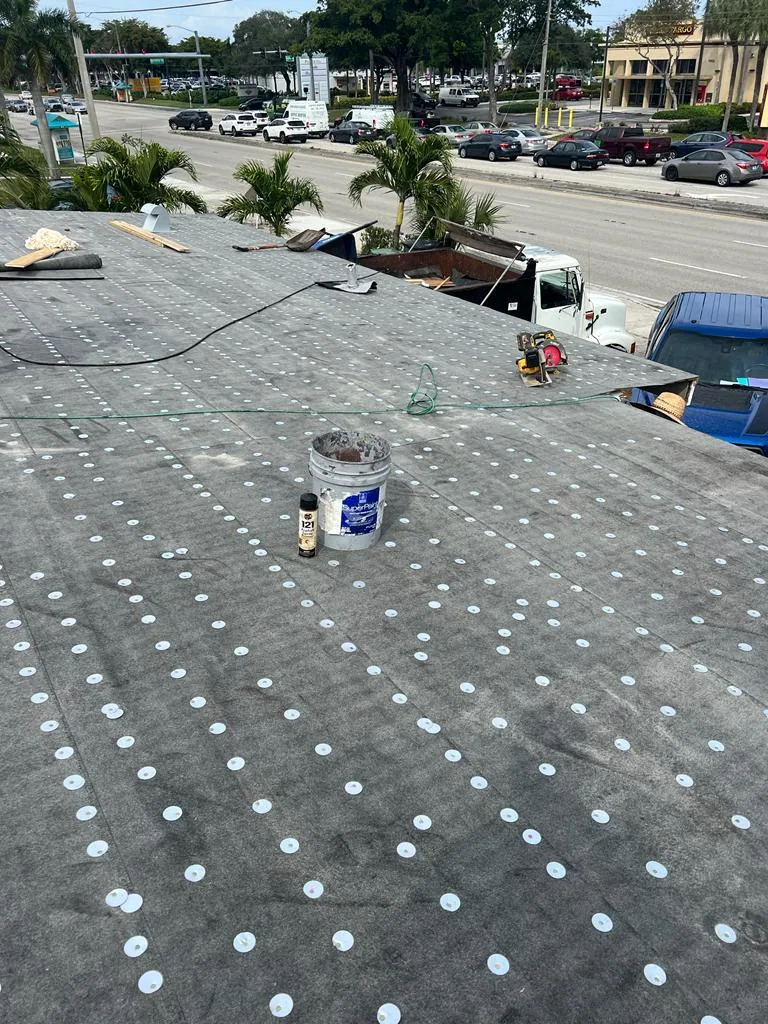
Wide membrane rolls can reduce the number of field seams, but each seam that remains still needs a sound weld. On a Versico roof, we identify the installed TPO product, attachment pattern, and repair history before deciding whether the failure is local or tied to the larger sheet layout. Conroe's hot afternoons move exposed membrane; intense rain tests the drains and perimeter details. At Conroe Park North, freight and industrial activity make material staging a practical part of the roof plan. We inspect the actual field, record its repair boundary, and match the work to the building's access window.
VersiWeld TPO Options
Versico's reinforced VersiWeld TPO is a heat-weldable single-ply membrane. The product range includes reinforced sheet, VersiWeld Plus with the OctaGuard XT weathering package, and fleece-backed VersiFleece TPO. Those names describe different sheet constructions and system options; they do not identify what is installed on a particular building. We inspect labels, membrane surface, accessories, and visible attachment before selecting repair materials.
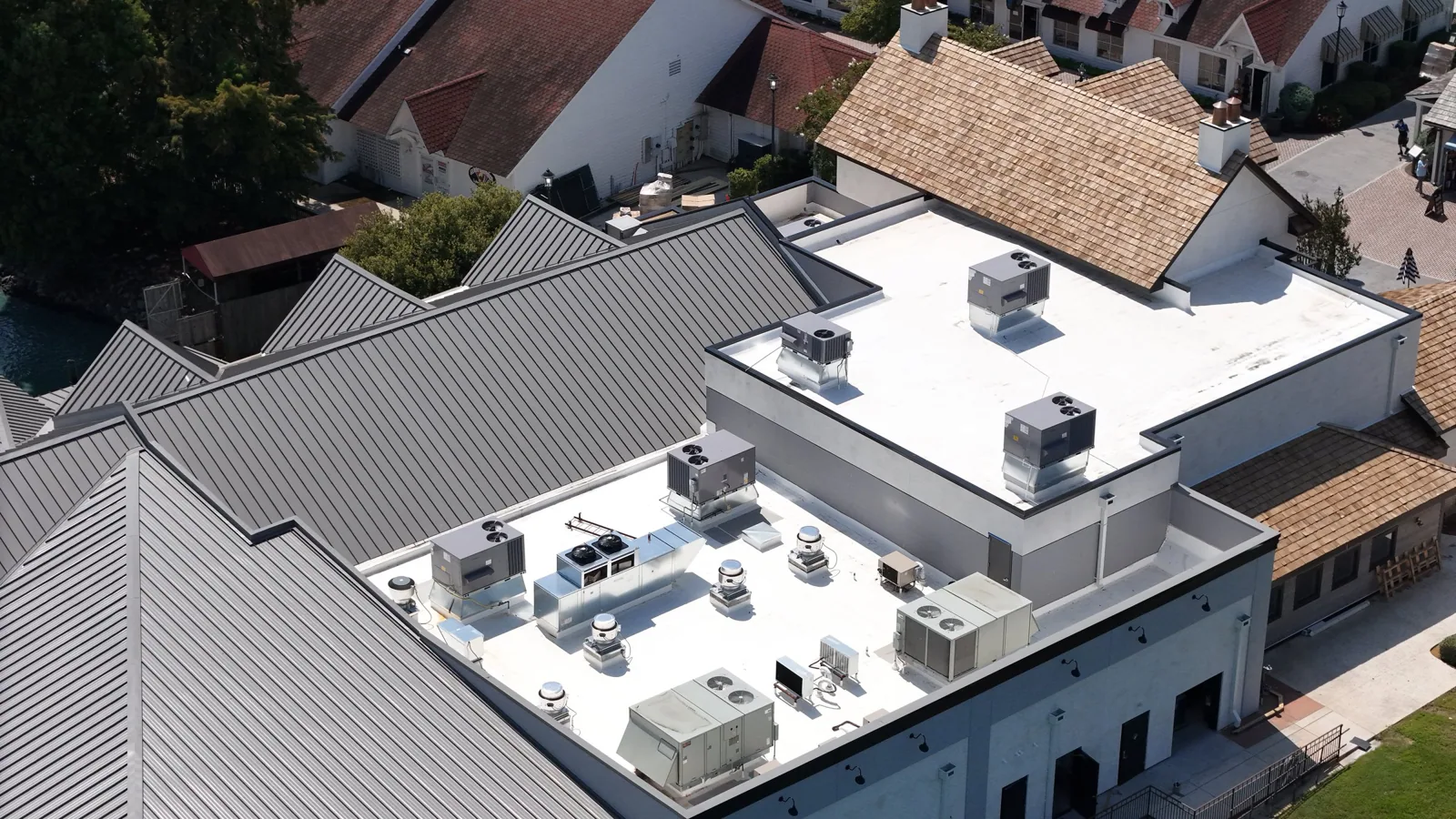
A wide sheet may reduce the number of seams, but its weight and handling still have to fit roof access and staging. Fewer laps also do not remove the need to inspect corners, penetrations, and perimeter details. If an addition uses another product family, the transition is its own work area. A Carlisle membrane inspection or GAF system review follows that brand's material details. The TPO assembly check includes attachment, insulation, cover board, and drainage rather than treating the field sheet as the entire roof.
Welds and Sheet Layout
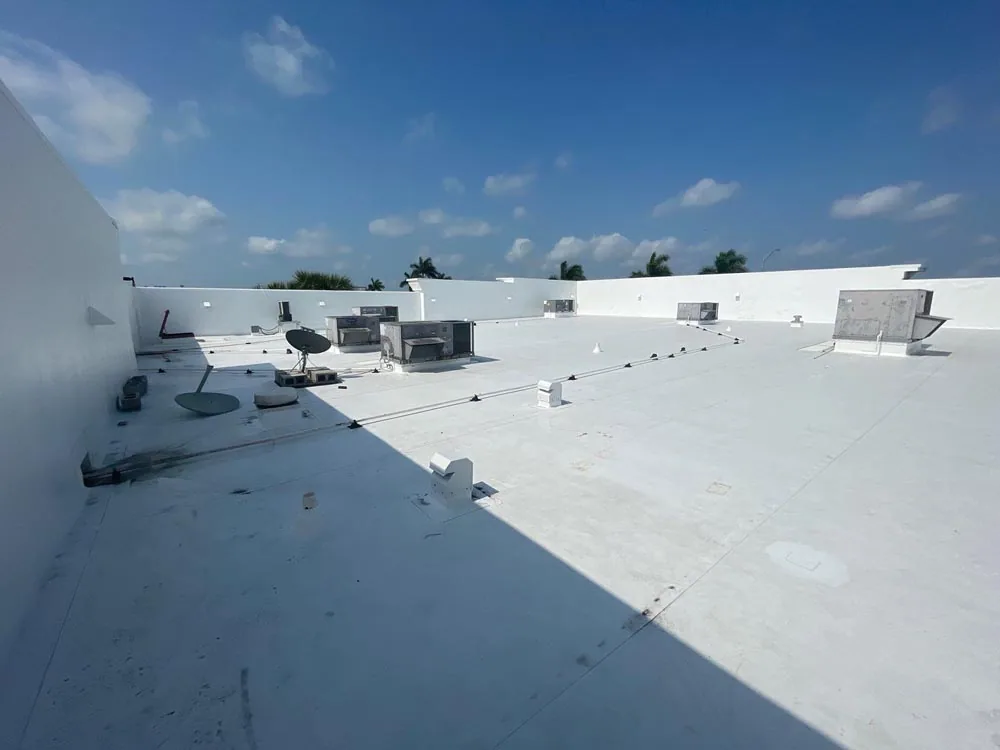
We examine the length and direction of field laps, probe accessible edges, and look for contamination, wrinkles, cuts, or a previous patch that crosses the weld. A weld may be locally weak while nearby membrane remains sound. Repeated separation along a fastener line can point to sheet movement or attachment rather than a single seam defect. A seam repair review should identify that distinction before material is applied.
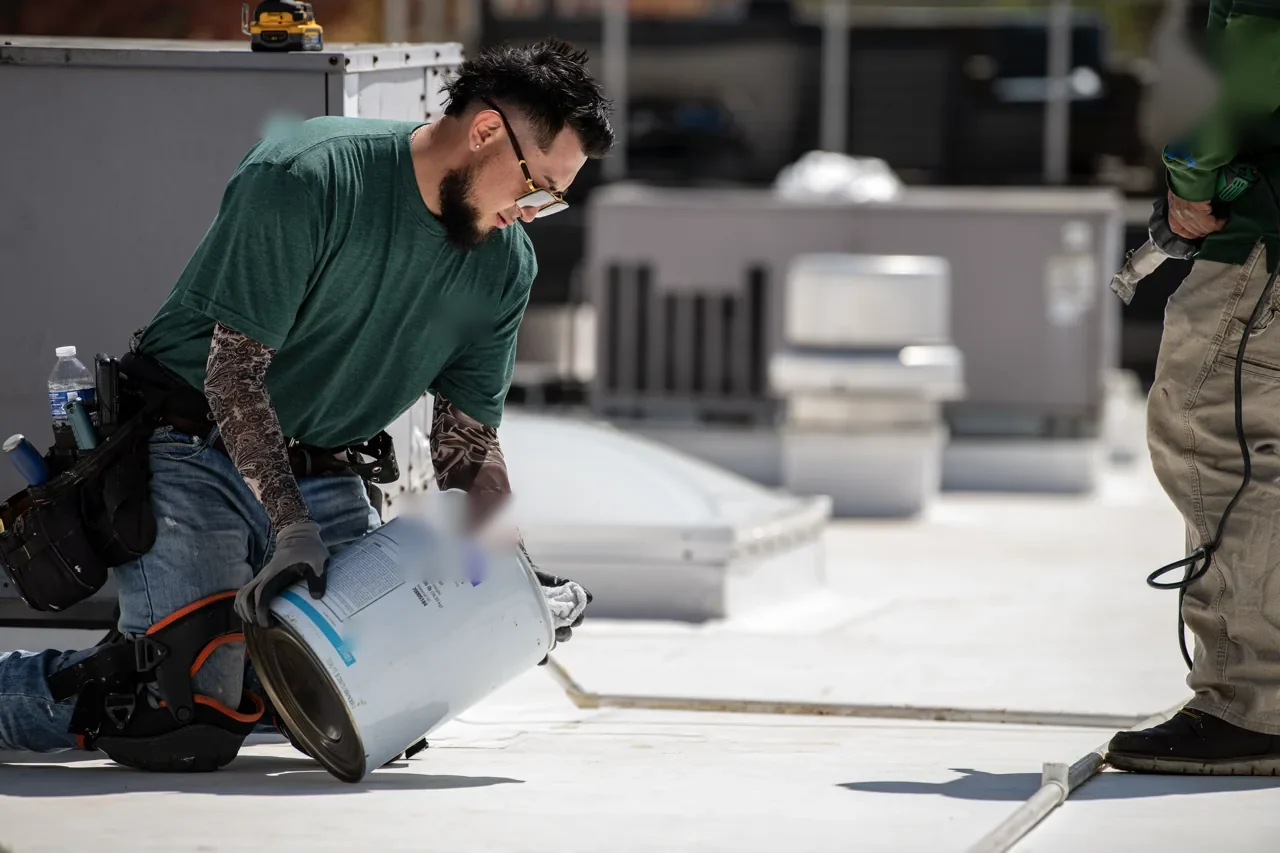
Conroe's July and August regional average highs approach 95 degrees. That heat affects exposed membrane and the conditions for a field weld. We prepare a clean, dry area, check a test weld when needed, and verify the finished lap before moving equipment or opening another section. At corners, parapets, and roof edges, we inspect the termination and metal because those details manage wind load as well as water. The repair boundary should reach sound sheet without covering a loose edge that still needs correction.
Fleece Backing and Substrate
VersiFleece pairs a nonwoven polyester fleece with TPO. That backing changes how the sheet bonds to its substrate and how a repair detail is prepared. It does not remove the need to check for water beneath the membrane or movement in the cover board. We identify whether fleece is present before choosing adhesive, patch material, or a transition detail. If the roof has older coatings or patches, a small test can help confirm which surface is available for the repair.
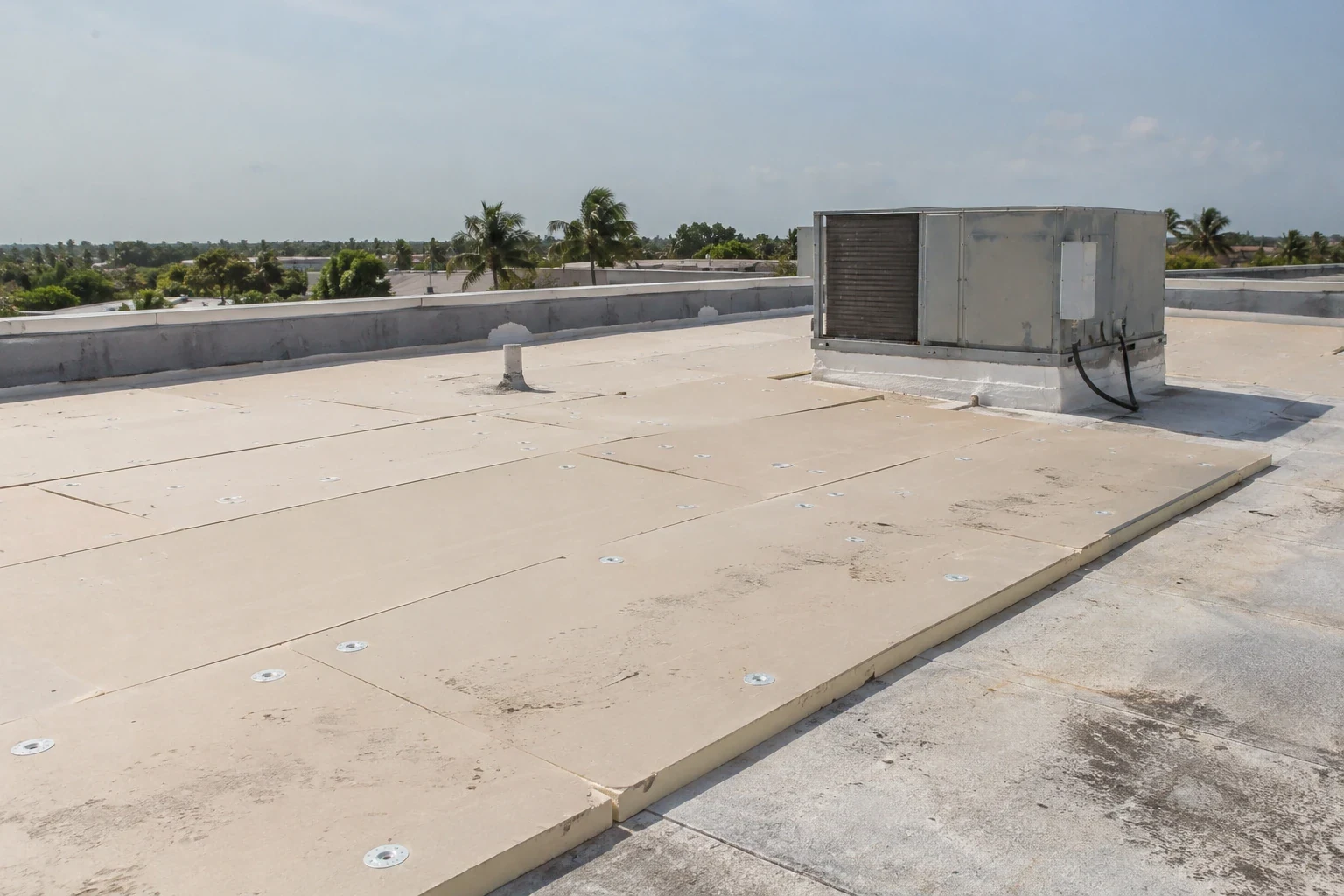
Soft spots, displaced board joints, or fastener movement can undermine a patch even when its top edge is closed. We check adjacent insulation and the attachment visible at roof edges or existing openings. Rooftop service paths can add punctures around units and supports. The insulation and cover board inspection can distinguish a membrane-only repair from work that must continue into the assembly. A coating over an unprepared fleece-backed surface would not resolve the underlying condition.
Water Routes Through the Field
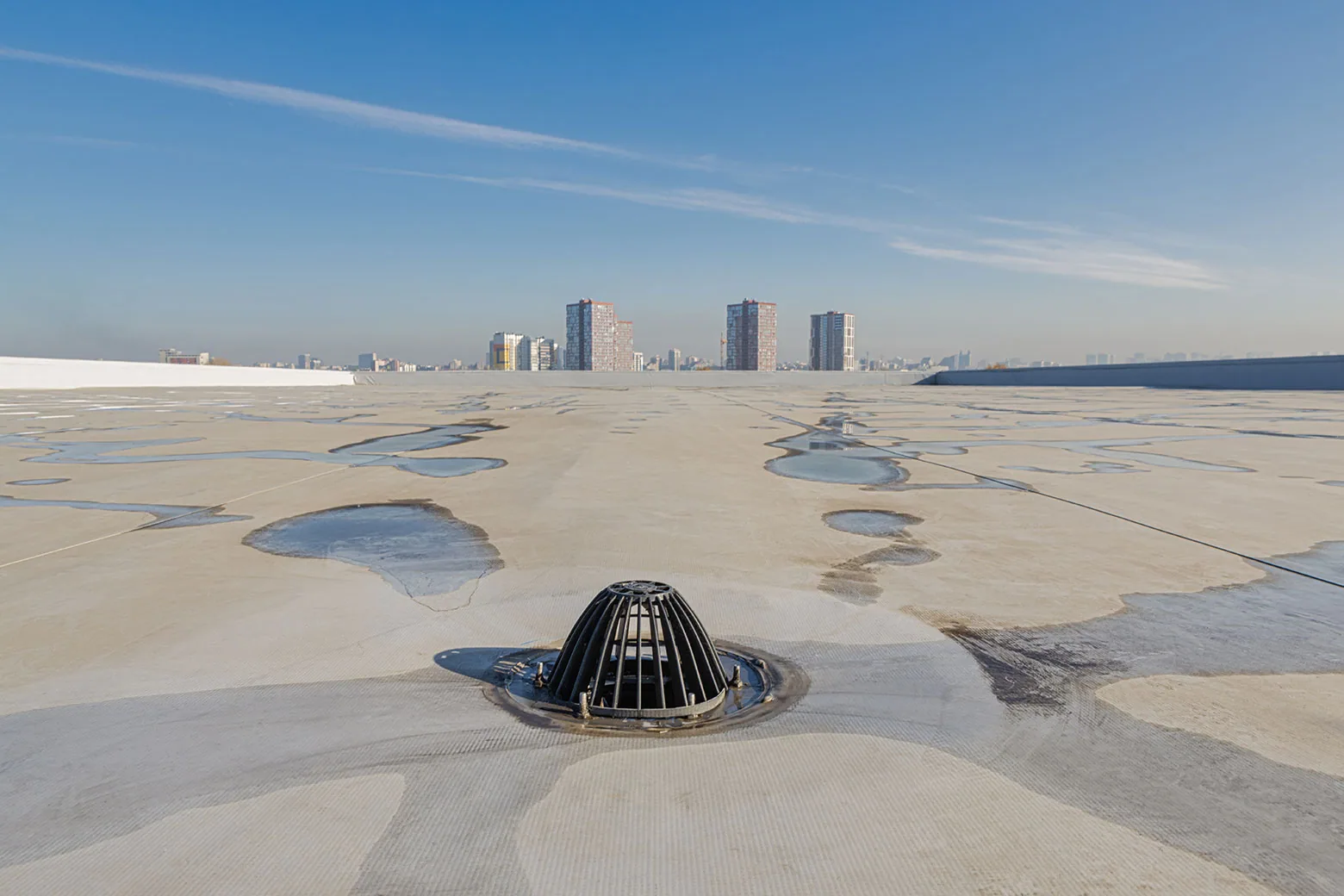
Rain makes drainage defects visible across a broad sheet. We follow low areas to drains, scuppers, and overflow points, checking strainers, membrane terminations, and nearby welds. Standing water could reflect an obstruction, settlement, or deck deflection. Its outline is not enough to identify the cause. If a drain connection is open, we inspect the clamping detail and surrounding TPO. A drain and scupper service can be included with a membrane repair when the observed condition supports both items.
Conroe's observing site at Lone Star Executive Airport sits beyond the city's northern edge; regional storms can bring intense rain and damaging wind. Neither weather history nor a product label proves that a roof was affected. We document actual water entry, displaced edge metal, punctures, and opened seams. If rain is approaching during service, the work area stays small enough to secure before leaving. For a leak that needs immediate attention, commercial leak repair can protect the interior while the broader TPO assessment is prepared.
Repair or Renew the Section
A limited repair may fit a puncture or seam opening when the adjacent sheet, attachment, and insulation remain serviceable. Several failures along a repeated seam line, widespread wet board, or loose perimeter details can move the decision toward renewal. We mark confirmed defects and areas that need further testing, then compare the map with the proposed work boundary. The owner can see what is supported by inspection and what remains concealed.
A recover review checks existing roof layers, moisture, deck capacity, attachment, drainage, and code. Covering an unknown or wet assembly can preserve the problem below the new surface. Tear-off exposes concealed layers but changes staging and debris handling. A replacement plan should state the membrane, edge treatment, drains, penetrations, and daily dry-in sequence. If the roof is ready for planned service rather than renewal, preventive maintenance can revisit the same seams and drains on a documented schedule.
Stage Work Around Operations
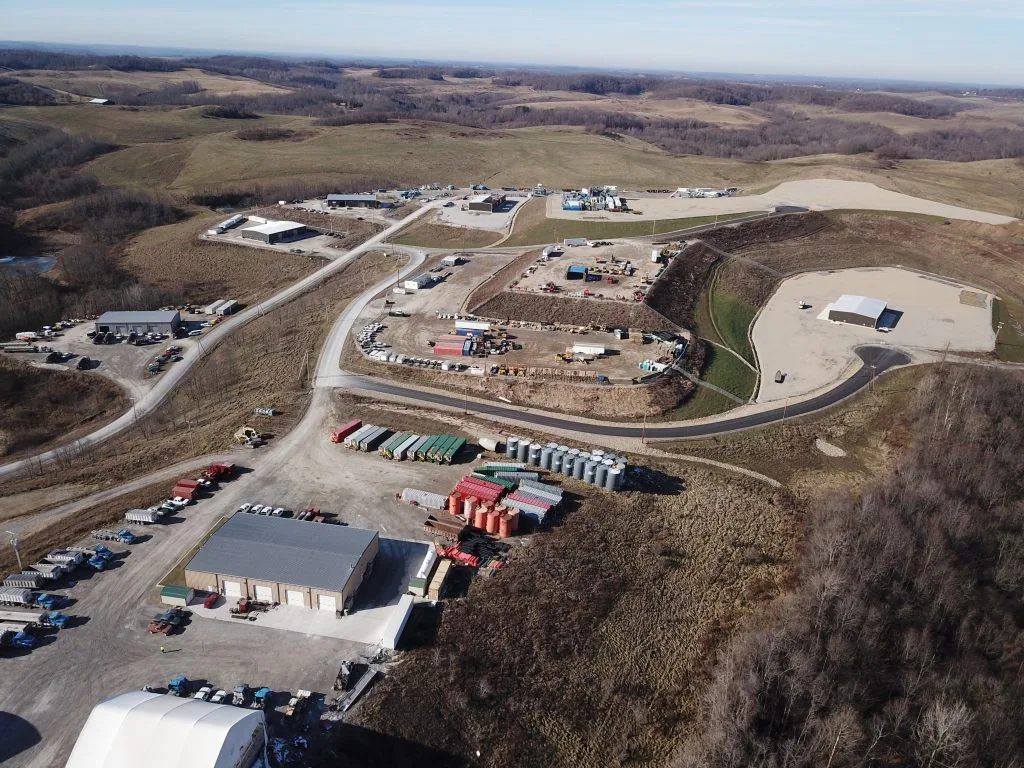
Conroe Park North includes freight, manufacturing, warehousing, and food processing. Those uses can make a lift route or delivery time compete with active traffic. At Deison Technology Park, research and office operations can require planned roof access; each property's loading route and interior restrictions still need confirmation. If the property is part of a larger operation, the contact identifies areas where noise, vibration, or temporary access limits require notice.
We open only as much roof as can be repaired and closed safely within the work window. The crew records completed sections, protection left in place, and any concealed condition that changes the scope. Photos show both the weld or patch and its location on the roof. A condition report can preserve the sheet layout, repair limit, and next inspection point. The resulting record helps the manager distinguish a TPO field issue from an edge, drain, or substrate concern.
Keep the Versico Details Findable
A useful service history identifies the Versico membrane observed, its attachment where visible, the section reached, and the repair method used. If VersiWeld Plus, reinforced VersiWeld, or VersiFleece is not confirmed, the record should say what was visible and what remains unknown. That prevents later work from assuming a sheet construction based only on a brand label. The closeout also names areas that were not opened.
After service traffic or a hard rain, maintenance can revisit the same seams, corners, drains, and equipment routes. The record should tell the next inspector where to look and what condition would justify another test. Product selection, repair boundary, and daily access constraints belong together because each affects the next decision. An owner can then compare a repeated defect with the work already completed instead of starting from a generic membrane description.
Commercial Roofing Questions
How do you distinguish VersiWeld from VersiFleece?
We inspect membrane labels, surface construction, and visible attachment. Fleece backing changes the bond to the substrate, so we confirm it before choosing adhesive or a repair transition.
Does a wider TPO sheet mean fewer roof problems?
A wider roll can reduce the number of field seams, but corners, penetrations, attachment, and perimeter details still need review. We inspect the complete assembly .
Can a VersiWeld lap be repaired on its own?
A local weld may be appropriate when sheet beyond the opening and the attachment remain sound. We test the prepared area when needed and check whether repeated openings point to a larger movement issue.
What if a roof has fleece-backed TPO over older insulation?
We check the bond, moisture, cover board, and attachment before deciding whether the repair can stay at the membrane. A surface patch cannot stabilize soft or wet material underneath.
How do you plan a Versico repair around Conroe rain?
We choose a dry work period, keep the open area within the available closeout window, and secure the roof before leaving. If conditions change, the repair boundary can be reduced or rescheduled.
Related Roofing Work