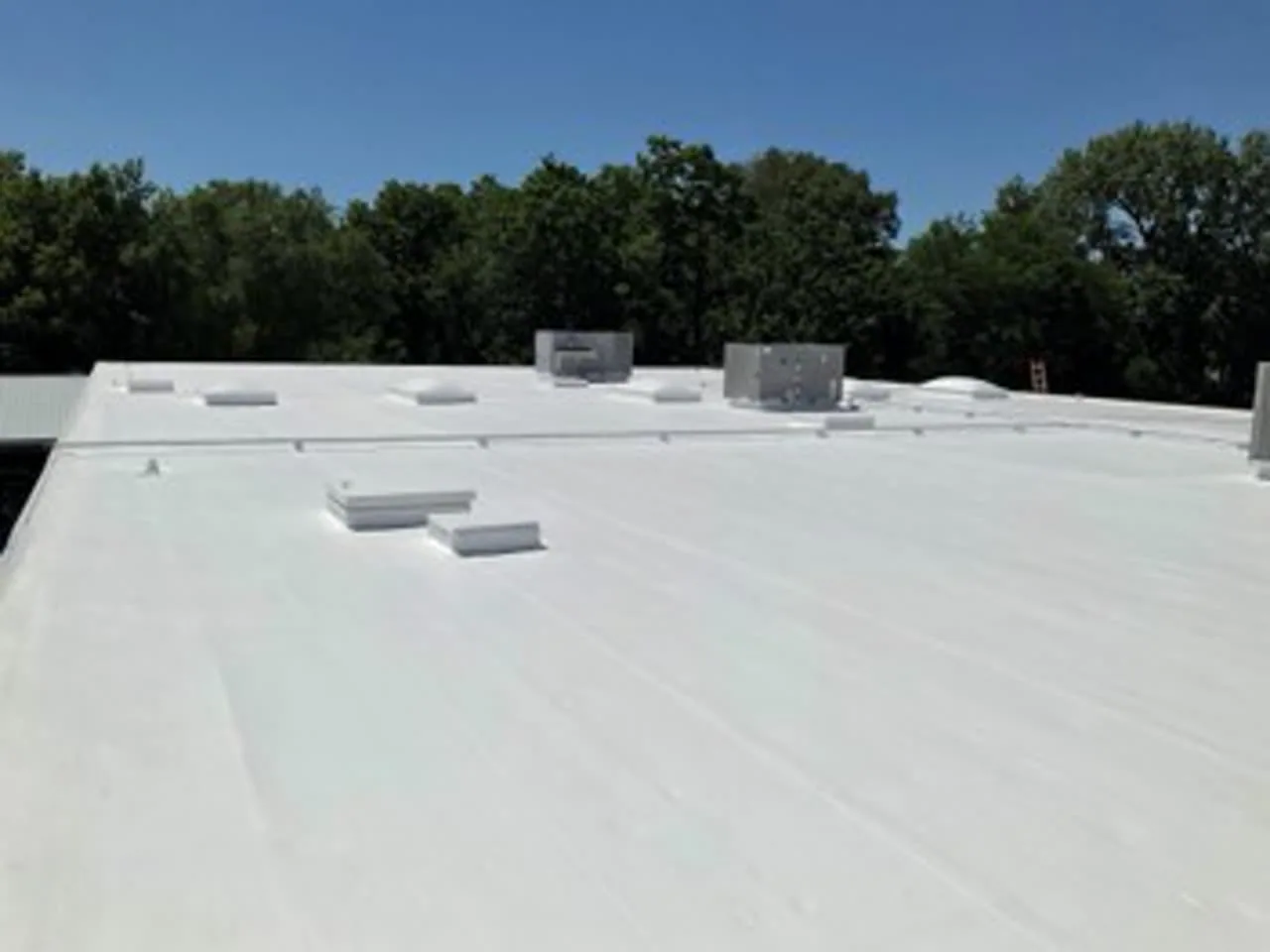
Commercial Roof Coating Restoration in Conroe, TX
Restore a sound commercial roof in Conroe with substrate checks, drainage review, compatible coating selection, and a defined application scope.
A reflective coating cannot rescue wet insulation or a roof that has lost its attachment. In Conroe, long hot periods make surface temperature and seam movement part of a restoration decision, but the existing assembly sets the limit. We inspect the membrane, test adhesion where needed, map repairs, and verify that water can reach working outlets before recommending a coating. Roofs serving offices and retail in The Woodlands Town Center have different access patterns from an industrial section at Conroe Park North. The surface must be suitable before product selection begins.
The existing surface decides whether coating fits
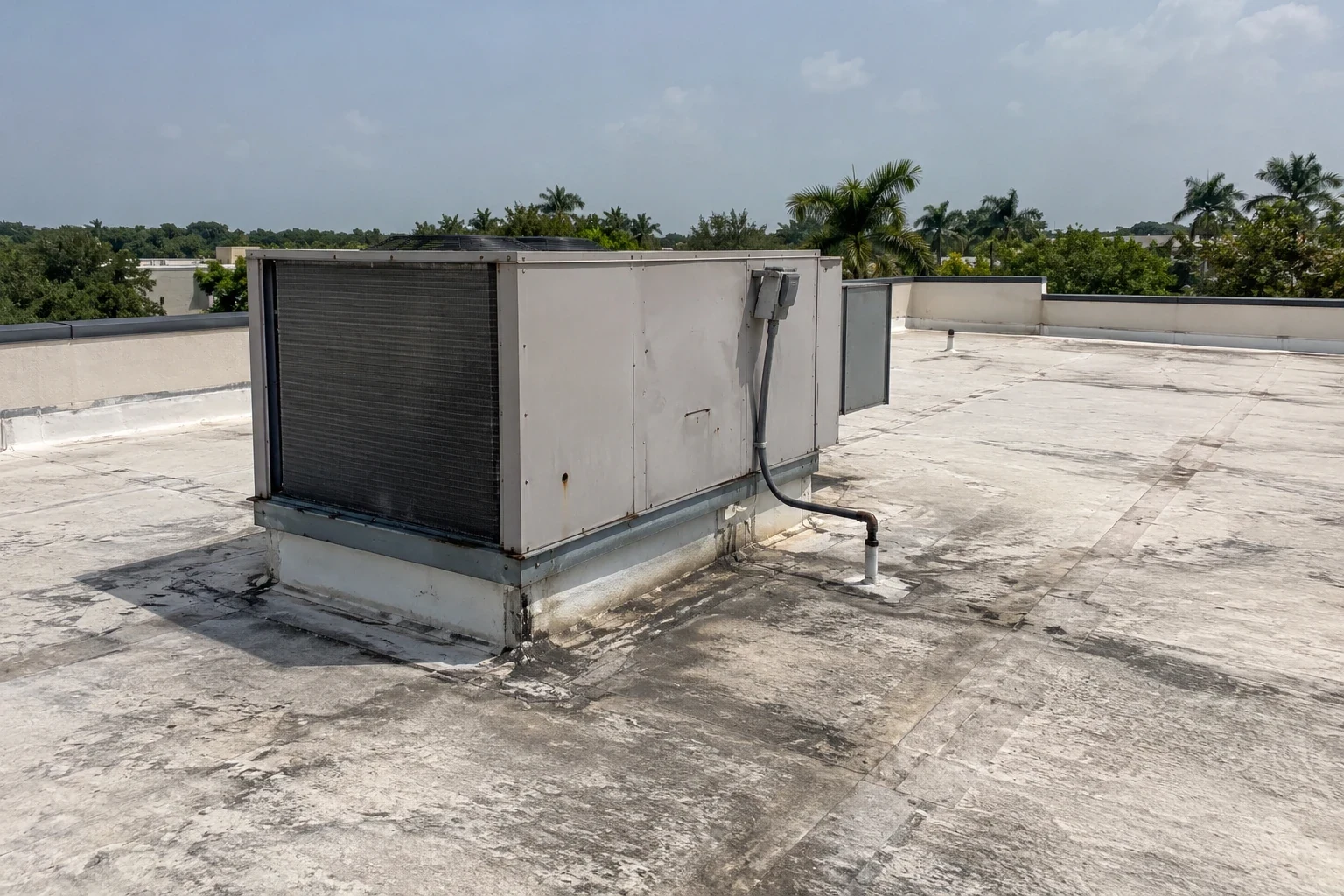
We identify the roof type, previous repairs, coatings already present, and the condition of the material below the surface. A coating needs a compatible substrate with enough sound area to accept preparation and application. Peeling layers, uncured sealant, contamination, widespread cracking, loose membrane, or trapped moisture can interrupt adhesion. If the roof has several repairs or additions, we map each section rather than treating the whole surface as uniform. A roof inspection can establish the visible condition and point out where testing could change the recommendation.
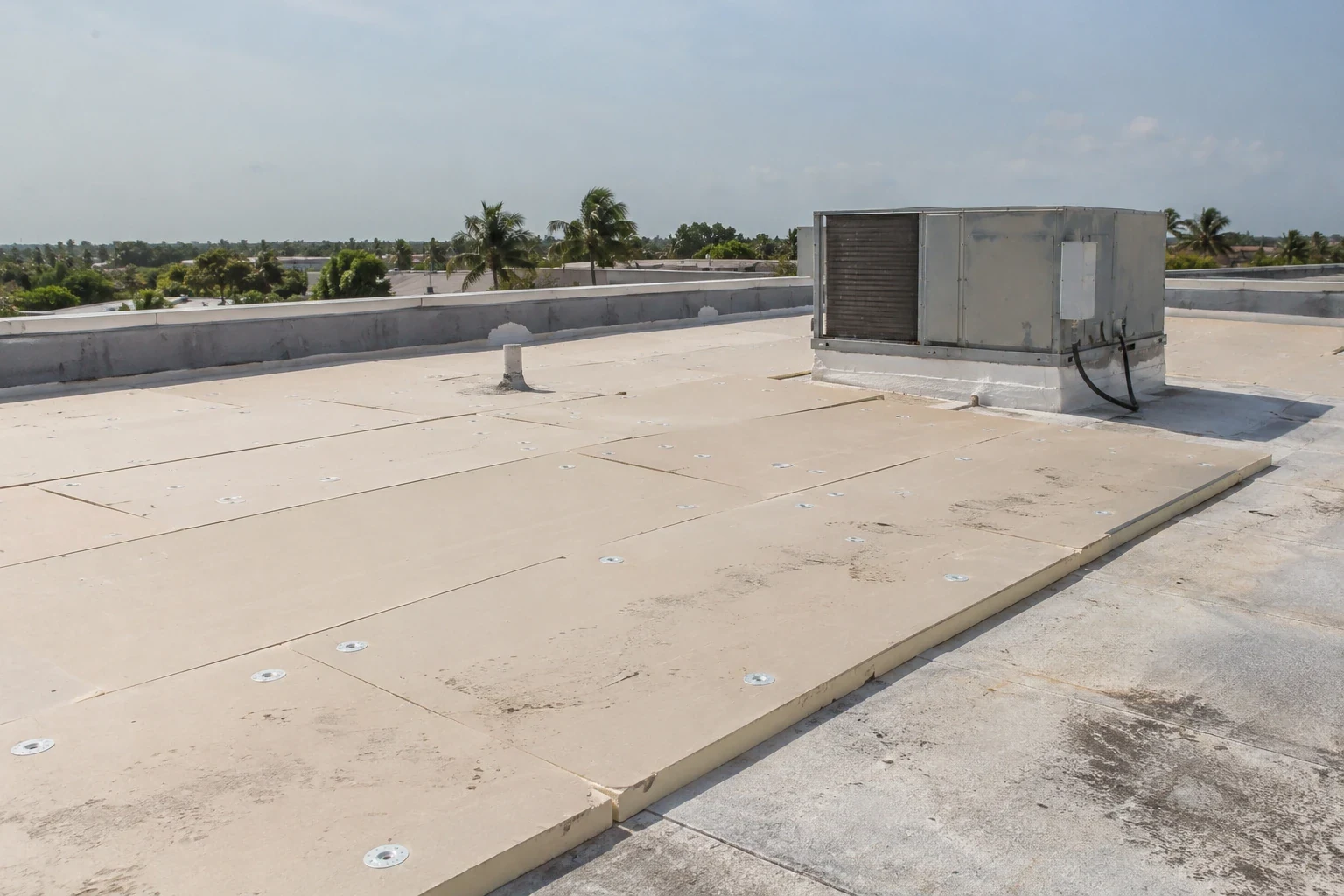
Moisture is a separate question from surface wear. Infrared scanning, core cuts, or another controlled test may help define wet insulation, but the method and sampling limits belong in the work scope. A roof insulation and cover-board review can address damaged layers that need replacement before a coating is considered. We do not cover a confirmed wet area and call it restored. If the deck, attachment, or membrane has failed beyond a local boundary, removal or another system may be the better repair path.
Heat, rain, and application windows
Nearby Houston Intercontinental Airport records average July and August highs near 95 degrees. That regional number helps explain why exposed roof surfaces can remain hot through a workday; it does not describe a particular Conroe roof temperature. Application requirements depend on the selected coating, substrate temperature, moisture, dew point, and forecast. We schedule surface preparation and installation within the product limits and protect the building if conditions change. The proper window matters at an industrial site near FM 3083 as much as it does above an occupied office.
Heavy rain tests the same drainage paths after work is complete. We check drains, scuppers, overflow openings, curbs, and low areas before application, then identify anything that needs correction first. A coating should not bridge a blocked outlet or hide ponding that will remain after the surface cures. In Deison Technology Park, office and research uses make equipment access and operating hours relevant to staging. The property contact confirms the actual constraints; the district name does not tell us which coating or roof assembly is present.
Preparation before the first pass
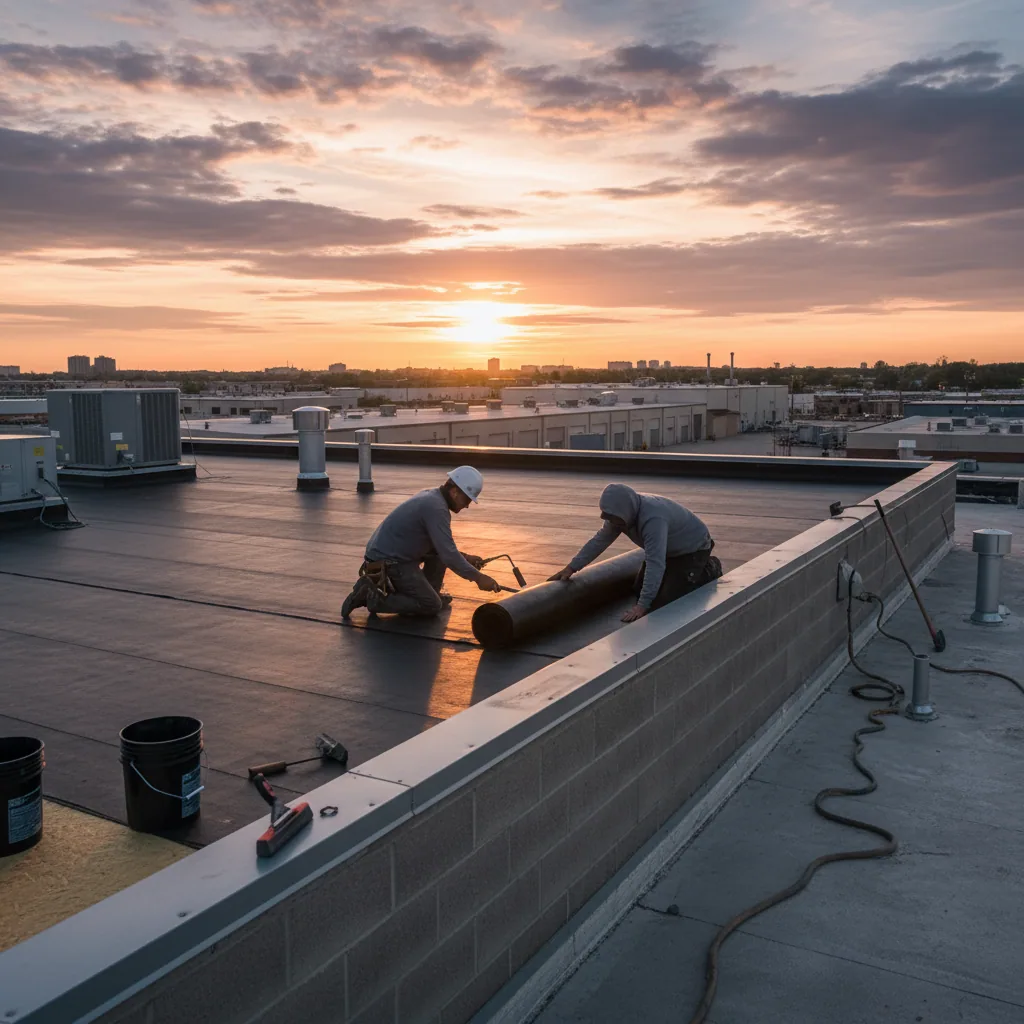
Cleaning, drying, and repair determine whether the coating can bond. We remove loose material, prepare the surface as required, repair open seams and flashing, and replace unstable components within the approved boundary. Test patches can confirm adhesion where existing layers or surface conditions are uncertain. If the coating calls for primer or reinforcement fabric, the scope identifies where those materials belong. The application plan also protects drains, equipment, walk paths, and adjacent surfaces from overspray or residue.
Before production, we agree on the test area, approved preparation, sample thickness, and the person who accepts the result. The roof should be dry enough for the selected product, and the crew should confirm that the prepared surface matches the test patch. We then plan where materials will be staged and how the application edge will be closed if wind or rain interrupts the shift. A section is not ready for coating until loose details, active leaks, and incompatible residue have been resolved within the approved boundary. This sequence limits the chance that a new layer conceals a repair that still needs work.
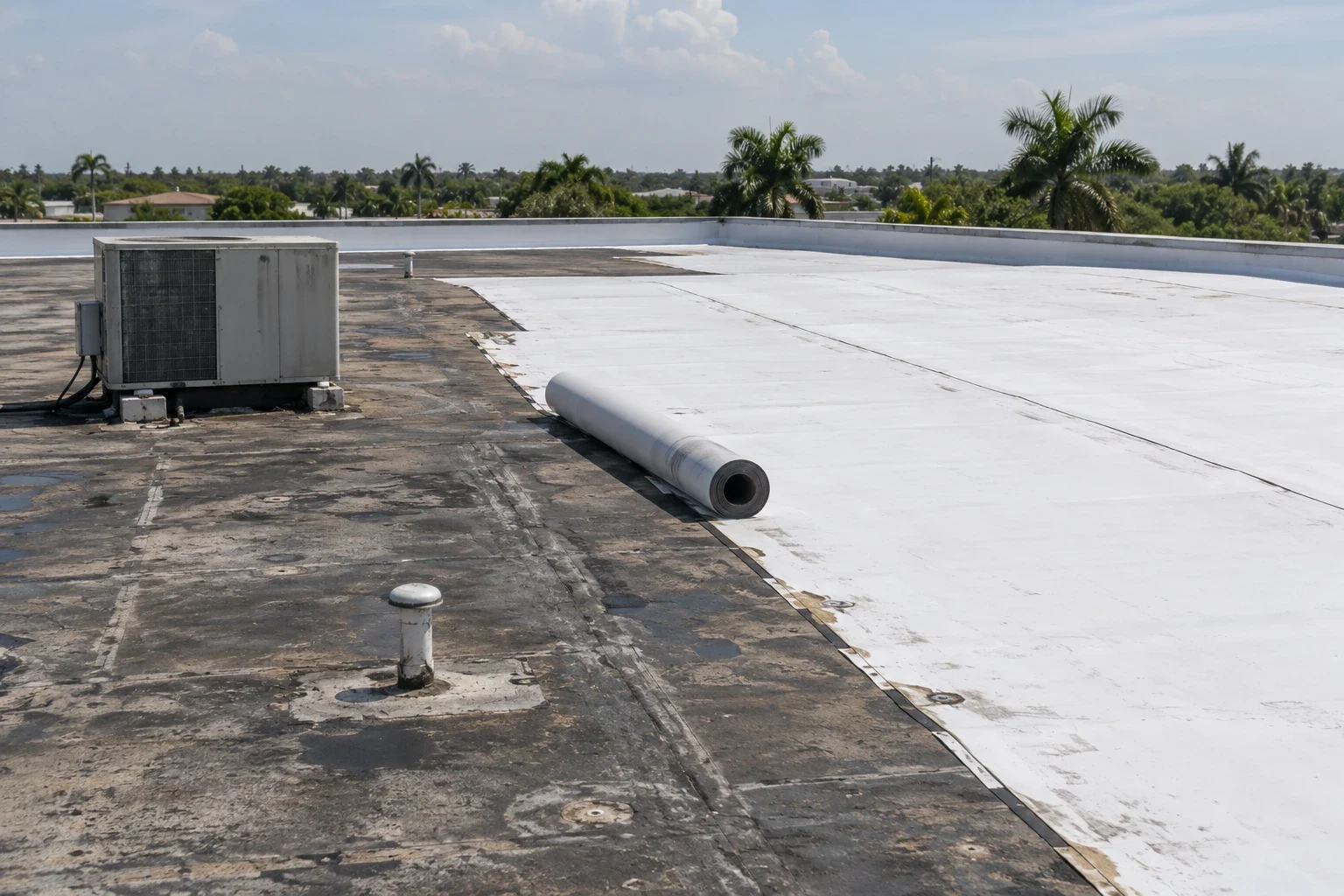
Existing membrane chemistry matters. Silicone, acrylic, and other coating systems have different properties and maintenance needs, so we verify product compatibility rather than layering one product over another by assumption. A silicone roof coating or acrylic coating should be selected for the specific surface, exposure, and project requirements. We document the repairs and preparation that happen underneath. That record helps the next service visit distinguish coating wear from a new opening in the roof assembly.
Compare restoration with recover or replacement
Coating can be a fit when the underlying roof remains sound and the surface accepts the chosen material after preparation. A recover adds another roof layer and changes height at edges, drains, and curbs. Tear-off exposes concealed insulation and deck, but introduces removal, debris handling, and daily dry-in needs. We compare these options using the same inspected roof boundary and note what testing remains. For a facility manager, that makes it easier to judge whether restoration addresses the documented condition or only improves the exposed surface.
Cost and timing depend on preparation, repairs, test areas, surface area, access, equipment, and the time needed for cure between coats or before weather exposure. If active water is entering, a targeted roof repair may need to precede the restoration decision. The scope identifies which repairs are included, which areas will receive coating, and what conditions would require a change order. It should also state how walkways, rooftop equipment, and drainage remain usable after the work.
Care for the restored roof
A coated roof still needs inspection. Check for cuts, blisters, open flashing, ponding, dirt at outlets, and wear where technicians reach equipment. Keep service traffic on designated paths and correct damage before water works beneath the coating. A maintenance record should include the product installed, preparation, repair locations, photos, and any manufacturer instructions supplied with the system. A condition report can carry those observations into the next budget review without treating every change in color as a failure.
A service visit should compare the coating against the original application map. Check transitions where coated field material meets metal, drains, curbs, and uncoated surfaces; those edges can move differently and need their own inspection. If a technician crosses the same area repeatedly, confirm that walkway protection remains in place and that tools have not cut through the film. We record a repair by location and material so a later crew can use a compatible product instead of guessing from color alone.
After the next hard rain, the facility contact can report whether water cleared from known low areas and whether any interior symptom returned. We compare that report with the drainage map and the areas repaired before coating. If the surface is damaged or a detail has moved, we inspect the exact location and decide whether a compatible repair is possible. A recover assessment or replacement review remains available if inspection shows the assembly needs a larger intervention.
Commercial Roofing Questions
How do you know whether a roof can be coated?
The membrane or existing coating must be sound enough to prepare and bond. We inspect attachment, moisture, seams, drainage, and prior layers, then test compatibility where needed.
Will coating stop ponding water?
No. Drainage and low areas must be evaluated separately. We correct blocked outlets or define other needed work before applying a surface system.
Can coating go over a wet roof assembly?
Confirmed wet insulation needs its own removal or repair scope. A coating does not dry concealed layers or correct a failed deck.
What controls the application schedule?
The coating instructions, surface and air conditions, moisture, access, preparation, cure time, and forecast determine when each section can be completed.
Does a restored roof still need service?
Yes. Drains, transitions, penetrations, and areas used by equipment technicians need periodic review, with coating repairs recorded by roof section.
Related Roofing Work