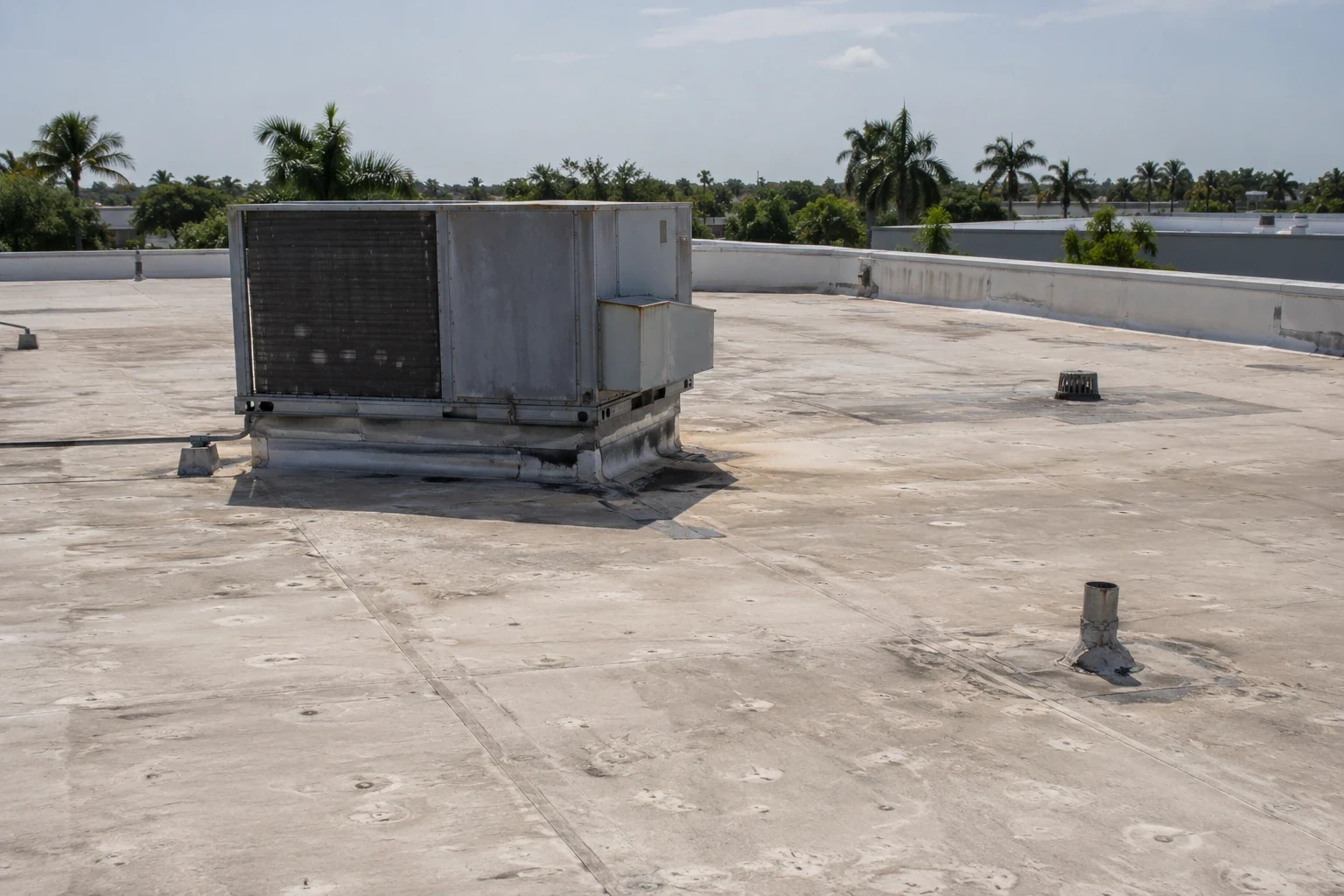
Commercial Storm Damage Roof Repair in Conroe, TX
Inspect and repair storm-affected commercial roofs in Conroe with safe access, temporary protection, documented conditions, and a defined repair boundary.
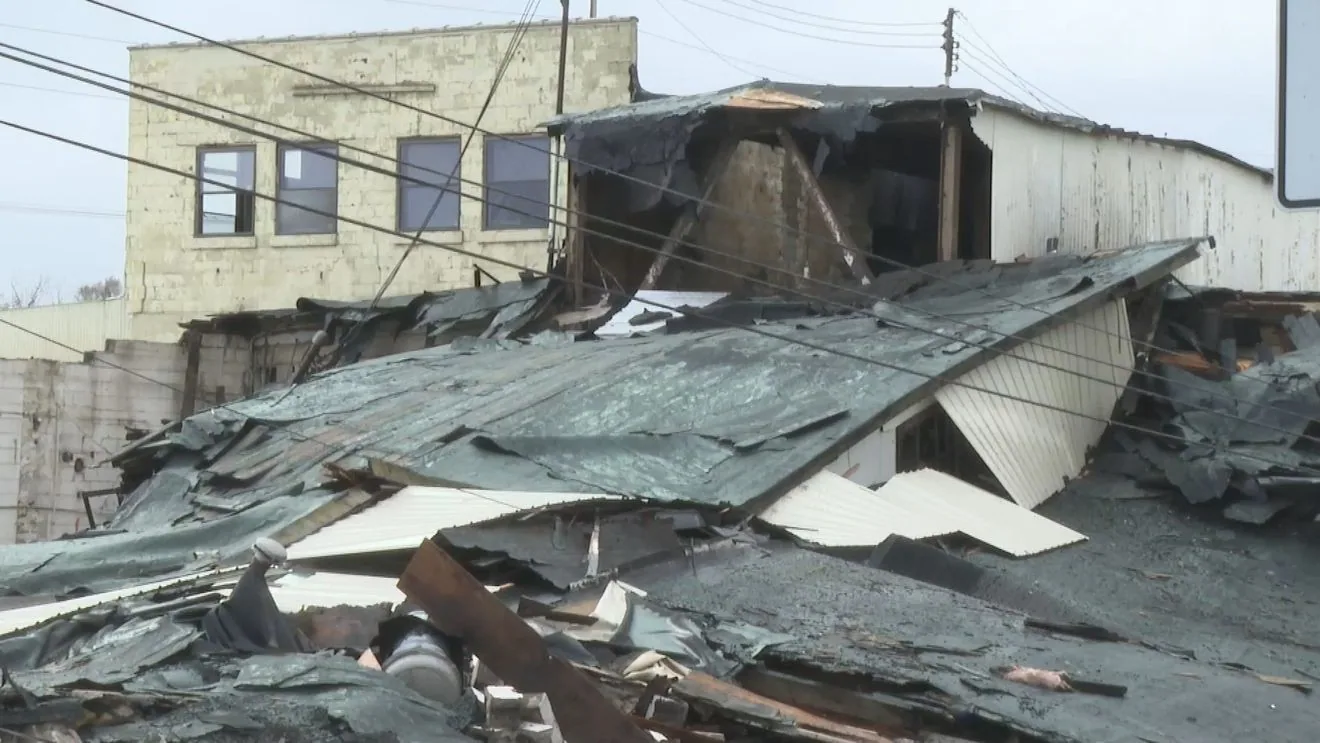
A reported storm is a reason to inspect, not a diagnosis of the roof. Conroe's documented weather includes an October 1997 tornado over the city and a separate tornado along Highway 105 near Cut and Shoot; that history belongs to the region, not to every building. We check the actual roof for displaced edge metal, open seams, punctures, blocked outlets, and water entry. A property near the I-45 and Loop 336 corridor or within Downtown Conroe receives a building-specific review and repair scope.
Access only when the roof is safe
Standing water, active lightning, loose metal, damaged ladders, and wind-driven debris can make a roof unsafe to reach. The site contact should keep staff away from wet electrical areas, unstable ceiling material, and any suspected roof opening until the inspection can proceed safely. We confirm access conditions, roof height, hatch or ladder location, equipment paths, and whether interior protection needs attention first. If conditions prevent a roof visit, we can address immediate interior exposure and return when safe access is possible.
Temporary protection is limited to the area the crew can secure. A tarp or dry-in should not block a drain, trap water, or create a loose edge. We record what it covers, what remains exposed, and when a permanent repair should follow. For an active leak that cannot wait, emergency roof response can establish a safe first step. The immediate measure remains separate from the final repair so the building record shows what was contained and what still needs correction.
Separate fresh impact from older wear
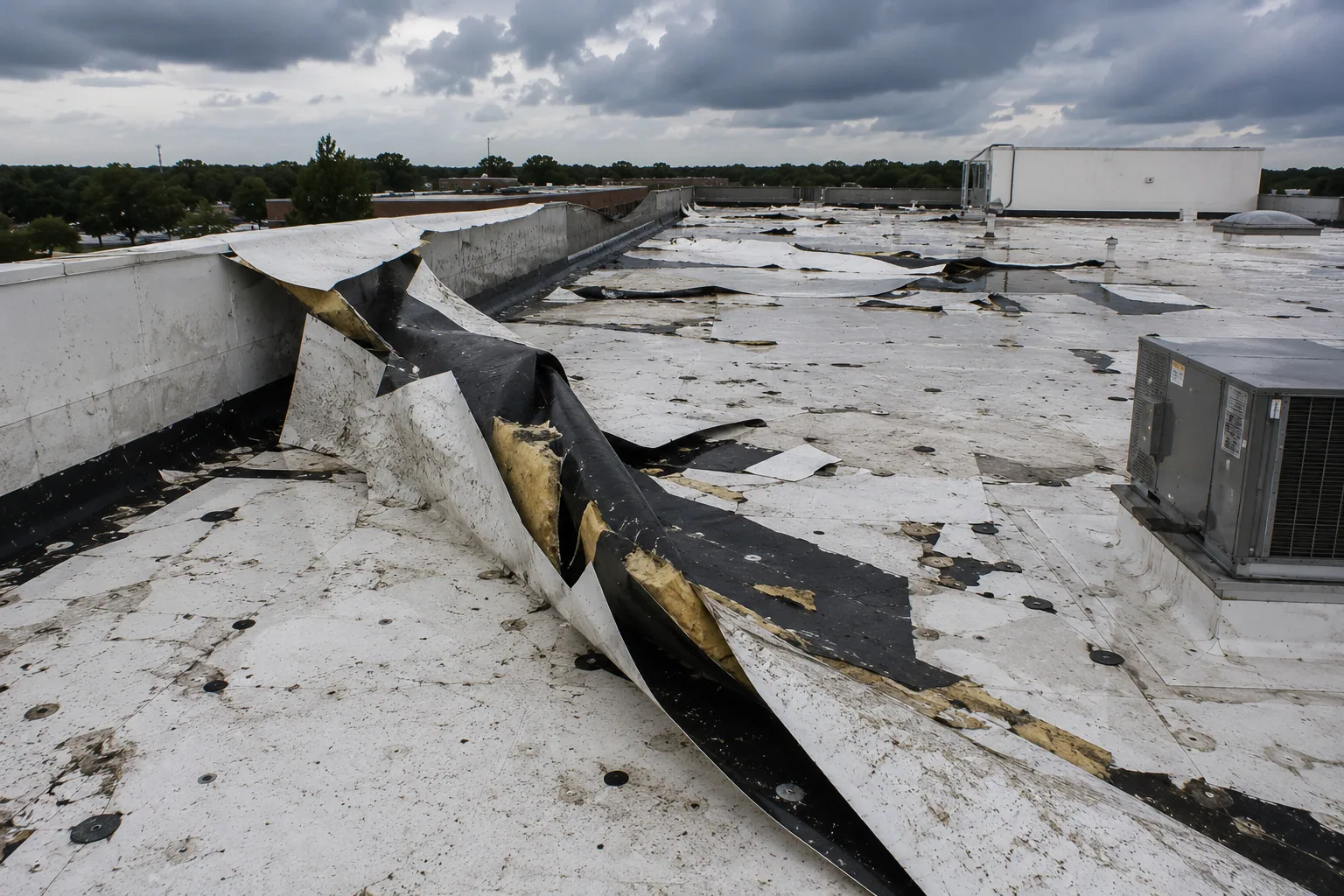
We compare the reported time and location with roof maps, earlier repair photos, maintenance history, and current surface evidence. A lifted panel, fresh puncture, or displaced coping may be visible; an older crack or recurring leak may have existed before the event. Each finding gets its own note. Hail reports and regional wind records do not establish impact on a particular roof. The inspection identifies what was observed, what is suspected, and what remains concealed.
Wind and hail need separate review. Wind loads can loosen perimeter terminations or lift a panel; hail can mark soft metal, damage exposed accessories, or leave no obvious sign in the membrane. We record each surface and attachment condition instead of using one storm label for the full assembly. If claim documentation may be needed, preserve safe-ground photographs, the event date, interior reports, and prior maintenance records. Do not send staff onto an unsafe roof or discard loose components before the condition is documented. These details help a later reviewer compare fresh observations with known wear without treating the weather report as proof of property damage.
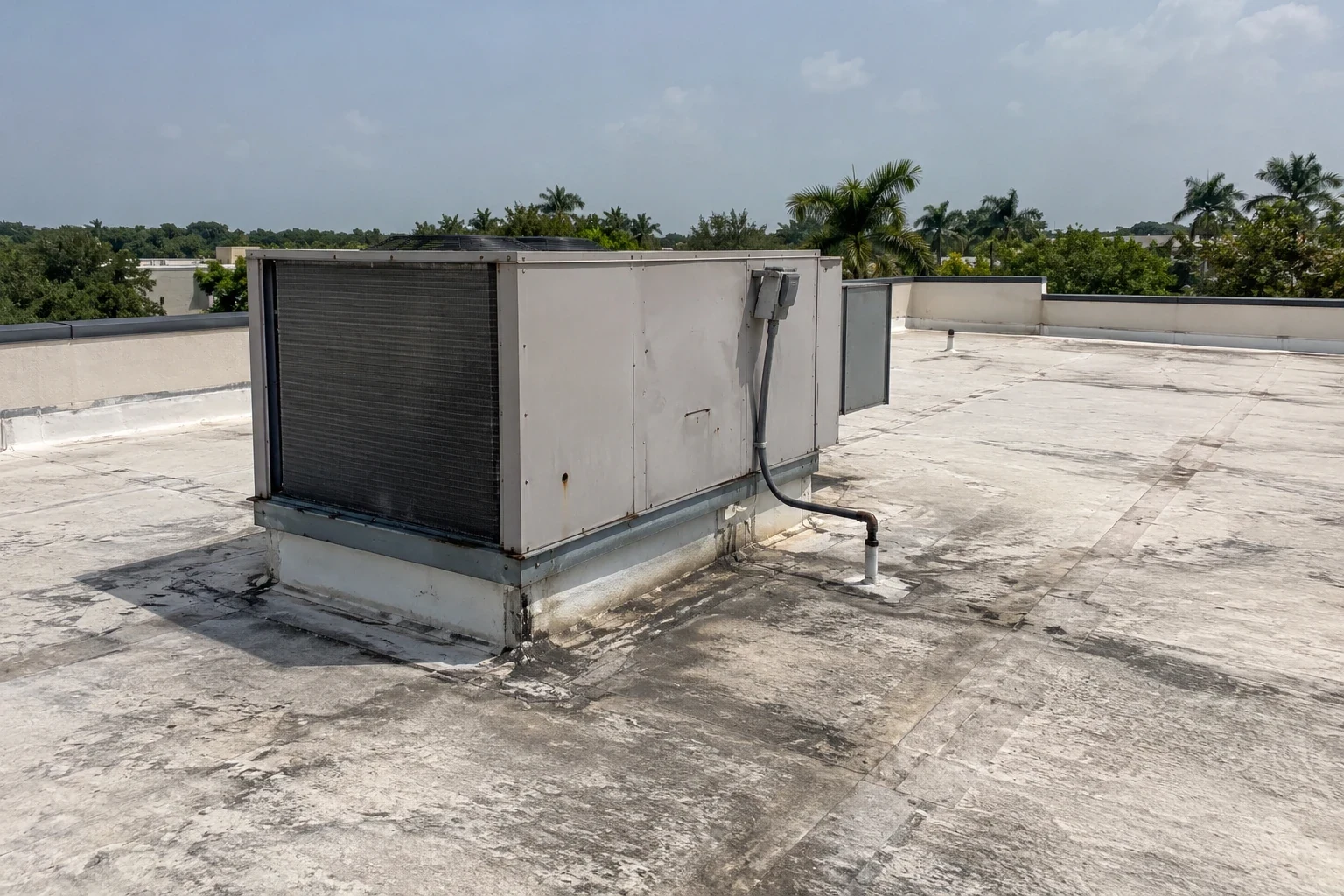
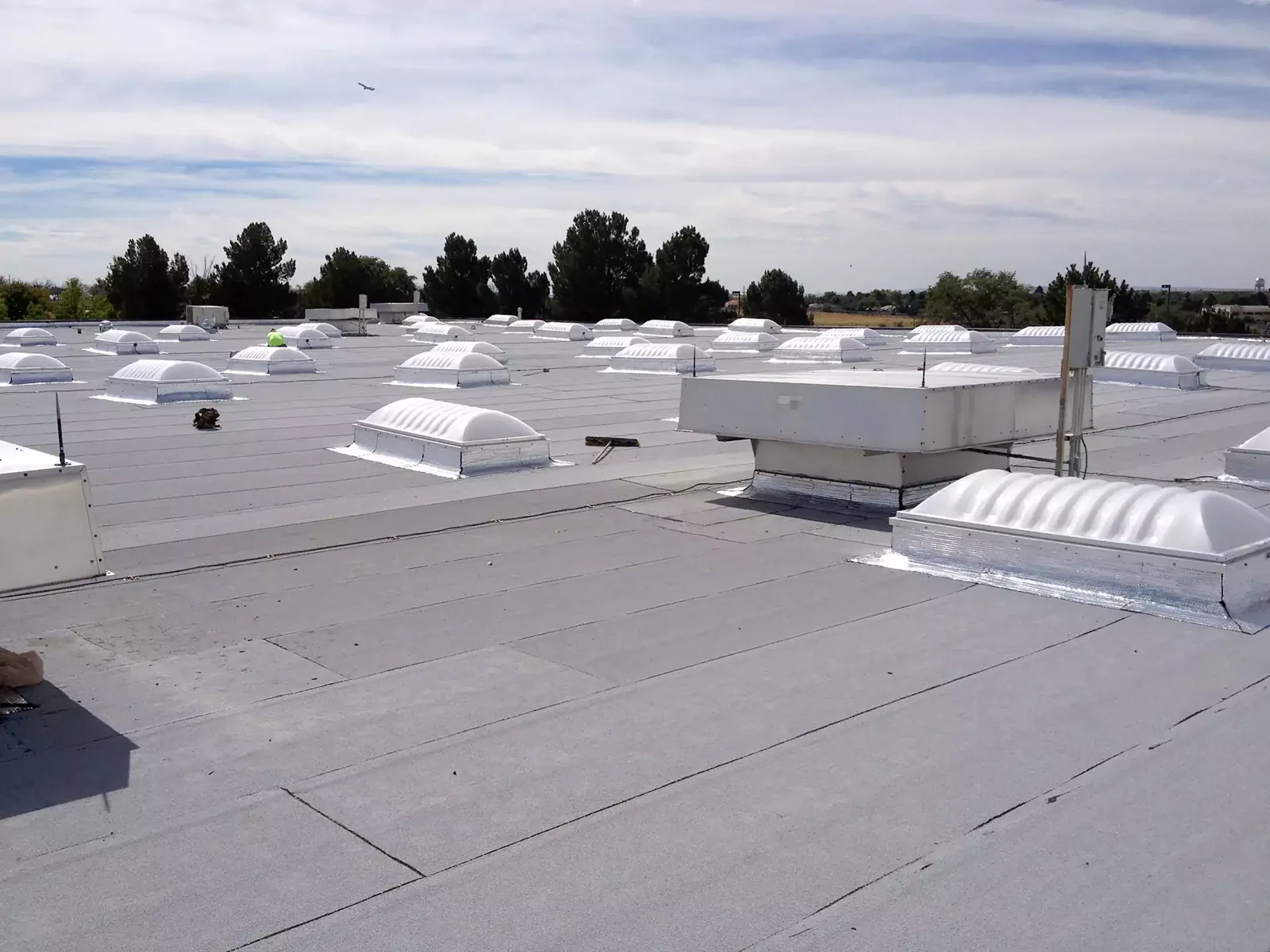
The check covers corners, perimeters, seams, curbs, skylights, fasteners, drains, scuppers, and wall transitions. We look for water tracks and openings around rooftop equipment as well as marks on the membrane or metal. A commercial roof inspection can map conditions by roof section, while wind damage repair can address a confirmed opening or loosened detail. If an interior stain sits away from the likely entry point, the report follows the path instead of treating the ceiling location as proof.
Check drainage after intense rain
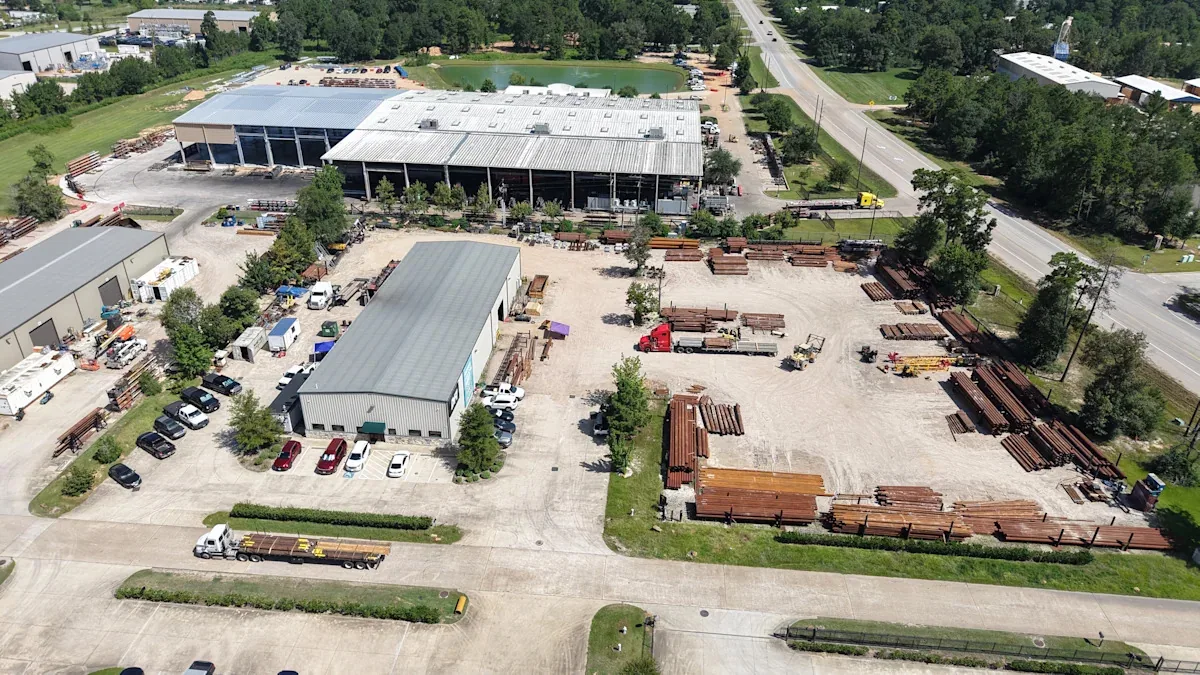
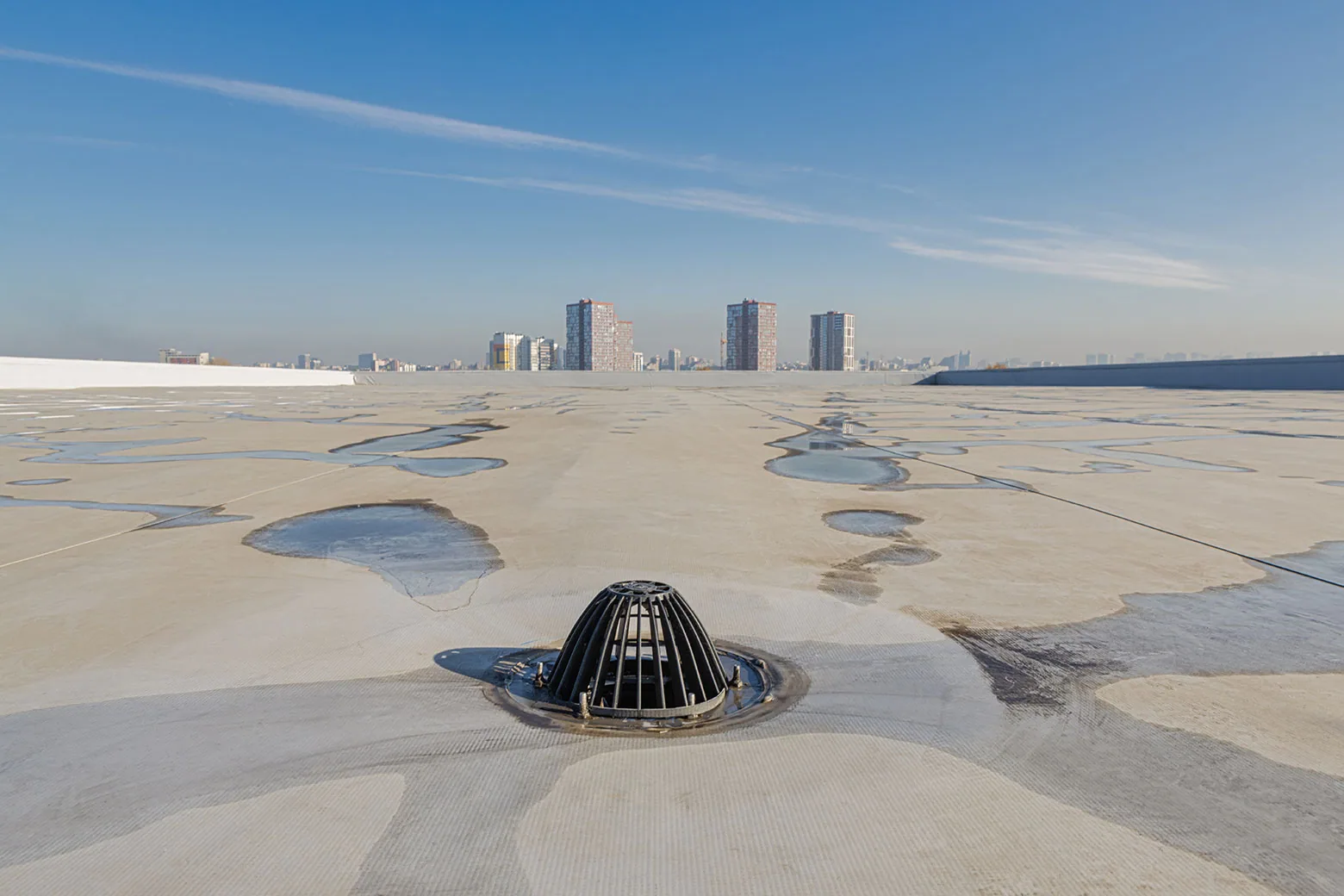
Water that remains after a storm can point to a blocked outlet, a low section, or a membrane connection that no longer sheds runoff. We check the drain bowl, strainers, scuppers, overflow openings, and roof surface around them. A blocked drain should be cleared, but that alone may not correct standing water if the slope or outlet height is part of the problem. In areas such as Conroe Park North, active freight and industrial uses can make staging and lift placement part of the inspection plan, though they do not tell us the condition of an individual roof.
During Hurricane Harvey, Lake Conroe reached record pool elevations. A later release contributed to major downstream flooding in Montgomery County. Those reports are part of Conroe-area storm history, not a finding about any specific commercial roof. We use the reported conditions at the property, the roof map, and safe visual or moisture testing to identify the repair boundary. A drainage review can clarify whether outlet work, membrane repair, or a larger roof correction is needed.
Set the repair boundary before opening material
A localized tear, open seam, or displaced edge can be repaired when the surrounding material and attachment remain sound. Broader wet insulation, repeated pullout, deck movement, or a damaged transition can expand the work. We mark the visible defect, test where concealed moisture could change the removal limit, and explain the condition that would require added work. The owner approves any expansion before more material is removed. This keeps an initial storm response from turning into an undefined tear-off.
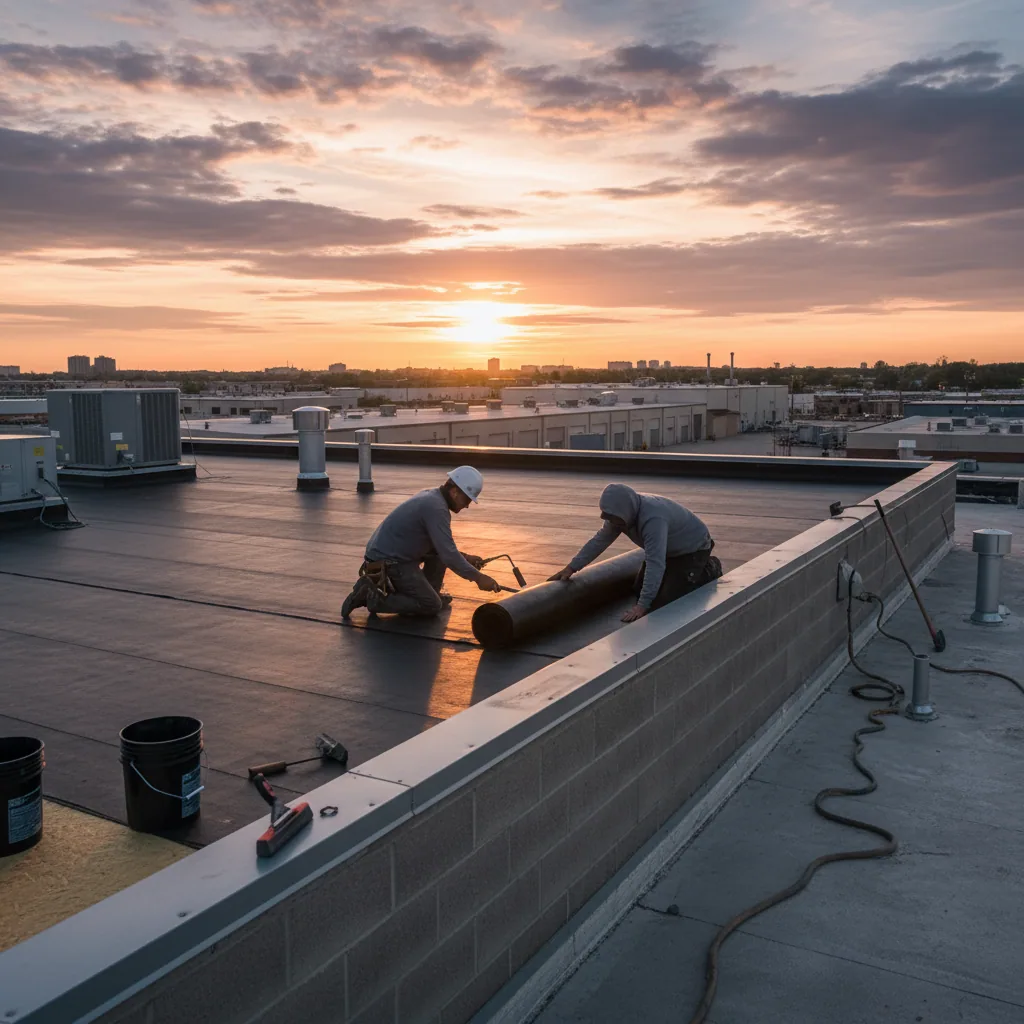
Repair methods depend on the installed system. A thermoplastic membrane needs a compatible welded patch, EPDM requires its own surface preparation and accessory materials, and metal panels need secure attachment and weather-tight transitions. If replacement is considered, a roof replacement review should compare the same section and access assumptions. A condition report can preserve before-and-after photos, open questions, and the work completed for the property's next maintenance or insurance decision.
Leave a record that survives the next storm
Closeout identifies the roof area visited, conditions found, temporary measures, materials installed, and items left for testing or later repair. Photos should show both the detail and its place on the roof so the next inspection can compare like with like. If wet insulation, damaged deck, or inaccessible areas remain, the record names them as unresolved instead of describing the roof as fully repaired. That distinction helps a property manager coordinate interior restoration, capital planning, and any requested claim documentation without overstating what the roof inspection established.
A repair above a canopy, loading lane, or office entrance also needs a ground-level closeout. We confirm that debris is removed, pedestrian routes are open, and temporary barriers are taken down only when the area is safe. If an opening remains protected overnight, the contact receives its exact limit and monitoring need. That information matters when another crew, tenant, or property manager takes over before the permanent repair visit.
After the next rain, review the repaired seam, edge, curb, or drain connection and record whether water cleared from the affected area. If another storm arrives before permanent work, check that temporary protection remains secured and that outlets are open. A claim documentation review can organize photos and repair records, while the insurer decides coverage. The property owner receives a clear statement of completed work and the next action, not a prediction based only on regional weather.
Commercial Roofing Questions
Does a tornado or hail report prove our roof was damaged?
No. Regional weather creates a reason to inspect. We document the surface, details, and interior reports at the property before recommending repair.
Can you inspect during heavy rain or high wind?
Roof access waits until conditions are safe. We can help protect the interior and schedule the roof review when the surface can be reached safely.
What if the leak appears far from the damaged area?
Water can follow the deck or insulation before reaching the ceiling. We compare the interior location with slope, drains, seams, and penetrations to trace the entry path.
When does storm repair become a larger roof project?
The scope can grow when moisture, attachment failure, or deck damage extends beyond the visible opening. We test and map that boundary before expanding removal.
Can the repair record support an insurance review?
Yes. Photos, dates, observed damage, temporary protection, and completed work can be organized for review. Coverage remains the insurer's decision.
Related Roofing Work