SOPREMA Commercial Roofing Systems in Conroe, TX
Inspect SOPREMA roofing in Conroe, TX. We identify the membrane or liquid-applied detail, trace water entry, and set a repair boundary by roof section.
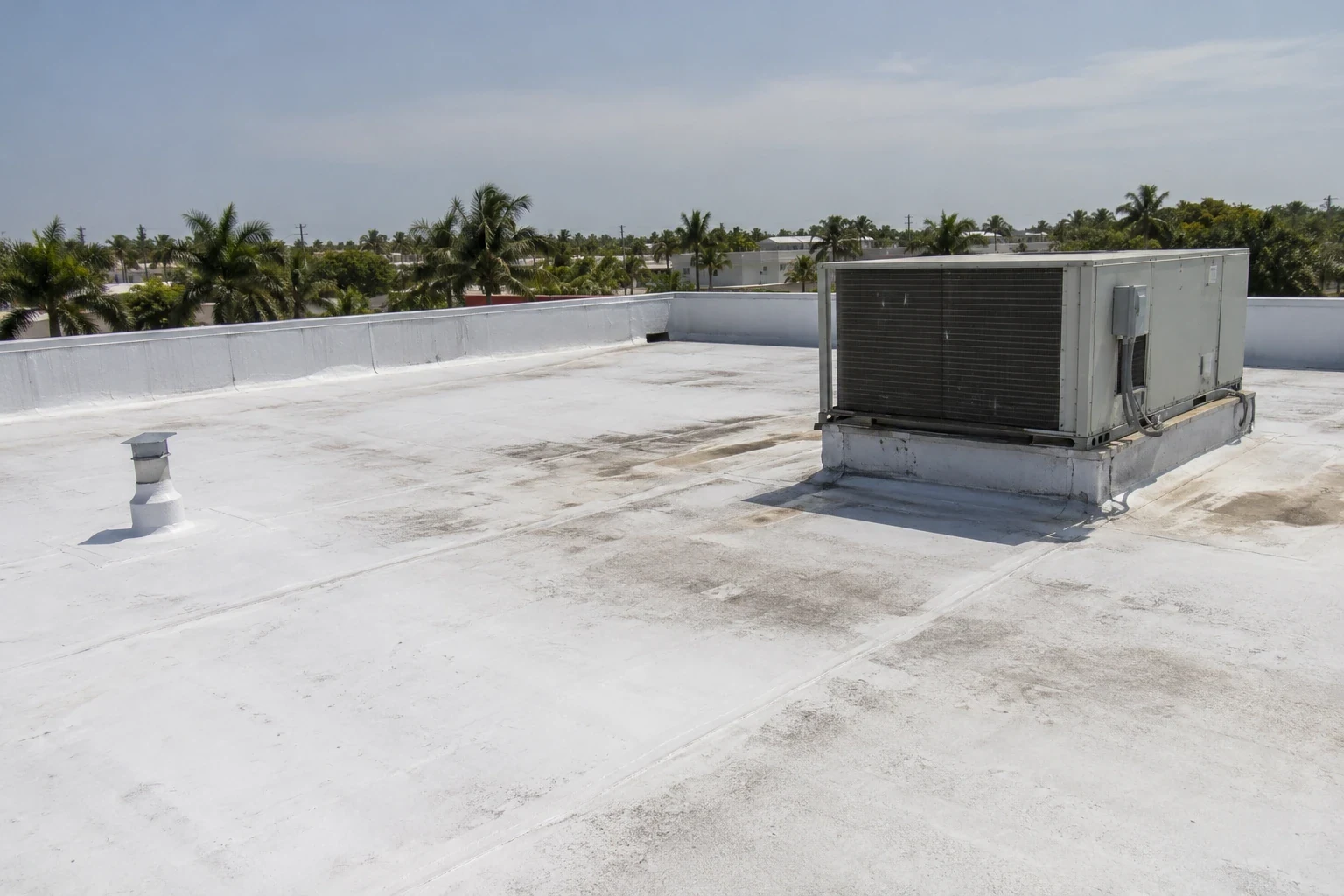
Several roof layers can hide which one is taking water. On a SOPREMA assembly, the field may include SBS-modified bitumen, a PVC membrane, or a liquid-applied detail, and each calls for a different repair path. We identify the material before cutting, heating, or coating the surface. Conroe's long hot season works on exposed seams and flashing; heavy rain tests every drain and transition. At Conroe Park North, manufacturing, freight, and food processing operations make access and staging part of the scope. Deison Technology Park's research and office uses raise different scheduling questions. A property name does not tell us what system is installed, so we inspect the roof itself.
SBS, PVC, and Liquid Details
SOPREMA makes commercial roofing products in several material families. Its SOPRALENE and ELASTOPHENE lines include SBS-modified bitumen membranes, while its broader portfolio also includes PVC membranes and liquid-applied PMMA or PMA products. ALSAN FLASHING is a polyurethane-bituminous resin reinforced with fleece for difficult flashing details. Those products do not share one repair method. We identify whether the roof has layered asphaltic sheets, a thermoplastic field, or a liquid-applied flashing before preparing the work area.
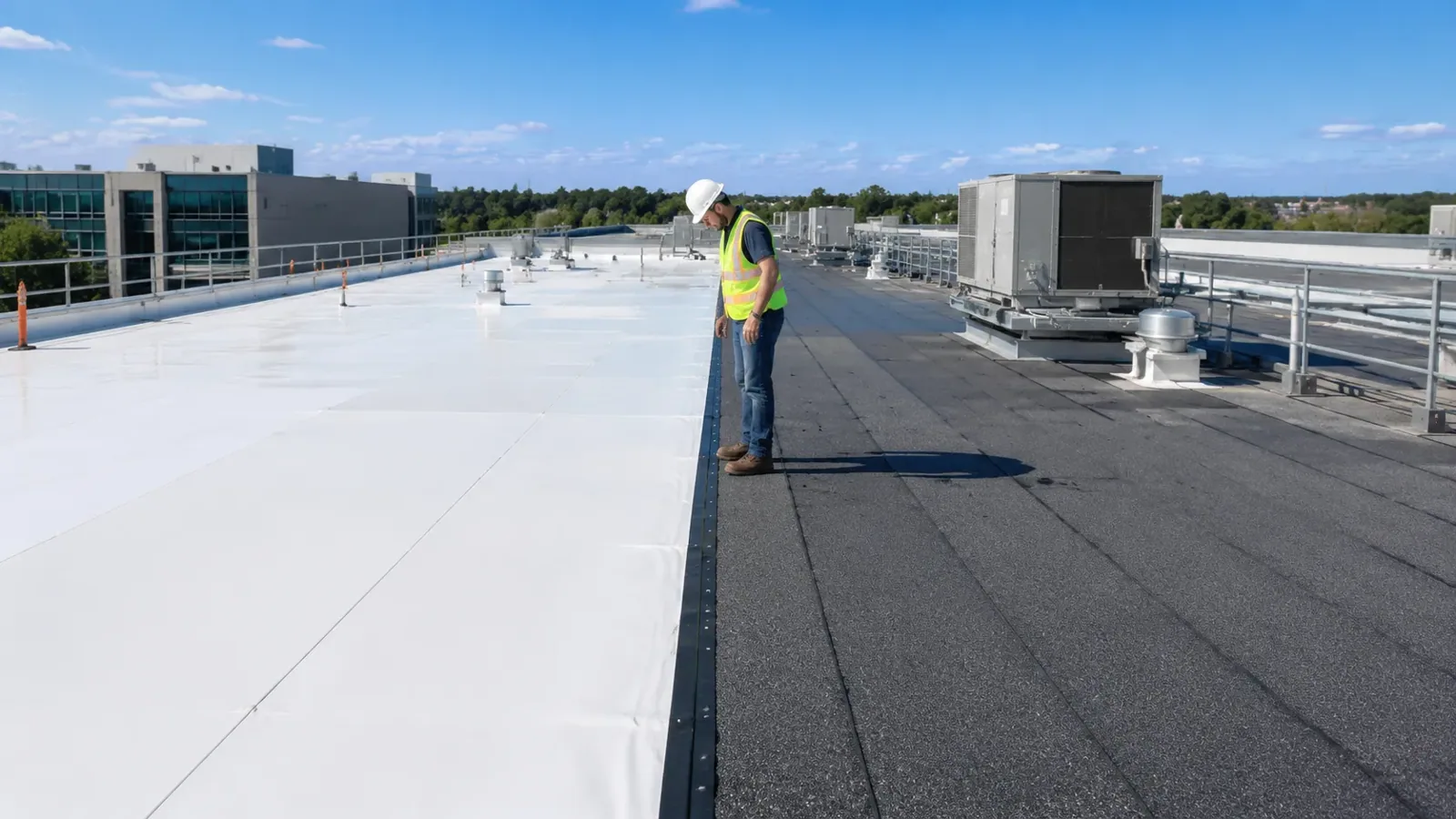
The roof may have more than one generation of material. A later addition, old coating, or transition at a drain can create a boundary that is not obvious from the ground. We check exposed edges, labels, repairs, and tie-ins rather than applying one system's detail everywhere. A modified-bitumen system review follows the plies and surfacing; a PVC membrane inspection checks welded seams. For a different membrane family, GAF roof details or Duro-Last PVC details need their own material identification.
Read the Layers Before Repair
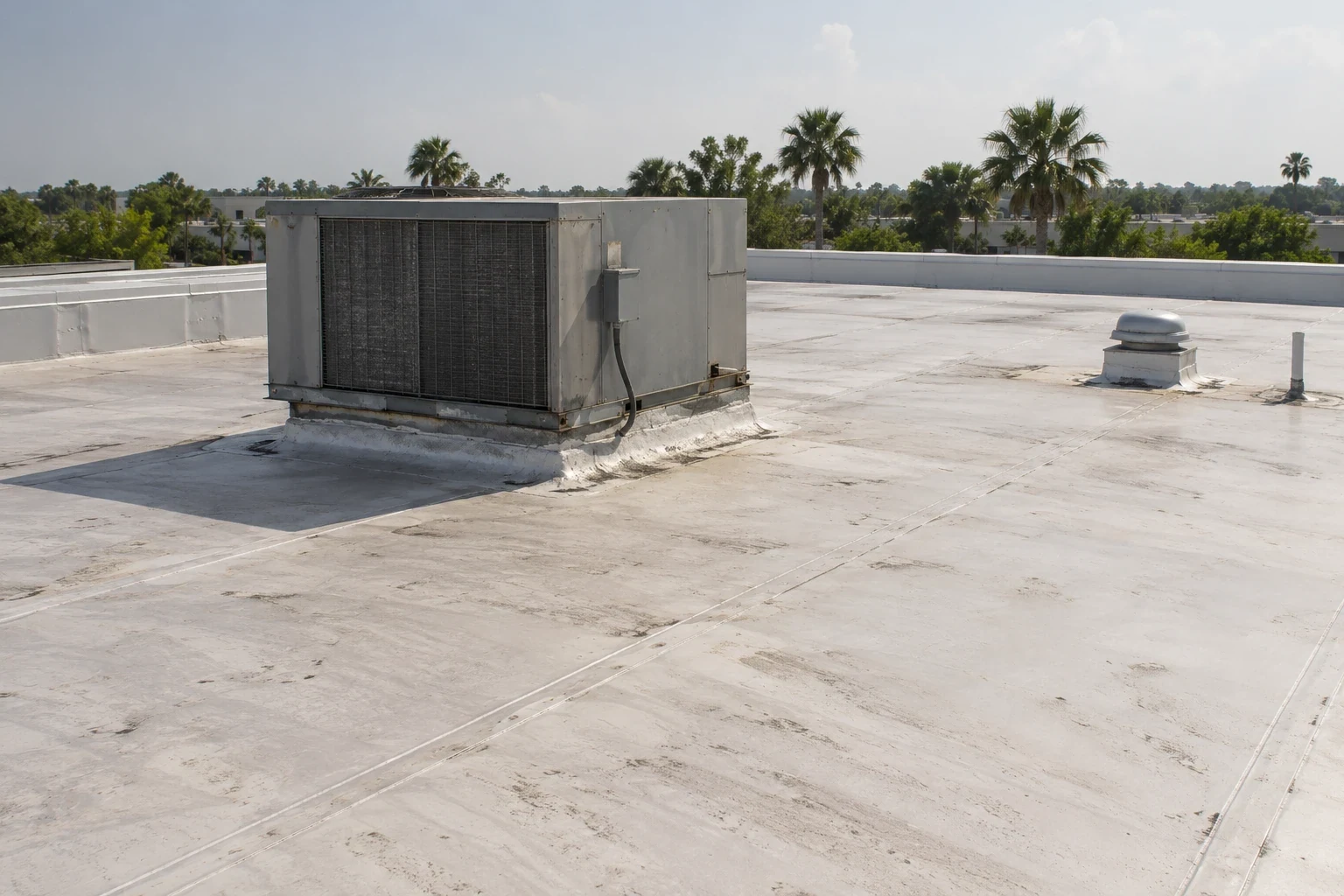
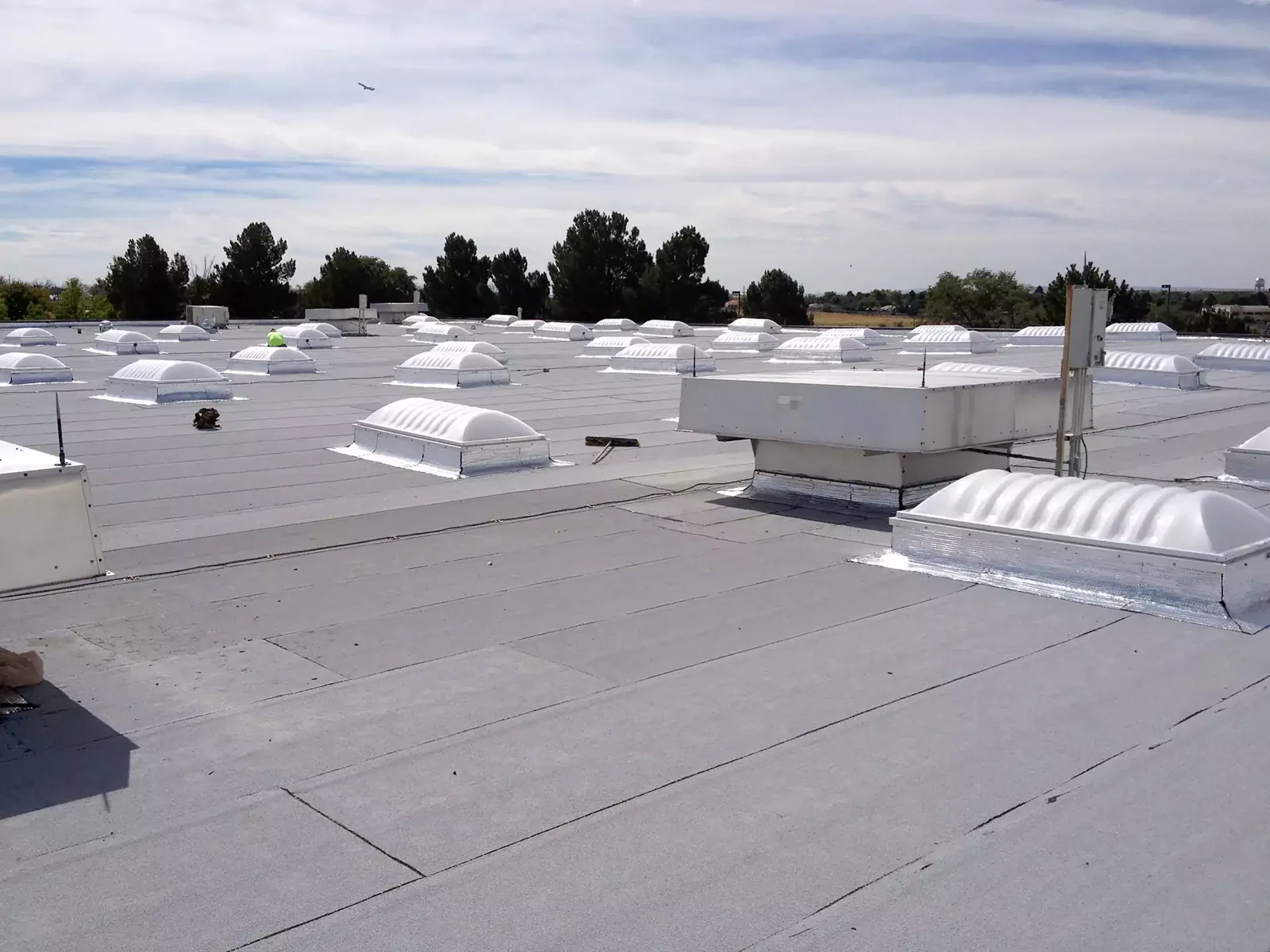
On a modified-bitumen roof, we inspect cap-sheet granules or surface, laps, base transitions, and flashing terminations. Cracks, blisters, open laps, or patches can show different problems, so the repair material and heat method must fit the existing layers. At a liquid-applied corner, we inspect its condition and reinforcing fabric before selecting a compatible repair. A roof restoration review starts with a watertight substrate and compatibility, not color or product name.
Where a roof combines SOPREMA materials, each interface still matters. A bituminous field next to a PVC curb detail may need a designed transition rather than direct contact. We identify where the system changes, inspect the flashing, and document any test area before expanding the repair. The same caution applies when a repair crosses a drain bowl, pipe penetration, or wall. Heat, solvents, primers, and adhesives have product-specific limits. Work proceeds only after the installed surface and intended connection are understood.
Conroe Heat and Rainfall
Regional July and August average highs near 95 degrees put exposed materials through sustained summer heat. A hot surface can soften some materials or change how a repair product handles, while cooling later in the day brings contraction. We schedule application and seam work for suitable conditions, follow product instructions, and protect the building from open areas. A surface temperature and a nearby weather normal are not the same measurement, so field conditions still decide whether the work can proceed.
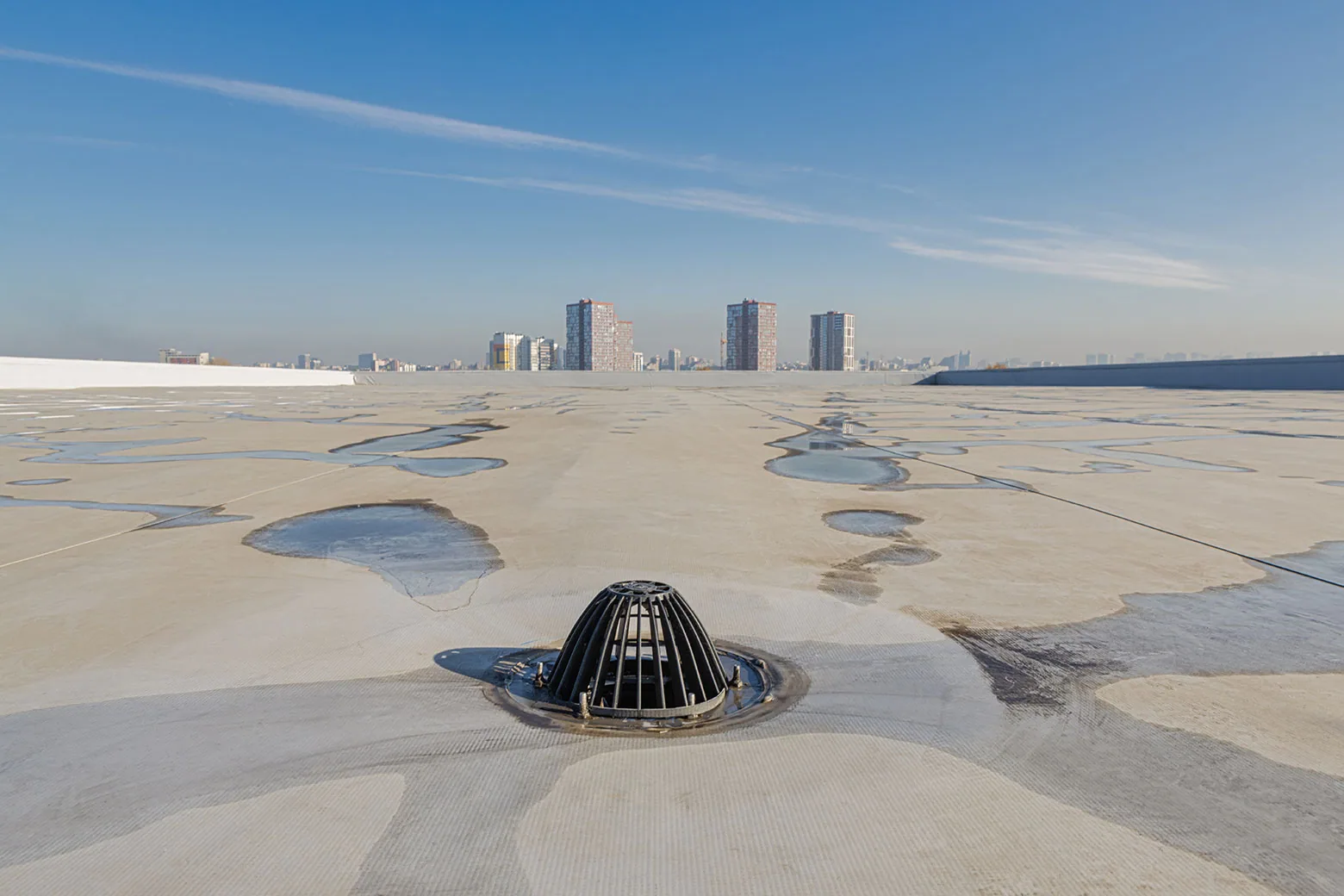
Rain tests slope, drains, scuppers, flashing, and the seam between each roof layer. Conroe's climate station at Lone Star Executive Airport is just north of the city, and the Houston-Galveston region tracks intense rainfall among its severe weather hazards. We do not infer damage from a storm report. We trace actual water entry and inspect the route to the nearest opening. A drain and scupper review can uncover a blocked outlet or failed termination that a surface coating would leave unresolved.
Handle Corners and Penetrations
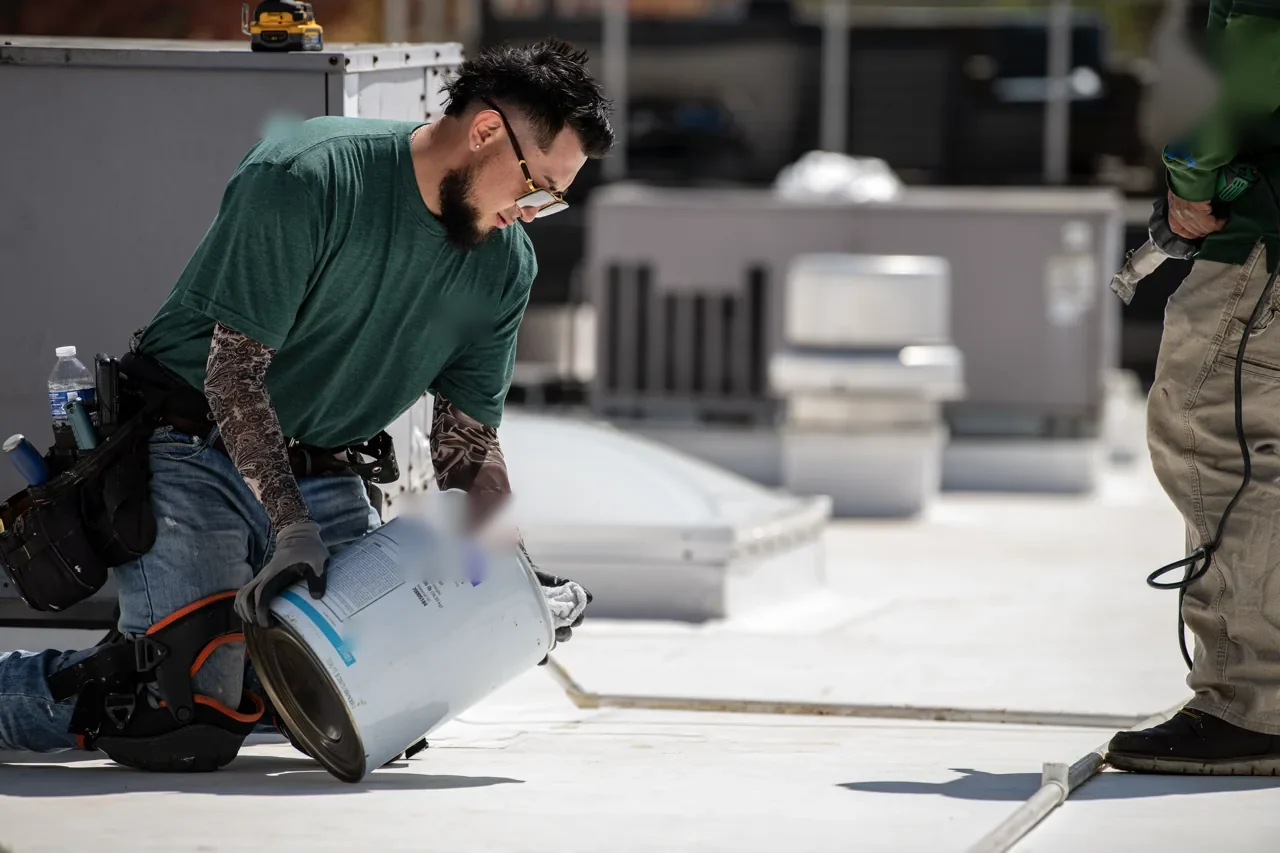
Flashing details carry the most work at a change of plane. A parapet, curb, drain, or pipe boot must connect the roof field to a vertical surface without leaving a pocket where water can sit. ALSAN FLASHING can be used for certain difficult details, but the roof still needs a compatible substrate and correct reinforcement. We inspect the edge of a liquid-applied repair for cracks, loose fleece, or a bond failure, then confirm that the surrounding membrane can receive the chosen detail.
A service call can expose a second failure nearby. A curb may move, metal can loosen, or a drain connection may have been altered during equipment work. We check the support and membrane together. The flashing repair scope names the detail, material, and limit. If a leak is active, emergency roof repair can address immediate water entry while the wider assembly is evaluated. We keep temporary protection distinct from a permanent repair so the owner knows which work remains.
Choose a Local Repair or Full Renewal
A small opening in one cap sheet or one liquid flashing may fit a focused repair when adjacent material is sound and dry. Repeated lap failures, widespread blistering, wet insulation, or liquid detail separation across several transitions can expand the boundary. We map confirmed defects, mark areas for testing, and compare repair with renewal. A brand name cannot answer whether another roof layer is appropriate.
A recover assessment checks moisture, attachment, existing layers, deck capacity, drainage, and code. Covering wet material can retain the defect; removing layers exposes the deck but adds noise, debris, and access needs. A replacement scope should identify the selected assembly and treatment at drains, edges, and equipment. If a coating is under consideration, the existing roof must be watertight and suitable for that application. We state the conditions that would change the planned quantity before concealed material is removed.
Plan Material Handling and Access
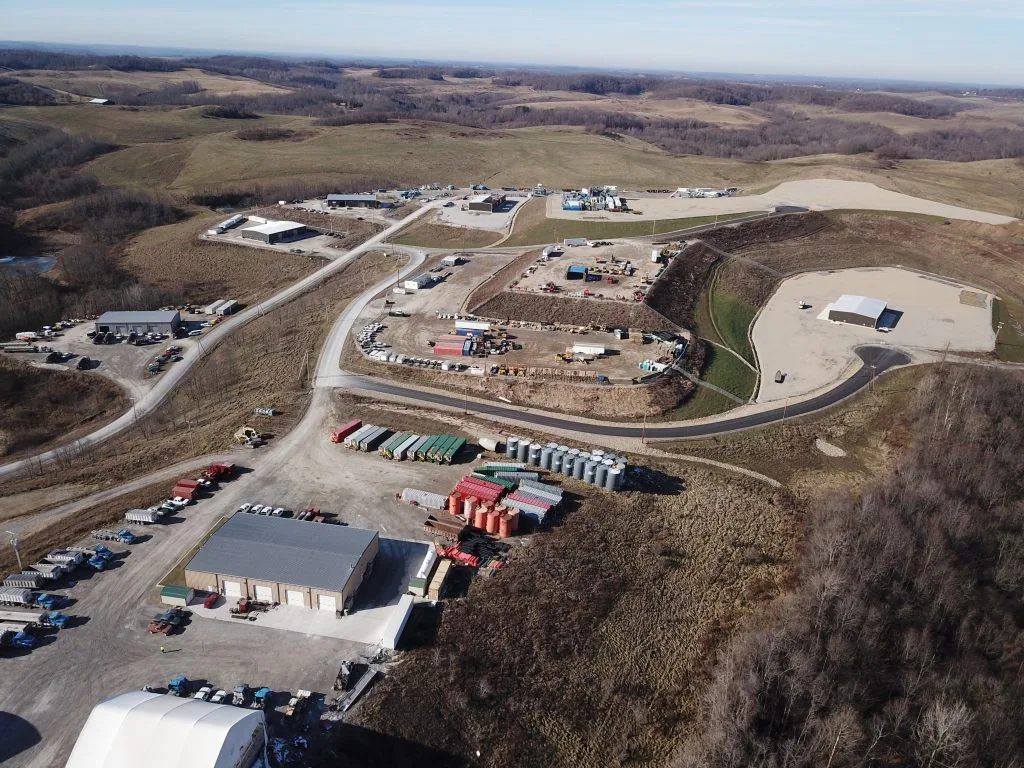
Conroe Park North combines freight, manufacturing, warehousing, and food processing. Material delivery can compete with truck movement, so we confirm the property's loading rules and staging location. Deison Technology Park includes research and office uses, where a manager may need to protect access to specific rooms or equipment. These are different operating contexts. Neither tells us the roof type or whether an interior area is affected.
We sequence work by roof section, with a defined area to prepare, repair, and close before the crew leaves. If a test exposes damp insulation or an unexpected layer, we document its extent and pause for approval before the added removal. The site contact knows which door or route remains open and when noise or equipment movement is planned. A phased roofing plan can set those limits for a larger project without leaving an unprotected edge overnight.
Preserve the System History
Closeout should identify the material observed, roof section reached, repair method, photos, and any test result. For a layered SOPREMA roof, it helps to record whether the repair was on SBS-modified bitumen, PVC, or a liquid-applied detail. If the product could not be confirmed, the record states what was visible and what still needs identification. It should also mark a concealed area that was not opened.
That detail lets later maintenance compare a repeat leak with previous work. A drain, wall, or equipment penetration may need another look after service traffic or the next heavy rain. We give the property manager a repair limit and a trigger for follow-up rather than calling the entire roof complete when only one area was reached. A roof condition report can hold those findings alongside the photos and roof map.
Commercial Roofing Questions
How can you tell whether a SOPREMA roof is modified bitumen or PVC?
We check exposed edges, surface, seams, labels, and repair history. If one roof has multiple layers or additions, we mark each transition and confirm the surface before selecting a repair material.
Can ALSAN FLASHING repair any curb or wall detail?
It is a liquid-applied flashing resin for certain difficult details, but compatibility depends on the substrate and surrounding roof. We inspect both before specifying its use.
Does another coating solve an SBS blister or open lap?
A coating will not correct a wet or unstable layer below it. We identify why the surface opened and whether the substrate is sound before considering restoration.
When should layered roofing be removed instead of covered?
Moisture, attachment, layer count, deck condition, drainage, and code affect that choice. We inspect or test the assembly and explain what a recover would leave concealed.
How do Conroe storms affect SOPREMA repair timing?
A dry substrate and enough time to secure the work area matter. We keep the open section within the forecast window and document observed roof damage separately from regional weather history.
Related Roofing Work