Apartment and Multifamily Roofing in Conroe, TX
Coordinate apartment roofing in Conroe with resident notices, leak tracing, common-area protection, and practical repair or replacement planning.
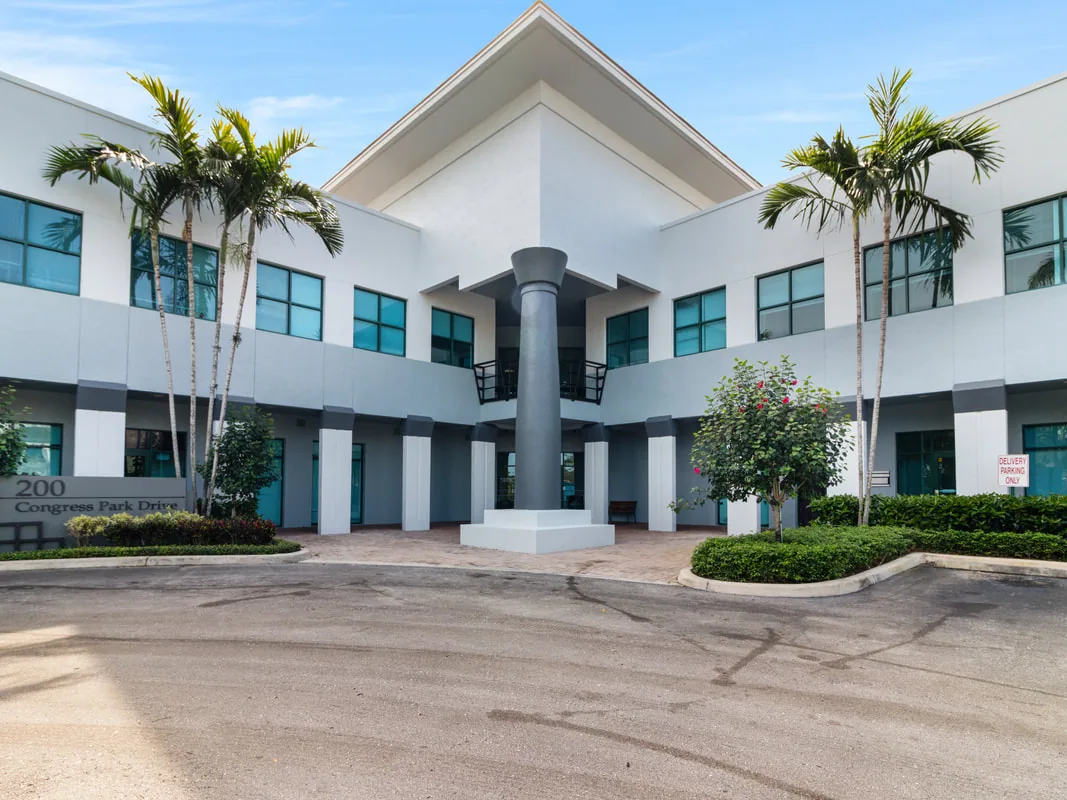
A water mark in one apartment can trigger questions from the resident, property manager, and maintenance team before anyone knows which roof detail failed. The roof visit needs a unit or common-area location, a contact who can authorize access, and a plan for keeping residents away from the work zone. Apartment roofing also involves shared corridors, parking, balconies, and service areas that continue in use while work proceeds. Grand Central Park is a master-planned Conroe community with shopping and dining options, and Montgomery lies about 15 miles west near SH 105 and FM 149. These are local area examples, not evidence about an individual apartment property's roof or amenities.
Give residents clear notice and safe routes
Property management can set the notice period, delivery method, quiet hours, pet or balcony instructions, and contact for questions before work starts. We confirm how crews reach the roof, where a lift or materials can be staged, and whether a walkway, parking row, or building entrance needs temporary control. Residents should not be asked to grant roof access or interpret a contractor's route; the manager identifies the authorized contact and approved path.
Work may need to move among separate buildings or roof wings. We identify each location and define which entrances or common spaces are affected on a given day. If a roof opening must remain under temporary protection overnight, the property contact should know where it is and what inspection is planned before the crew leaves. Phased reroofing for an occupied property can set this sequence, with resident communication managed through the owner or manager.
Match the apartment report to a roof area
A ceiling stain, wet wall, or drip near a window may be several feet or several units from the roof opening. Water can travel along a deck or framing before it appears indoors. We use the unit number or common-area location, floor, time noticed, and recent weather to focus the inspection. On the roof, we review accessible seams, penetrations, curbs, drains, wall transitions, and earlier repairs. The report should state which sections were checked and which were hidden or unsafe to reach.
Management can protect residents and belongings below active water under its own safety process. No one should enter a ceiling cavity or climb onto the roof to investigate. A commercial roof inspection can document the assembly and nearby details, while commercial roof leak repair addresses a defined condition after the source is assessed. If separate buildings have different roof histories, the work order should keep those records distinct rather than treating the whole community as one roof.
Review drains, edges, and shared penetrations
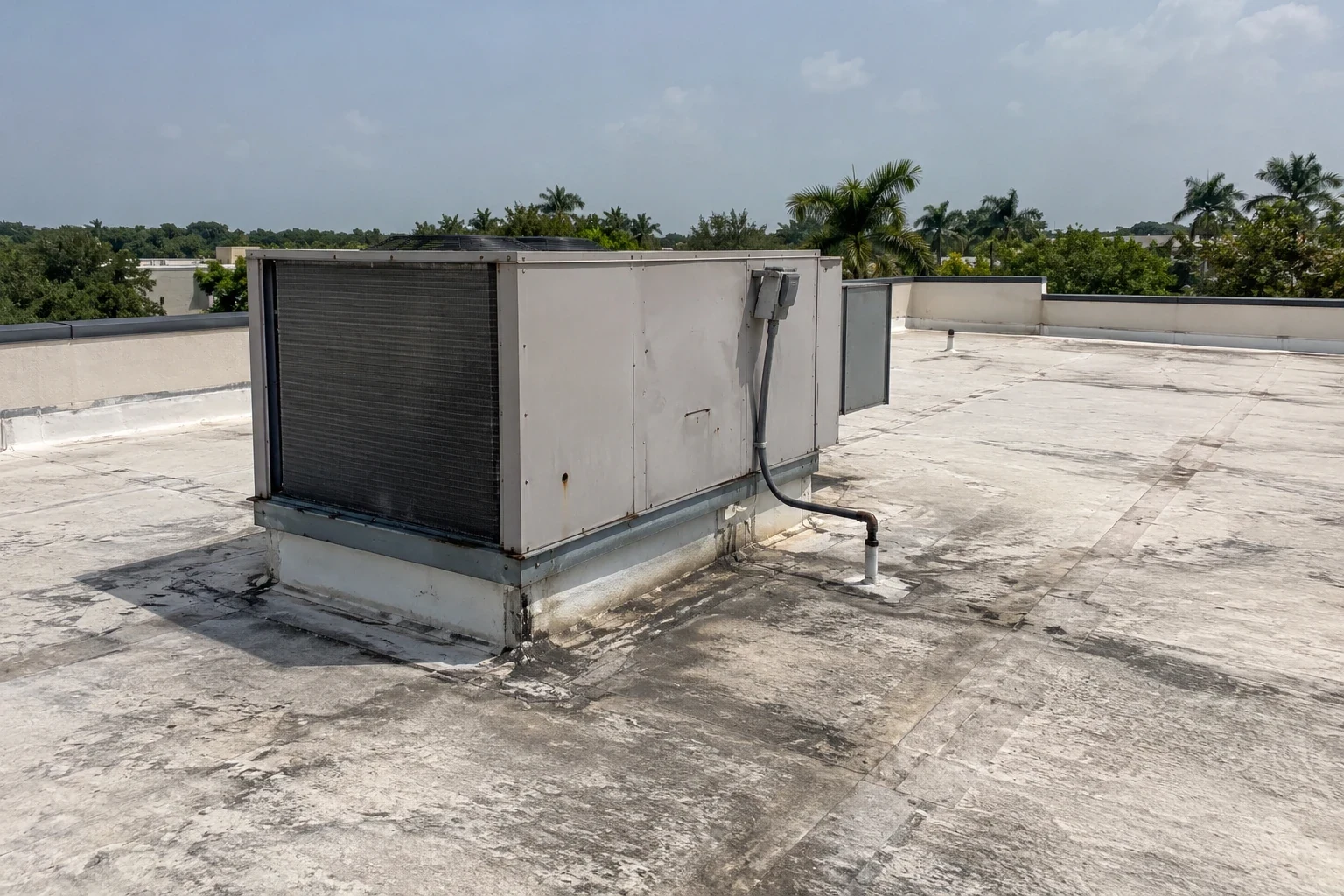
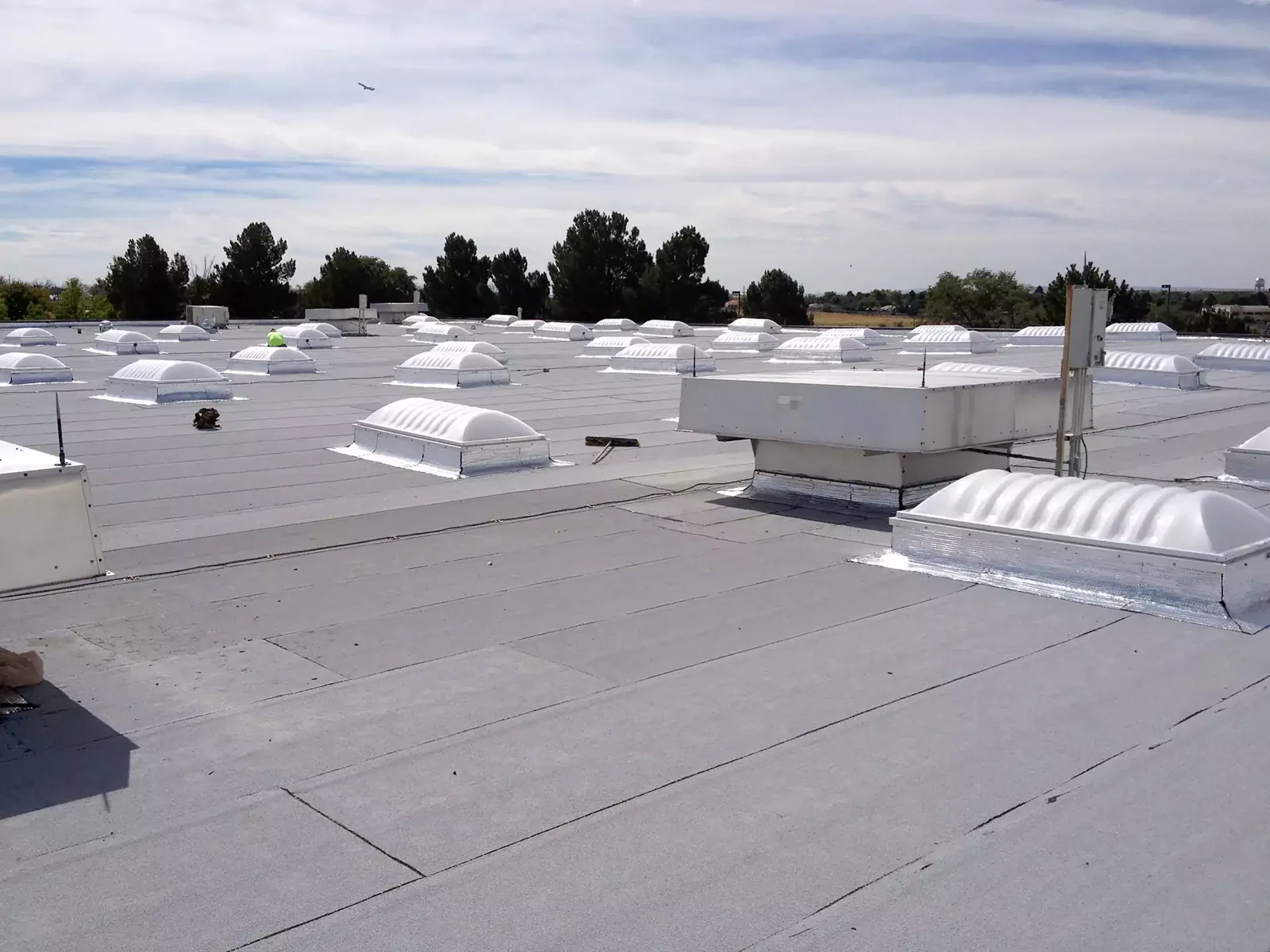
Apartment buildings can have parapets, stair or mechanical enclosures, plumbing vents, HVAC curbs, and roof drains, but the actual details vary by site. We document what is present instead of assuming each building has the same layout. A leak near a parapet may be tied to edge metal or wall flashing; an interior ceiling spot may trace to a drain or penetration. The roof map should identify the observed detail and the nearby area checked.
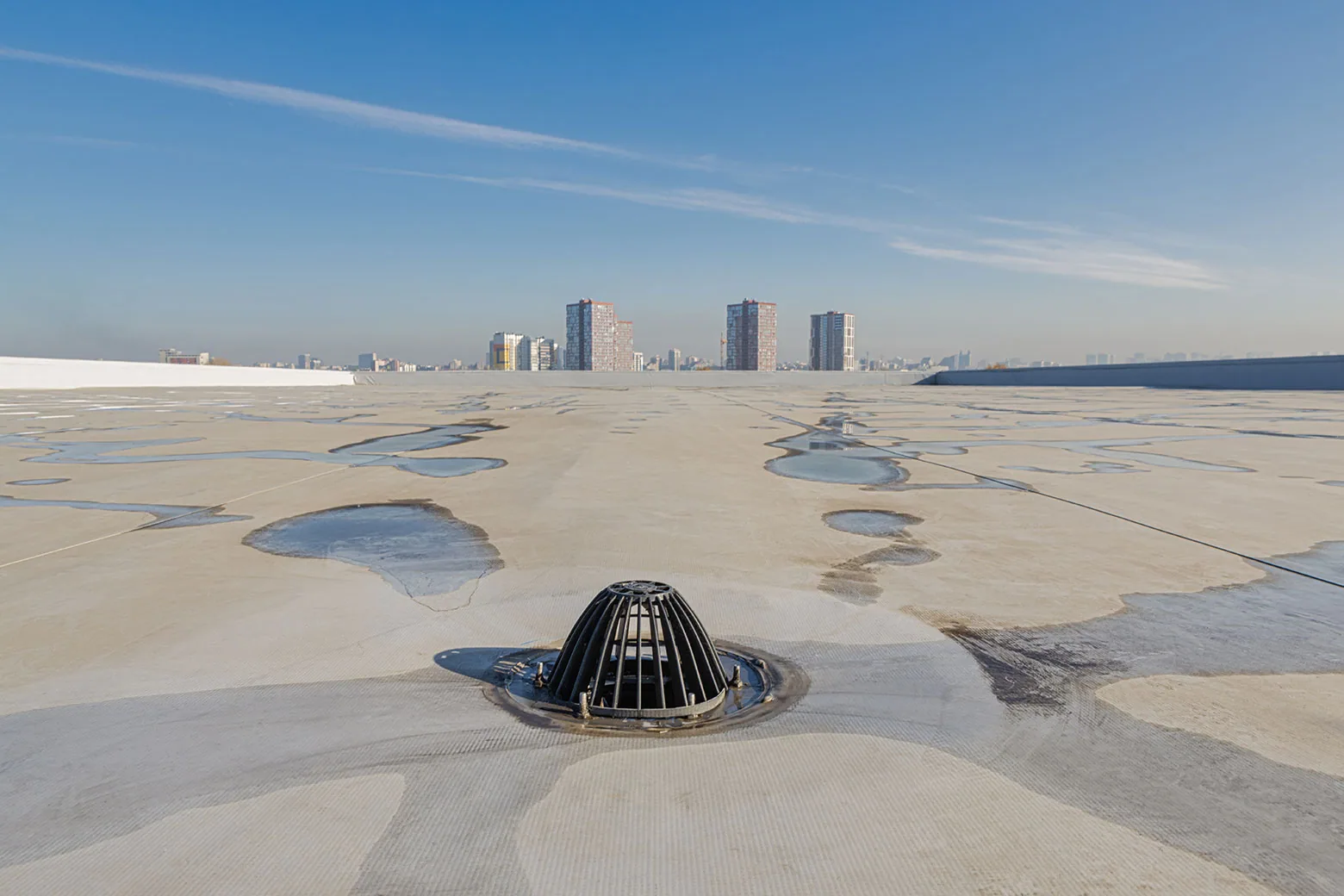
Drainage issues can recur in a low area or after debris collects at a strainer. We look at visible drains, scuppers, overflow routes, and discharge points and note blockages or damage. Drain and scupper service can define that part of the work. For a hotel property, room assignments and events create different access demands; hotel roofing covers that use case. Apartment managers may instead need to coordinate resident notices, parking, and shared entries across multiple buildings.
Plan around Conroe rain and roof heat
Heavy rain can expose a leak path that stays hidden during a dry inspection. Management can use the storm notice to identify which buildings or units reported water, then arrange an inspection that starts with those roof sections. We set an exposed-work limit and confirm temporary cover before the crew begins a repair, since residents continue to use entries and parking during most project windows.
During Hurricane Harvey, Lake Conroe reached a record pool elevation, and a record release contributed to flooding downstream in Montgomery County. That watershed event is local context; it does not establish roof damage at an apartment property. The roof review should focus on membrane, drainage, edges, and the unit reports actually received. Grand Central Park and nearby Montgomery are separate service areas with different property layouts. A weather contingency notice can tell residents when access or parking shifts while the manager receives an update about the inspected roof zone.
Compare a repair with community-wide renewal
Apartment ownership may have roofs installed at different times or separate buildings with distinct repair records. We compare each section on its own: surface condition, drainage, penetrations, edge metal, and interior reports. A local defect may need a small repair; recurring water across several buildings may support a community-wide assessment. A new roof layer can avoid some demolition only if the existing assembly and structure allow it. Removing existing material exposes hidden conditions but requires a route for disposal, protection below, and resident updates.
A portfolio scope should identify building numbers, roof areas, staging, common-space controls, and which manager approves added work. It should not assume that a repair on one wing resolves another building's report. A replacement scope can sequence work by location and explain the approval points. An office property has tenant notices and business-hours considerations; office-building roofing describes that separate use. For multifamily properties, the manager should retain closeout photos by building so new calls can be compared against the correct section.
Keep maintenance records by building
A useful closeout lets the next manager connect a resident report to the repair performed. Record the building, roof section, reported unit or common area, work date, materials, photographs, and any limits on inspection. Note whether a nearby condition needs another trade or a scheduled return. If a leak reappears, the service history can help determine whether the new report matches the old roof zone.
Grand Central Park is a Conroe master-planned community with shopping and dining beyond the downtown core. Montgomery is a separate nearby city about 15 miles west. These places illustrate the range of surrounding communities; neither determines a roof design or apartment layout. Grand Central Park is one broader service area for commercial roofing visits. Planned maintenance can track visible drains, transitions, and prior repairs at a multifamily property while management controls resident communication and access.
Commercial Roofing Questions
What should a resident include in a leak report?
The unit or common-area location, time noticed, whether water is active, and any affected contents help management route the call. Residents should follow property safety directions and avoid ceiling cavities or roof access.
Can apartment roof work happen while residents stay onsite?
Yes, when management approves access, notice, parking or walkway controls, and daily closeout. The schedule should identify which building or common area is affected instead of relying on a general community notice.
Do all buildings in a complex need replacement at once?
Not necessarily. Each roof section may have a different assembly, condition, and repair history. A site review can compare work by building and identify whether conditions support localized repairs or a broader program.
How do you handle balconies during roof repair?
Management identifies balconies or patios below the work and sets resident notice or temporary access controls. The roofing scope should keep debris and tools within the approved boundary and restore access after inspection.
What belongs in a multifamily roof service record?
Keep the building and roof zone, reported unit or common space, findings, repair materials, photos, inspection limits, and follow-up items together. Separate records help the manager compare future leak reports accurately.
Related Roofing Work