Hotel Roofing in Conroe, TX
Plan hotel roof repairs in Conroe around guest comfort, event schedules, service access, drainage, and clear options for repair or renewal.
A damp ceiling in a guest room can lead to a room move, a maintenance call, and questions about how far the water traveled. In a hotel, roof work also touches lobby access, loading, event setup, and quiet hours. We begin with the reported room or public area and the manager who can approve access. The Woodlands Town Center combines hotels with office, retail, healthcare, entertainment, and residential uses across a roughly 1,000-acre district. The Waterway connects lodging and business destinations along a 1.8-mile linear park. These regional facts show that lodging is part of a broader mixed-use market; they do not describe an individual property's roof system.
Protect guests and keep hotel routes clear
Before an inspection, the hotel contact can identify occupied floors, event rooms, loading hours, guest entrances, housekeeping routes, and any area scheduled for a large gathering. We confirm where the crew can enter, whether an escort is required, and what temporary barriers or signs management expects. A roof hatch above a guest corridor may have a different access procedure than a service roof over the kitchen or mechanical area.
Quiet periods matter, but the hotel decides when work can occur. We can separate noisy removal from quieter inspection or repair steps and identify when a room or corridor may need temporary closure. A daily update should state which section was completed and whether any route remains restricted. Phased work in an occupied hotel can define those work zones and the weather-tight closeout at each stage. If a guest needs to move, hotel staff control that decision; the roofing crew focuses on the roof and agreed access boundaries.
Trace the report across rooms and roof sections
A stain in a room may be below a curb, seam, drain, or parapet transition some distance away. We use the room number, floor, time noticed, and any prior maintenance ticket to locate the matching roof zone. The inspection checks visible membrane, penetrations, edges, drain openings, and earlier repairs that could affect the path. Photos and a simple zone reference help the hotel team compare an interior call with what was seen above.
If the leak appears during a storm, the time and direction of wind-driven rain can help focus the inspection without proving the source. Staff should protect guests and contents using hotel procedures and should not enter a ceiling cavity or go onto the roof. A commercial roof inspection can broaden the review when more than one room or floor shows symptoms. For a property with nearby shopping and dining tenants, shopping-center roofing covers shared storefront access, while hotel findings stay tied to guest areas, service routes, and the inspected roof assembly.
Coordinate rooftop equipment and service vendors
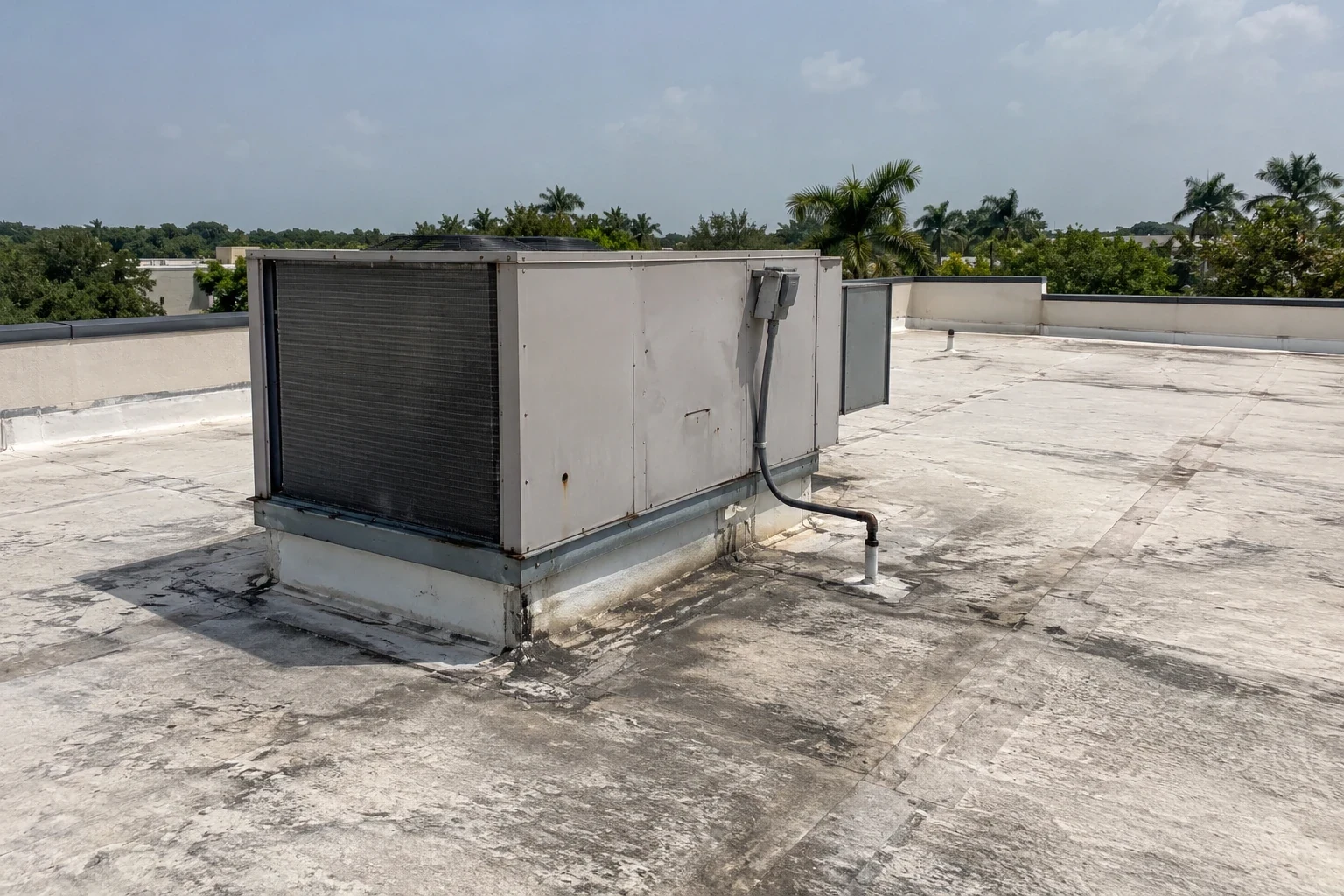
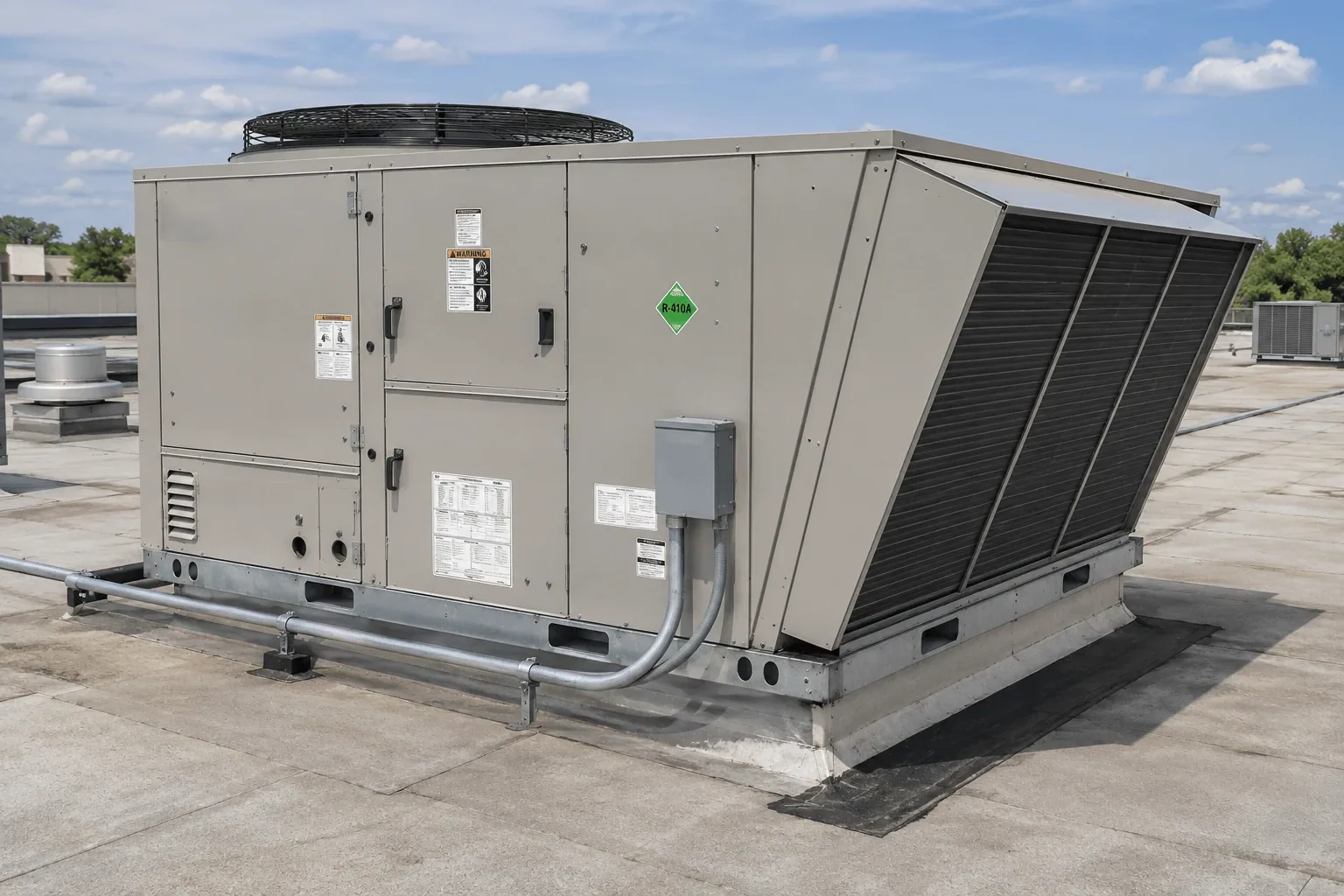
Hotel roofs may carry kitchen exhaust, ventilation, cooling, and communications equipment, but the actual roof inventory varies. The hotel's engineering or service contractor identifies which systems must stay active, when a shutdown is allowed, and what clearance must remain. We check visible curbs, supports, penetrations, and flashing while leaving equipment changes to the responsible vendor. That separation prevents roofing work from becoming an unauthorized adjustment to a building system.
Water near an exhaust or mechanical curb can enter through its flashing or another nearby detail. We inspect the surrounding membrane and drainage before selecting a repair. If a service vendor has a scheduled visit, the hotel can coordinate it with roof access to avoid repeated setup. Equipment curb and support review can identify the roof interface to include in a scope. Drain and scupper inspection is useful when water remains near a low point after rainfall or a guest-room leak returns in the same area.
Plan around Conroe's hot roofs and wet weather
Hotel roof work has to account for reservations, event setup, and any guest area below the section scheduled for repair. Management can identify the rooms or public spaces that should remain quiet and choose a notice point if weather moves the crew to another roof zone. The work plan should also state how temporary protection will be inspected during a rain delay and who receives the revised completion estimate.
Heat on an exposed surface may narrow a safe work window, while rain can require the crew to stop and secure the area. We plan the sequence with a defined daily closure step instead of leaving an opening until the next visit. Town Center and the Waterway are local mixed-use destinations that include lodging, business, and visitor activity; a hotel's own calendar, room map, and service routes control the roof schedule. The local area does not determine the building's assembly. A hotel manager should receive a zone-specific update before guest access changes.
Compare repair and replacement with room impact
Hotel ownership needs a roof recommendation that names the guest areas affected and the service period required for each option. A small flashing failure may call for a focused repair if the surrounding surface is sound. Recurring room calls, multiple roof sections in decline, or an assembly that cannot be maintained in place may justify pricing a broader project. An overlay reduces removal only when the existing roof can accept another layer and concealed moisture is controlled. A tear-off gives a view of underlying materials but requires disposal access and a reliable weather close.
Set out the work by wing or floor and identify loading, lift placement, guest routing, equipment coordination, and the daily handback. A replacement proposal should state which rooms or public zones could be affected and how the hotel will receive updates. An apartment program has resident notice and parking concerns; apartment roofing addresses those needs. The hotel manager can then compare roof conditions with event bookings, room availability, and the maintenance calendar.
Leave a clear handoff for hotel engineering
Closeout should identify the building and roof section, work completed, materials used, dated photos, and any item left for another trade. If the hotel must monitor a room after a repair, record the location and the time period for follow-up. A later report can then be compared with the same zone without treating every ceiling mark as the same failure.
The Woodlands Waterway District includes commercial uses such as offices, hotels, restaurants, parks, and residences. Town Center also serves as a shopping, medical, business, and entertainment destination. This broader mix supports lodging and visitor activity in the region, but each property sets its own event calendar and access rules. The Woodlands Town Center is a service area for commercial roof visits. A maintenance schedule can track visible drains and past repairs between guest calls, with access arranged through hotel engineering.
Commercial Roofing Questions
Can hotel roof work proceed while guests are staying onsite?
It can when management approves access, noise windows, guest routes, and the work section. The plan should name any room or corridor that needs temporary restriction and confirm the roof is protected at daily closeout.
What should the front desk report about a room leak?
The room or floor, time noticed, whether water continues, and any nearby lighting or equipment help facilities staff route the call. Hotel staff should follow their guest-safety procedure and notify the designated building contact.
Will roofing work affect hotel HVAC?
The hotel's engineer or service vendor decides whether a unit can be shut down or needs clearance. We coordinate roof access and flashing work with those instructions and do not alter the system independently.
How do you avoid noise during an event?
Management identifies event hours and guest areas when booking the work. We can sequence noisy tasks where feasible, but the scope must reflect the actual removal method, safety needs, and weather window.
What does a hotel reroofing plan include?
It should define roof sections, guest and service access, material staging, equipment coordination, weather protection, daily closeout, and the approval path for concealed conditions.
Related Roofing Work