Medical Office Roofing in Conroe, TX
Plan medical office roofing in Conroe with leak response, safe access, equipment coordination, and repair or renewal choices planned to protect patient care.
A roof leak at a clinic can reach reception, exam rooms, records, or electrical equipment while staff are still seeing patients. The first job is to identify the affected roof zone and protect the rooms below without blocking arrivals or emergency access. Conroe includes different kinds of commercial property: Deison Technology Park is planned for corporate, research, and office uses, and VGXI operates a life-sciences manufacturing facility there. That context supports careful coordination around specialized work; it does not tell us what any clinic roof contains. We inspect the building, locate the likely entry point, and give management a practical sequence for repair or renewal.
Start with patient routes and clinical operations
Before moving a ladder or setting a work zone, we ask which doors patients use, where accessible parking and drop-off occur, and whether the affected area contains active treatment or diagnostic rooms. Clinic managers can identify hours when reception is busy, rooms that cannot be taken out of service, and the person who can approve roof access. We use that information to plan staging and communicate any expected noise or temporary interior protection. A roof inspection should not create a new obstruction at an entrance or send crews through a restricted clinical area.
Some repairs can be isolated above a single suite. Others require access across a larger roof section or coordination with building engineering. We identify the requested work area, agree on access and escort rules, and leave each opening protected before the crew leaves. Phased work in an occupied building helps when a repair or replacement must move around continued patient appointments.
Trace the report to a roof condition
A ceiling stain is evidence of water movement, not proof that the membrane immediately above it has failed. Water can travel along a deck, insulation joint, conduit, or structural member before appearing indoors. We compare the reported room with roof drains, seams, penetrations, curbs, edge transitions, and previous repairs. When safe access allows, the inspection records visible membrane condition, open or displaced details, debris, and drainage behavior. Photographs and a roof-zone sketch give the facility contact a shared reference for the next decision.
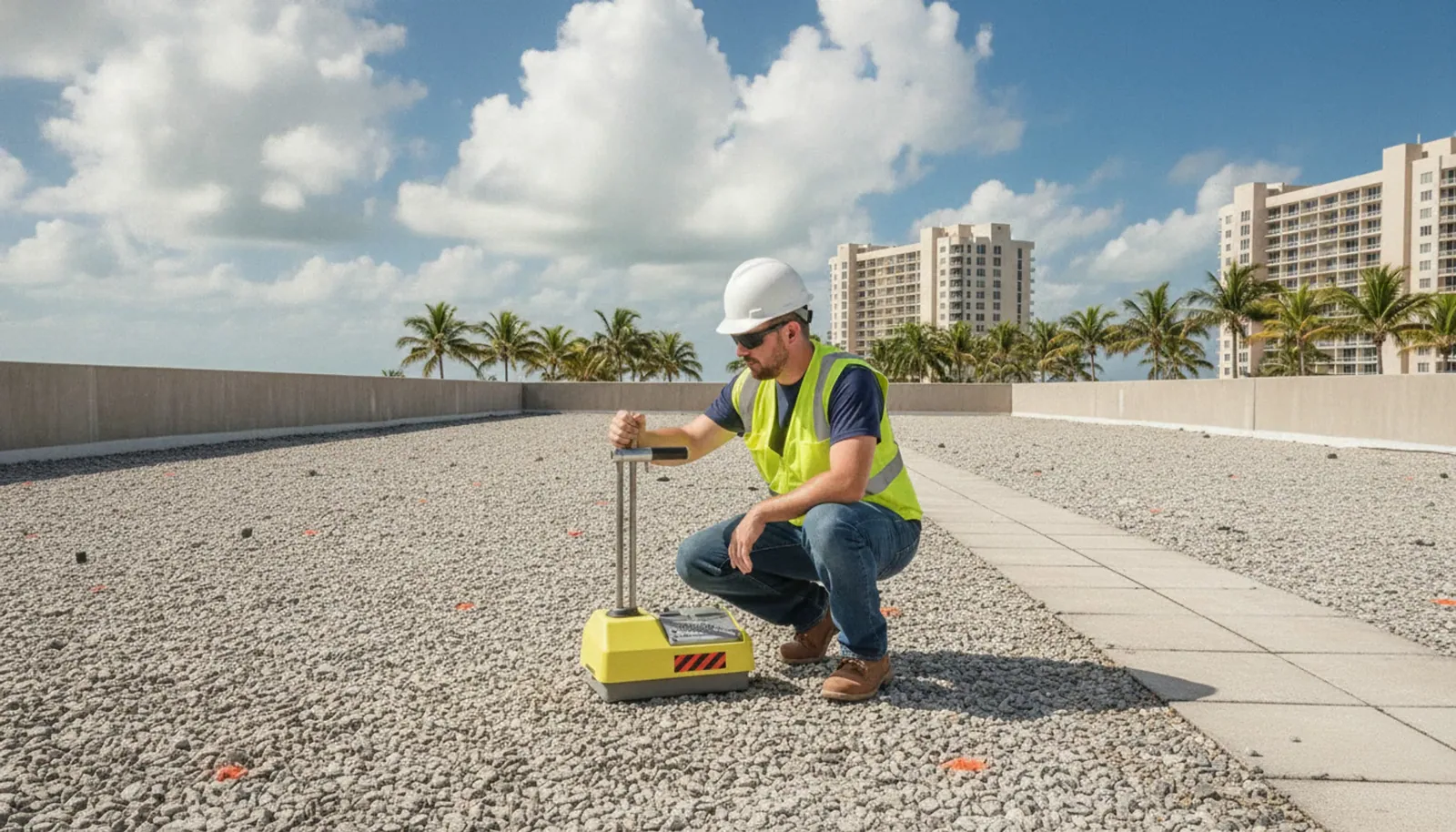
If the wet area is concealed or the visible damage does not explain the interior report, targeted testing can narrow the search. Infrared moisture mapping may help identify temperature patterns that need confirmation with other inspection methods. We explain what the method can and cannot establish; a scan alone does not prove the full limits of wet insulation. For a broader condition review, a commercial roof inspection can document the assembly, details, and repair priorities across the accessible sections. The clinic team can then decide whether to isolate one area or investigate a wider portion of the roof.
Protect equipment, penetrations, and service clearances
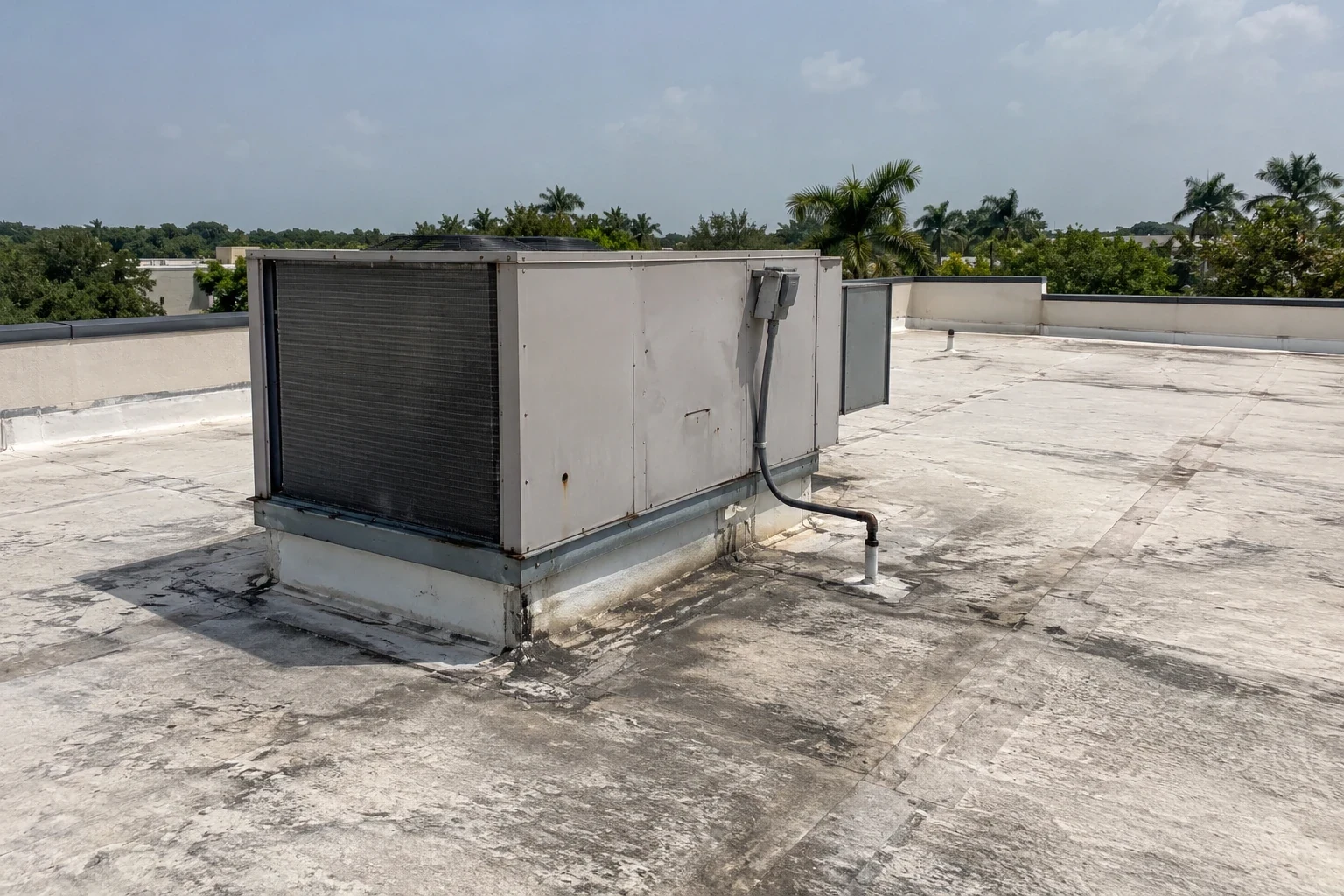
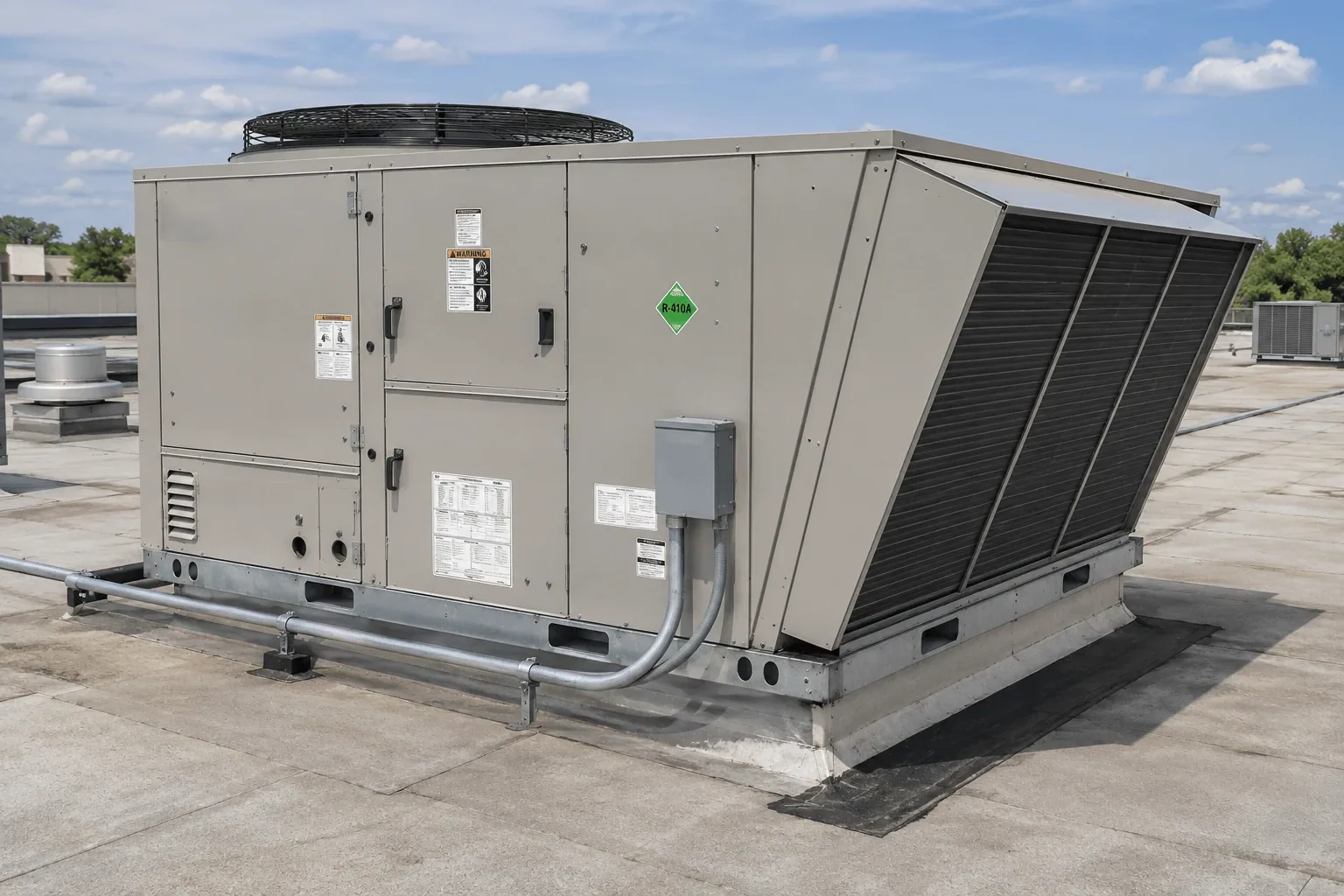
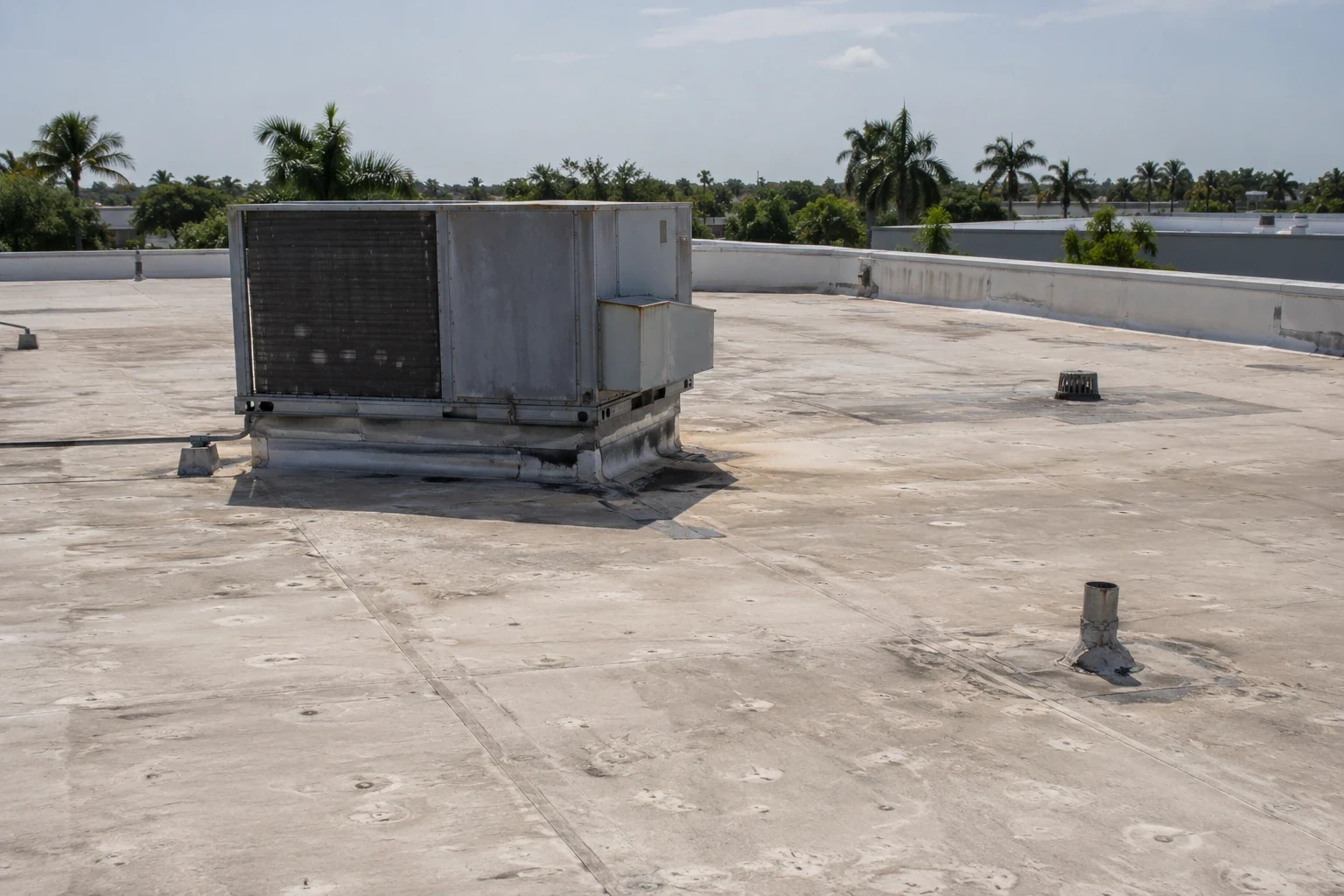
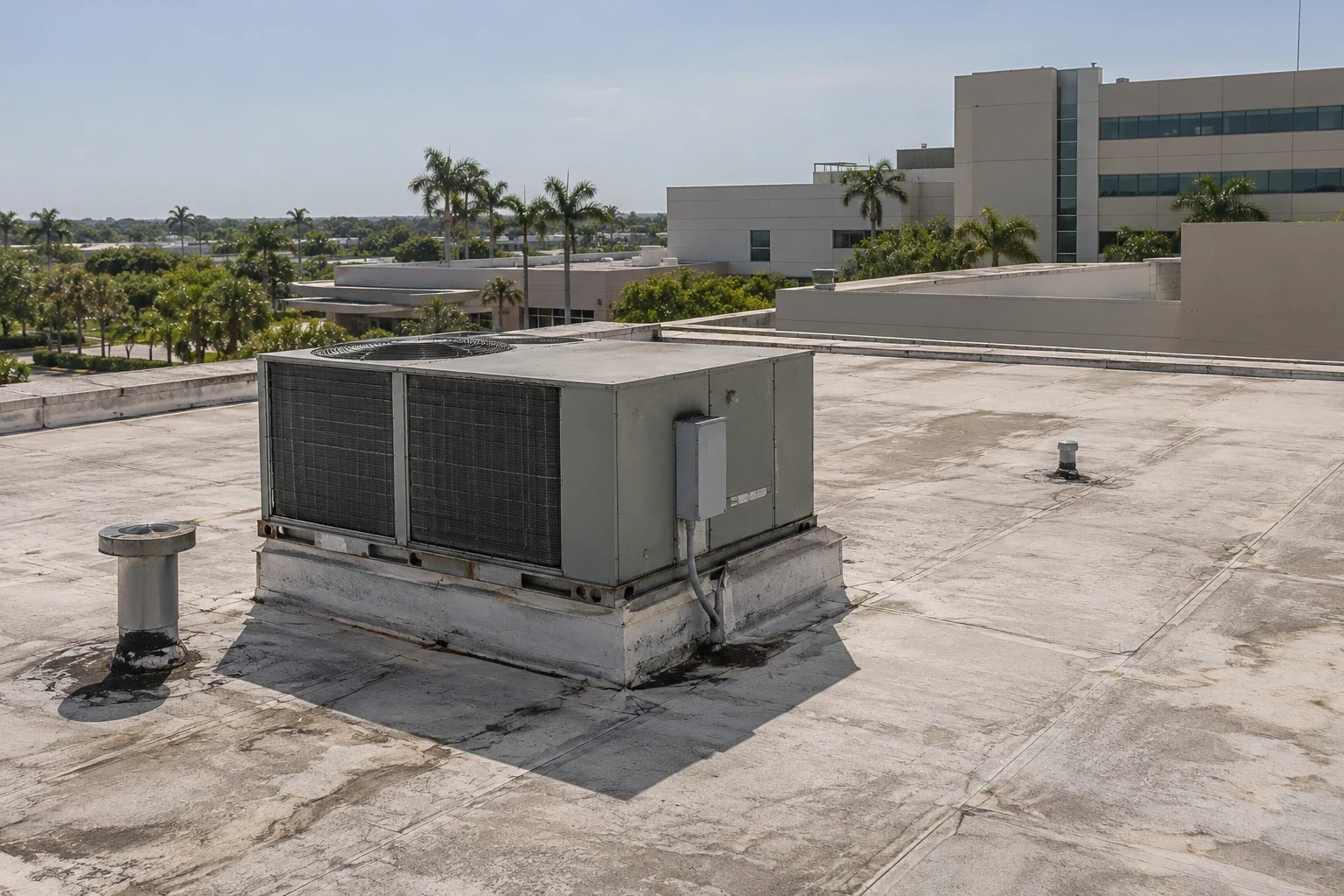
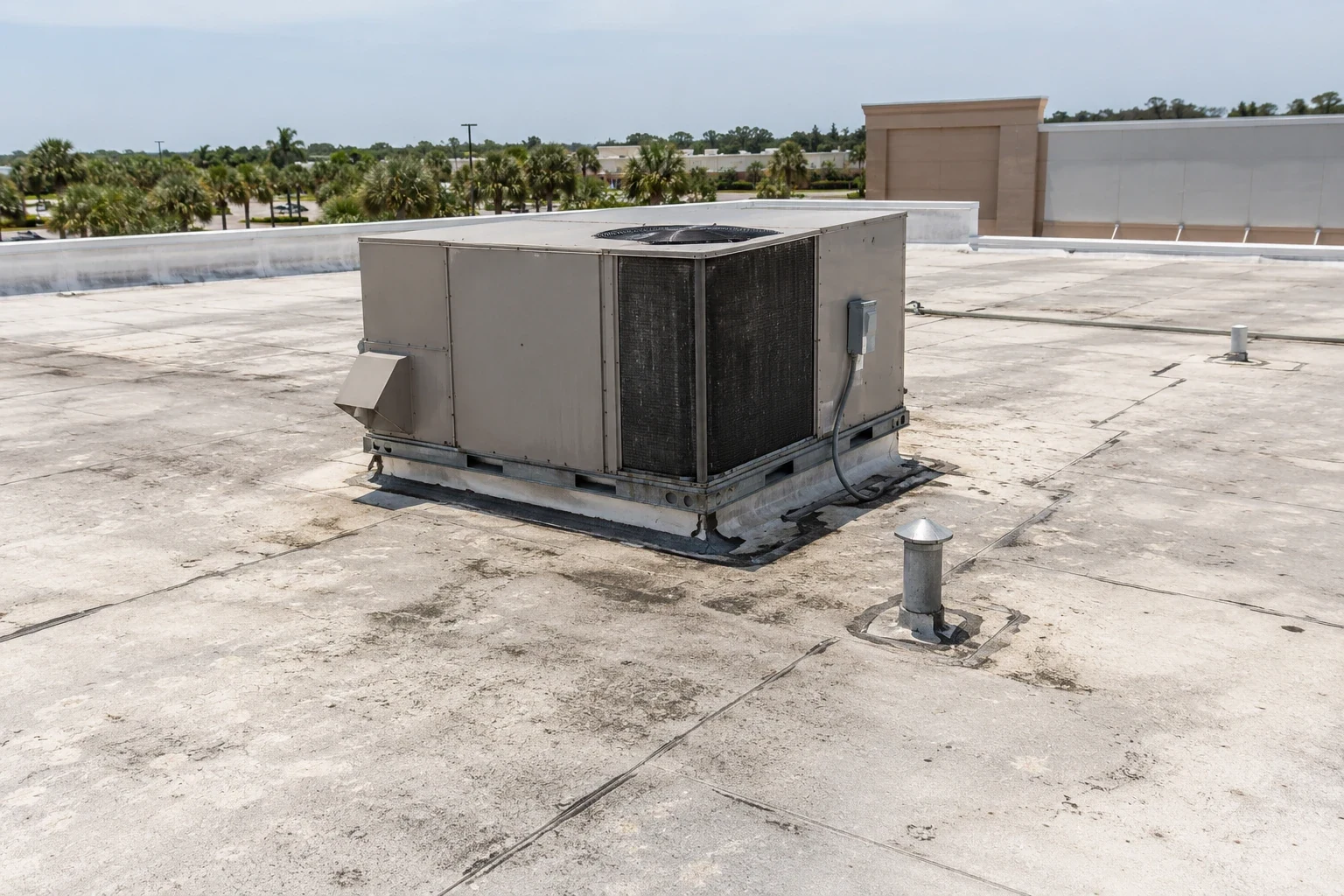
Medical office roofs may support ventilation, cooling, exhaust, communications, and other equipment, but the actual inventory varies by property. We do not assume what a unit serves from its appearance. The building engineer or service contractor can identify equipment that must stay energized, shut down, or remain reachable during roofing work. We map curbs and penetrations, check visible flashing, and discuss any service clearance before staging materials. A roofer should not disconnect a clinical system or move equipment without direction from the responsible technician.
Leaks near a curb can originate at the curb flashing, an adjacent seam, a pipe penetration, or another uphill detail. We inspect the assembly around the reported area and document conditions separately instead of applying a blanket sealant repair. Curb and support review is useful when equipment attachment or flashing needs a closer look. In Conroe, VGXI's life-sciences manufacturing facility at Deison Technology Park is a reminder that specialized operations need property-specific access planning; a clinic's requirements still come from its own operator.
Read drainage and storm exposure as one system
Water that remains at drains, scuppers, or low areas can lengthen the time a roof stays wet and make a small defect harder to isolate. We look for debris, blocked openings, damaged strainers, and visible changes in drainage. The roof's slope and structure also matter; a ponded area may point to a larger drainage or deck question rather than a simple maintenance issue. Drain and scupper inspection can help identify whether the observed restriction is a maintenance item or part of a broader repair scope.
Conroe's storm history also makes a careful post-weather review useful. During the October 1997 tornado sequence, Conroe Airport measured a 57 mph southerly gust as one storm crossed town; separate tornado activity tracked near Cut and Shoot on Highway 105. That local record does not establish damage at a particular clinic. For a clinic, an event-day review compares staff reports with the roof map; we examine the reported zone first, then nearby edges, penetrations, and drainage that could carry water toward that room. Storm-damage roof repair should begin with a documented condition, a safe temporary measure if needed, and a defined permanent repair.
Choose repair or renewal from documented conditions
A localized defect may be repairable when the surrounding membrane, insulation, and attachment remain sound. Repeated leaks, widespread moisture, brittle or separated materials, and failing transitions can justify a larger review. A recover may be possible only when the existing assembly, moisture condition, structure, and applicable requirements allow it. A tear-off exposes concealed layers but adds debris handling, dry-in work, and disruption. We describe the evidence and assumptions behind each option so the clinic can weigh service life, work hours, access limits, and protection of the rooms below.
A useful scope names the roof zones, repairs, drains, penetrations, edge details, and exclusions. It also states how unexpected wet materials or concealed damage will be handled before additional work proceeds. A replacement scope should show where work starts, how the building remains protected, and what the crew will complete at each daily closeout. For a neighboring property type with different operating demands, hospital roofing requires campus-level coordination; clinic work is often smaller, but still needs the same clarity about patient access and critical rooms.
Keep the roof record useful after the crew leaves
Clinic ownership and facility responsibilities can change, so closeout information should be concise and usable. We can provide dated photographs, the roof-zone location, repairs completed, materials installed, and unresolved conditions needing another trade or follow-up inspection. The service log distinguishes observed conditions from work opened or tested, giving a later manager context without assuming that an old repair explains a new symptom.
Conroe Park North is a 1,655-acre industrial area with city utilities, four-lane streets, and a broad mix of manufacturing, freight, food processing, and warehouse employers. It is not a clinic inventory; it shows the range of commercial operations in the local market. We base each medical-office recommendation on that property's roof, occupants, and maintenance history. An office-building roof assessment can support a portfolio discussion while keeping each repair tied to the building inspected.
Commercial Roofing Questions
Can roofing work happen while a clinic remains open?
Yes, when the work zone, patient paths, noise, and daily closeout are planned with clinic management. Some repairs need a short room closure or a quiet work window, so the schedule should name the affected area and who will approve access.
What should clinic staff do when a leak appears?
Move people and sensitive materials away from active water, use a safe container if practical, and notify the facility contact. Do not enter a ceiling cavity or climb onto the roof. Give the roofer the room location, time noticed, and whether the leak changes during rain.
Does an infrared scan prove where water entered?
No. It can identify temperature patterns that may warrant further investigation, but the result needs interpretation alongside roof construction, weather, and other inspection findings. We explain the limits and recommend confirmation before defining a repair area.
Can a roof contractor work around medical equipment?
The clinic's facility lead and equipment service providers set operating, shutdown, and clearance requirements. We coordinate roofing access and protection with those rules, and we do not disconnect or relocate equipment without direction from the responsible party.
When is replacement better than another repair?
A broader renewal review is appropriate when leaks recur, moisture is widespread, or several details have deteriorated. The recommendation should follow mapped conditions and compare repair, recover, and tear-off options against the assembly and operating schedule.
Related Roofing Work