Commercial Roofing in Magnolia, TX
Commercial roof repair, inspection, and replacement in Magnolia, TX. We assess leaks, drainage, membrane details, and the right scope for your building.
A commercial roof in Magnolia needs a repair plan based on its actual assembly, not a guess based on its address or the kind of business inside. Magnolia is about 25 miles southwest of Conroe and roughly 45 miles northwest of Houston. That places the town within the broader Conroe service market while leaving every roof condition specific to its building. We identify the membrane, drainage, edges, penetrations, and interior area affected by a leak. Then we separate urgent water control from permanent repair or renewal.
Magnolia’s economic development office assists businesses considering relocation, expansion, or startup and provides site-selection support. For facility planning, roof due diligence belongs beside access and operating questions. A visual walk shows surface conditions; testing may be needed to assess concealed insulation or deck. Conroe-market summer heat and intense rain make seam, flashing, and drainage details important. The roof walk confirms which of those conditions are present at the property.
Put Roof Condition into the Facility Decision
A new lease, purchase, expansion, or startup can put a roof question on a short timeline. Before committing, establish what is known and what still needs inspection. We record the visible roof assembly, repaired areas, drainage points, edge metal, equipment supports, and any evidence of moisture. If the property contact has maintenance records or prior leak reports, we compare those notes with the roof instead of treating an interior stain as a diagnosis.
The Magnolia EDC’s role in relocation and expansion decisions makes roof condition a practical part of site planning, but it does not establish the age, occupancy, or construction type of any specific property. We avoid projecting those details. For a buyer or tenant, the questions are direct: Is water entering? Are repairs localized or recurring? Can access be coordinated? Could testing change the budget? A roof condition report can organize observations into immediate work, follow-up testing, and longer-range renewal needs.
Trace the Leak and Inspect the Assembly
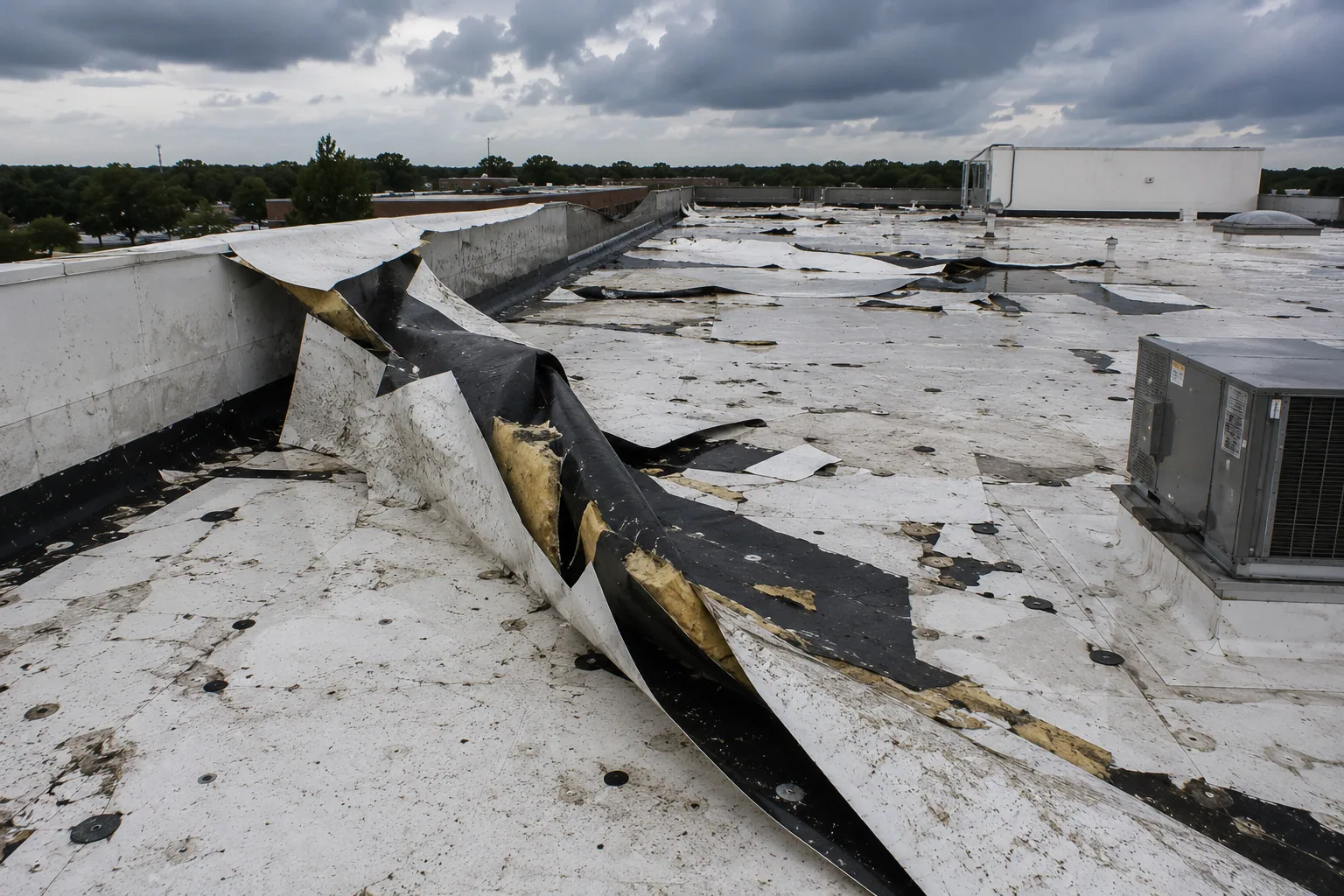
When water appears inside, we inspect the area above and around it. Water can travel along a deck or framing before it becomes visible, so the closest ceiling mark may not sit below the opening. We check seams, laps, curb bases, pipe penetrations, wall transitions, drains, and prior patches. We note whether a detail has separated, whether the membrane is punctured, and whether material around the defect feels sound. If the source is still uncertain, we explain what additional test could narrow it down.
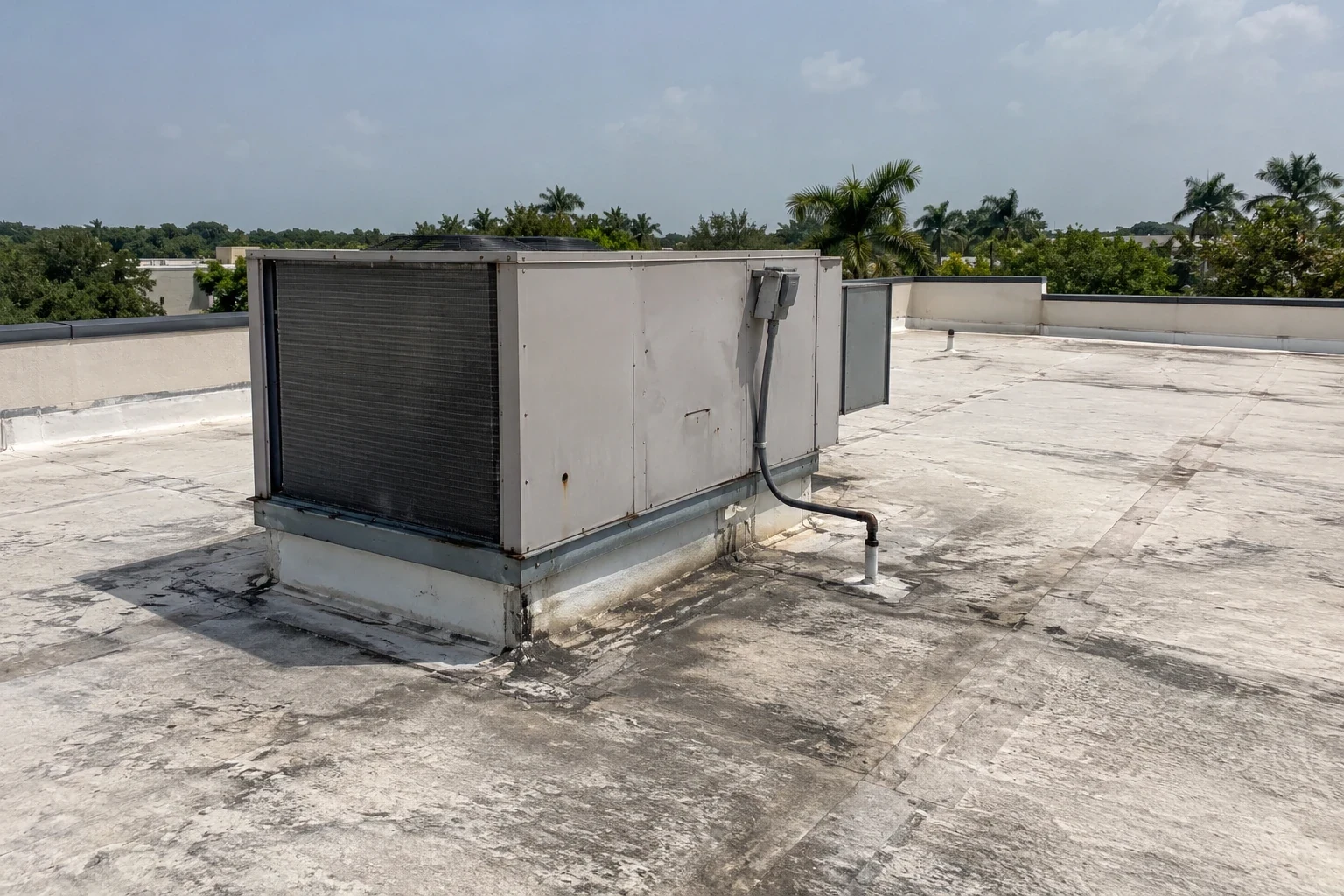
The inspection also identifies the roof system before a repair method is selected. TPO, EPDM, PVC, modified bitumen, coating, and metal each call for compatible materials and preparation. We look at attachment, exposed insulation edges, surface condition, and the tie-in area. If an earlier patch sits over a wet or unstable substrate, adding material may conceal the problem rather than correct it. A commercial roof inspection can establish a clear baseline before a repair, purchase, or capital discussion.
Account for Heat, Wind, and Heavy Rain
For regional context, Houston Intercontinental’s 1991-2020 normals put average highs at 94.5°F in July and 94.9°F in August. These are nearby regional figures used for the Conroe market, not Magnolia roof readings. Repeated summer heat can work at seams, fasteners, metal transitions, and corners as materials expand and contract. During the inspection, we check whether laps remain closed, flashing stays bonded, and perimeter attachments are secure. The roof’s material and condition determine which repair products can make a durable bond.
Heavy rain makes drainage capacity visible. We follow the flow toward the drain, scupper, or outlet and check strainers, bowls, overflow paths, and low sections where water remains after surrounding areas clear. A blocked strainer and a settled roof can both leave standing water, but they need different responses. Wind-driven rain can reach weak wall transitions or curb flashing even when the field membrane looks intact. We distinguish maintenance from detail failure before proposing work. If water remains around an outlet, drain and scupper service can address the drainage side of the assessment.
Choose a Repair, Recover, or Replacement Scope
A repair is a reasonable first option when the defect is limited, nearby material is sound, the substrate is dry, and the new patch can bond to a compatible surface. We widen the scope when inspection shows multiple related openings, wet insulation, failing edge metal, or recurring leaks along one seam or transition. The recommendation should name the confirmed area and say what has not been opened or tested. That keeps a localized repair from being confused with a full-roof warranty or a complete condition statement.
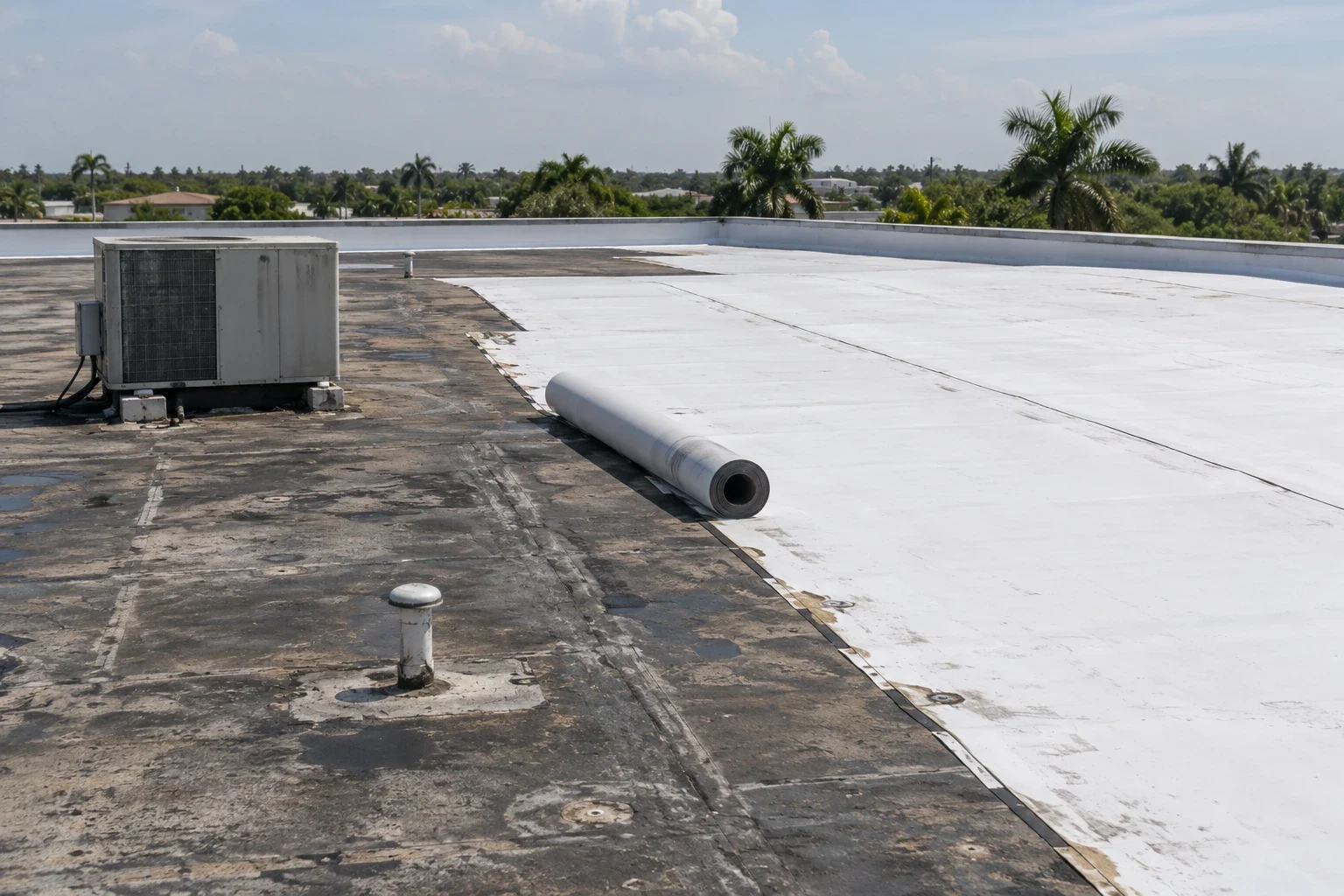
A recover may work if the existing assembly is dry, attached, supported, and suitable for another layer. Drain height, perimeter details, code requirements, and equipment clearances also matter. If those conditions are unknown, testing or selective removal can prevent an added layer from trapping moisture. Tear-off exposes the assembly but involves debris handling, interior protection, and a more involved daily closeout. We compare those tradeoffs against the roof’s actual condition, not a generic life-expectancy claim. Review a commercial roof repair for a contained defect or a commercial replacement plan when broader renewal is justified.
Set Access and Weather Windows Before Work
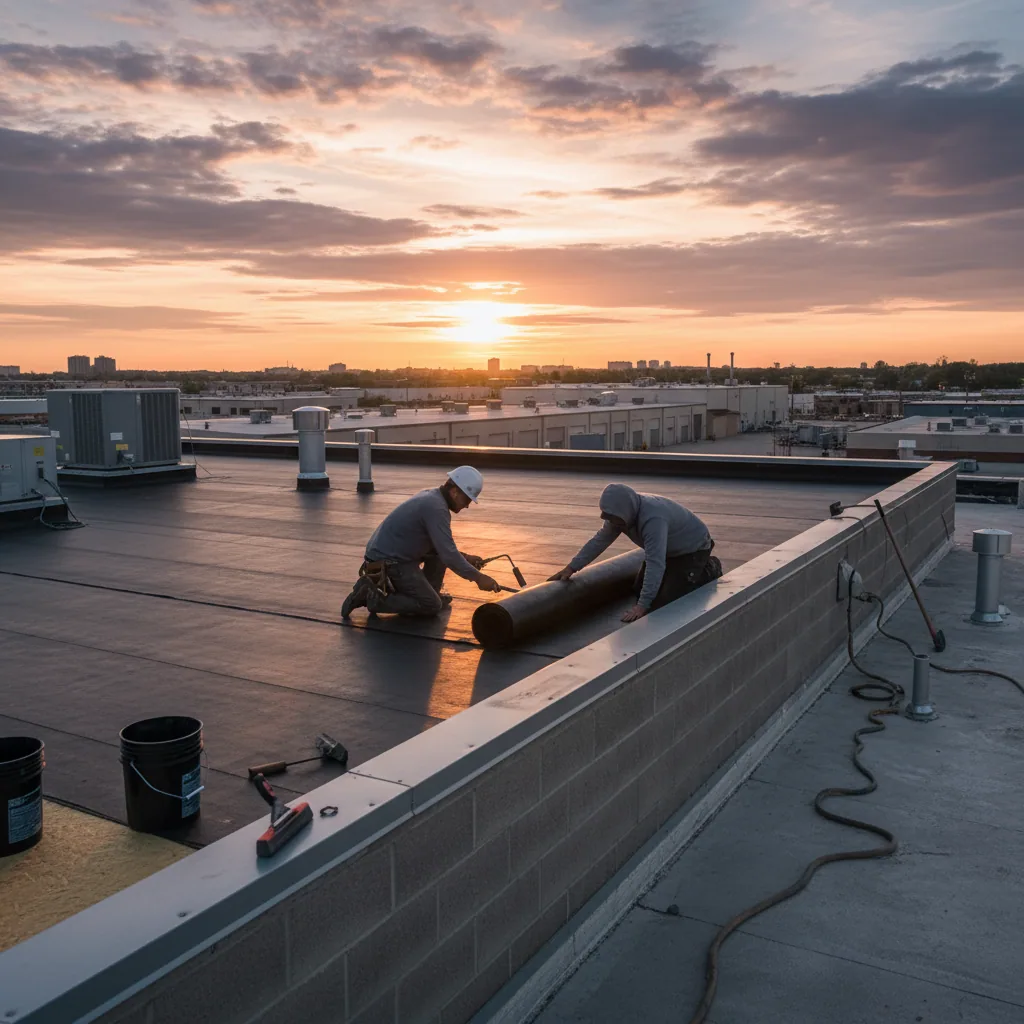
Every roof project needs a route for workers and materials, a safe work area, and a closeout plan for changing weather. We ask who can authorize access, what hours are practical, whether equipment must remain online, and which interior areas need protection. The crew stages materials where the property contact approves and keeps the open area within the time available to complete a watertight tie-in. If a test opening reveals wet insulation or a damaged deck, we pause at the agreed decision point before expanding removal.
Weather affects both safety and material performance. A roof must be suitable for the repair product, and rain in the forecast can change when a section is opened. We set a fallback plan for temporary protection and communicate any schedule change before it affects the building. For urgent water entry, emergency roof repair can focus first on safe access, temporary water control, and the next inspection step. A more complete recover assessment can follow after the existing assembly is identified.
Leave a Clear Record for the Next Decision
At closeout, the owner should know which roof areas were repaired, which materials were used, what conditions remain, and whether any further testing is recommended. Photographs are useful when paired with a location on the roof plan and a short note describing the detail. If a condition is concealed, the record should say so. That makes later repair or renewal decisions more precise.
For Magnolia properties evaluating growth or a site decision, a current roof record can support budgeting and maintenance planning without implying that every component is failing. We separate immediate water-control work from longer-range capital items. Owners can also compare local-area service with our Montgomery commercial roofing and Willis roof service pages while keeping each property’s findings tied to its own inspection. The next step is a site walk, not a system assumption.
Commercial Roofing Questions
Can you inspect a Magnolia property before a lease or purchase?
Yes. We can document visible roof conditions, trace reported leaks, review drainage and penetrations, and identify areas that may need testing. The inspection can help separate confirmed repair needs from questions that remain concealed.
How do you decide whether a roof needs repair or replacement?
We compare the number and spread of defects, membrane condition, moisture evidence, attachment, and edge details. A localized failure may support repair; widespread deterioration or wet materials may justify testing and a broader renewal plan.
Do Conroe heat figures describe the temperature on my Magnolia roof?
No. The figures are regional climate context for the service market. We inspect the roof itself for heat-related seam, flashing, and perimeter wear rather than treating a regional normal as a property measurement.
What should we do if rain is entering the building now?
Protect contents and notify the property contact, then arrange a safe roof inspection. We look for the entry path, check nearby drainage and flashing, and distinguish temporary water control from permanent repair.
What can affect the timing and cost of commercial roof work?
Roof area, access, system type, concealed moisture, material compatibility, drainage work, interior protection, and weather windows all affect scope. We verify those conditions before pricing a repair or replacement.
Related Roofing Work