Commercial Roofing in Research Forest, The Woodlands, TX
Commercial roof service in Research Forest, The Woodlands. We inspect membrane details, drainage, and access around research, office, and life-science uses.
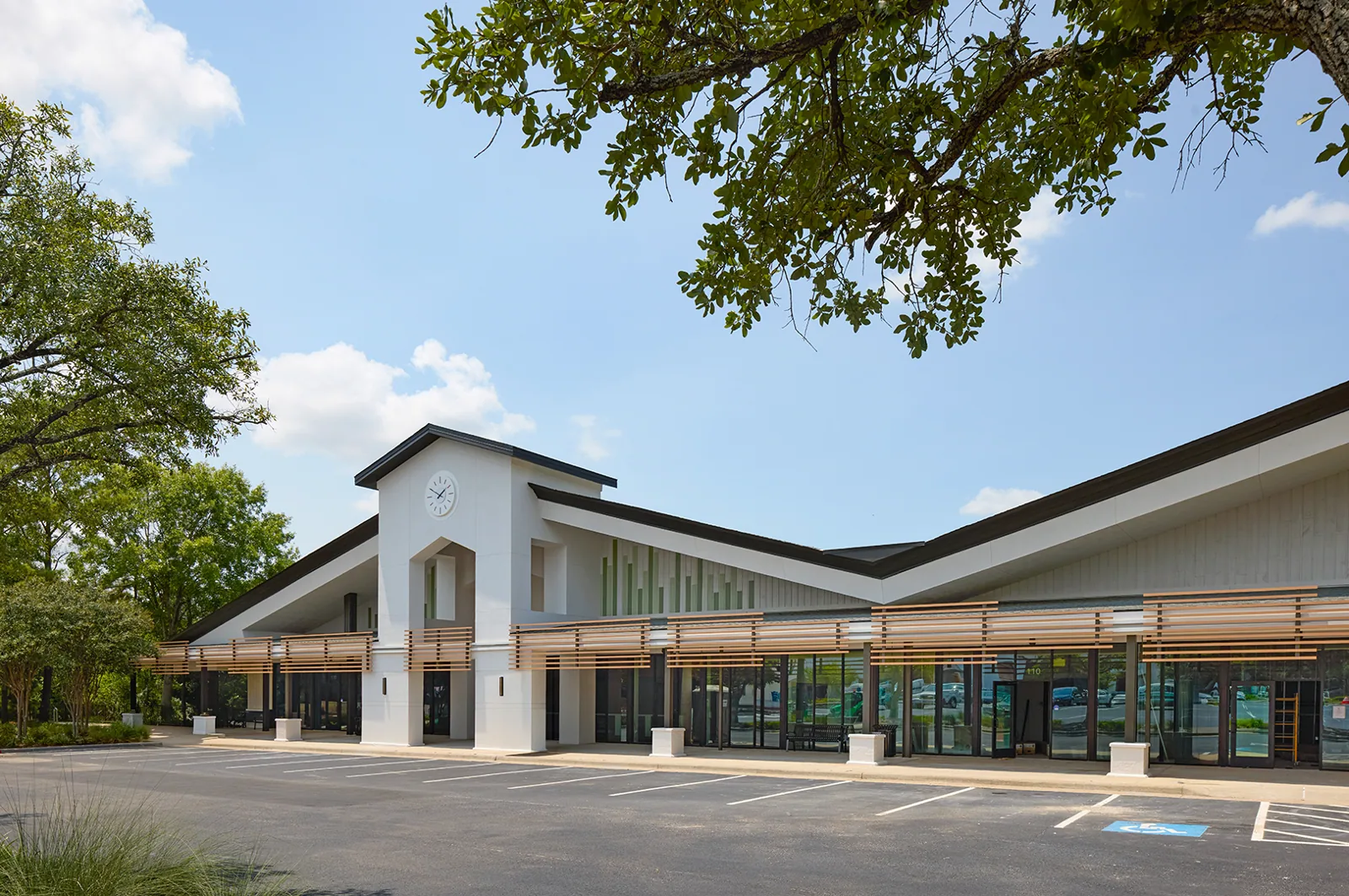
A research building can have critical operations below the roof, so access and daily closeout need to be settled before a membrane is opened. Research Forest’s first Houston Advanced Research Center facility dates to 1982, and The Woodlands now identifies the district as its Innovation District. Research Forest is designated as an Innovation District, with life-science activity continuing to grow. We plan commercial roofing around the property's actual equipment, access rules, and occupied space, then inspect seams, curbs, penetrations, and drains. Conroe-market heat and heavy rain put stress on exposed roof details. The repair method still depends on the assembly found at the building.
Set the Access Window First
We ask the property contact which areas below need uninterrupted operation, when rooftop equipment can be reached, and where material can be unloaded without blocking staff or research access. Noise, lift placement, and interior protection may require different timing from a general office project. We confirm those limits before scheduling work, then map each work zone and tie-in so inspection, repairs, and watertight closeout follow an approved sequence.
Research Forest is one commercial area within the broader 1,000-acre Town Center zone, which runs between I-45 and Lake Woodlands. That boundary helps locate the district; it does not show a particular building's membrane or roof condition. A Town Center roof plan and a Hughes Landing commercial roof review also require a building-level check; one site's access or findings do not transfer to another. Here, the site contact determines the route and which operations need protection while work proceeds.
Inspect the Assembly in Sections
A leak in a technical or office space may appear below a roof detail several bays away. We trace the report to nearby seams, curb bases, penetrations, wall transitions, and low points. The walk checks for open laps, loose metal, punctures, wet insulation, and prior repairs that do not bond to the existing membrane. A localized defect may support a repair; similar openings across a fastener line or parapet can indicate a broader problem. A commercial roof inspection records what was observed and where additional testing may be needed.
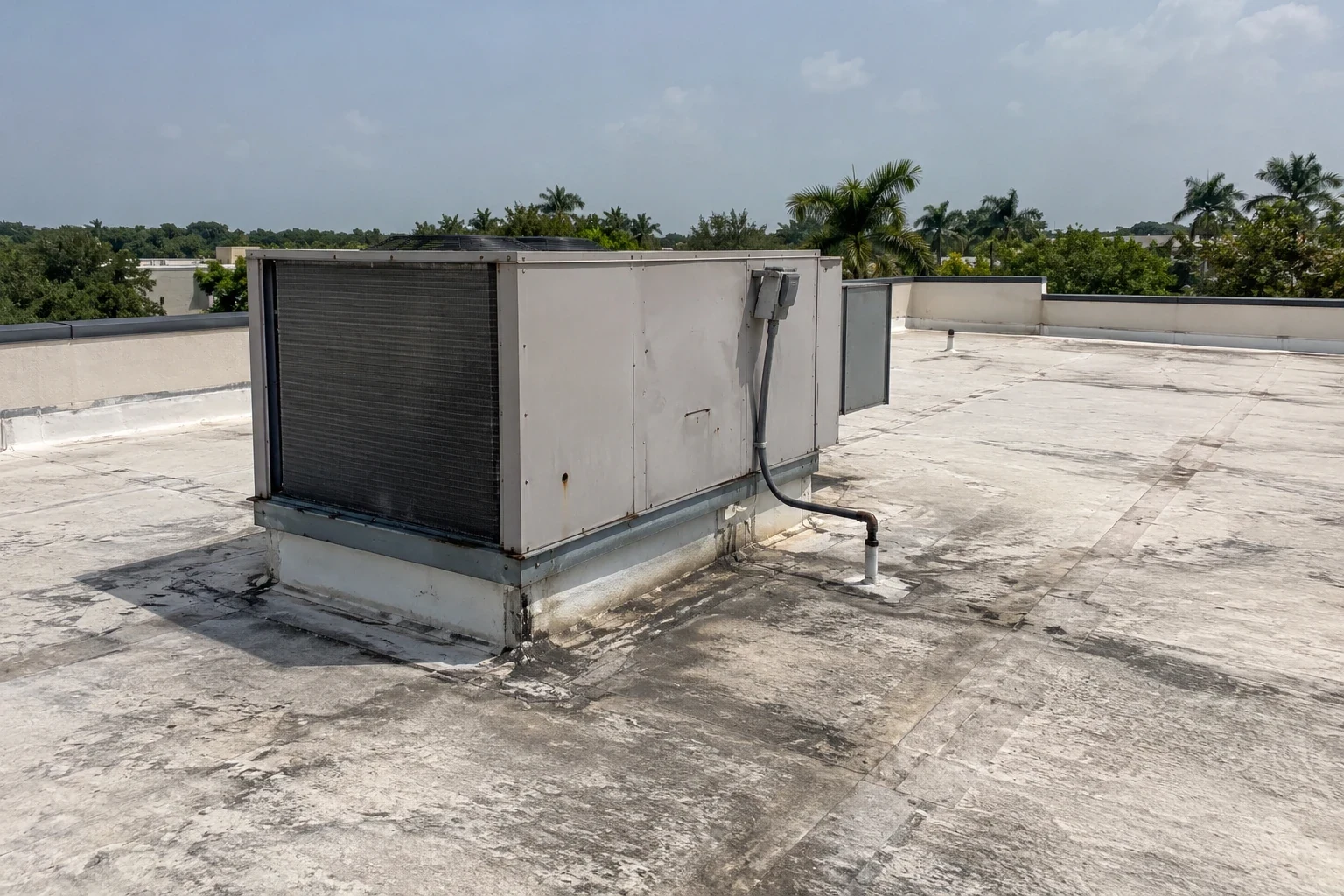
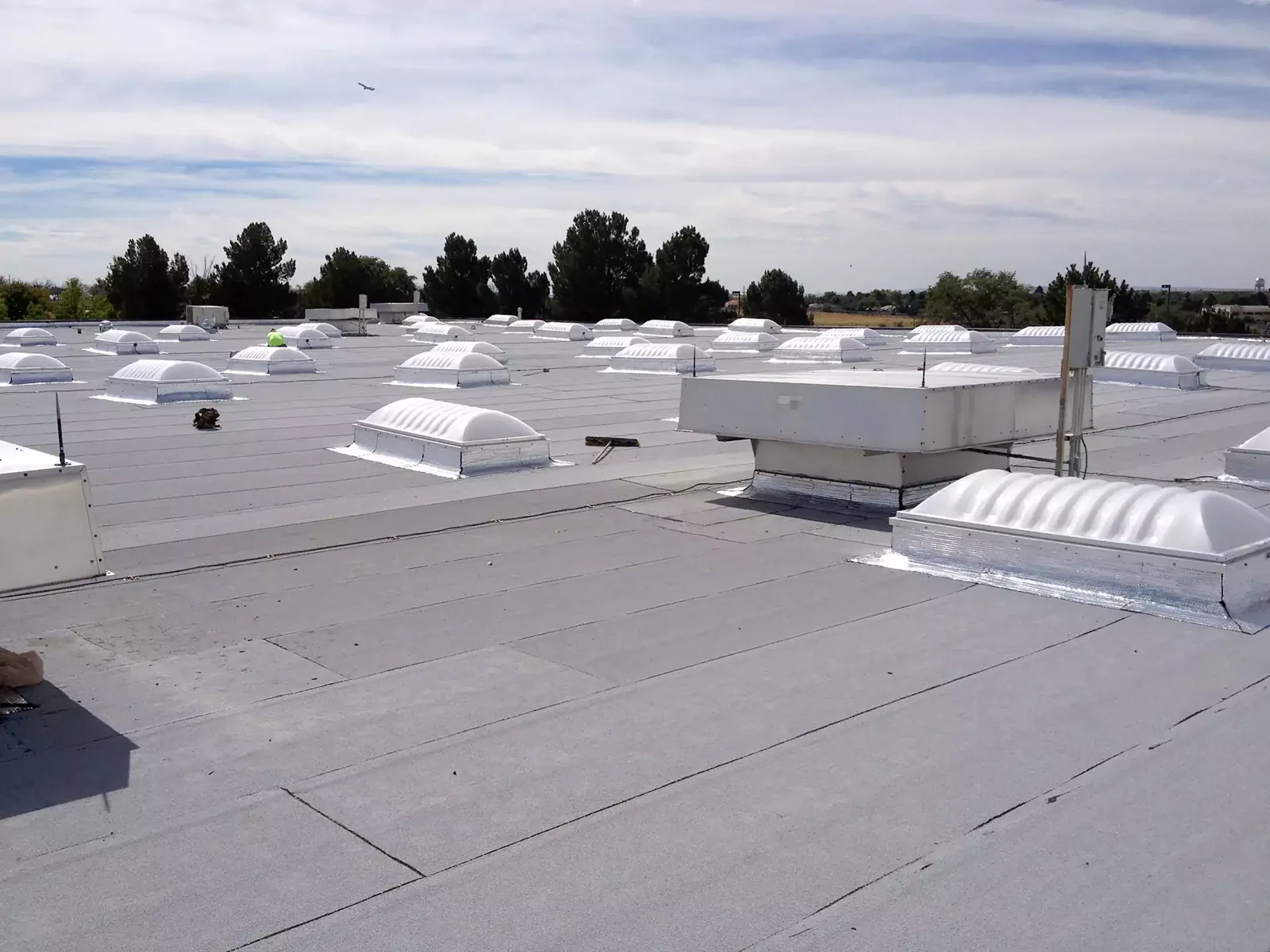
The district's research and life-science context makes equipment coordination relevant, but it does not tell us what systems are on a given roof. We identify membrane, attachment, and insulation rather than infer them from the building's use. If the roof includes rooftop units, conduit, or exhaust, we inspect their supports and flashing as separate water-entry points. The property manager receives a repair boundary tied to the roof map, not just the interior room name.
Work with Regional Heat and Rain
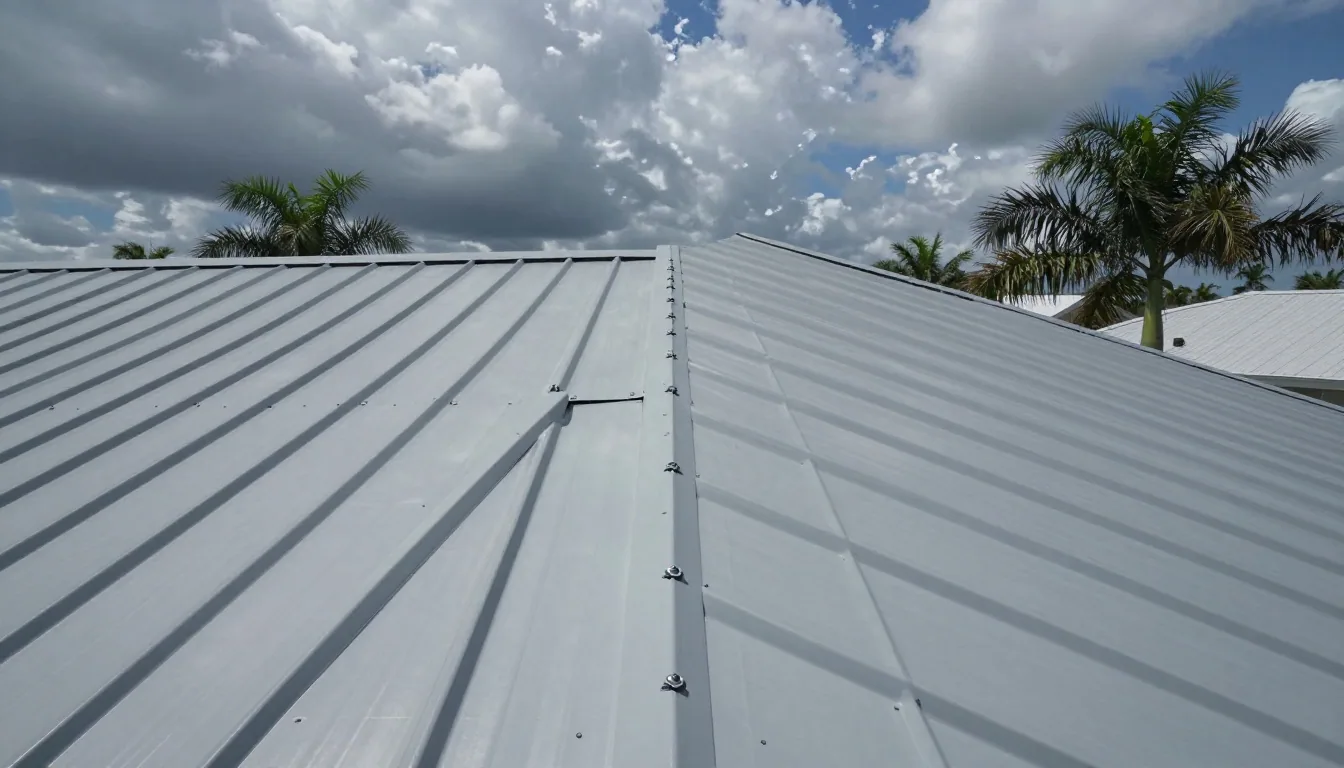
Conroe, the market city, has nearby July and August regional average highs near 95 degrees. Those normals indicate sustained seasonal heat for the service area, not a temperature reading for a Research Forest roof. Daily expansion and contraction can stress welds, fasteners, curb corners, and metal transitions. We check whether a seam edge has lifted or a flashing return has separated, then confirm that the installed material can accept the planned repair. A TPO seam review follows a different process from EPDM or PVC work.
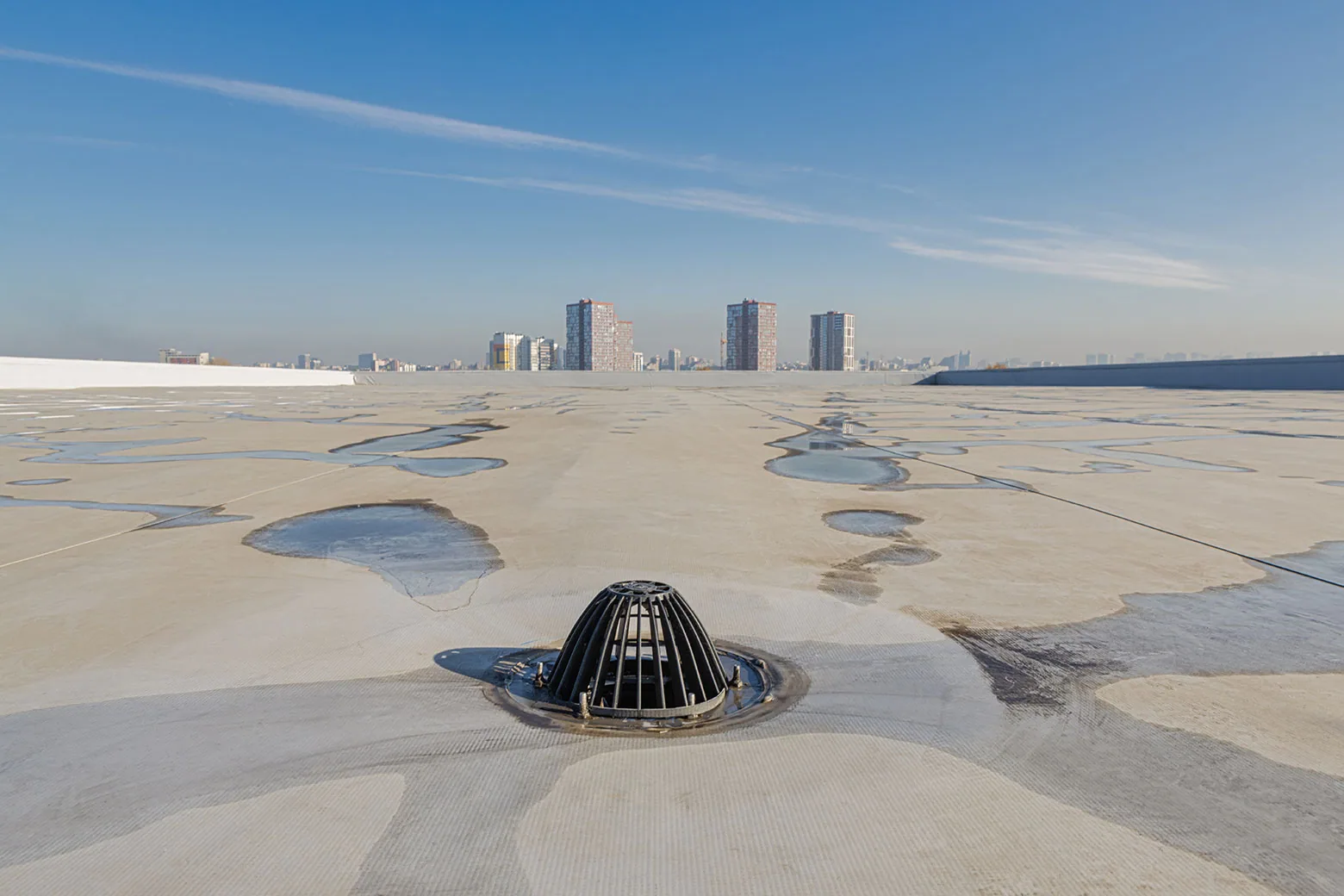
Intense rain tests the drainage route. We inspect strainers, drain bowls, scuppers, overflow points, and low areas where water remains after nearby sections clear. We note whether water can drain freely, whether nearby membrane has softened, and whether the low point extends beyond one outlet. Lone Star Executive Airport, north of Conroe, hosts the market's climate observing station. Weather affects scheduling; the roof inspection documents actual conditions. A drain and scupper inspection can separate a drainage correction from a membrane repair.
Repair, Recover, or Replace
A short open seam or damaged penetration can be repaired if nearby membrane remains flexible, attachment is secure, and insulation is dry. Repeated water entry, wet cover board, broad delamination, or loose perimeter metal can justify a larger scope. We map the confirmed defects and identify any area where testing may change the boundary. The proposal names the material, repair method, tie-in, and concealed conditions that could affect the next step.
A recover requires dry materials, reliable attachment, adequate deck support, useful drain height, and code compatibility. A new layer over an unknown wet assembly can hide the defect. Tear-off exposes concealed conditions but adds debris, noise, and interior protection needs. A replacement plan should include edge details, drains, curbs, and daily dry-in. If the building needs a shorter-term response before a capital project, commercial roof repair can address the verified opening while the broader condition is reviewed.
Protect Equipment and Interior Space
Before the crew reaches the roof, the manager identifies sensitive rooms, air-handling restrictions, equipment shutdowns, and a safe route for moving tools. We protect occupied areas below the work zone and keep the opened section within the time available to close it. If roof traffic from service technicians or equipment replacement contributed to the damage, the inspection records the path and the affected curb or penetration.
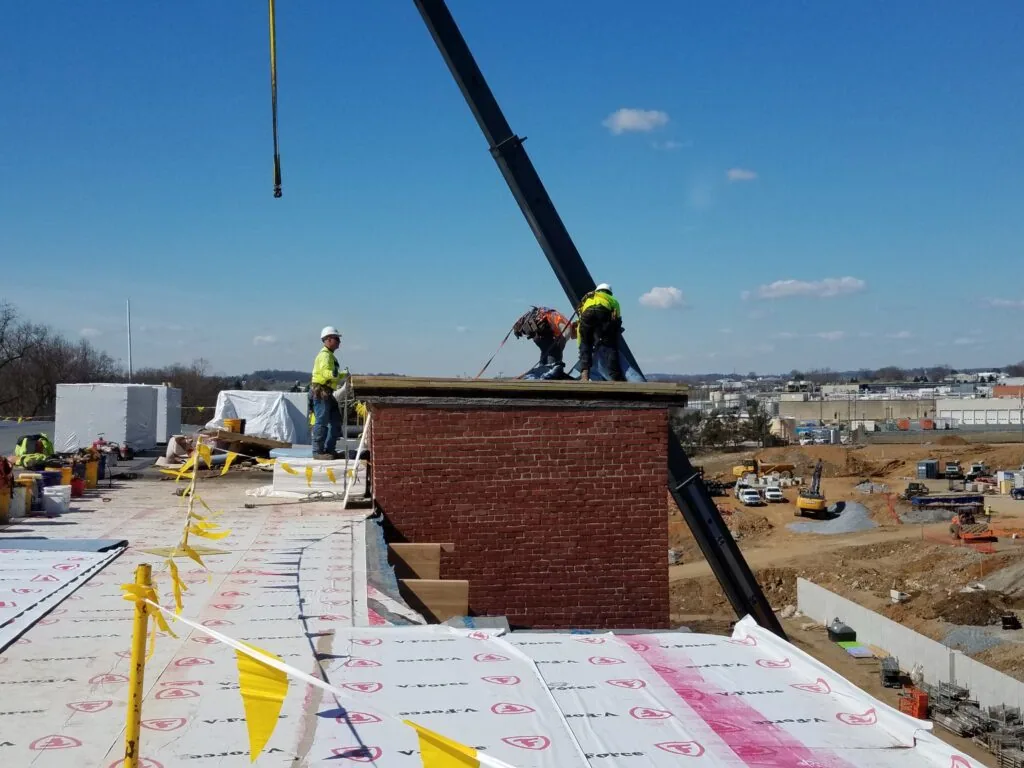
A test opening may reveal wet insulation or damaged deck not visible from the surface. We photograph and measure that condition, then pause for approval before removing additional material. That decision point matters where a project must preserve research schedules or access to adjacent space. A phased reroof plan can separate work by roof area, noise period, and interior protection requirement. Each stage ends with a secure tie-in and a note about the next section.
Make Timing and Cost Drivers Clear
The estimate depends on membrane type, repair area, layers to remove, insulation and deck condition, perimeter details, staging, and required interior protection. A small leak may involve a complex curb or drain. A larger reroof may require lift access, debris handling, multiple tie-ins, and coordination with equipment work. We list those drivers separately so the owner can compare scope and building impact.
Material arrival, approvals, weather, and access windows affect timing. The crew works only an area it can make secure before leaving. If rain approaches, the team narrows the opening or resets the task. If hidden damage changes quantities, the manager reviews the finding before work expands. That keeps the repair boundary visible and the project decision tied to the condition found rather than an assumption about the district.
Keep a Service Record by Roof Area
Closeout identifies the roof zone reached, membrane where confirmed, repair material, photos, test results, and any area not opened. Images should show the detail and enough surrounding roof to locate it again. We note which operating restrictions shaped the work and what condition should trigger another visit.
A roof condition report can hold the map and follow-up points together. Research Forest continues to be identified as an Innovation District with life-science activity, but an individual roof's service history stays with that property. Maintenance can return to the same curb, drain, or seam after equipment service or a heavy rain and compare the finding with the prior repair limit.
Commercial Roofing Questions
How do you schedule a roof repair around research operations?
We confirm access hours, sensitive interiors, equipment limits, and material routes with the site contact. The repair area is planned to close within the approved window.
Does Research Forest's life-science activity identify the roof system?
No. The district's business context does not establish a building's membrane, deck, or attachment. We identify those components during the roof inspection.
What do you check when a leak appears under a research area?
We trace the report to nearby seams, penetrations, curbs, and drains, then note whether insulation or deck needs testing. The interior location alone does not show the entry point.
Can a roof replacement be phased around lab or office access?
Phasing depends on whether the roof can be separated into secure, weather-tight work zones. We coordinate access, interior protection, noise periods, and daily closeout before opening the first section.
What should be recorded after a roof repair?
Keep the roof-zone photo, material identified, repair method, test result, and remaining limits together. That lets a later inspection return to the same detail.
Related Roofing Work