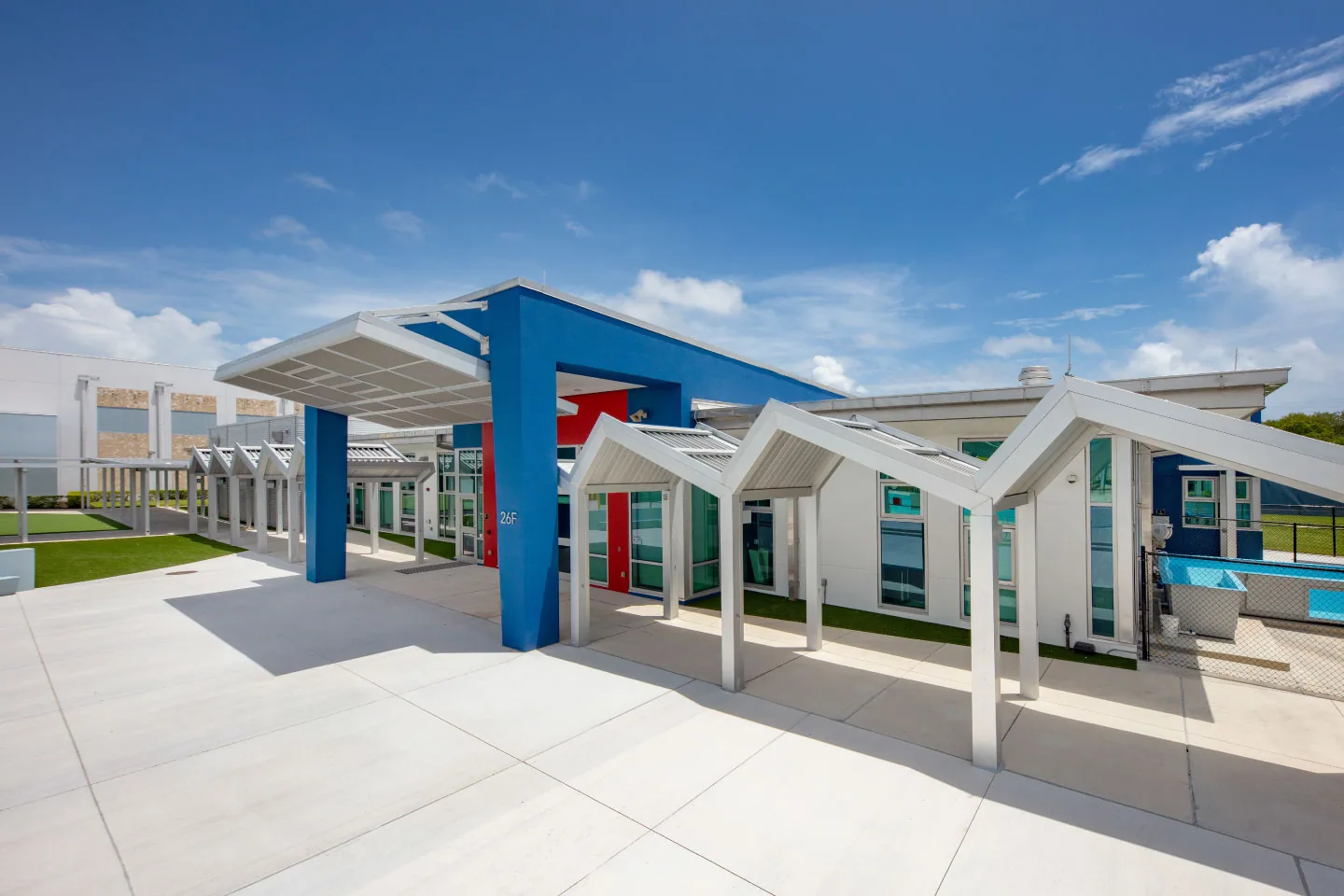
Commercial Roofing in The Woodlands Waterway District, The Woodlands, TX
Commercial roof inspections and repairs along The Woodlands Waterway. We plan around hotels, offices, dining, event access, drainage, and occupied space.
A hotel, office, or restaurant roof beside a public walkway needs a plan for the space below as well as the membrane above. The Woodlands Waterway is a 1.8-mile linear park through Town Center, linking residential, retail, dining, business, and entertainment destinations. Commercial uses along it include offices, hotels, restaurants, parks, residences, and major shopping destinations. It also connects Town Center with Cynthia Woods Mitchell Pavilion and convention-center hotels. We inspect the actual property, then coordinate roof access, staging, drainage, and daily closeout around its operation. Conroe-market heat and heavy rain affect regional work windows, while building conditions decide the repair.
Protect the Ground Route
Ground-level activity may continue while roof work is underway. The site contact identifies public paths, entrances, loading, lift positions, and the route for removing debris. If a hotel or restaurant needs a quieter period, we schedule removal accordingly. If access must remain open near an event or convention use, staging and material movement need a clear boundary. We confirm these details before the crew opens the roof, then keep the work area sized to the closeout window.
The Waterway links Town Center destinations with the Pavilion and convention-center hotels, so event or guest movement can matter to a property's work plan. The schedule at each building still needs confirmation. A Town Center roof review or Hughes Landing service plan begins with its own access map. For this district, the manager identifies which routes are active and where protection below must stay in place.
Trace Water to the Detail
A ceiling leak can begin at a seam, curb, parapet, drain, or wall transition outside the room where water appears. We compare the interior report with roof conditions nearby and follow the slope toward outlets. The inspection looks for open laps, punctures, loose flashing, membrane movement, and wet insulation. When one detail fails and nearby material is stable, a focused repair may work. Repeated calls or moisture across several areas may call for testing beyond the reported location. A commercial roof inspection documents where the water path was checked and what remains concealed.
With offices, hotels, restaurants, and shopping uses along the Waterway, interior protection can vary by building. The roof type cannot be inferred from that use mix. We identify membrane and attachment, then select compatible materials for the actual system. A drain obstruction and an open membrane termination may cause similar wet areas, but they require separate corrections. A drain and scupper review keeps outlet findings distinct from seam or flashing work.
Account for Regional Heat and Rain
Nearby Houston-region July and August average highs approach 95 degrees. That is a regional heat indicator for the Conroe market, not a temperature reading along the Waterway. Heat moves exposed membrane and metal, putting stress on seams, curb corners, and flashing where materials meet. We inspect for lifted welds, loose fasteners, brittle sealant, and repairs that no longer bond. The installed roof assembly determines whether heat-welding, adhesive, or another detail fits.
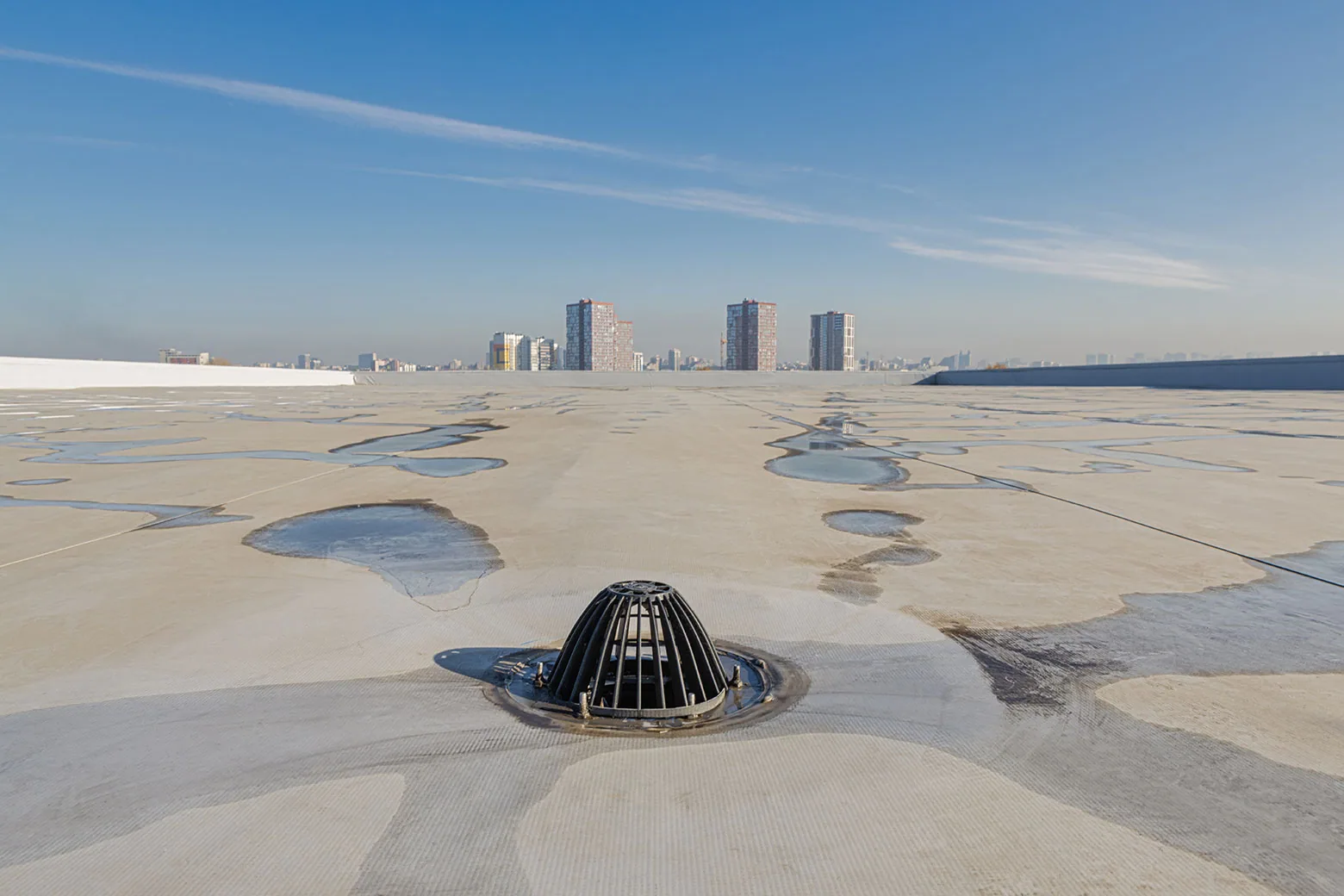
Heavy rain tests the drainage path from field to outlet. We inspect drain bowls, strainers, scuppers, overflow points, and low areas that remain wet after adjacent sections clear. A blockage, settled insulation, or deck deflection can leave water in place. The Conroe market's climate station is located at Lone Star Executive Airport, just north of the city. Weather shapes when work can safely proceed; conditions at the property determine what is repaired. If the forecast narrows, an open area is secured before the next shift.
Define the Repair or Renewal Limit
A short seam opening or damaged curb detail can be repaired when adjacent membrane is dry, attachment is sound, and no broader pattern is visible. Recurring water entry, wet board, widespread seam separation, or loose edge metal may move the decision toward a larger scope. We map confirmed findings and areas needing a test. The written proposal shows the section, material, tie-in, drainage work, and conditions that could change after opening.
A recover is possible only when existing layers, moisture, attachment, deck support, drainage height, and code allow another assembly. Covering a wet or unstable layer may conceal rather than fix it. Tear-off exposes the deck but adds noise, debris, and access demands. A replacement scope should include wall transitions, drains, curbs, and daily dry-in. For an active leak before a larger project is ready, commercial repair work can address the confirmed opening.
Keep Occupied Uses in the Sequence
The Waterway's mix of office, hotel, restaurant, park, residential, and shopping destinations means access below the roof may change by property and time of day. We ask about tenant hours, customer entrances, public routes, equipment shutdowns, and sensitive interiors. The manager identifies where material can be placed and who receives notice if weather or a concealed condition changes the schedule.
We work by sections that can be opened, repaired, and secured during the planned window. A test opening that shows wet insulation or deck damage is documented and held for approval before additional removal. Photos include a roof reference, and the site contact receives the next planned work area. A phased reroof plan can coordinate larger work while keeping interior protection and access requirements visible.
Explain Cost and Timing Drivers
Cost depends on membrane type, repair area, removal depth, wet materials, drains and edge details, lift access, and protection below. A small leak can require work at a complex curb; a larger roof area may be easier to reach. We state those drivers separately so the owner can compare roof-related work with operational constraints.
Approvals, material arrival, weather, and available access windows affect timing. We set a daily opening limit that can close securely before the crew leaves. If removal uncovers a damaged deck or wet insulation, the manager reviews photos and quantities before the scope expands. A clear decision point avoids carrying concealed work as an unspecified add-on.
Leave a Precise Roof Record
Closeout identifies the roof section, membrane where known, repair material, photos, and any area left for testing. The photograph should show the detail and enough surroundings to find it again. We distinguish permanent repair from temporary protection and note what the crew did not open. That gives the next inspection a clear starting point.
A roof condition report can keep the repair boundary and follow-up point with the property record. The Waterway connects many uses across Town Center, but buildings do not share a single roof history. Maintenance can revisit the same seam, drain, or curb after a hard rain and compare it with the prior condition without assuming that another nearby property has the same assembly.
Commercial Roofing Questions
How do you plan roofing near the Waterway's public paths?
We confirm entrances, pedestrian routes, deliveries, lift placement, noise limits, and event or guest access with the property contact. The work zone is set before the roof is opened.
Does a hotel or restaurant use tell you which roof system is installed?
No. It informs access and interior protection, but the membrane and attachment have to be identified at the building. We inspect before selecting repair materials.
What should we do when a leak appears during an event or hotel stay?
Share the interior location and timing. We inspect nearby roof seams, penetrations, and drains, then coordinate protection below while locating the actual entry point.
Can work be phased around Waterway district operations?
It can be phased when the roof layout and safe tie-ins support it. We agree on daily limits, access, noise, and closeout with the building manager.
What determines whether a roof needs a patch or renewal?
The membrane, attachment, moisture below, extent of recurring failures, and perimeter condition guide that choice. We map the evidence and note areas needing a test.
Related Roofing Work