Commercial Skylight and Penetration Flashing in Conroe, TX
Repair commercial skylight, curb, pipe, and penetration flashing in Conroe with water-path inspection and material-specific tie-ins.
Condensation below a skylight and rain entering at its curb can leave similar ceiling marks, but the roof-side evidence differs. In Conroe, hot afternoons and heavy rain test the seals and transitions around skylights, pipes, curbs, and equipment supports. We inspect each opening, check the membrane connection and surrounding drainage, and trace water before defining a repair. An office building near Deison Technology Park or a distribution property in Conroe Park North needs a scope tied to its own roof layout and operating limits.
Find the opening behind the interior symptom
A ceiling stain under a skylight does not prove that the lens or curb is leaking. Water can enter at a nearby seam, travel along a deck flute, or follow a conduit before appearing below. We compare the reported location with roof slope, skylight corners, flashing laps, nearby drains, and previous repairs. If several openings share one roof section, we map each separately so a repair at one curb does not stand in for an inspection of the next.
Condensation can collect when warm interior air meets a cooler frame, especially where the room has high humidity or limited air movement. A roof inspection separates that pattern from water entering at the curb, but the interior condition may also need review by the facility team. We note whether the symptom followed rain, equipment operation, or temperature change and compare it with the roof-side evidence. This prevents a glazing complaint from being assigned to flashing before either source is checked.
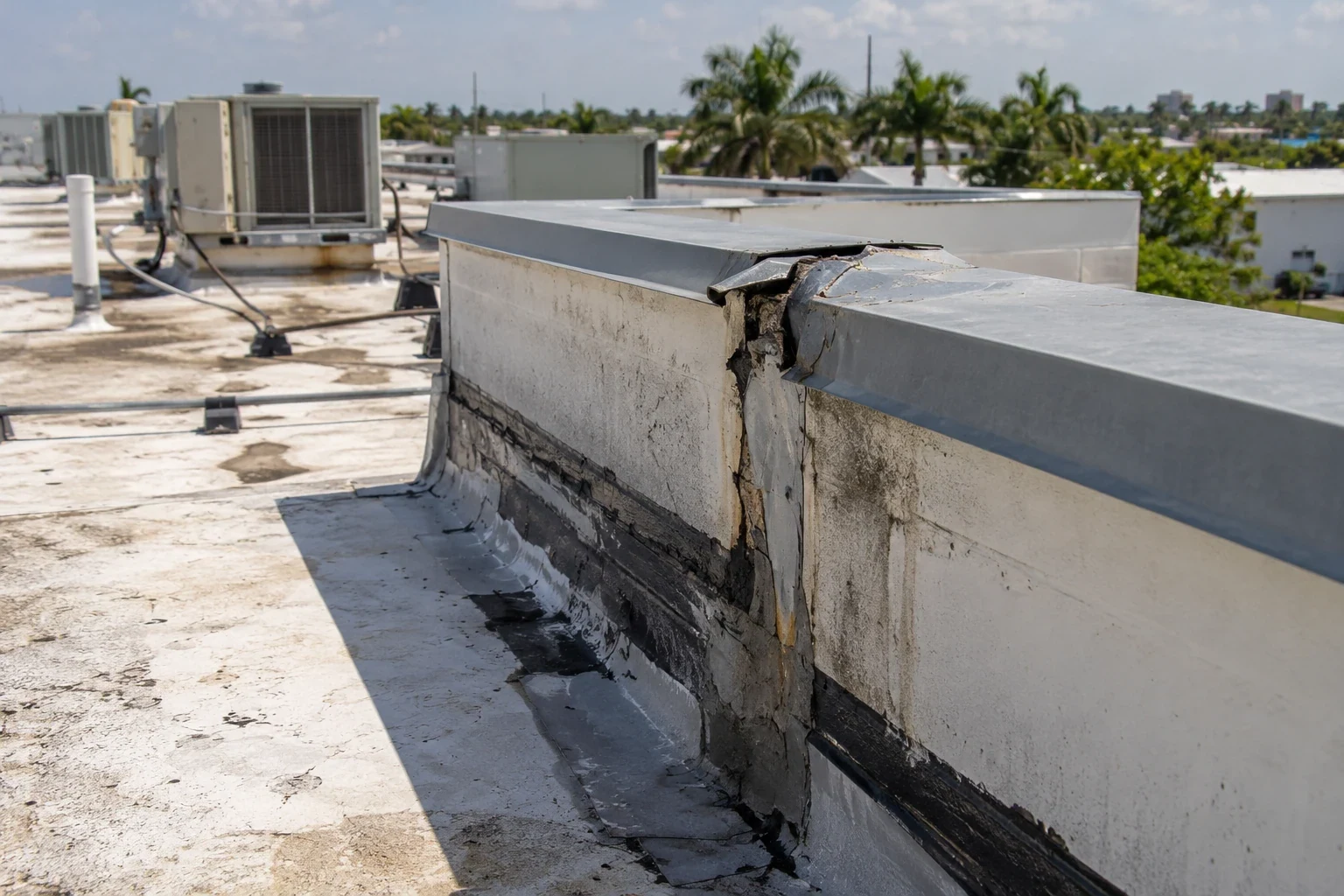
The exterior check looks for cracked sealant, open laps, loose counterflashing, exposed fasteners, corrosion, movement, and material that has pulled away from the curb. We also inspect the skylight frame, glazing, and visible drainage around its base. A commercial roof inspection can document the roof zone and identify where testing could confirm wet insulation. If the opening is active, leak repair can protect the building while the permanent detail is prepared.
Match flashing to the roof material
Flashing at an opening must connect to the installed roof system. A thermoplastic membrane may use a welded curb wrap, while EPDM, modified bitumen, built-up roofing, and metal require different materials and attachment methods. We identify the field membrane, curb surface, existing patch layers, and condition of the substrate before selecting a detail. A bead of sealant around the frame can conceal a separation without restoring the membrane connection.
The opening also needs enough clearance for the frame and roof layers to move without tearing the flashing. We check whether fasteners bear evenly, corners have reinforcement, and the curb face gives new material a stable bond. Where a prior repair hides the original connection, remove only what is needed to expose a sound tie-in and verify the substrate before rebuilding it.
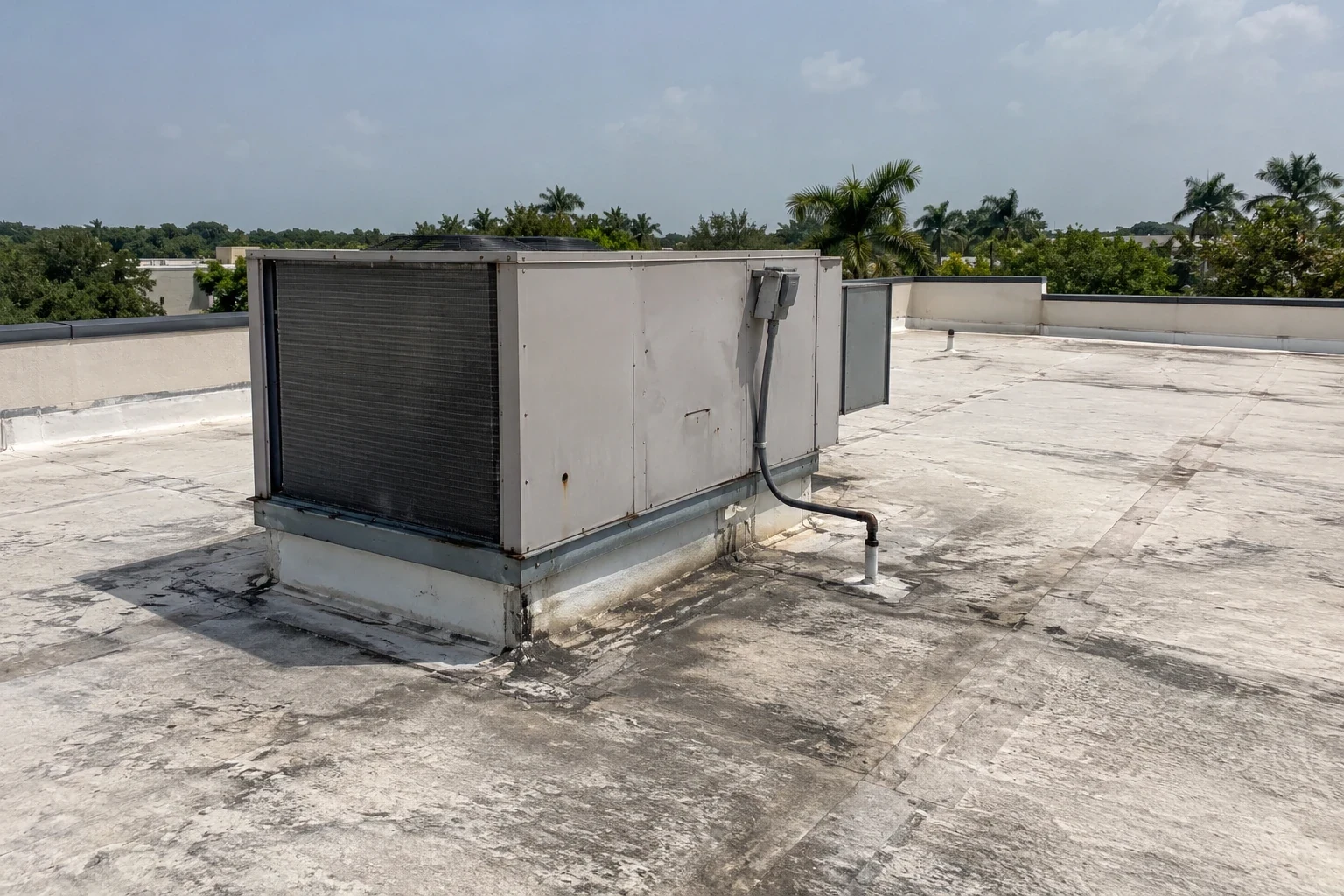
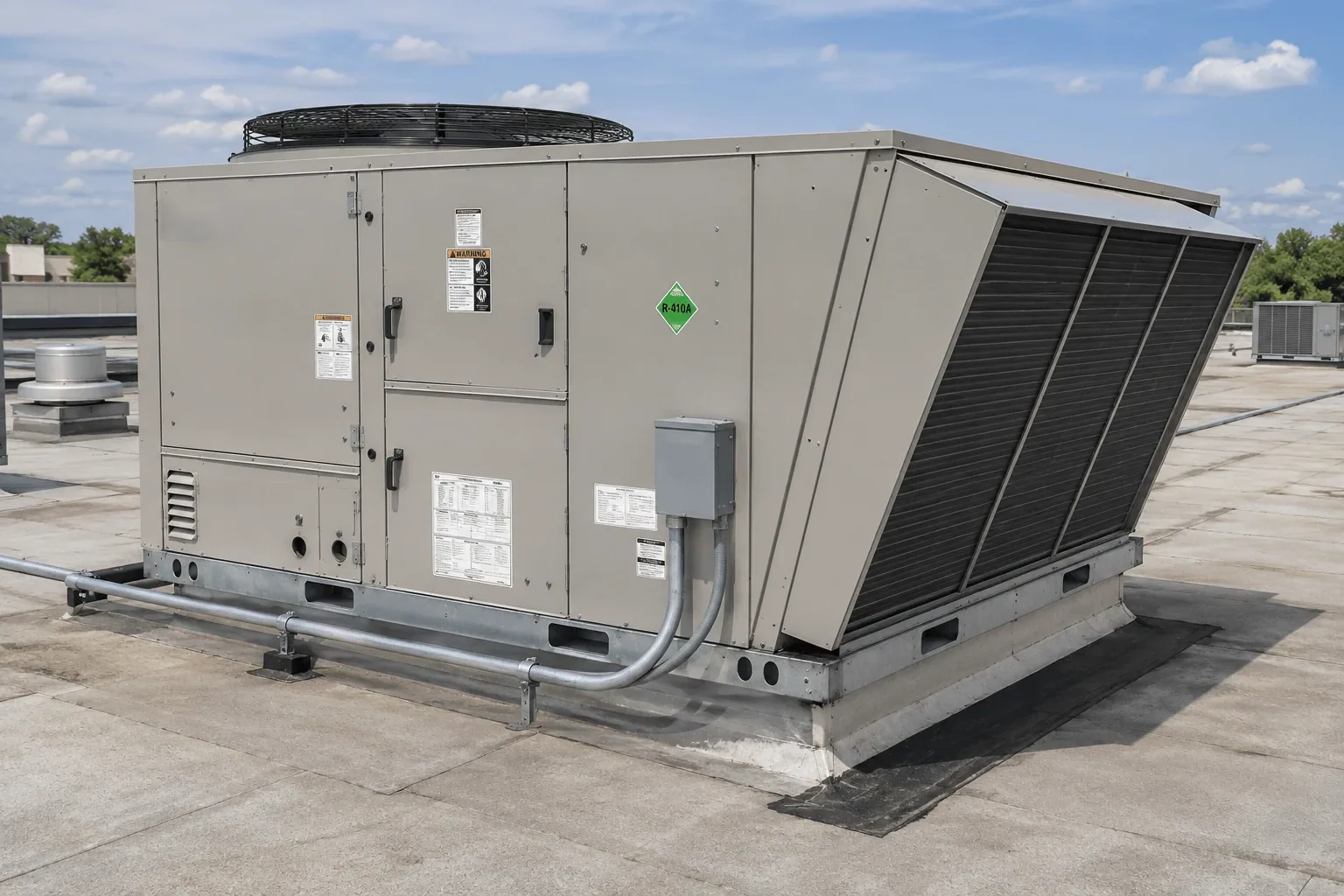
Skylight curbs need secure corners and a sound termination above the water line. Pipes and conduits need collars or compatible flashing that can accommodate movement. Larger equipment curbs may require coordination with mechanical providers so final height and position are known before roofing closes around them. A curb and support repair can address the equipment interface; flashing failure repair can rebuild a confirmed wall or penetration transition. The estimate states which opening is included and where new material meets the existing roof.
Plan for heat, rain, and movement
Houston Intercontinental averages July and August highs around 95 degrees, a nearby regional measure of the summer heat around Conroe. Hot surface conditions affect worker access, cleaning, adhesives, and product application limits. Metal frames and roof sheets also expand and contract, placing movement at corners, fasteners, and curb transitions. We inspect the assembly at the building and schedule repair within the selected material's requirements rather than treating a regional temperature as a roof reading.
Heavy rain follows the roof's slope and exposes openings where water can back up at a curb or drain. We check whether runoff reaches the outlet and whether the flashing detail interrupts that route. A skylight set in a low area may need drainage correction along with a new curb wrap. At The Woodlands Town Center, mixed office, healthcare, lodging, and retail uses can affect access windows; an industrial property along FM 3083 may have vehicle movement to preserve. We confirm conditions with each site's contact.
Set the repair limit and protect the opening
A localized split or failed seal may be repaired when the curb, substrate, and adjoining membrane remain secure. If water has reached insulation or damaged the deck, the scope needs to account for those layers. We photograph the visible opening, mark the roof zone, and identify whether a test cut could change the removal boundary. If a skylight frame itself is cracked or damaged, replacement responsibility may involve the glazing or window contractor as well as roofing. The proposal distinguishes each trade's work.
Skylight replacement and roofing repair can involve different contractors. Before work begins, establish who removes the frame, who prepares the curb, and who reconnects the roof membrane. If the unit stays in place, protect glazing and keep tools from bearing on the frame. If it must be lifted, the opening needs a weather-tight cover and a planned return to close the assembly. The sequence should account for interior protection and the safe movement of materials through occupied areas.
During repair, we protect the opening and nearby interior, remove unsound material, prepare the surfaces, install compatible flashing, and check the finished tie-in. Work should not leave an open roof section at the end of a shift. The access plan covers ladders, lift routes, equipment shutdowns, and any area below that needs notice. A phased work plan may be useful if multiple penetrations are repaired while tenants or operations remain in the building. If the defect reaches a larger seam or edge, a roof repair scope should name that extension before more material is removed.
Record each skylight and penetration separately
Closeout identifies the opening, roof system, flashing material, preparation, repair boundary, and any test or frame work that remains. Photos should include both a close view of the corners and a wider image that locates the unit on the roof plan. For a roof with several skylights, numbering each unit prevents a future leak call from being assigned to the wrong opening. The manager can also record the date of glazing or equipment service if a vendor changes the interface.
After the next rain, review the same curb corners, pipe collars, and nearby drain path. If the interior report returns, compare its location and timing with the repair record before repeating the same seal. A roof condition report can retain findings by zone, while a maintenance visit can check exposed transitions after equipment work. That history shows whether the repaired detail remains stable or a separate opening needs attention.
Commercial Roofing Questions
How can you tell whether a skylight or nearby roof detail is leaking?
We compare the interior symptom with the frame, curb, flashing, seams, slope, and drains. Water can travel, so the stain location alone does not identify the opening.
Can sealant repair a skylight curb?
Sealant may be part of a compatible repair, but an open membrane lap, loose counterflashing, or damaged curb needs its own correction.
Do pipe collars need replacement when the roof is renewed?
The project inspection determines that. We check collar material, attachment, movement, and connection to the field membrane before including replacement.
What if water is trapped under the flashing?
Testing or a controlled opening may be needed to locate wet insulation and set the removal limit. We document confirmed material separately from suspected areas.
Can roof work continue around active equipment?
Often, with a planned access window and mechanical contact. If the unit must move or shut down, the property team and equipment provider coordinate that step.
Related Roofing Work