Auto Dealership Roofing in Conroe, TX
Plan auto-dealership roofing in Conroe around showroom hours, vehicle protection, service bays, equipment access, and documented repair choices.
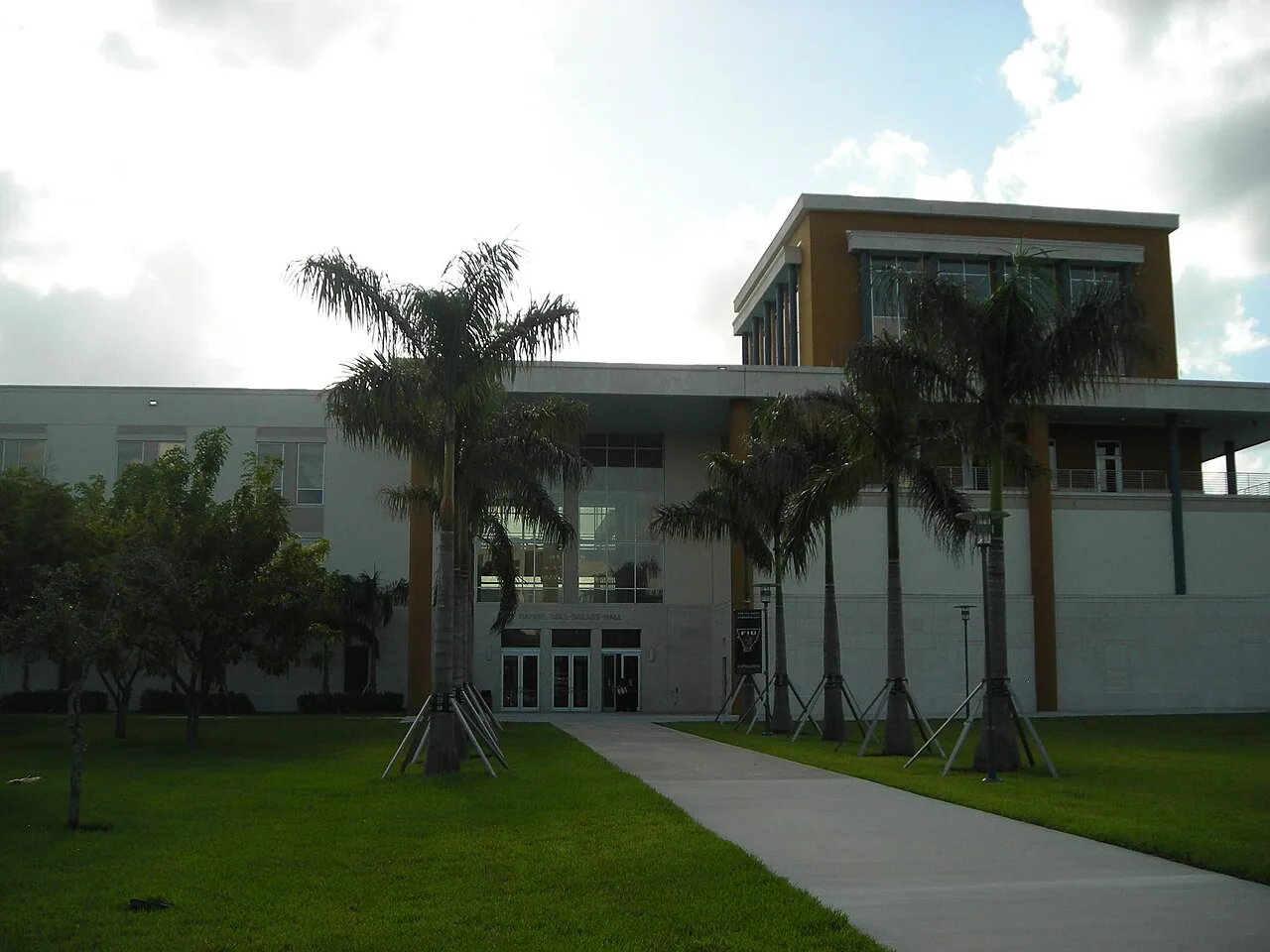
Showroom staff may notice a ceiling mark before anyone knows whether water reached a display vehicle or a customer area. In the service bay, the same roof problem can interrupt tools, lifts, or work in progress. The first step is to identify the building area and the dealer contact who can coordinate access. Dealership properties may include a showroom, repair bays, parts storage, wash areas, and covered customer space, but the actual roof layout must be inspected. Conroe's regional access includes the I-45 and Loop 336 connection, while Conroe Park North is an industrial employment district on FM 3083. These places establish the market's commercial context, not a dealership location or roof condition.
Keep sales, service, and vehicle movement coordinated
The dealer can identify sales hours, service-bay throughput, delivery times, vehicle storage areas, and the customer routes that should remain clear. We confirm which doors or lanes might be affected by a lift, ladder, or material staging. Vehicles below the work area can be moved by dealership staff before roofing begins. The roofing crew should not relocate customer or inventory vehicles unless the dealer has arranged and authorized that movement.
Showroom work may need quieter hours than a service-bay repair. A repair schedule should specify the section, work window, barrier, and when the area will be returned. If a larger project crosses several roof areas, phased work in an occupied building can make daily access and closeout easier to track. Dealer management remains responsible for customer notices and vehicle movement; the roofing scope should state the areas that need to be clear. A site map can show the approved route.
Separate showroom, service, and parts areas
A dealership addition may have a different roof assembly from the original showroom or service building. We map visible transitions, seams, curbs, penetrations, edges, and drains by section so a leak report does not get assigned to the wrong roof. Water near a service lane may travel from a roof opening at a different bay or wall transition. The interior location and roof detail should be compared before a repair limit is selected.
A commercial roof inspection can document accessible surfaces and describe any section that could not be reached safely. If a leak appears over parts storage, the report should identify shelves or stock that need protection while management directs product movement. A big-box retail property also has a broad sales floor, but its operations differ from vehicle service; big-box retail roofing addresses that separate building use. The proposed repair remains specific to the inspected dealership.
Review rooftop units and service penetrations
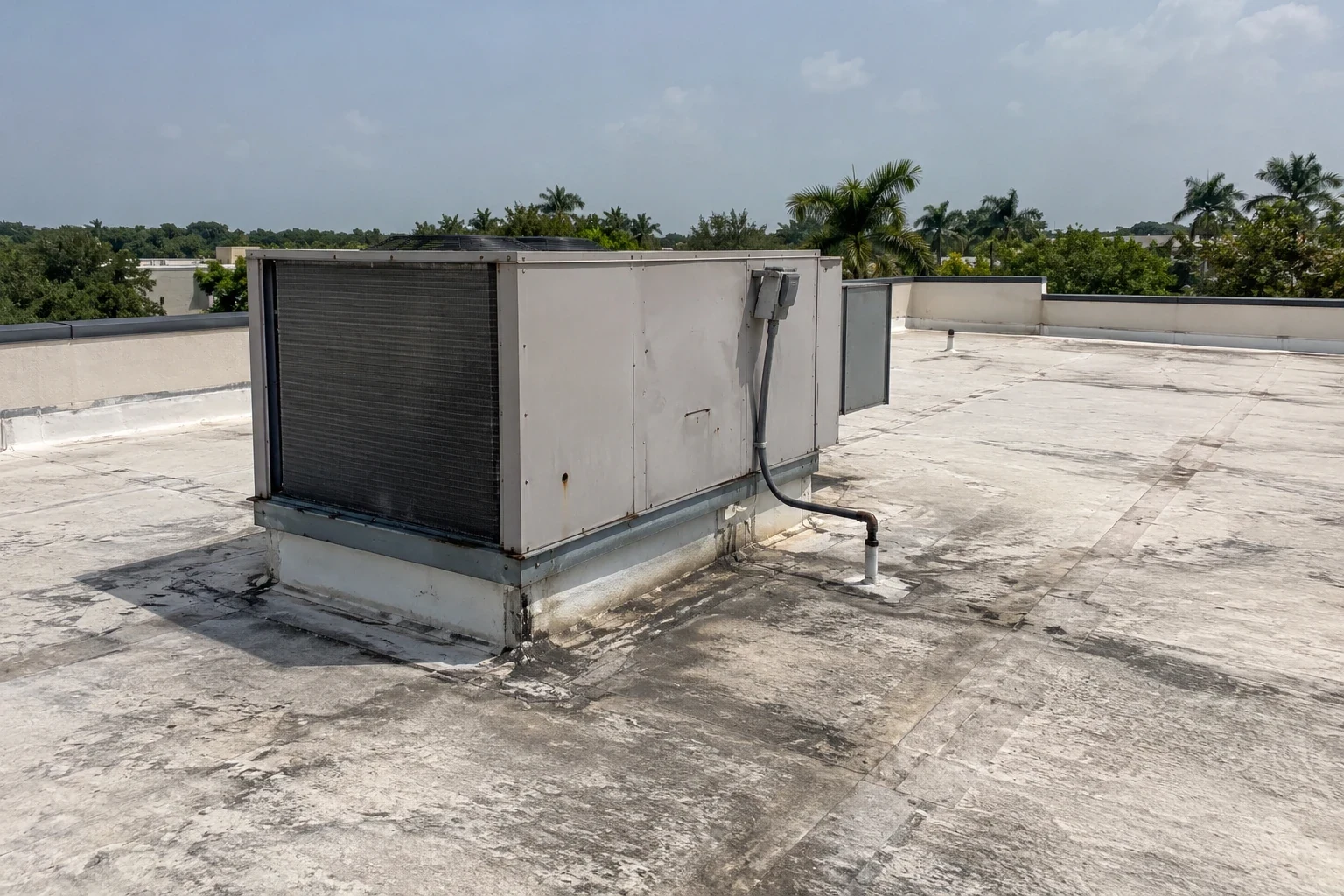
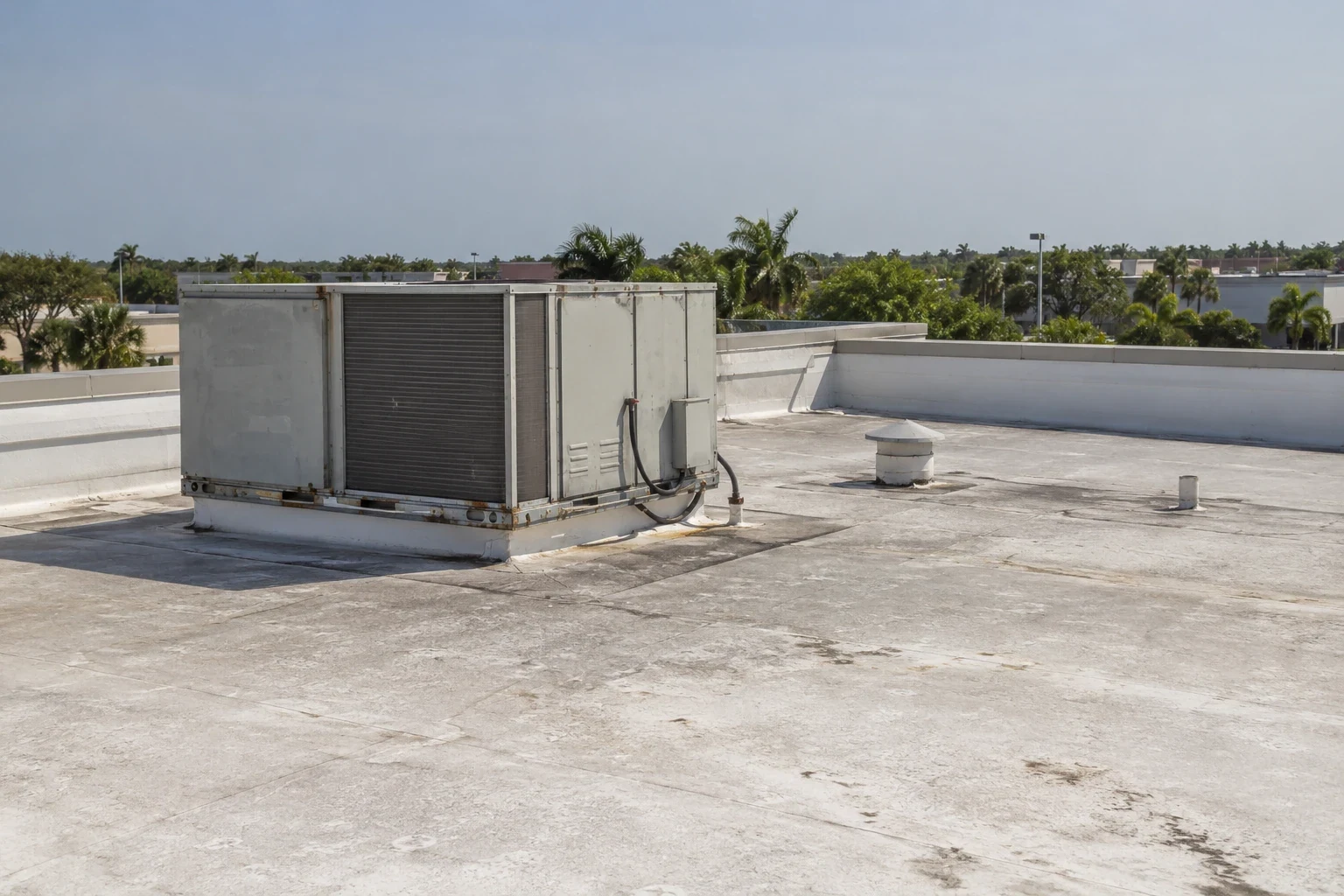
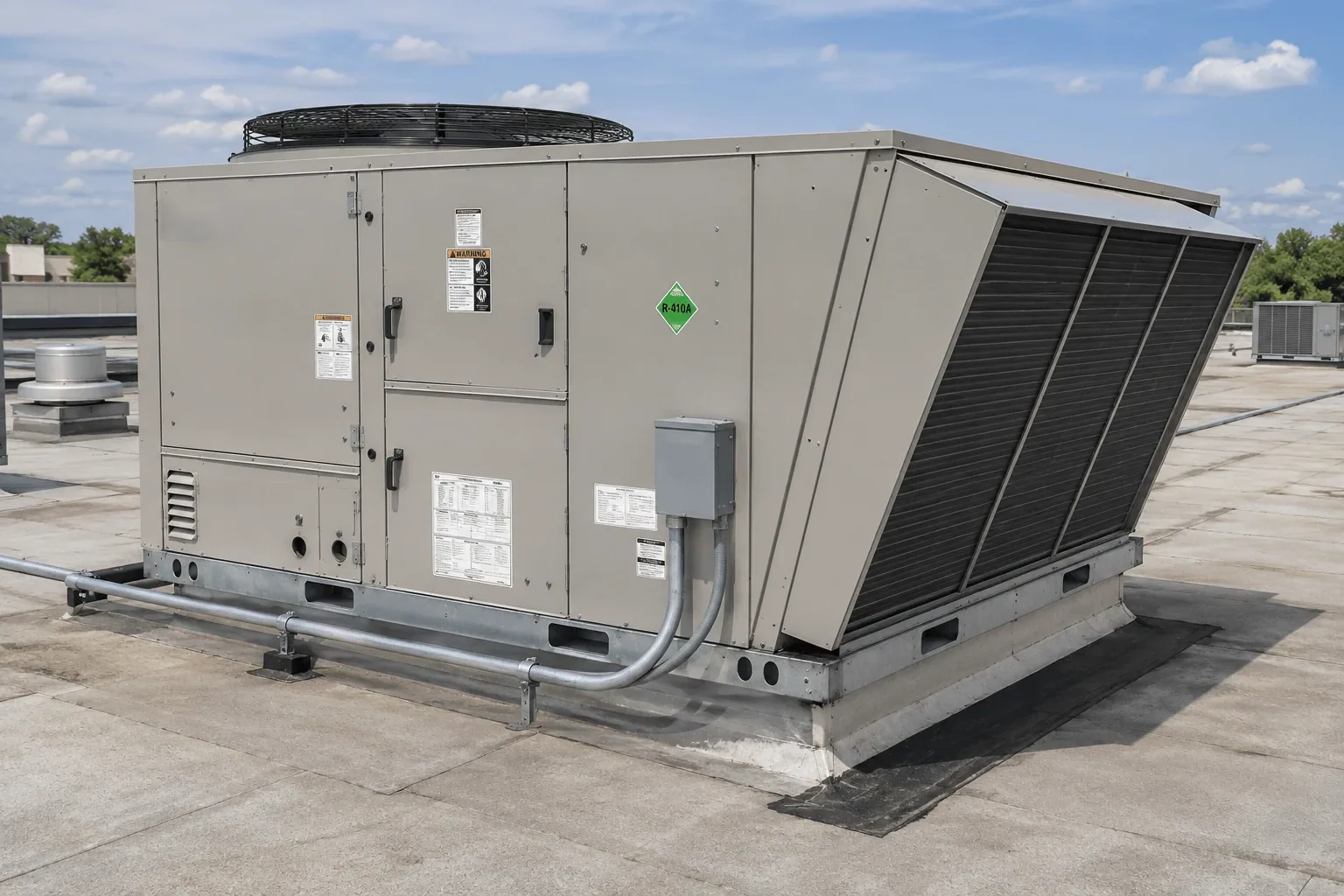
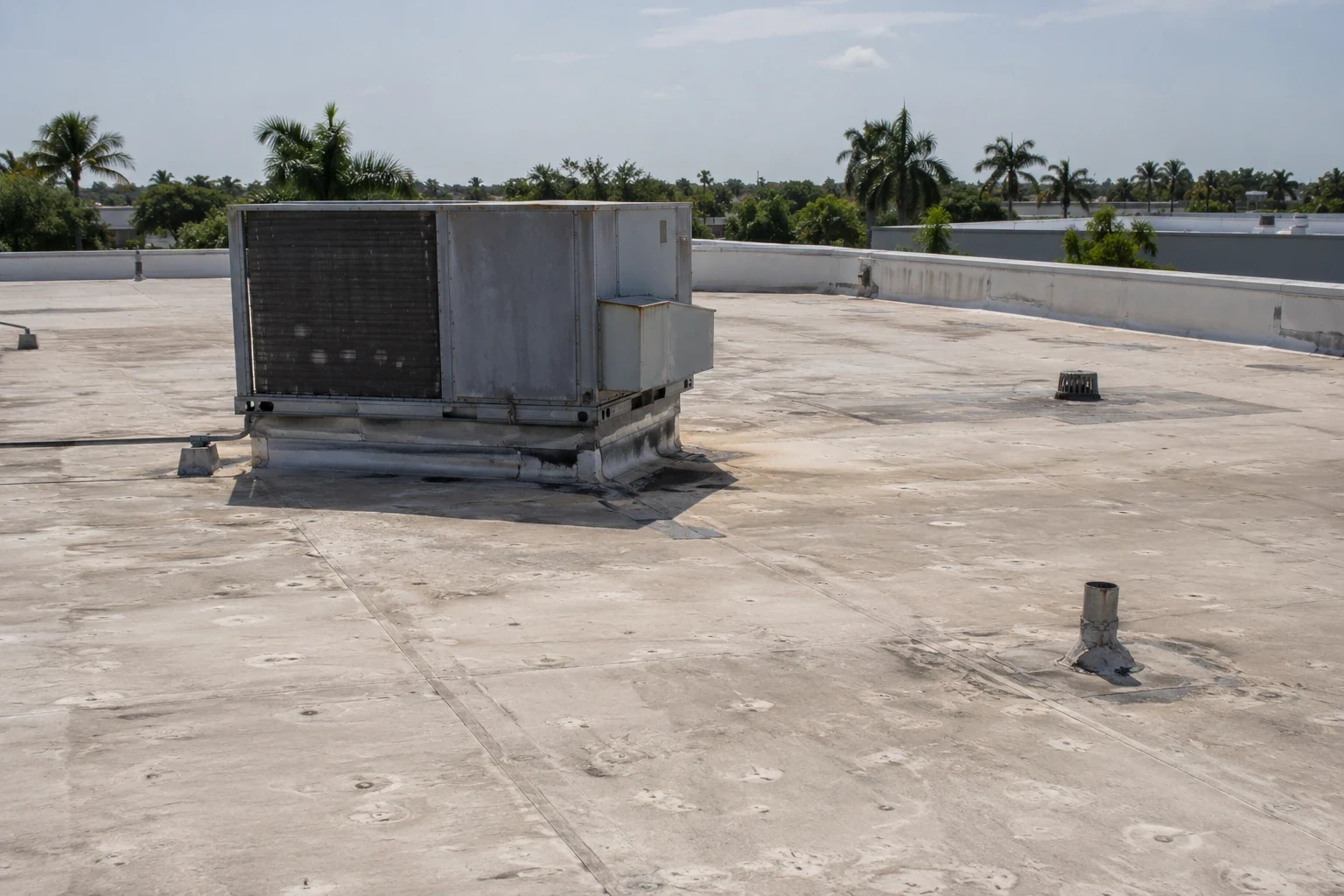
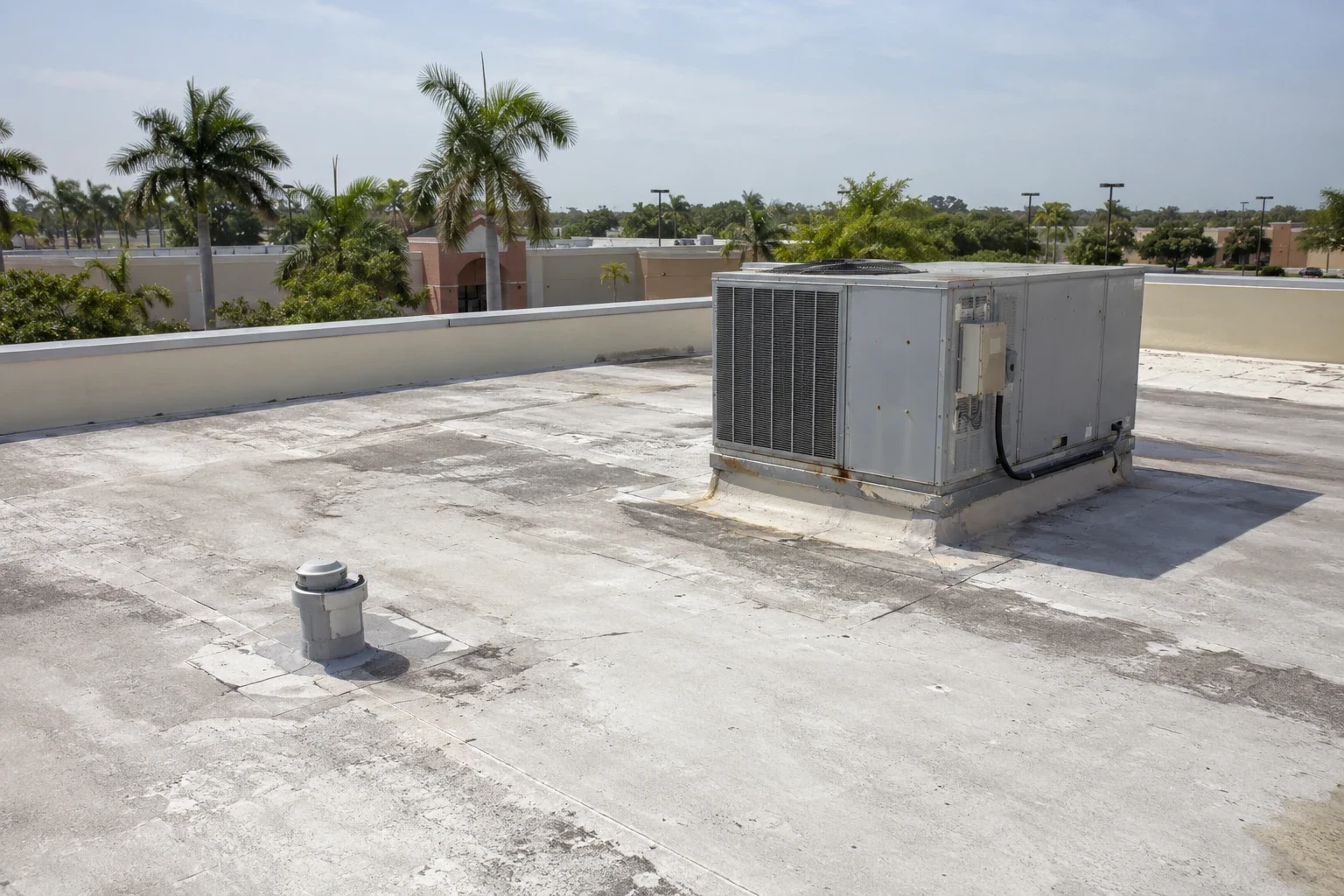
Service bays and showrooms may use ventilation, exhaust, cooling, or other equipment, but the installed systems vary. The dealer's building engineer or service vendor identifies units that must remain on, shutdown windows, and clearance requirements. We inspect visible curbs and flashing without changing equipment settings or moving a unit. If a dealer has a vehicle lift that reaches the roof edge, the manager must identify the clearance and safe equipment route before the site visit.
A leak near a fan or pipe does not automatically mean the curb has failed. We inspect nearby seams, wall details, penetrations, and drainage to find a plausible path. Equipment curb and support review can help when the flashing interface or attachment needs closer attention. Dealers with on-site parts storage may also use a warehouse-type building; warehouse roofing describes a different occupancy and loading profile, not a substitute for assessing a dealership's roof.
Check drainage and weather-related damage
Accessible drains, scuppers, strainers, low areas, and discharge points should be checked for debris or damage. Water that remains near a curb or service-bay section can keep a detail wet and slow the source search. Drain and scupper inspection can document the visible route. If the issue only appears during rainfall, the manager can note which rooms or bays were affected and how long the water continued.
Heat on a roof surface can narrow the safe work window, and rain requires a defined dry-in step. After severe weather, we inspect rooftop HVAC supports, fascia, skylight curbs, and service-bay exhaust openings before work moves over vehicle areas. After a current report, we inspect the named section for punctures, displaced edges, damaged flashing, or new interior water. Storm-damage roof repair follows the observed condition and records temporary protection separately from permanent work.
Compare a repair with broader roof work
A local repair may be enough if the defect is isolated and the surrounding roof remains stable. If water reports recur over the showroom and service areas, or several transitions show deterioration, ownership may want a broader assessment. A cover layer is considered only when the current assembly, moisture, attachment, structure, and drainage support it. Removal allows a look at concealed materials but adds debris routing and temporary protection. The quote should explain what each choice addresses and how it affects dealer activity.
List the roof sections, drains, equipment, parking and staging controls, vehicle protections, work hours, and the process for approving hidden conditions. A replacement scope should distinguish the building areas in the proposal. A grocery operation brings cold-chain priorities, while dealership management coordinates sales and service work; grocery-store roofing addresses that separate environment. Compare options by the roof evidence and the dealer's approved schedule.
Keep the repair record tied to each building section
The dealer's next facilities contact should be able to locate the repair by building and roof zone. Closeout can include dated photos, the reported room or bay, material installed, work limits, weather delays, and follow-up items. If an equipment service vendor needs to inspect a curb or line, note that handoff and avoid describing it as complete before the vendor reports back. The record lets sales and service leadership compare later reports with the roof detail that was actually addressed. If vehicle staging changes before a return visit, the dealer can update the route and confirm the newly cleared area with the crew.
Conroe Park North fronts FM 3083 and supports a diverse industrial and logistics workforce. The I-45 and Loop 336 corridor links area commerce with the regional road network. Neither fact confirms where a particular dealership operates. Conroe Marketplace is a broader service area for commercial roofing work, and property visits still depend on the owner's access approval. Scheduled maintenance can track accessible drains and prior repair zones while the dealer controls vehicle and customer traffic.
Commercial Roofing Questions
Can roof work happen while dealership sales continue?
It can when management approves noise windows, parking or vehicle movement, customer routes, and the work boundary. The scope should identify which area is active and how it will be handed back.
Who moves vehicles before a roof repair?
Dealership staff arrange movement of customer, inventory, or service vehicles. The roofing crew needs a cleared, approved work area and should not relocate vehicles without authorization.
What should a service manager report about a leak?
Identify the bay, showroom, or storage area, the time noticed, whether water continues, and any equipment or vehicles at risk. That helps facilities staff direct the inspection.
Does water near a rooftop fan mean its curb failed?
Not by itself. The entry can be at flashing, a nearby seam, a drain, or another transition. Inspection should follow the water path and identify observed roof details.
When should a dealer consider full replacement?
Recurring reports, widespread moisture, or several deteriorated roof sections may justify comparing larger work. A recommendation should describe conditions by building area and include operating impacts.
Related Roofing Work