Commercial Roofing in Cleveland, TX
Commercial roof inspections, repairs, and replacement in Cleveland, TX. We assess leaks, roof assembly, drainage, access, and repair timing.
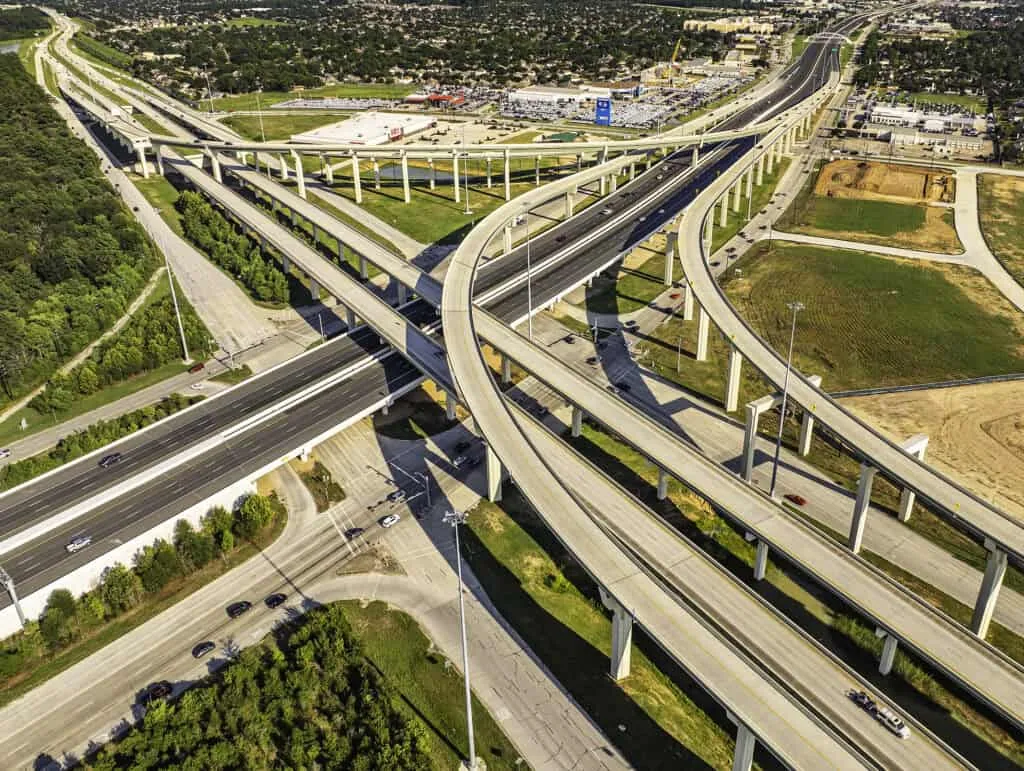
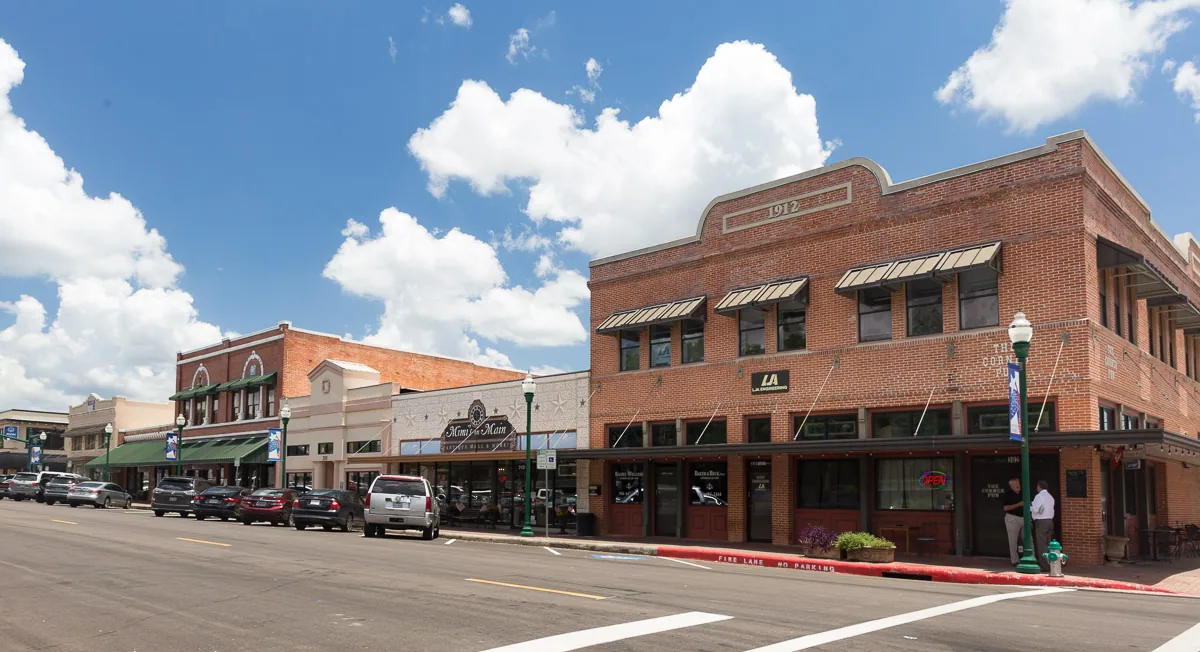
Commercial roofing in Cleveland starts by identifying the building’s roof and its operating needs. Cleveland is an outer-ring commercial market in Liberty County, about 45 miles northeast of Houston along I-69/US 59. The city also identifies Highway 105 as a commercial growth corridor. Its economic development corporation manages sites intended for commercial and industrial users, with rail spurs at select properties. Those transportation and development details describe the market; they do not show what a particular building contains or how its roof is performing.
We inspect seams, penetrations, perimeter metal, drainage, and previous repairs, then coordinate access with the site contact. A corridor may affect delivery timing, but the property determines the lift position, truck route, and areas that must stay open. For other regional service areas, see New Caney commercial roofing and Tomball roof service. Each page leads to a separate property-level review.
Plan Work Along the Property’s Access Route
I-69/US 59 and Highway 105 are commercial routes identified by the city. We ask the site contact which entrance serves the building, how deliveries are scheduled, and whether a truck or lift can reach the roof without blocking regular operations. If the property’s EDC-managed site has a rail spur, that fact alone does not establish a roofing delivery route. We confirm the approved access path and staging area at the facility. We also coordinate arrival and departure times with whoever manages the site, especially when a delivery or shared drive could overlap with the roofing crew’s material movement.
Materials, debris, and lifting equipment need a safe sequence. Before mobilizing, we verify where a container can sit, which drives need to remain clear, and how the crew will communicate a weather delay. If an occupied building requires separate work areas, an occupied-building reroof plan can stage repairs around verified access limits. The sequence depends on secure tie-ins and a daily dry-in plan, not the corridor name.
Trace the Water Path Across the Assembly
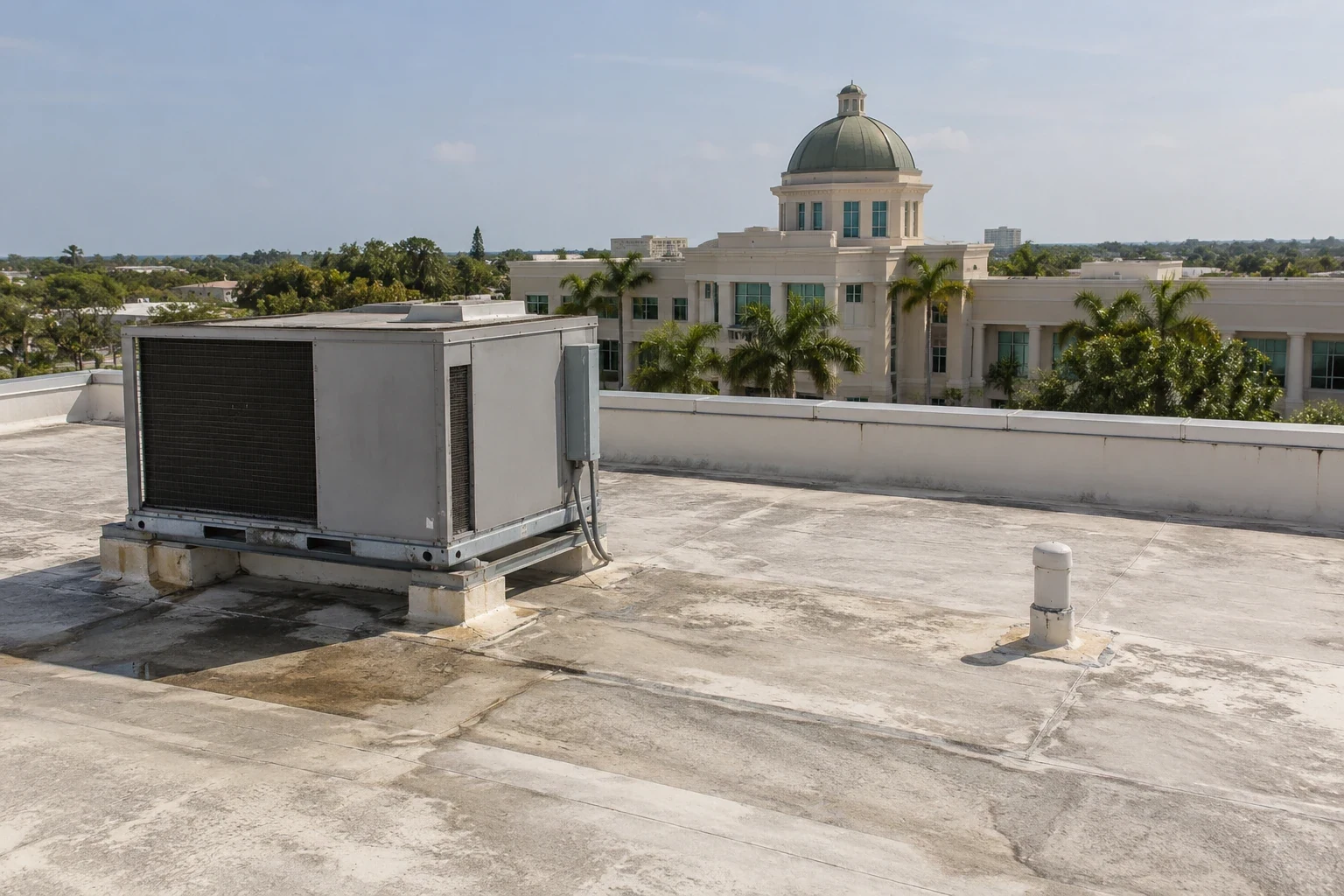
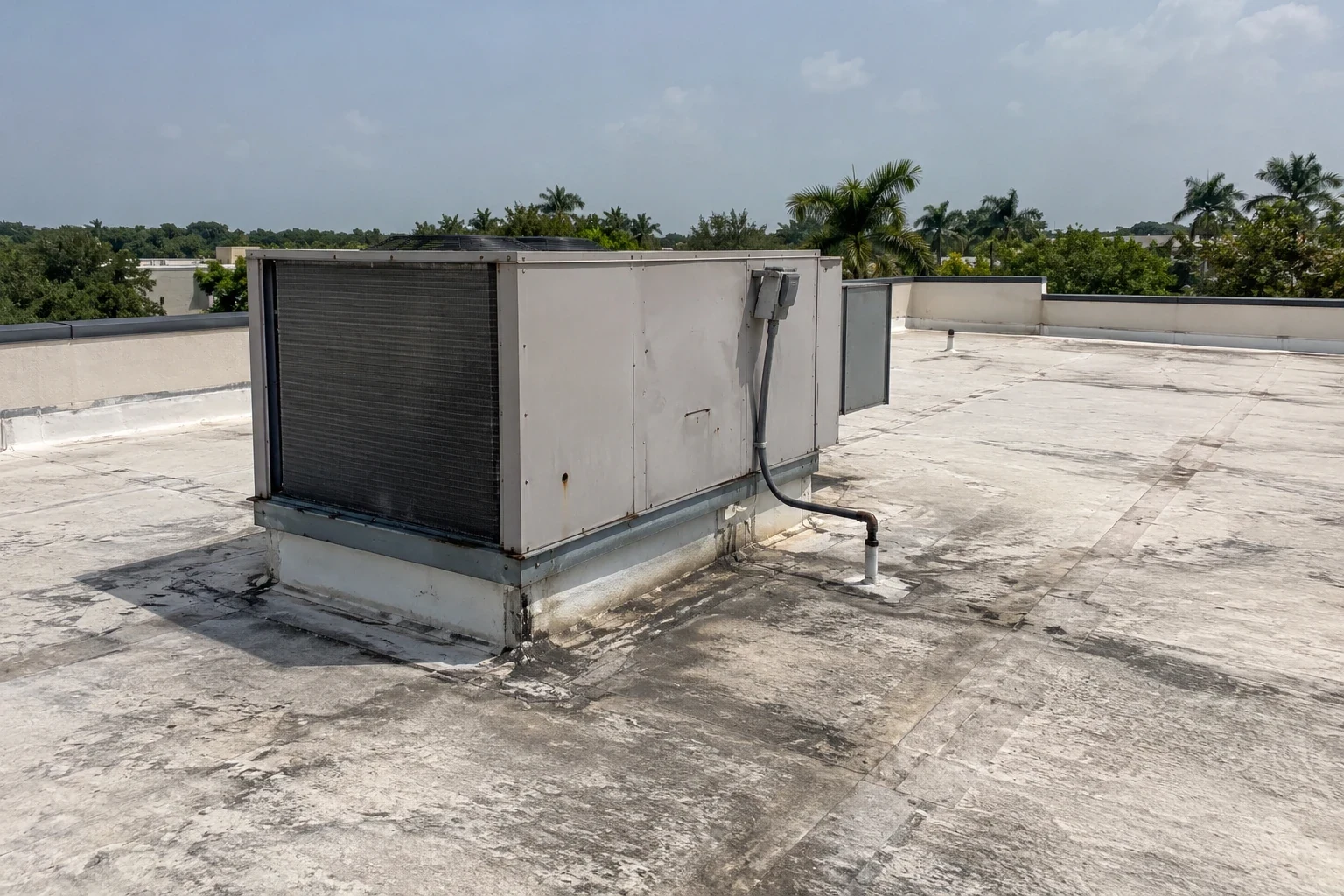
Interior water can move along a deck or framing before appearing below the roof opening. We start with the affected area and inspect the roof above and around it, following seams, pipe penetrations, wall transitions, equipment curbs, skylights, drains, and prior patches. We look for lifted membrane, open metal joints, separated flashing, punctures, and wet insulation. If those signs do not establish the source, we discuss a targeted test instead of assigning a cause too early.
The city’s commercial and industrial development focus does not define the roof system at an EDC-managed property or any other building. We identify membrane, attachment, visible substrate, and drainage details directly. Repair materials must be compatible with the system and the surface preparation possible at the site. A commercial roof inspection can map the findings, note concealed areas, and explain what evidence would change the recommendation.
Inspect Roof Details Under Regional Heat and Rain
For Conroe-market weather context, July’s typical high at Houston Intercontinental is 94.5°F and August’s is 94.9°F. These nearby normals are a regional indicator, not a Cleveland roof temperature. Prolonged heat moves membranes and metal through repeated expansion and contraction. We inspect weld lines, fasteners, curb corners, and perimeter transitions for separation or loss of bond, then select a repair method that fits the actual assembly.
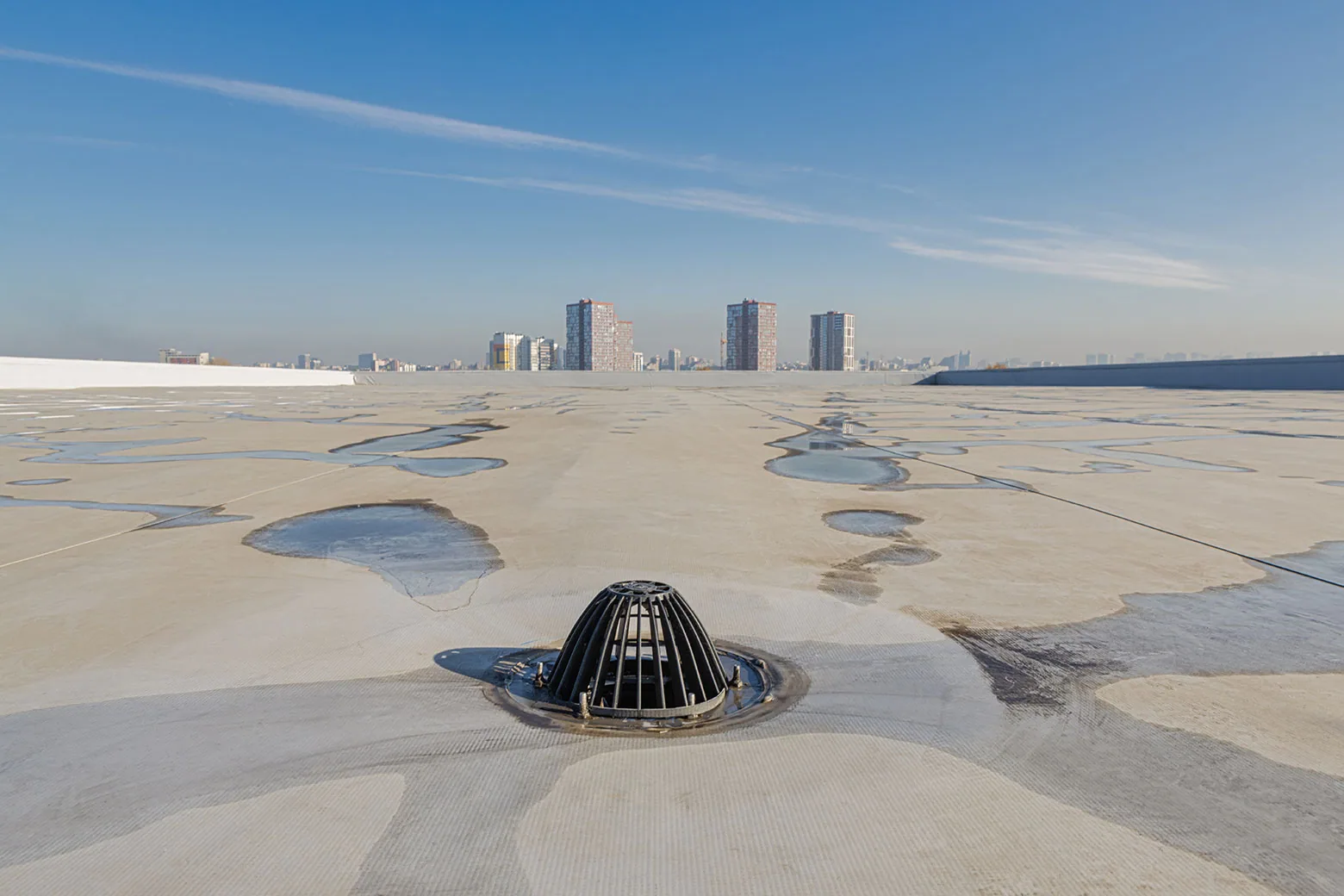
Rain reveals whether the roof drains as intended. We trace water toward outlets, check bowls and strainers, and look for low spots that remain wet after nearby areas clear. A blocked outlet can be corrected differently from a depressed area or moisture below the surface. Wind-driven rain may also enter at a weak wall or equipment detail. We confirm the likely path before expanding the scope. If drainage is the reported concern, roof drain and scupper service can address outlet conditions identified during the walk.
Compare Repair with a Larger Roof Project
A small repair can work when the failure is contained and adjacent material is stable enough for a lasting tie-in. Recurring leaks, several separated seams, wet insulation, or loose edge details may mean the area should be tested or the repair boundary widened. We identify what is confirmed, what remains unknown, and what additional access or testing would answer the next question. The owner can then compare the disruption and likely life of a repair with the cost and access needs of replacement.
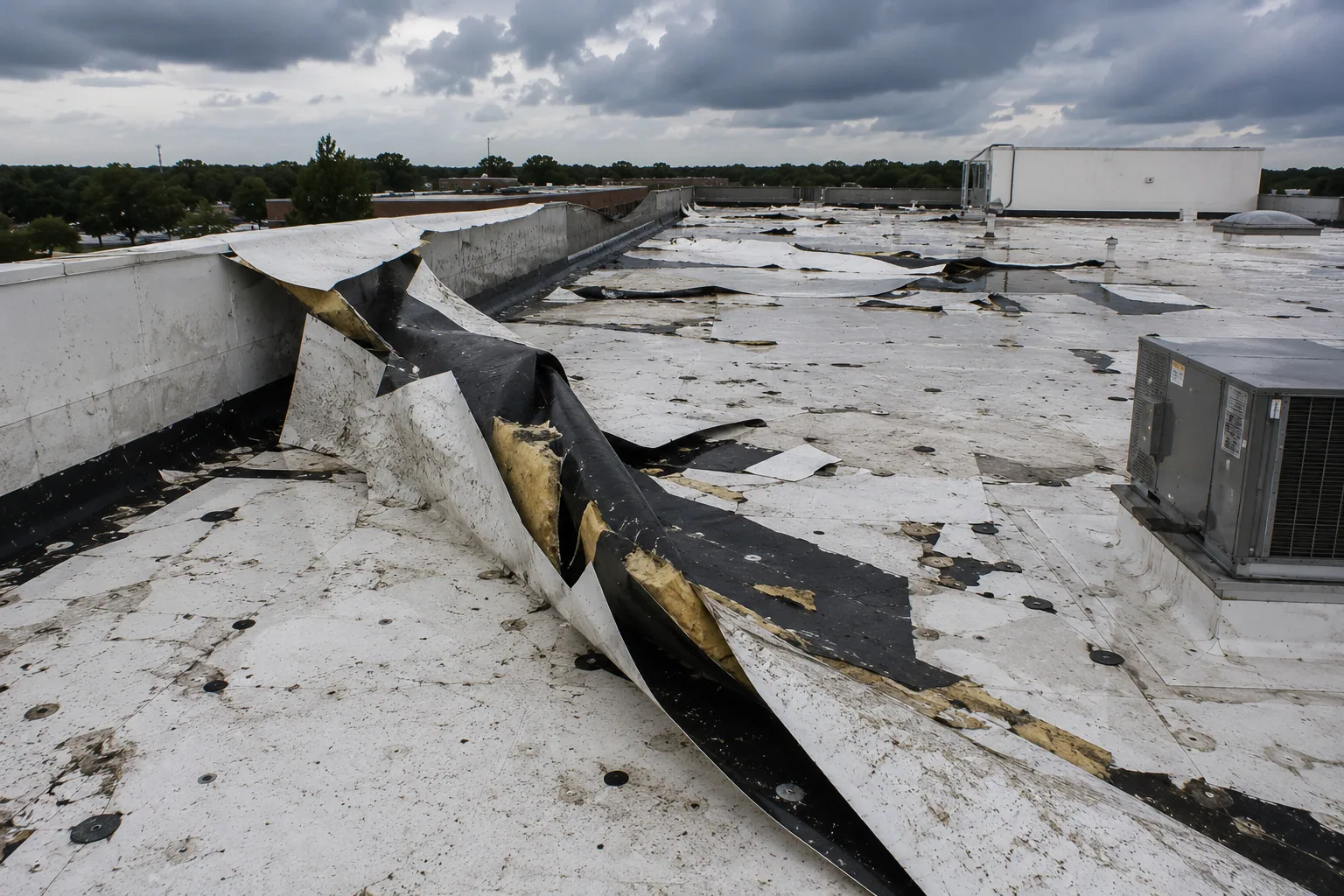
Before planning a recover, we check the existing roof’s moisture, attachment, deck support, outlet elevations, edge geometry, and equipment clearances. A new layer over wet or unstable material can preserve the failure. Selective removal may answer questions before a larger tear-off, while full removal creates access to more of the assembly and requires debris and interior protection. A commercial roof repair can address a localized defect; a replacement plan is appropriate when observed deterioration supports broader renewal.
Define Protection and Approval Before Opening
The work plan names the section to open, temporary weather protection, daily stopping point, and person authorized to approve additional removal. We keep the exposed area within what the crew can make watertight during the shift. If weather changes, the opening is secured before other work continues. An unexpected deck or insulation condition is documented and held for approval rather than added silently to the job.
When water is actively entering, a temporary response may protect the interior while a permanent repair awaits suitable roof conditions. Emergency roof repair can focus on safe access and limiting further entry, followed by an inspection of the assembly. That first response does not replace a complete diagnosis. We return to verify the roof, identify compatible materials, and set a scope supported by the conditions found.
Keep Site and Roof Information Distinct
At closeout, the owner receives the areas inspected, repair details, materials used, and any concealed condition not tested. Photographs should identify a roof zone as well as the close-up detail. If rail service, site access, or a planned use affected the work sequence, that belongs in the project record; it does not establish a roof finding.
The city’s corridors and commercial-development sites help explain Cleveland’s business context. Roof maintenance remains specific to each property. Roof condition reporting can organize urgent corrections, future inspections, and capital items while keeping observations separate from broader market facts. The next step should be clear: correct the confirmed defect, test an unresolved area, or evaluate renewal if the roof’s condition warrants it.
Commercial Roofing Questions
Is Highway 105 a commercial route in Cleveland?
Cleveland's commercial growth corridor follows Highway 105 alongside I-69. That context helps locate the market, while the roof inspection and the property’s approved access route determine the project plan.
Do rail spurs at select EDC sites affect roof service?
They may be relevant to site logistics, but a rail spur does not establish how roofing materials can be delivered. We confirm the approved access and staging plan with the property contact.
How can I tell whether a commercial roof needs replacement?
Look at the spread of defects, repeat leak history, wet insulation, attachment, and perimeter condition. We document what inspection confirms and identify tests that could change the recommendation.
Can a roof inspection find the source of a leak?
Often it can narrow the path by checking seams, penetrations, flashing, and drainage around the reported area. If water is concealed beneath the assembly, targeted testing may be needed.
What affects the timing of a roof repair in Cleveland?
Weather, material compatibility, site access, operating hours, equipment needs, and the daily dry-in plan affect timing. We verify those constraints before opening the roof.
Related Roofing Work