Commercial Roofing in New Caney, TX
Commercial roofing in New Caney, TX for leak response, inspections, and replacement. We check drainage, roof details, access, and operating constraints.
New Caney’s commercial roof work can involve properties with different access needs along the I-69/US 59 corridor. New Caney is an unincorporated Montgomery County community within the East Montgomery County Improvement District. The district lists the area population at 25,359 and identifies commercial activity along I-69/US 59, including Valley Ranch Town Center near the I-69 and Grand Parkway junction. Those details locate the service area; they do not tell us what roof sits above a specific business. We inspect the actual assembly, check how water drains, and set a work boundary that fits the property.
A roof project near an active corridor needs a plan for lifts, material delivery, truck movement, and any entrances that remain open. The property contact defines those limits. We then review seams, edge metal, penetrations, equipment curbs, and outlets before recommending repair or renewal. Our Valley Ranch Town Center roofing service and Porter commercial roof review also treat each building as its own inspection.
Plan Access Around the I-69 Commercial Route
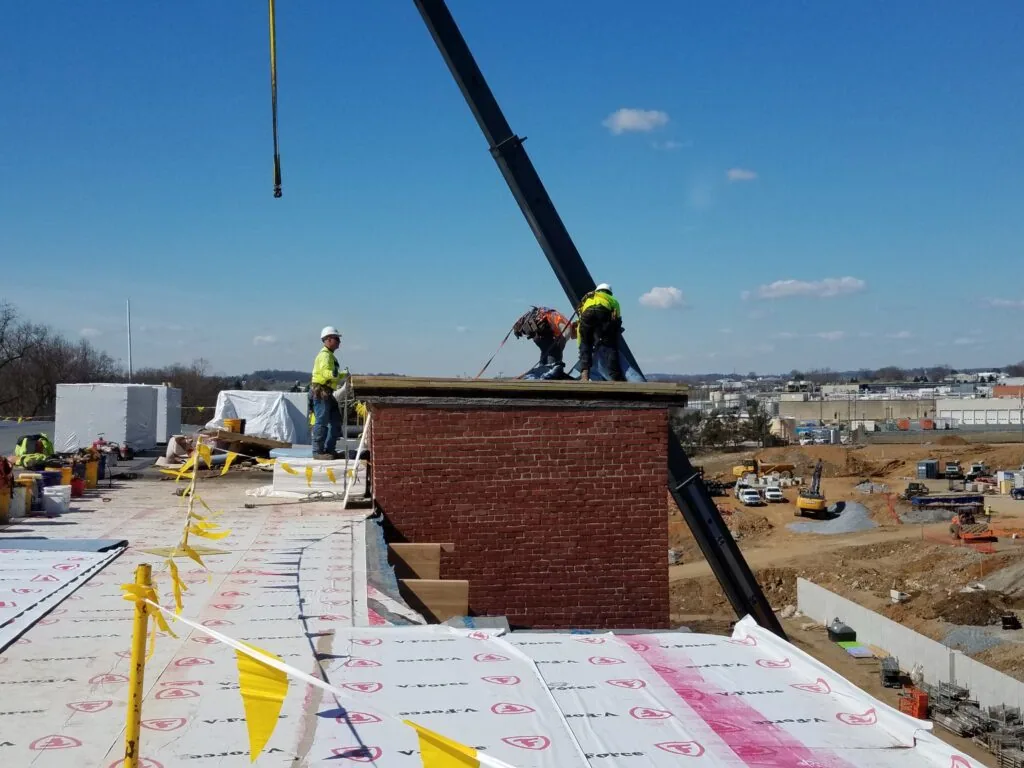
Before work begins, we confirm the property entrance, loading area, delivery hours, and route for moving tools and materials. I-69/US 59 connects New Caney commercial activity, but the safe path from that corridor to a roof depends on the specific site. We check whether a lift can be positioned without blocking a drive, how debris will leave the roof, and which doors need to stay clear. If a delivery window is tight, the material drop and crew start should be scheduled together.
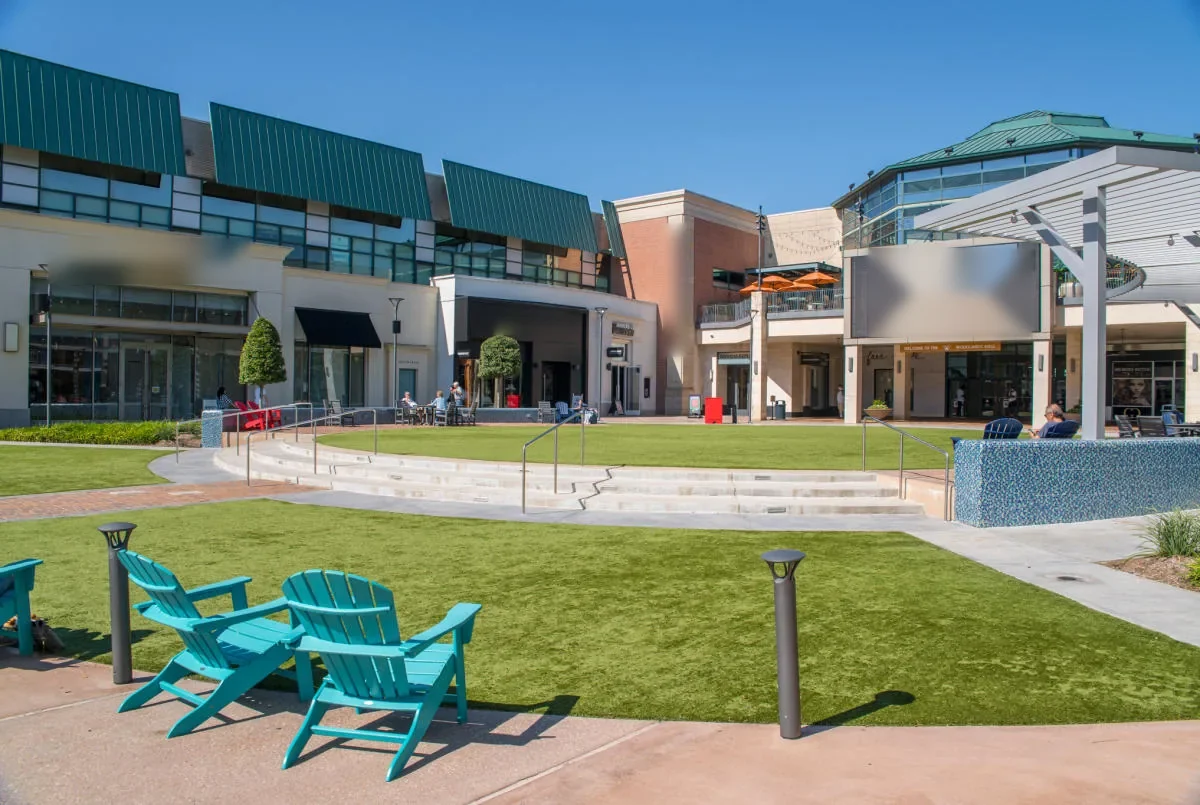
Valley Ranch Town Center sits at the I-69 and Grand Parkway junction, a recognized commercial point in the community’s corridor. A nearby location does not establish another property’s traffic pattern. We ask the manager whether customers, trucks, or service vendors use the same route and agree on a staging area before mobilization. For larger work, phased reroofing can limit exposure when roof layout and tie-in points permit safe daily closeout.
Follow Water Back to the Roof Detail
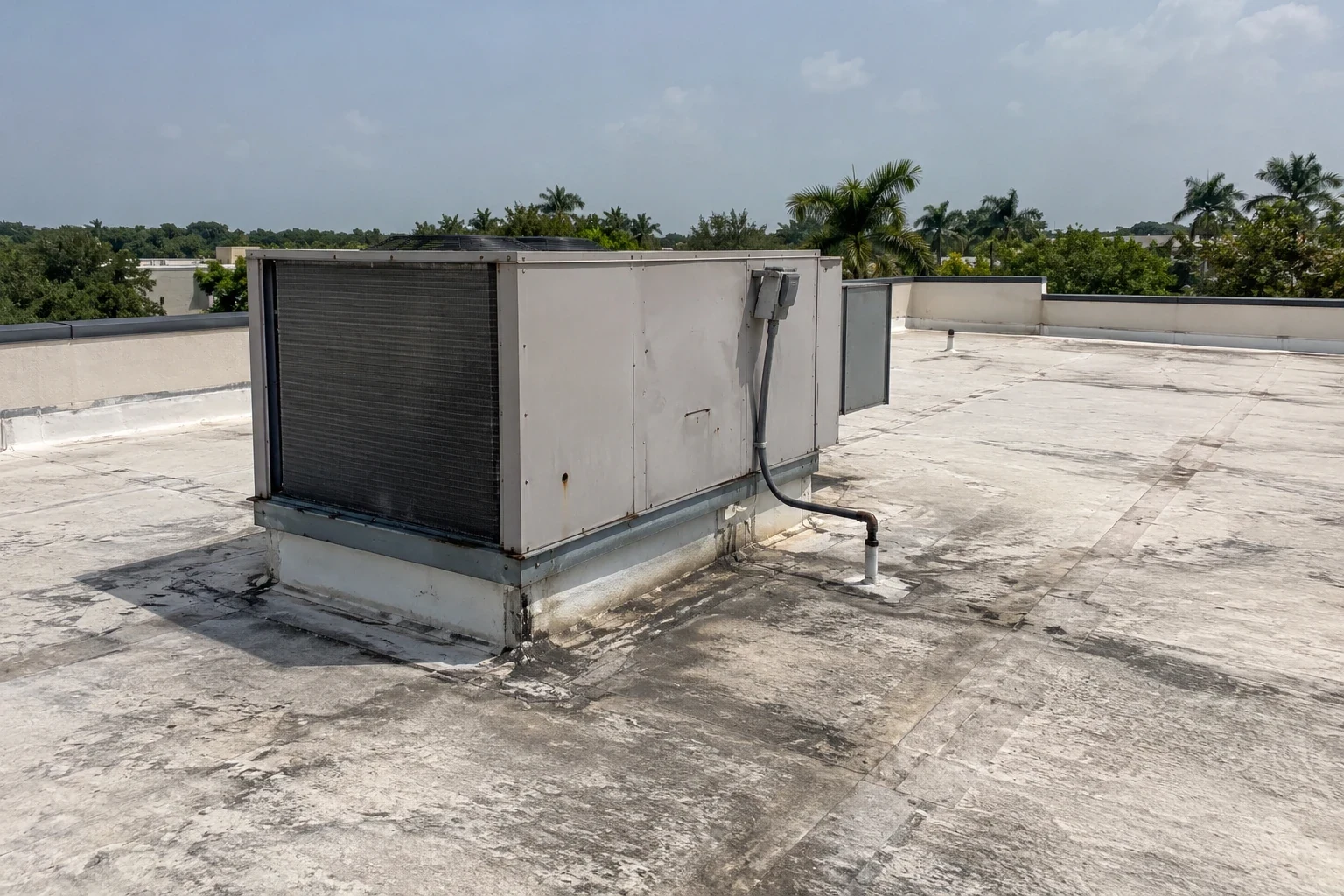
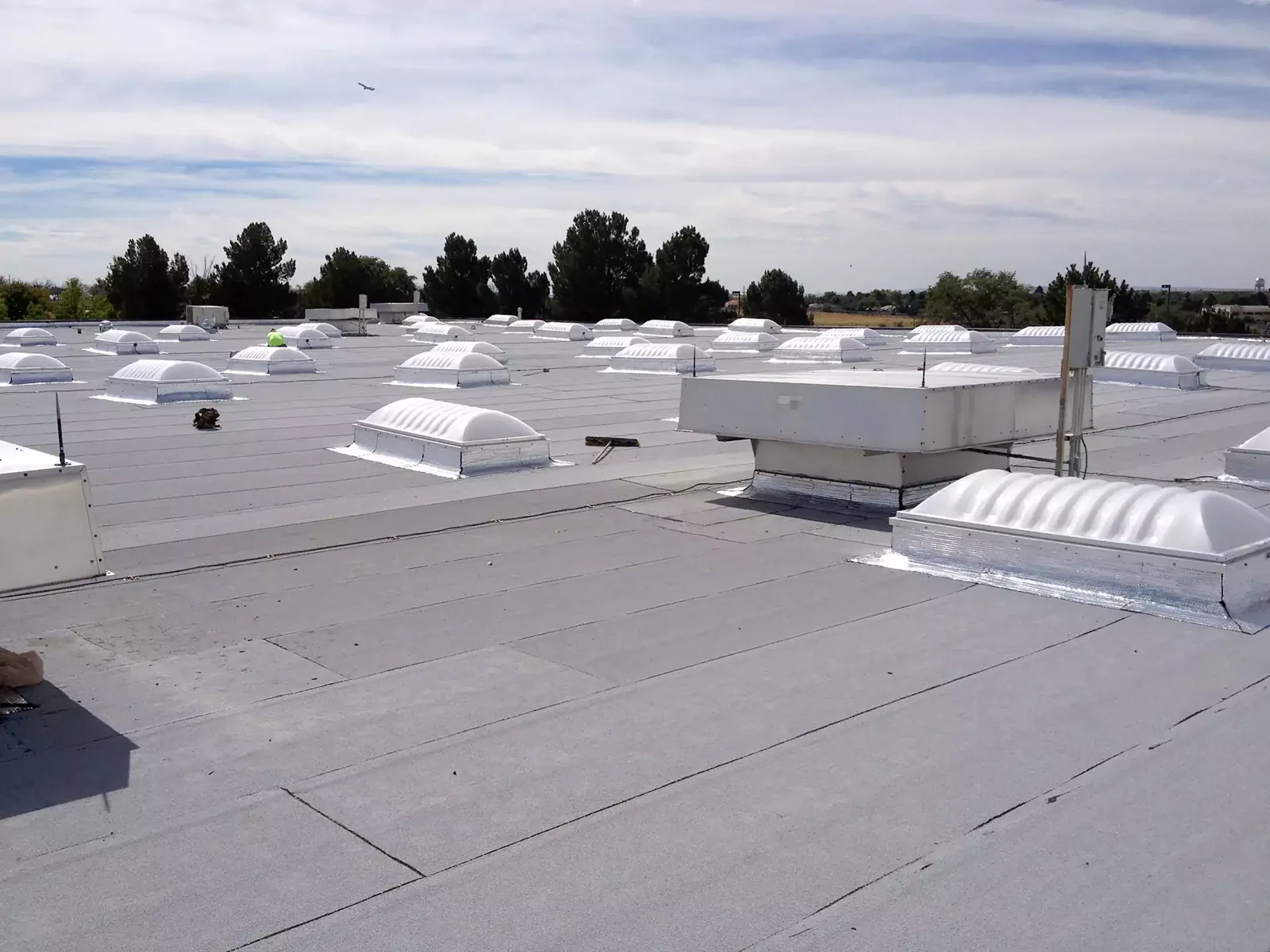
A ceiling stain is evidence of water inside, not proof of the roof opening above it. We compare the reported room with roof slope and nearby details, then check seams, penetrations, wall transitions, curbs, skylights, and drains. Water can travel along a deck or framing before appearing below. We look for punctures, lifted laps, loose flashing, open metal joints, and earlier patches that have separated from the surrounding material.
New Caney’s unincorporated status does not change the inspection method: identify the roof system first, then choose a compatible repair. TPO, EPDM, PVC, modified bitumen, coatings, and metal each require different surface preparation and tie-in details. If moisture may extend beneath the visible defect, we explain whether scanning or a controlled opening could clarify the boundary. A commercial roof inspection records what was checked and what remains uncertain, so a maintenance decision does not rest on the ceiling mark alone.
Check Heat-Worn Seams and Rain Flow
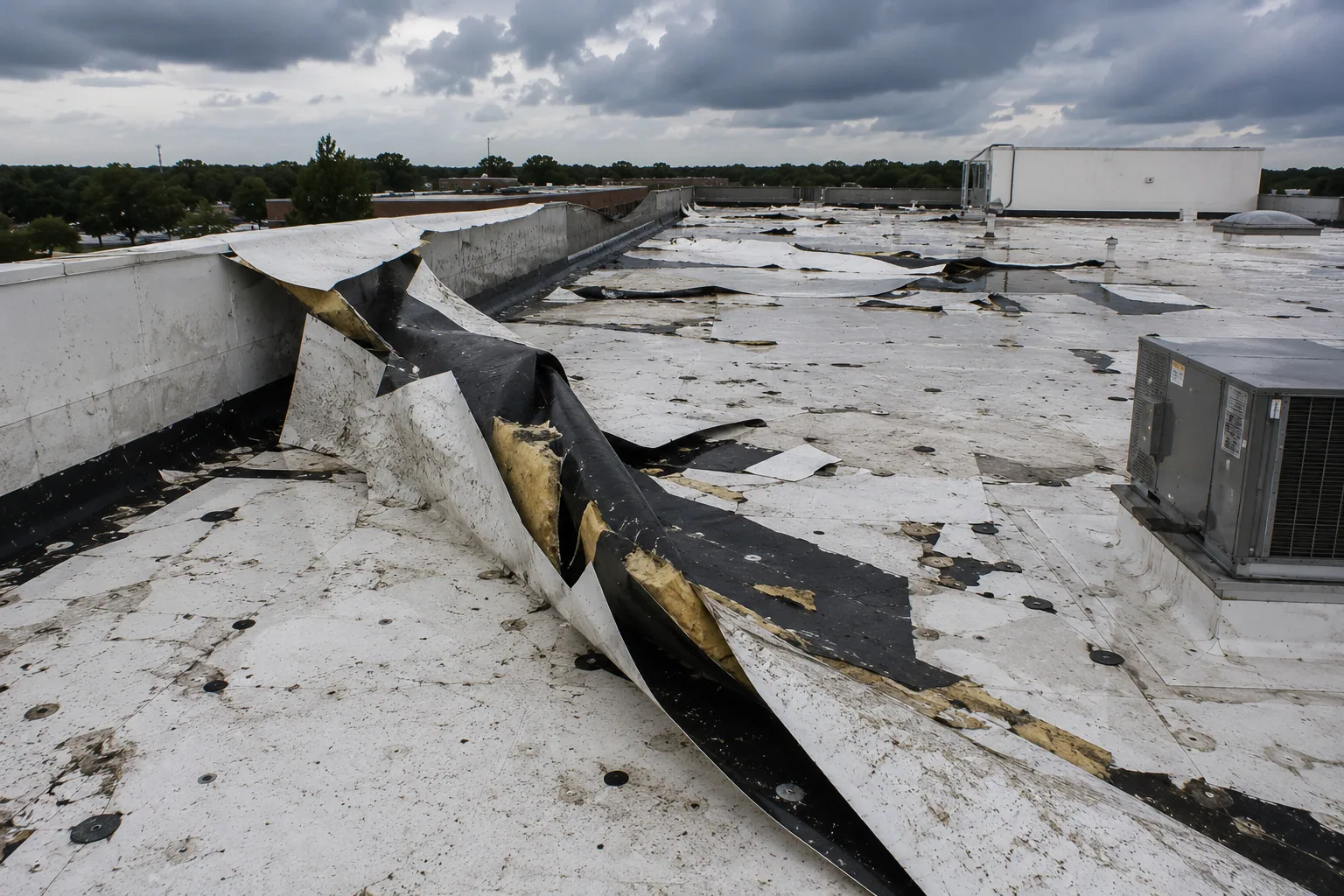
Houston Intercontinental’s nearby climate normals put the average high at 94.5°F in July and 94.9°F in August. Those airport figures offer regional context for the Conroe service market; they are not roof-surface temperatures in New Caney. Long hot periods can load membrane seams, fasteners, curb corners, and metal edges. We check for lifted welds, brittle or separated flashing, and patches that no longer bond before choosing a repair method.
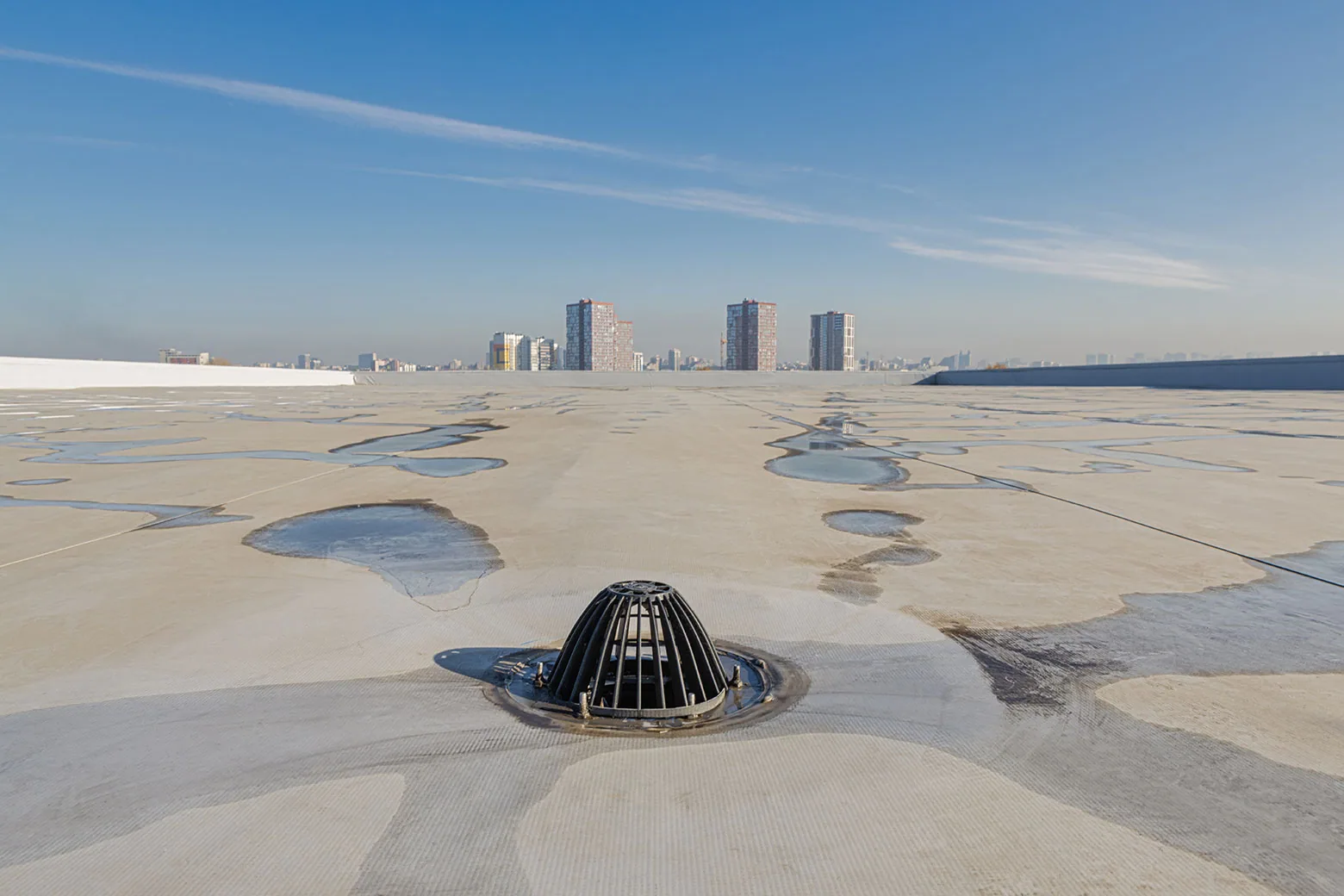
Heavy rain makes drainage problems visible. We clear the inspection path and check drain strainers, bowls, scuppers, overflow routes, and low areas where water remains after the surrounding surface dries. A blocked outlet can be corrected differently from a settled assembly or a deck concern. Wind-driven rain may also enter at a wall or curb transition. We identify the likely path, then recommend an appropriate next step. For a focused outlet review, roof drain and scupper service can be part of the inspection.
Set the Repair Boundary from Observed Conditions
A targeted patch may be appropriate when a defect is contained, adjacent membrane is sound, and the substrate is dry enough to receive a reliable tie-in. We look wider when water entry recurs, several seams show movement, insulation is wet, or edge metal has loosened. The written scope should state the area covered, the material and repair method, and any concealed condition that would need approval before work expands.
Adding a new layer is considered only after the existing roof has been checked for trapped moisture, attachment, deck support, drain height, and edge compatibility. If those details are unclear, testing or selective removal can prevent an overlay from hiding a defect. Tear-off exposes what is below but adds disposal, interior protection, and noise to the project. We compare that impact with the building’s condition and operating schedule. A commercial roof repair may resolve a local failure; a replacement scope fits when inspection supports broader renewal.
Keep Each Shift Watertight
The crew and property contact should agree on the roof area to open, temporary protection, weather fallback, and person authorized to approve concealed-condition work. Work is planned in a section that can be closed securely before the crew leaves. If a storm advances or a test opening reveals wet insulation, the team protects the roof and pauses at the approval point instead of continuing into an unplanned area.
When water is entering now, temporary control can reduce interior exposure while the permanent repair is evaluated. It is a separate step from the completed repair. Emergency roof service can address safe access and immediate water control before the roof dries. The follow-up visit verifies the assembly, drainage, and material needed for a lasting correction. This sequence keeps urgent response moving without promising a final diagnosis before the roof can be inspected.
Leave a Useful Record for the Property Contact
At closeout, we identify which roof zones were inspected, what was repaired, which materials were used, and what remains outside the completed work. Photos should show a roof reference and the detail, whether that is a drain, seam, curb, or wall transition. If a condition below the surface was not tested, the report states that limit. A later crew can return to the same place rather than reopening a broad question.
The improvement district’s population figure provides community context, not a count of commercial roofs or a maintenance survey. New Caney owners should base plans on the condition of the property in front of them. Roof condition reporting can separate urgent corrections from items to monitor and capital work to budget. Clear records also help coordinate roof access with future service vendors, loading needs, and weather windows.
Commercial Roofing Questions
Is New Caney a city for purposes of commercial roofing service?
New Caney is an unincorporated Montgomery County community within the East Montgomery County Improvement District. We use the property location and access details to plan the roof inspection and service.
Does the area population figure describe commercial building count?
No. The population is an area figure from the improvement district, not an inventory of businesses or roofs. We inspect each property and measure its actual roof before setting scope.
How do you schedule roofing near the I-69 corridor?
We confirm the site entrance, truck routes, loading hours, lift position, and material staging with the property contact. The work sequence is based on those site conditions, not just the nearby highway.
What do you inspect when a leak shows up inside?
We trace the report to nearby roof seams, penetrations, curbs, transitions, and drains. If water could be concealed below the membrane, we identify whether testing or a controlled opening is warranted.
When is a roof replacement better than a repair?
A replacement discussion makes sense when defects are widespread, repairs recur, or moisture affects more than one localized area. We document the observed condition and any test that could change the recommendation.
Related Roofing Work