Commercial Roofing in Historic Downtown Montgomery, Montgomery, TX
Commercial roofing for Historic Downtown Montgomery, TX. We inspect flashing, drainage, and access needs around shops, restaurants, and active district events.
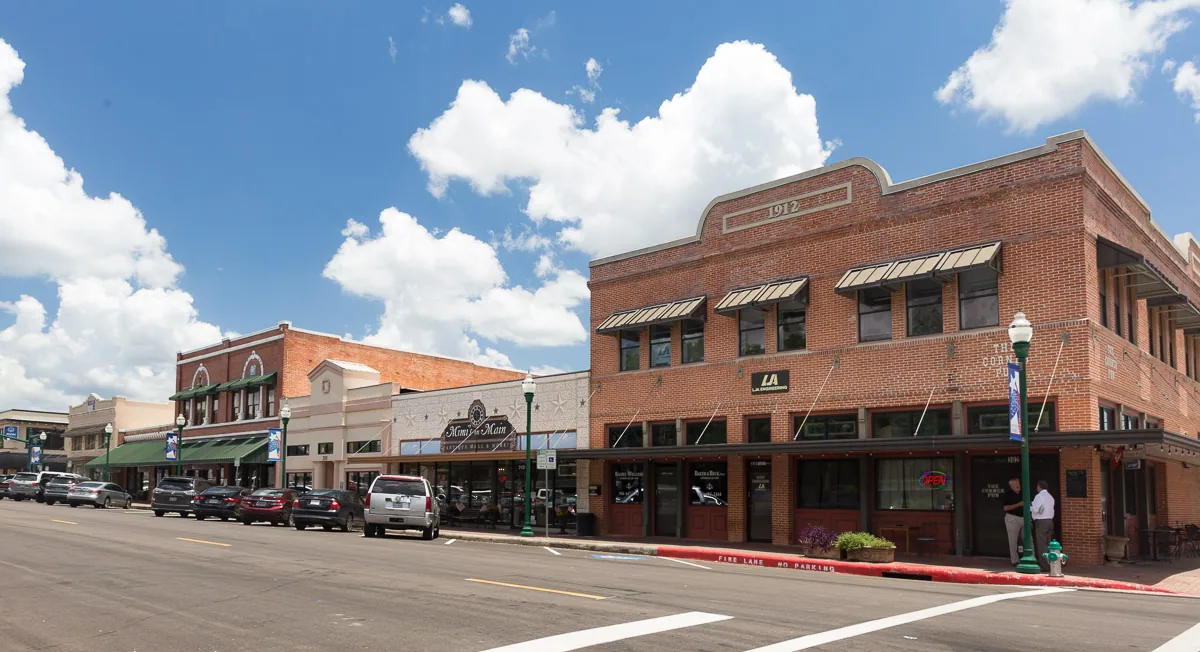
A roof repair in Historic Downtown Montgomery can meet an older wall, a later addition, or an edge altered by previous work. Historic Downtown Montgomery includes locally owned shops, restaurants, and community events, while the city invests in commercial development and preservation of the district's character. We inspect the building's actual roof-to-wall details, drainage, and membrane before choosing a repair. The town sits near SH 105 and FM 149, about 15 miles west of Conroe. Conroe's heat and heavy rain can work on flashing and seams, but the condition at the property sets the scope. We also plan access around entrances and scheduled public activity.
Schedule Around the District
Roof work needs a safe route for customers, tenants, crews, and materials. The property contact confirms which entrance must stay open, when deliveries arrive, and whether an event or restaurant service period limits lift placement or noisy removal. We identify the place where debris can leave the building and how the roof can be closed at the end of each workday. These details help protect the public route without assuming every business has the same hours.
Historic Downtown Montgomery has locally owned shops and restaurants, with commercial investment continuing across the town. A Montgomery commercial roof plan can address the broader town; Willis roof service follows another municipality's route and operating patterns. In this historic district, access decisions begin with the owner or manager at the building and the activity planned nearby.
Inspect the Wall and the Roof Edge
Water often enters where a roof changes plane. We look at parapet caps, coping joints, counterflashing, masonry transitions, gutters, and membrane turn-ups for openings or movement. A historic exterior may require attention to how new flashing meets existing material, but the actual wall construction must be observed before selecting a detail. We do not cover a loose edge with sealant and call the connection sound. The substrate, attachment, and path water takes all matter.
If a ceiling mark appears near an exterior wall, we compare it with flashing and nearby roof seams rather than assuming the stain marks the opening. A commercial roof inspection documents the roof location, interior report, and any test needed to establish the repair boundary. An active gap may need flashing failure repair at the vertical transition, while a different leak path may need a field seam or drain correction.
Keep Drainage Clear
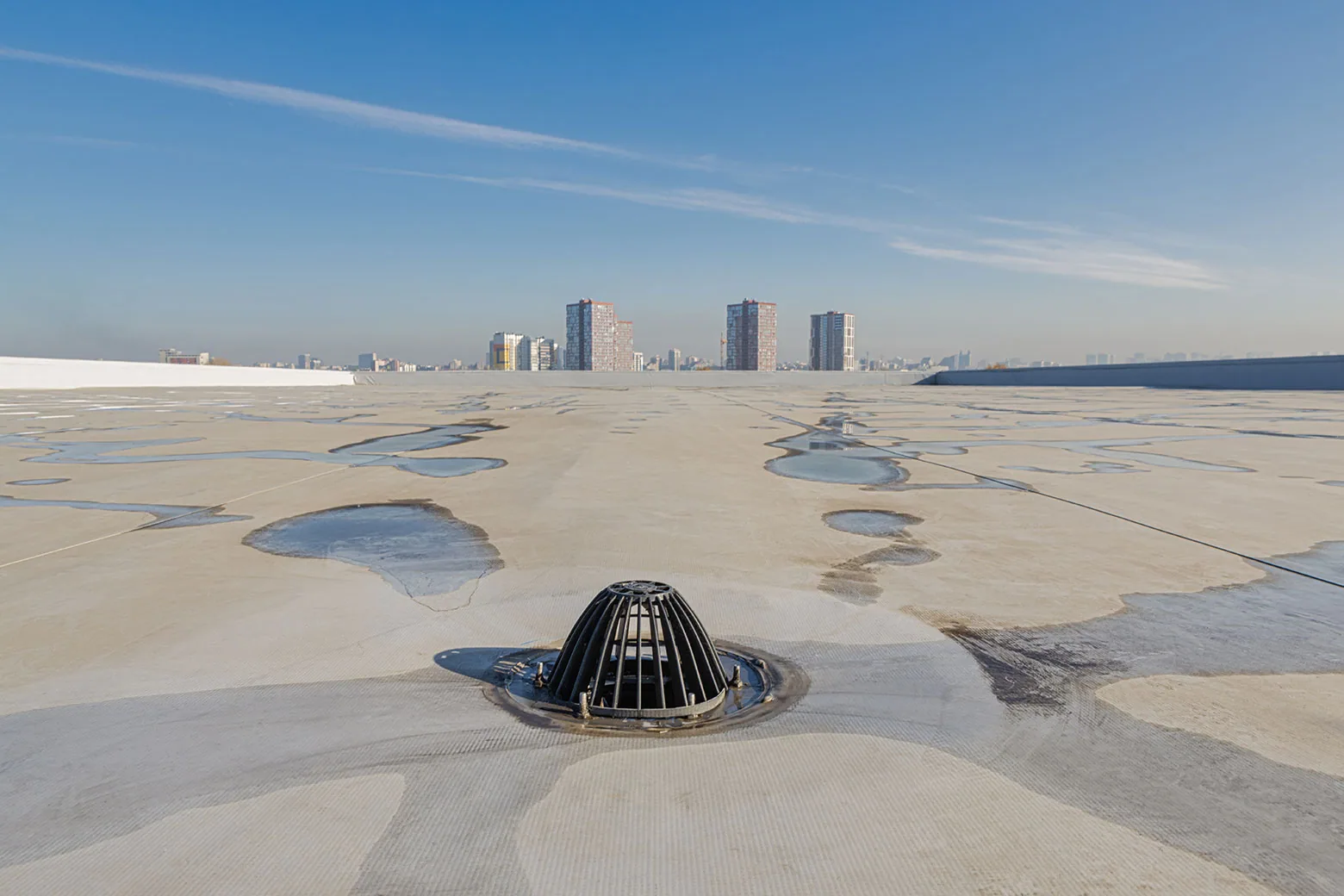
Heavy rain finds a weak outlet or low corner quickly. We inspect strainers, drain bowls, scuppers, overflow routes, and the way water leaves the roof near a wall. A blocked drain can cause ponding, while a failed clamping ring can allow water below the membrane. A low spot may also reflect deck or insulation movement. The same water pattern can have different causes, so we check outlet, slope, and membrane connection together. A drain and scupper review can be scoped alongside repair when inspection supports both.
Nearby Houston-region July and August highs average close to 95 degrees. This is a regional indicator for Conroe-area heat, not a reading for a particular Montgomery roof. Expansion and contraction work on metal and sheet transitions throughout the season. We look for split sealant, pulled flashing, wrinkles, and repair edges that have lifted. Conroe's climate station at Lone Star Executive Airport sits north of the city. The weather context sets work timing, while actual roof conditions set the repair.
Choose the Right Amount of Work
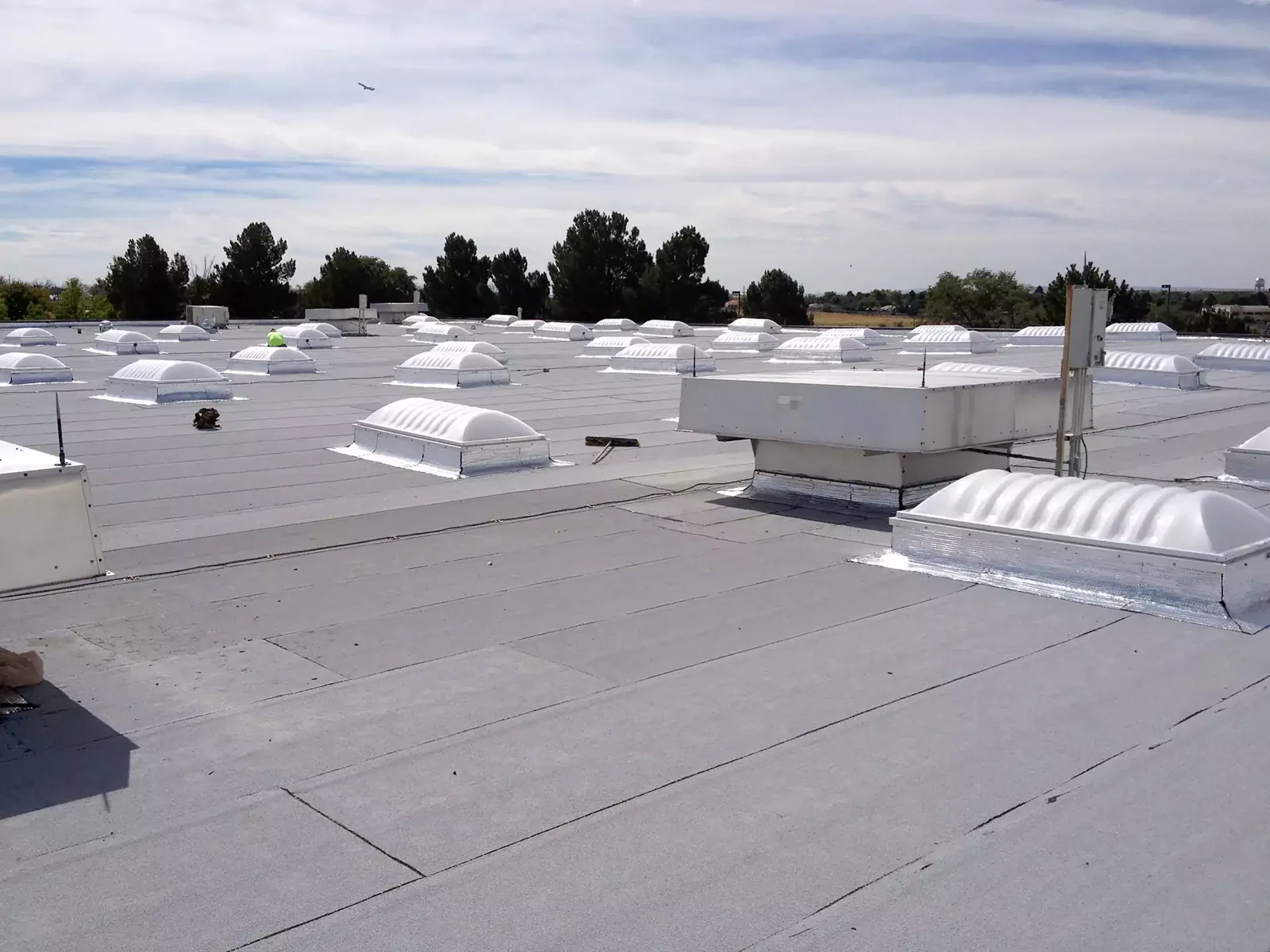
A localized opening at a wall, curb, or seam can be repaired when nearby membrane is dry and stable. Repeated leaks, wet insulation, separated laps, or worn edges may justify renewal across a larger roof section. We mark confirmed conditions and identify areas that need testing. The proposal distinguishes a visible repair from additional work that may follow if concealed material is damaged. This helps an owner compare a near-term fix with a planned project.
A recover is evaluated after checking moisture, existing layers, attachment, deck support, drain height, and code. Covering an unknown surface may trap a problem. Tear-off exposes concealed conditions but affects access, cleanup, and interior protection. A replacement scope should include roof edges, drains, curbs, and daily dry-in, not just field membrane. If a leak needs an immediate response, commercial leak repair can address the observed entry while a larger scope is prepared.
Respect the Building Without Guessing
The town is investing in commercial development while preserving historic character. That goal makes roof transitions worth careful review where an older exterior meets newer flashing or equipment. We inspect the material in place, the condition of the wall, and how the roof sheds water. The district's designation does not establish a building's age, structure, or roof assembly, so those details are confirmed at the site.
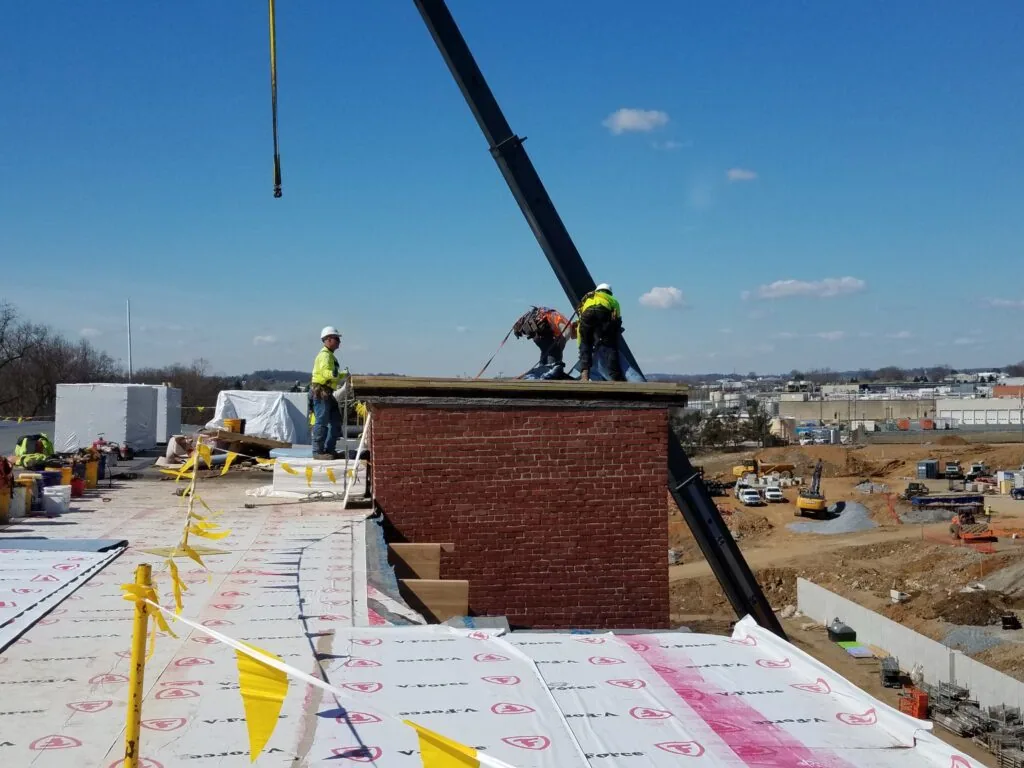
Work planning can include a narrow staging area, a scheduled event, or a route that cannot be blocked during business hours. The manager identifies those constraints, then we set the sequence, lift location, and debris path. If a concealed wall or deck condition changes the planned detail, we document it and pause for approval before extending the work. A phased roofing plan can divide a larger project into manageable roof areas while keeping protection below explicit.
Set Access and Scope Before Work
Project cost and timing depend on the roof area, membrane type, amount of removal, wet insulation, flashing detail, debris path, and access window. Historic streetscape activity may make a lift setup or material drop more constrained, but the property inspection determines what is needed. We identify those drivers in the estimate instead of hiding them inside one broad labor allowance. The owner can see which work addresses the leak and which protects the rest of the assembly.
Weather can shorten the day. We open only the roof section that can be prepared, repaired, and made secure before rain or closeout. If a test shows a soft deck or wet board, photos and measurements go to the property contact before additional removal. That gives the manager a decision point while the building remains protected. A return visit can be planned around the same entrance, event calendar, and roof access route.
Keep Repairs Tied to the Building
Closeout should identify the roof area, material where known, repair method, photos, and any part that needs a later test. Each photo needs a location reference so the next person can find the wall, drain, or seam. We note whether the work was permanent or temporary and which area remained unopened. This gives the owner a usable record rather than a general status line.
A roof condition report can retain the roof map and follow-up points. Keep the record with the individual building even when neighboring shops share a district. Maintenance can return to the same flashing joint after a hard rain, check whether the repaired edge is stable, and distinguish it from a separate roof section that still needs review.
Commercial Roofing Questions
How do you stage roofing work near Historic Downtown Montgomery shops?
We confirm entrance access, deliveries, event timing, lift placement, and debris movement with the site contact. The work area is sequenced to protect the public route and close securely each day.
Does historic district status tell you how an older roof is built?
No. The district's preservation goals do not establish a building's age, wall assembly, or roof material. We inspect those details before choosing a flashing or membrane repair.
What do you check at a leak near a storefront wall?
We inspect parapet caps, coping, counterflashing, membrane turn-ups, nearby seams, and the path to a drain. The interior stain helps locate the area but may not mark the entry point.
Can roofing be scheduled around a public event?
We coordinate the site schedule, customer entrances, material staging, and noise limits before opening the roof. A weather-safe closeout boundary remains part of the plan.
When does a local flashing repair become a larger project?
Repeated leaks, wet insulation, loose attachment, or deterioration across several roof areas can widen the scope. We map confirmed defects and note what still requires testing.
Related Roofing Work