Commercial Roofing in Roman Forest, TX
Commercial roofing in Roman Forest, TX for inspections, leak response, and repair. We verify roof materials, drainage, access, and repair limits.
A commercial roof in Roman Forest deserves a condition-based plan, not a forecast based on the town’s size or a nearby highway. Roman Forest is one of the named cities in the East Montgomery County Improvement District area. The district’s overview lists an estimated population of 1,977 for 2018, and identifies Roman Forest Boulevard among the intersections serving the broader I-69/US 59 retail corridor. Those facts connect the community to its surrounding service area; they do not describe the roof at any particular property. We inspect the roof system, trace water movement, and confirm access before advising on work.
At the first visit, we identify seams, penetrations, curb flashing, edges, drains, and prior repair areas. We ask who controls roof access, what hours allow noisy work, and whether equipment or interior operations need protection. A nearby Porter commercial roof inspection or New Caney roof service may use similar inspection steps, but the findings stay tied to the Roman Forest property.
Connect Site Access with the Local Route
Roman Forest Boulevard links the community to the wider East Montgomery County commercial area. Before material delivery, we confirm the address, approved entrance, receiving hours, lift position, and route for moving debris. The corridor’s commercial connections do not show how a particular site is laid out. We ask the property contact which doors or drives must remain clear and whether a truck route changes by shift.
That coordination matters even for a short repair. A crew needs room to reach the roof safely, keep materials stable, and close the work before leaving. If the property remains occupied, the manager can identify a sensitive room, required notice, or equipment shutdown limit. A sequenced reroof plan can divide larger work when the roof has a secure boundary between phases. We plan the sequence from site constraints rather than assuming a generic daytime window.
Track the Leak to a Verifiable Roof Detail
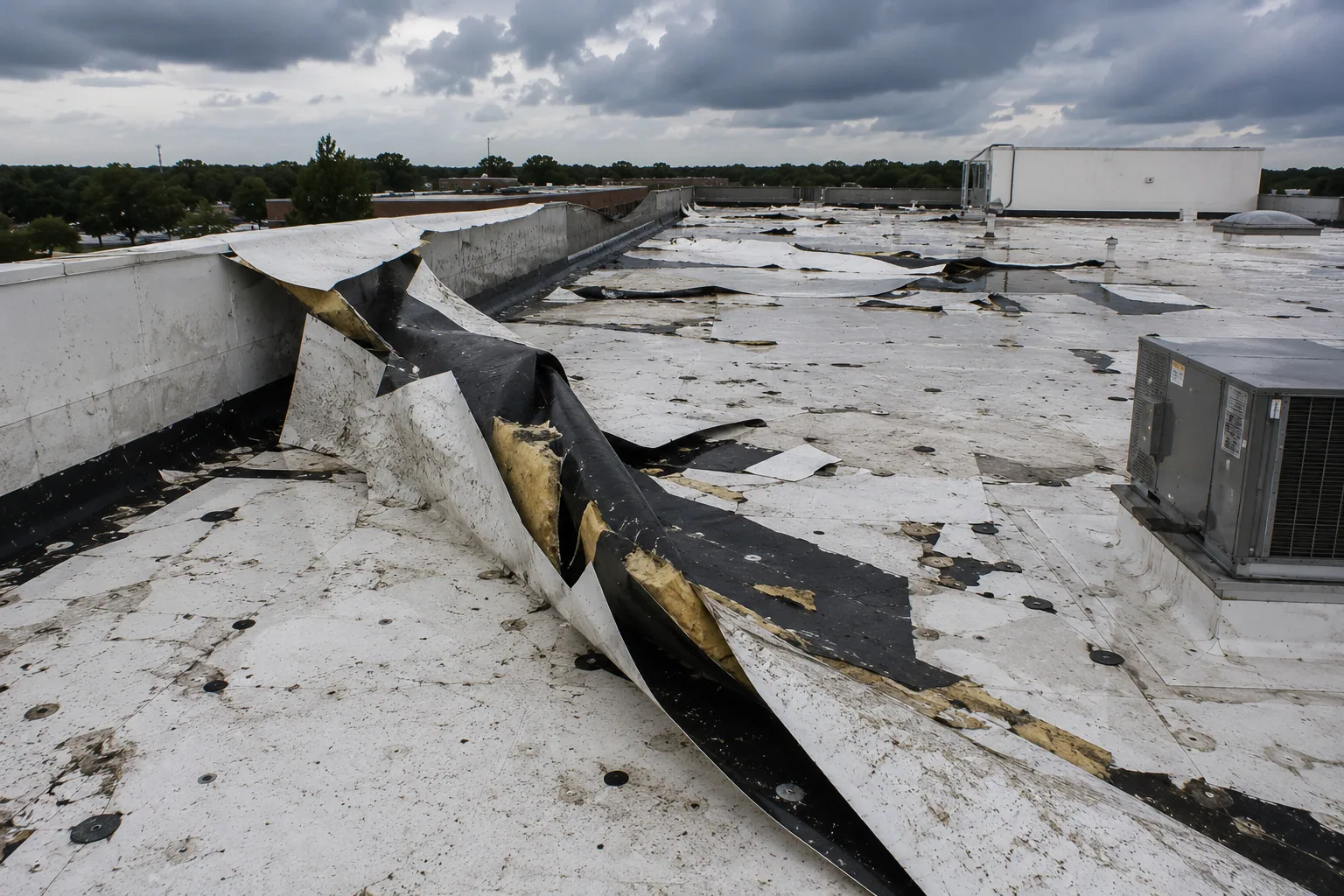
Water may travel from its entry point before it shows on a ceiling. We compare the interior report with roof slope and inspect the details in that area: membrane laps, pipe boots, equipment curbs, wall transitions, skylights, and outlets. We look for lifted seams, punctures, loose edge metal, cracked sealant, or a prior patch that no longer bonds. If a leak appears after a storm, that timing helps narrow the review, but the roof still needs a direct inspection.
The 2018 area population estimate is not a building survey, and Roman Forest’s municipal status does not reveal roof construction. We identify membrane or panel, attachment, and visible layers before selecting the repair material. If the surface is intact but moisture may be trapped underneath, testing can help decide whether the visible area is the real boundary. A commercial roof inspection records observations, test limits, and recommended next steps for the owner.
Plan for Heat, Wind, and Water on the Roof
For the Conroe service market, nearby long-term heat figures come from Houston Intercontinental: the typical high is 94.5°F in July and 94.9°F in August. These are regional normals, not Roman Forest roof readings. Summer expansion can stress seams, metal edges, fasteners, and curb corners. We inspect for separation or loss of bond, then check whether a repair product is compatible with the installed material and surface condition.
Rain pushes water toward low points and drainage outlets. We check that the path is open, inspect bowls and strainers, and look for standing water after adjacent roof areas clear. An obstruction may be different from a depression in the assembly or wet insulation below it. Wind can expose weakness at a perimeter or wall detail, so we inspect those transitions instead of focusing only on the field membrane. For outlet issues, drain and scupper service can address the drainage detail after the inspection identifies its condition.
Use Evidence to Choose the Repair Size
A localized fix can be suitable when the opening is isolated and the surrounding roof remains stable and dry. We look for enough sound material to make a compatible tie-in and check whether the defect has related failures nearby. If moisture extends beneath the surface or similar openings recur across multiple seams, a broader review is warranted. The scope should define what will be repaired and what remains outside the work boundary.
Before considering a new layer, we review concealed moisture, attachment, deck support, outlet height, and edge termination. An overlay can be difficult to reverse if the underlying assembly is wet or unstable. Selective testing may clarify the decision; tear-off provides more access but adds removal and interior protection. We compare the least disruptive option that can address the verified issue. A commercial repair is appropriate for contained damage; a replacement evaluation belongs on the table when the inspection finds broader deterioration.
Protect the Roof Between Work Periods
Before work starts, the crew and owner agree on the day’s opening limit, temporary dry-in, weather response, and approval contact. The section exposed should fit the time needed to complete a watertight tie-in. If rain threatens, we stop opening new areas and secure the roof. If a test reveals a concealed issue, we photograph it and pause for authorization before increasing the removal area.
An urgent leak may require temporary control before a permanent repair can be made. The first visit can protect the building and identify the next inspection step; it does not automatically establish the full scope. Emergency roof service can address safe access and immediate water entry. After the roof dries, we verify the assembly, substrate, and details that need lasting correction. The owner receives a distinction between temporary protection and completed repair.
Keep the Inspection Record Property-Specific
A useful closeout names the roof areas visited, the details repaired, the material used, and any untested condition. Photos should show where each detail sits on the roof, not only a close-up of a seam or curb. If an area remains concealed, the report should identify that limit. That allows a future service visit to start from the same evidence.
Roman Forest Boulevard and the I-69/US 59 corridor help describe local connections, while maintenance decisions depend on each property’s roof. We can separate immediate water-control actions from items to monitor and longer-range renewal. Roof condition reporting gives owners a consistent record for future planning. The decision should rest on inspected material, observed moisture, drainage performance, and access requirements, rather than a townwide assumption.
Commercial Roofing Questions
Is Roman Forest part of the East Montgomery County Improvement District area?
Yes. The district identifies Roman Forest among its named cities and communities. That regional connection does not determine the roof condition of a property, so our recommendation follows a direct inspection.
Does the population estimate indicate how many commercial roofs need service?
No. The district’s 2018 estimate describes population, not roof count or building condition. We assess the property’s assembly and visible defects before setting a scope.
Can you work around traffic on Roman Forest Boulevard?
We coordinate the approved entrance, staging, deliveries, and lift placement with the property contact. The road connection helps locate the area, while the site’s own access plan controls the work.
How do you tell whether a seam failure caused a leak?
We compare the interior report with the roof’s slope and inspect seams, penetrations, transitions, and drainage nearby. If water may have moved below the surface, testing may be needed to confirm the path.
What information is useful after a roof repair?
Keep the roof-zone reference, photos, material and repair method, and any limits or follow-up recommendations. That record helps a future inspection return to the same detail.
Related Roofing Work