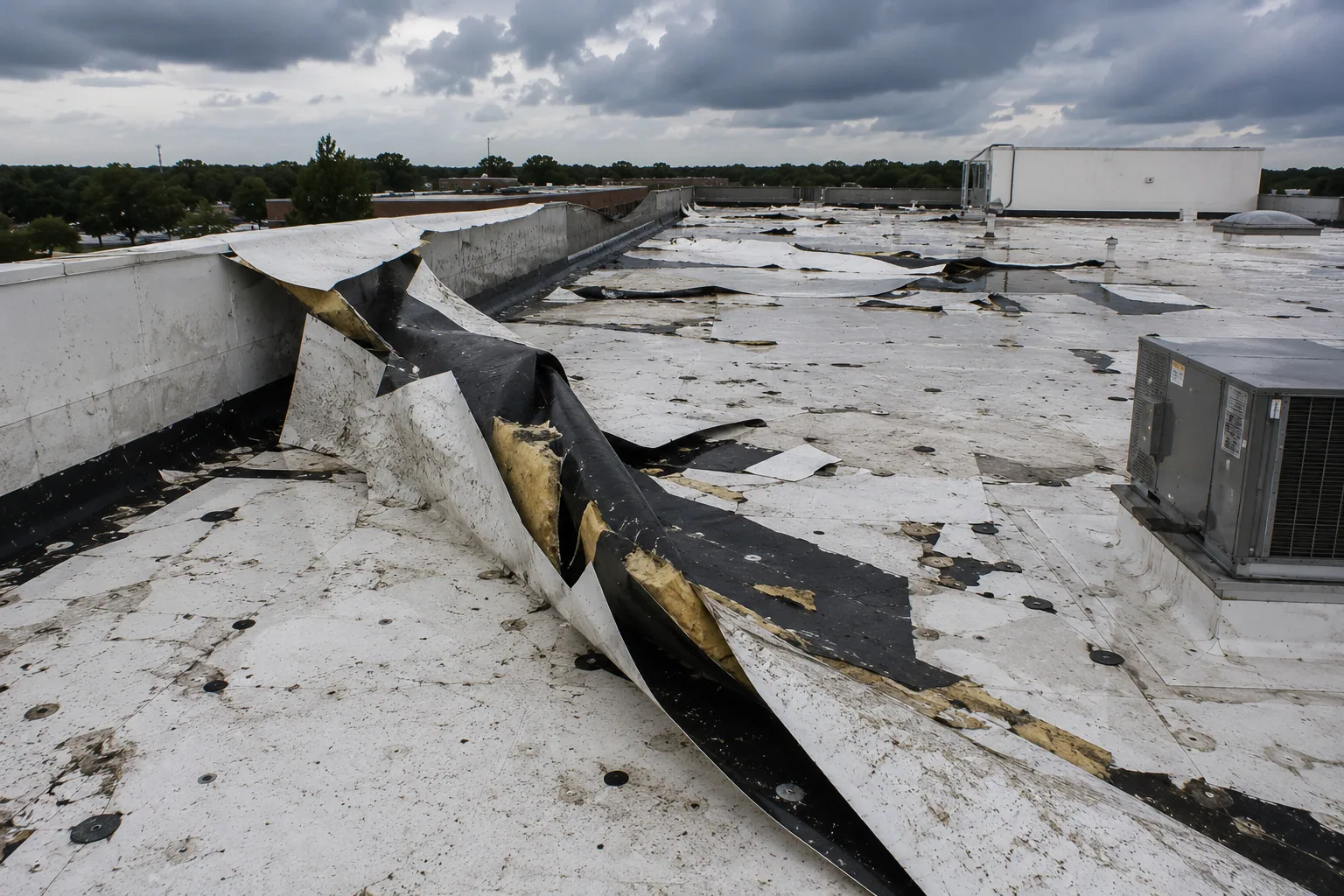
Commercial Roofing in Splendora, TX
Commercial roof inspections and repairs in Splendora, TX. We trace leaks, check roof details and drainage, and coordinate work with your site.
A commercial roof in Splendora needs a plan tied to the assembly and the business’s access needs, not assumptions about a growing corridor. Splendora is a named city in Montgomery County within the East Montgomery County Improvement District. The district’s 2018 overview gives the city an estimated population of 2,127, while its commercial map shows opportunities along I-69/US 59 and FM 2090. Those facts describe community and corridor context; they do not identify the roof system or condition at a particular property. We inspect the membrane or panels, drainage, edges, and penetrations before setting repair limits.
Work near a road or business entrance needs coordinated staging, delivery timing, and a daily closeout plan. We confirm which route the crew may use, where materials can be placed, and whether equipment or interior spaces need protection. For nearby service comparisons, see New Caney commercial roofing and Porter roof repair and inspection. Each property receives findings based on its own roof walk.
Coordinate a Safe Route from FM 2090
The regional commercial opportunities map connects eastern communities with I-69/US 59 and FM 2090. Before starting work, we confirm the site entrance, approved delivery window, lift route, and any part of the drive that needs to remain open. A highway corridor establishes regional access; it does not say which driveway a crew should use or where a container can safely sit. Those decisions are made with the property contact.
We also ask what operations must continue below the roof. A small repair can still affect a service entrance, loading area, or equipment shutdown window. If the project covers more than one zone, the crew can sequence tasks when each area has a secure tie-in and can be closed before the shift ends. An occupied-building reroof plan can coordinate access and daily dry-in across a larger scope.
Use the Interior Report as a Starting Point
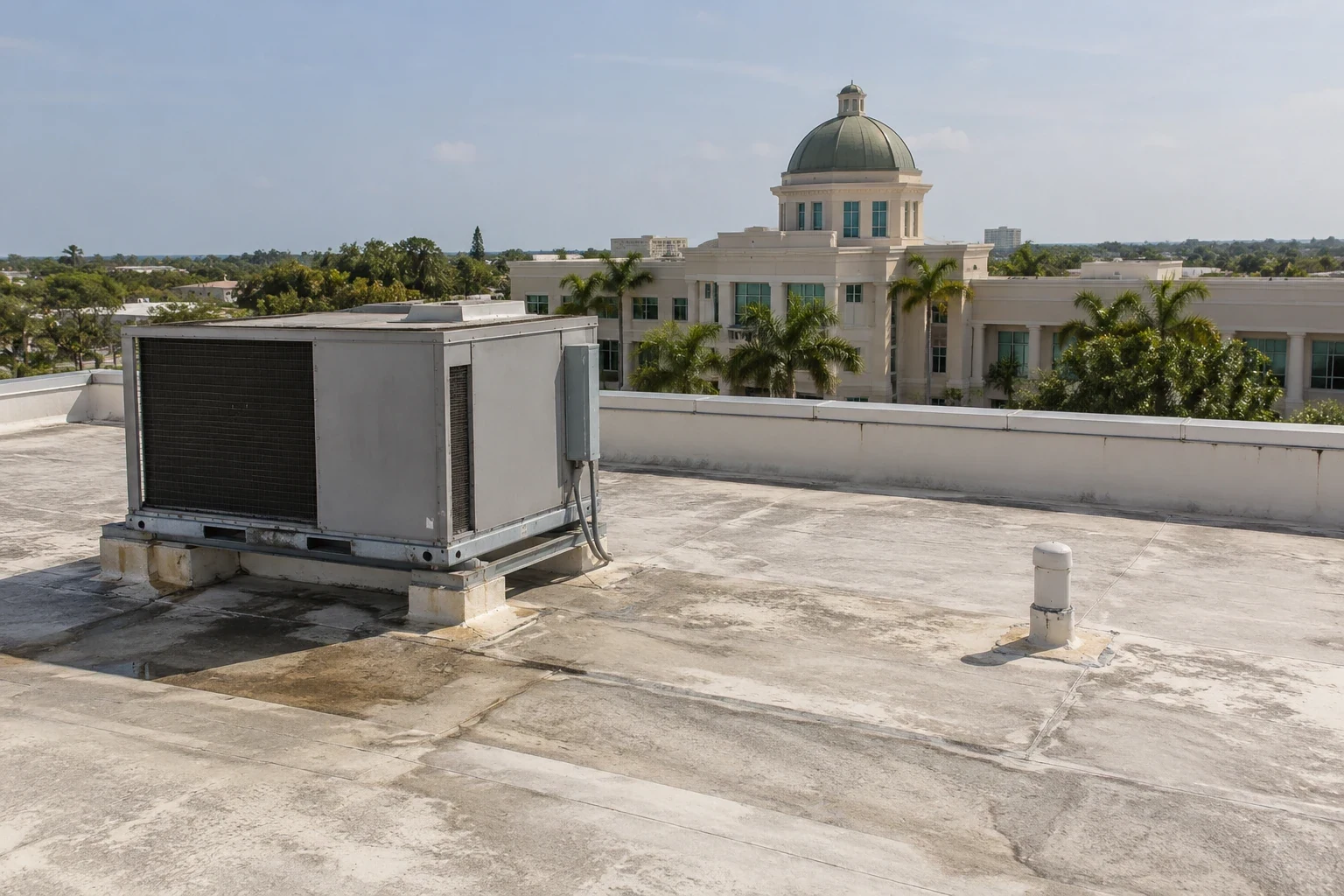
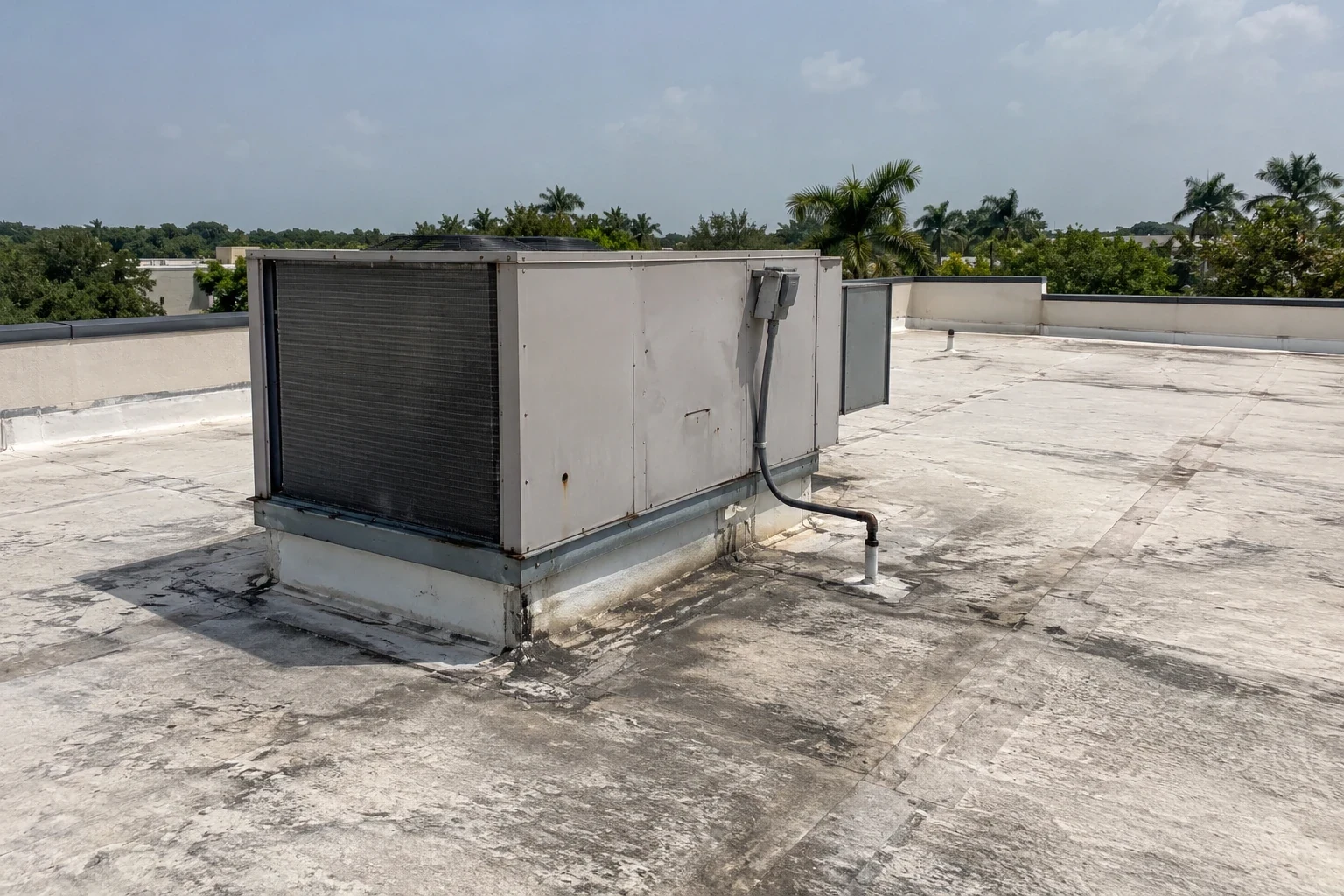
Water appearing inside may have entered through a roof detail some distance away. We compare the reported room with roof slope, then inspect nearby seams, curb bases, pipe and conduit penetrations, wall transitions, skylights, and drains. We note open laps, punctures, loose flashing, failed sealant, or prior work that has separated. If the path is not visible, we discuss moisture testing or a limited opening rather than claiming certainty from the stain. We can also compare the affected zone with roof plans or earlier repair photos supplied by the owner, then note where field verification differs from those records.
The city’s population estimate is not a count of commercial roofs or building types. We identify the actual system at the property, including membrane or metal, attachment, and accessible layers. Compatible repair depends on those details and on whether the material around the defect remains sound. A commercial roof inspection gives the owner a record of the roof areas checked and flags conditions that need more investigation.
Inspect for Heat Movement and Rain Entry
The July mean high at the nearby Houston airport is 94.5°F; August reaches 94.9°F. Treat these as Conroe-market context, not roof readings in Splendora. Sustained summer heat can place movement at seams, fastener lines, curb corners, and metal edges. We check those transitions for separation, brittle sealant, and patch materials that do not bond with the surface below.
Rain tests whether the roof carries water toward an open drain, scupper, or perimeter outlet. We check strainers and bowls, follow low points, and look for water that remains after nearby sections clear. A clogged outlet, settled insulation, and deck movement can produce similar signs but need different work. Wind-driven rain can also reach a wall or equipment curb where flashing has pulled loose. If the outlet needs attention, drain and scupper service can follow the condition we document.
Choose Between a Local Correction and Renewal
A local repair is a candidate when inspection confirms a contained failure, stable attachment, dry material below, and a suitable tie-in surface. When moisture affects additional areas, leaks return after prior work, or several perimeter details have loosened, we map a wider boundary and explain whether testing could change it. A useful proposal distinguishes the repair area from roof sections not included.
For a new roof layer, we first evaluate existing moisture, attachment, deck support, outlet height, and perimeter geometry. If any of those conditions are unknown, testing or selective removal can prevent hiding damage. Tear-off gives access to concealed layers but requires debris handling, interior protection, and more coordination. We weigh those effects against the condition found. A commercial roof repair may resolve one opening; a replacement scope is worth evaluating when deterioration extends across multiple roof areas.
Prepare for the Forecast and Daily Closeout
The work plan should state how much roof can be opened during a shift, how the crew will secure it if rain approaches, and who can approve added removal. Weather and material requirements set the work window. Work-hour restrictions and equipment access can further shape the sequence. We avoid exposing more area than can be restored or made watertight before leaving. If a test reveals wet insulation or a damaged deck, the exposed condition is recorded and held for the owner’s direction.
For an active leak, immediate protection and permanent repair are separate steps. A first response can reduce water entry and make the area safe while the roof dries for inspection. Emergency roof service can address that initial need and outline the follow-up. The final correction depends on the membrane, substrate, drainage, and flashing that the site inspection verifies.
Keep Roof Findings Separate from Area Statistics
The district’s 2018 population estimate and its map of development corridors help locate Splendora in the regional service area. Neither one establishes the condition of a roof. At closeout, we document the actual areas visited, repair method, materials used, and any concealed condition left untested. Photos should show where a drain, curb, or seam sits on the roof, not just a close-up.
This record lets an owner compare later inspections and separate immediate water-control tasks from maintenance or capital planning. Roof condition reports can make the observations easier to use during budgeting. If the inspection identifies a repeat failure, the report should show the prior repair and what changed. That gives the next decision a specific basis rather than a general impression of the property’s location or the area’s growth.
Commercial Roofing Questions
Is Splendora within the East Montgomery County Improvement District area?
Yes. The district includes Splendora among its named cities in Montgomery County. We still inspect the individual roof because the district designation does not establish a building’s system or condition.
Does Splendora’s population estimate indicate the amount of commercial roof work?
No. The district’s 2018 estimate is community context, not a count of businesses or roofs. Our scope comes from the specific assembly, access, and defects found at the property.
How do you plan work near FM 2090 or I-69?
We confirm the actual entrance, truck movement, staging, lift location, and delivery period with the site contact. A regional route is not a substitute for property access instructions.
Can you tell the roof system from the building’s location?
No. We identify the membrane or panel, attachment, and visible layers during the inspection. Only then can we select a compatible patch or replacement approach.
What is included in a commercial roof inspection?
We review seams, penetrations, flashing, drainage, perimeter details, and reported leak areas. The record separates visible findings from concealed conditions that may need testing.
Related Roofing Work