Commercial Roofing for Hospitality Groups in Conroe, TX
Plan hotel and hospitality roof work in Conroe around guest access, event schedules, heavy rain, and the building areas that must stay open.
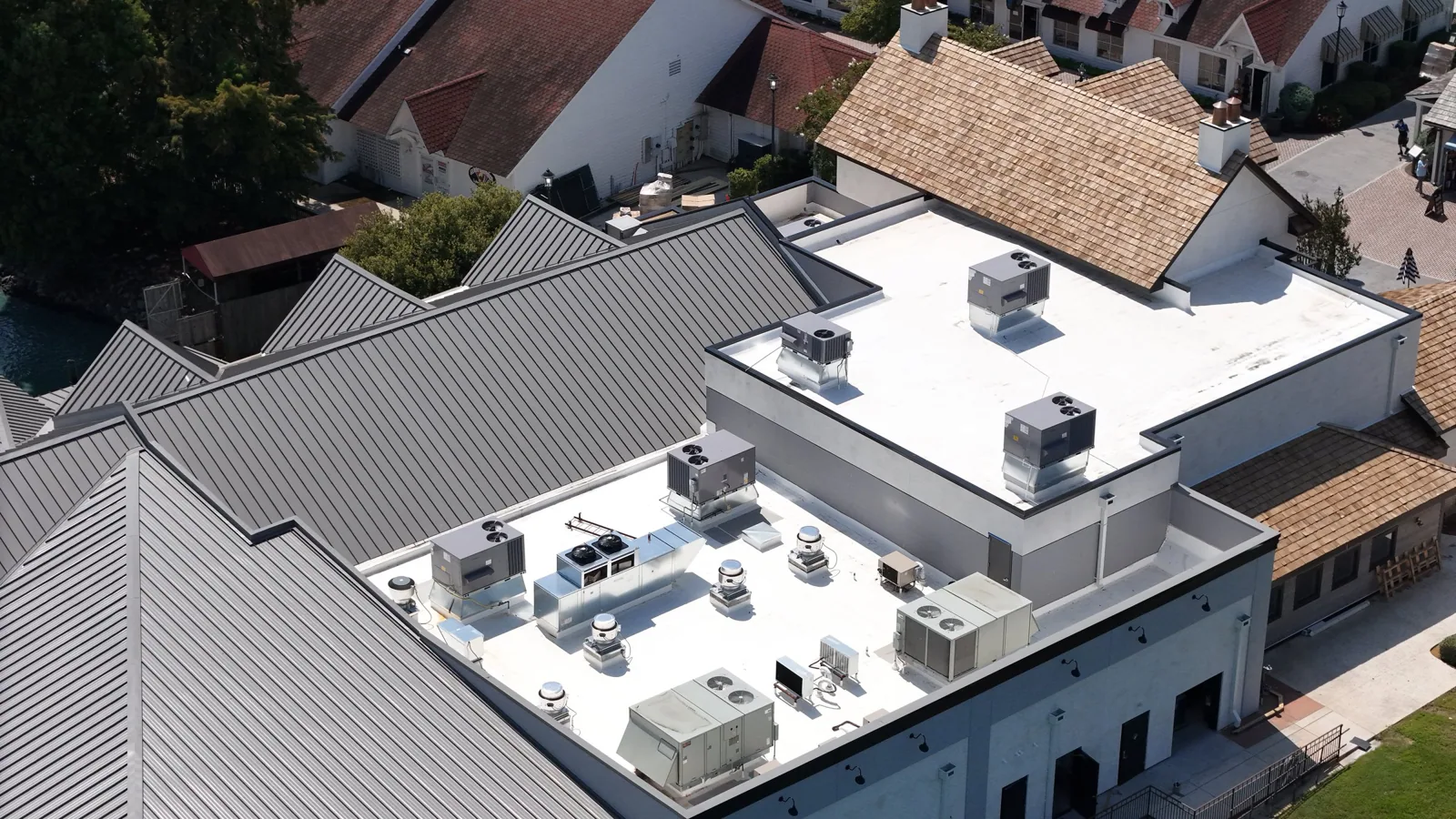
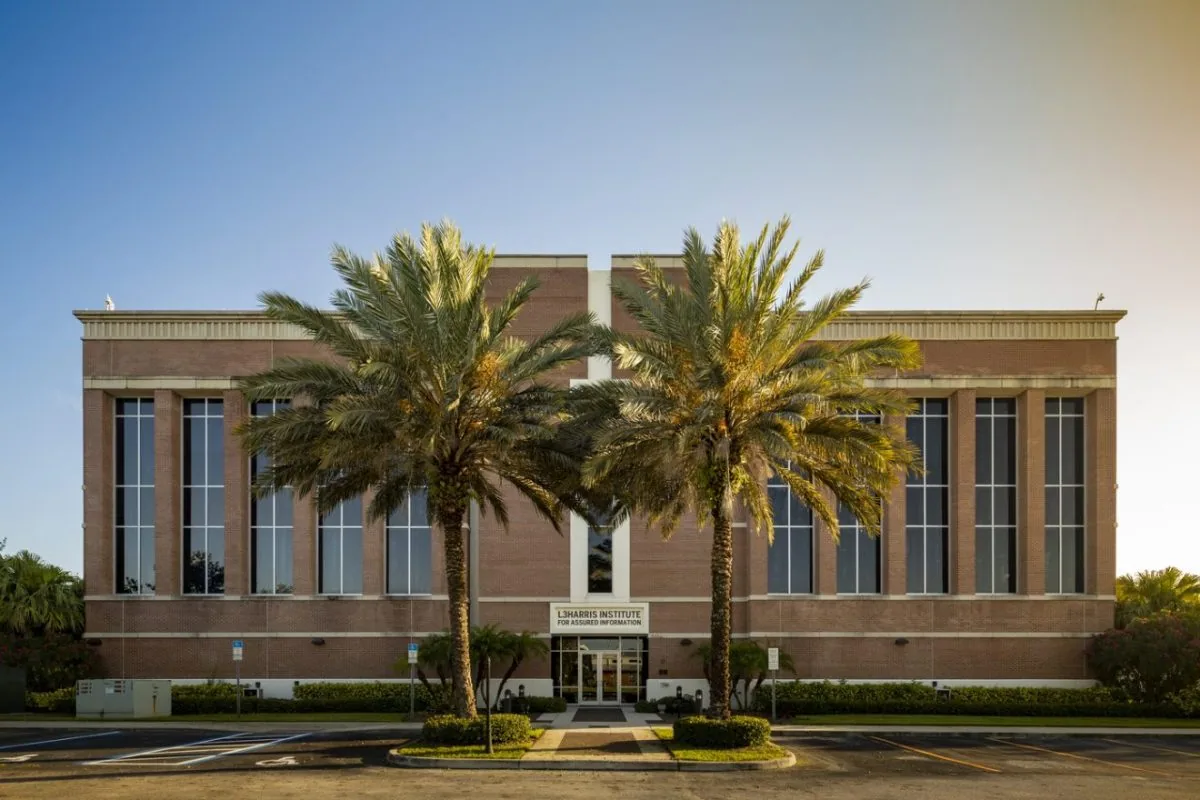
A ceiling stain in a guest room can start above a corridor, rooftop unit, or drain several bays away. At a hotel, the first decision is which rooms and services need protection while the roof is checked. The Woodlands Town Center brings hotels, healthcare, offices, dining, and entertainment into one mixed-use district. Conroe’s Grand Central Park adds shopping and dining outside downtown. Those settings show the range of hospitality operations in the region, but each property needs its own roof inspection and access plan.
Keep the affected area clear and usable
Front desk staff can tell us when a guest reported water, whether the room is occupied, and which nearby spaces need to remain available. That is useful, but it does not locate the roof opening by itself. We compare the reported area with roof seams, drains, wall transitions, equipment curbs, and prior patches. If water is active, we identify a safe temporary measure and a return path for the permanent repair.
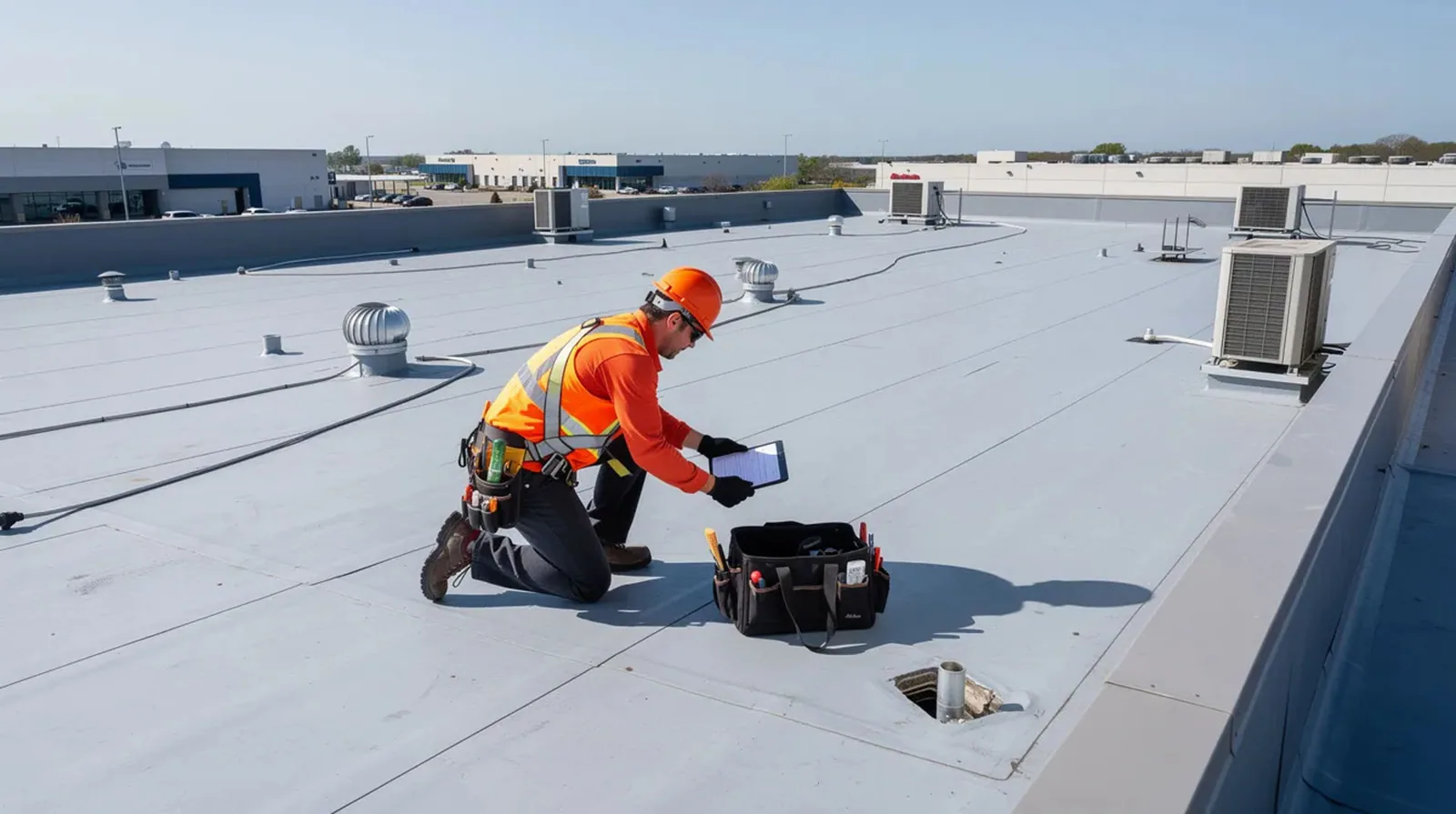
A property team can pair the room number with a roof-zone label without putting guest information in the roofing record. A commercial roof inspection records visible conditions and the areas that need closer review. Hotel roof work also has to account for guest routes, housekeeping, loading, kitchen service, and the hours when noise is least disruptive. We confirm those limits with the property contact before tools or materials are staged.
Trace water before reopening a room
Conroe-area roofs face intense rainfall as well as sustained summer heat. A short heavy shower can expose a restricted drain or a low point that was not obvious during a dry walk. One account of the October 1997 outbreak notes a 57 mph southerly wind at the Conroe airport. That historic reading can inform regional preparedness; a hotel roof still needs an inspection of the specific reported area after a current storm. After a storm, we inspect reported areas and the roof paths that feed them instead of treating every room complaint as the same leak.
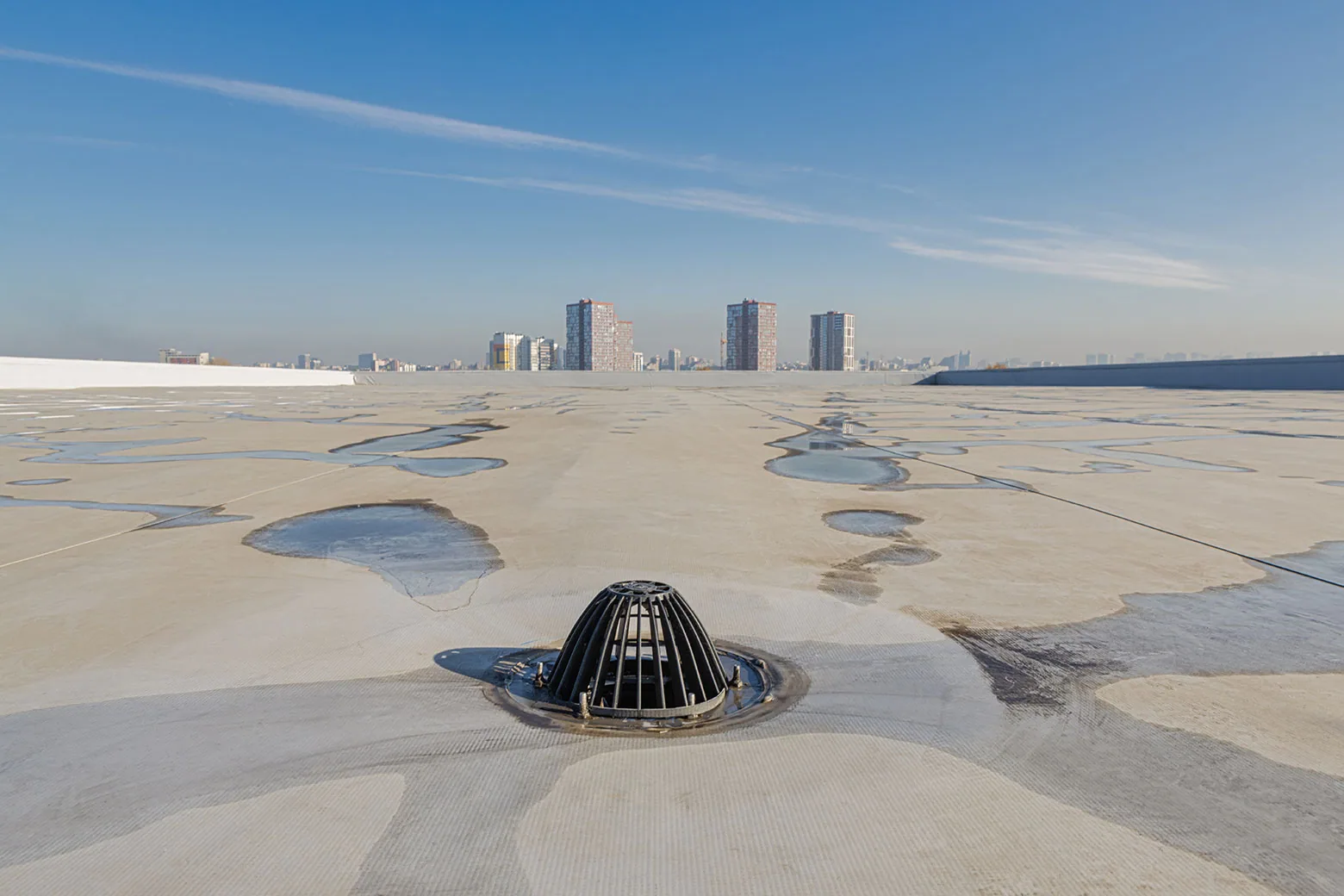
Water can travel along insulation or a deck before it appears indoors. We check whether the surface is ponding, whether the drain bowl and overflow route are clear, and whether seams or flashing show movement. Drain and scupper service can address an outlet problem; a membrane or curb repair may be needed when the water path points elsewhere. A room should return to service only after the property decides the interior is ready and the roof repair has been checked.
Build the access window around hotel operations
Hotels do not run on one quiet shift. Guest check-in, conference events, food service, housekeeping, deliveries, and maintenance calls overlap. A useful work plan lists the roof access point, lift or material route, areas below the work, acceptable noise hours, and the person who can approve a change. We can divide a larger scope by roof section so the property has a clear daily limit and a place to report a new concern.
Where a ballroom, restaurant, or occupied guest wing sits below the repair, the manager can help sequence work away from an event or meal period. Phased occupied-building work is planned by area, access, and protection needs. The Woodlands Waterway district includes hotels, restaurants, offices, residences, parks, and business venues, so mixed-use access and shared circulation are familiar regional conditions. They still must be confirmed at the individual property before work begins.
Choose repair or replacement from the roof condition
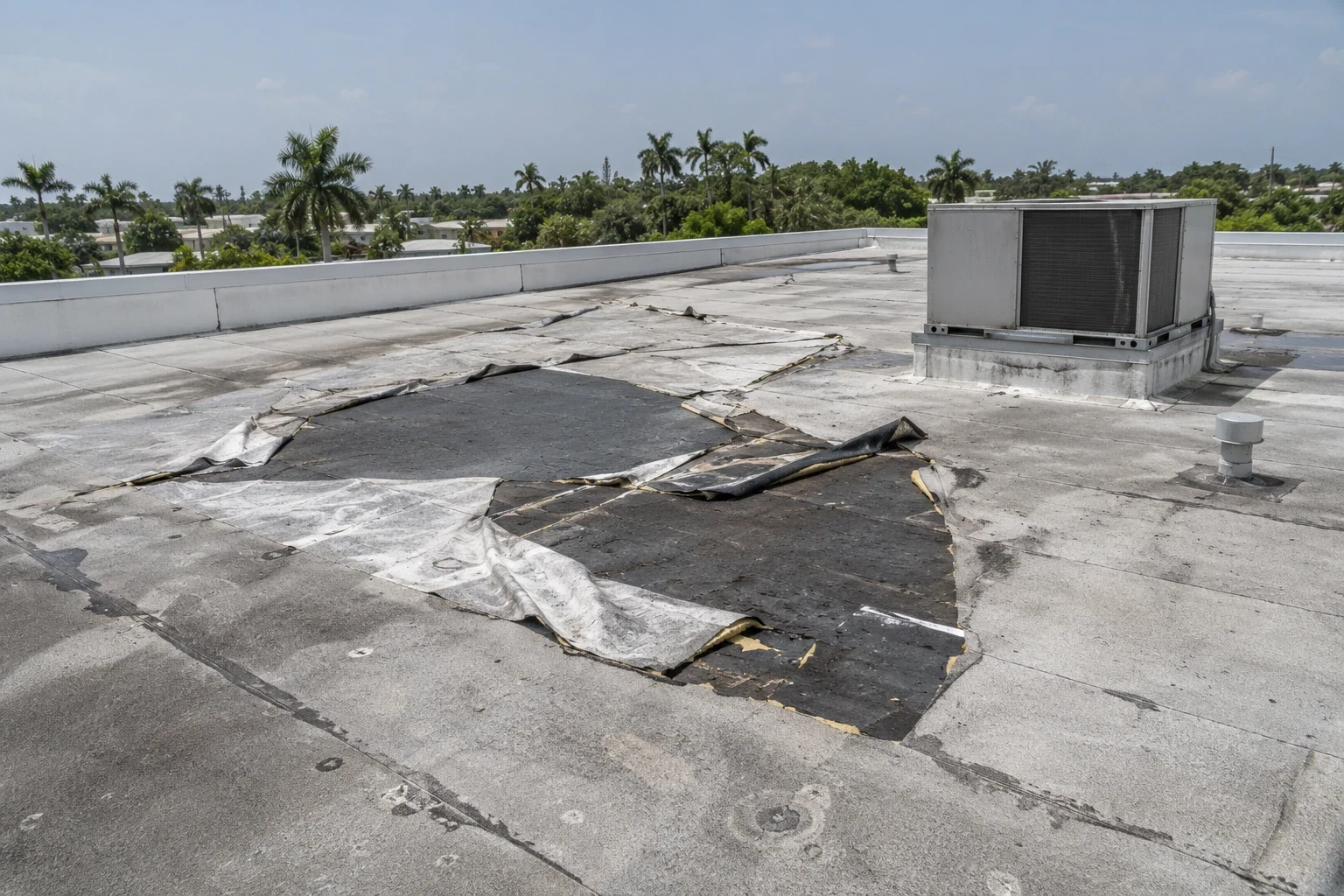
A small open flashing edge can call for a focused repair when adjacent membrane remains bonded and dry. Widespread wet insulation, recurring seam separation, or deterioration across several roof sections can shift the decision toward a larger restoration or replacement scope. We document the boundary and explain what is visible, what needs testing, and which conditions could change the recommendation. The owner can then compare a limited repair with the interruption and life-cycle demands of broader work.
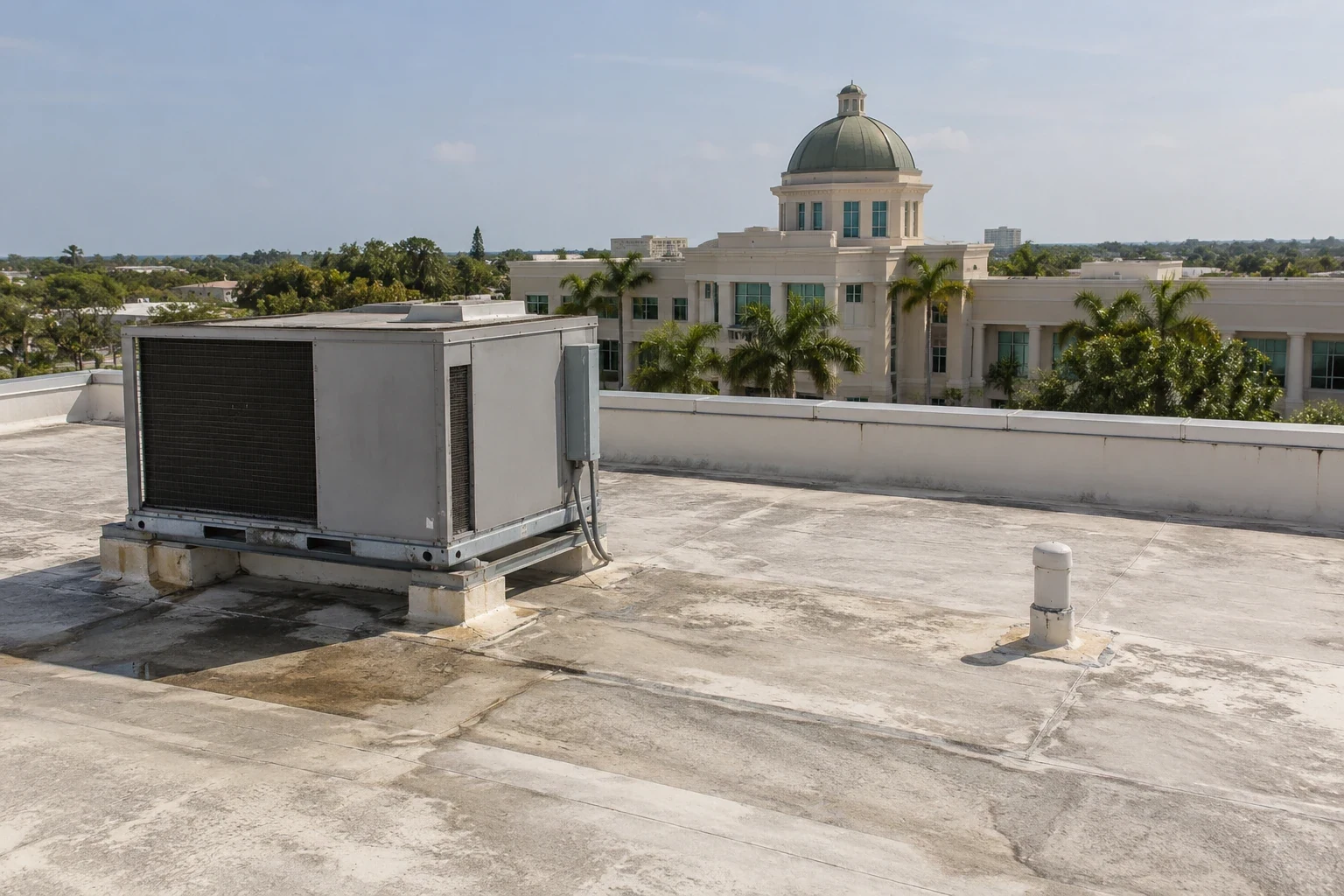
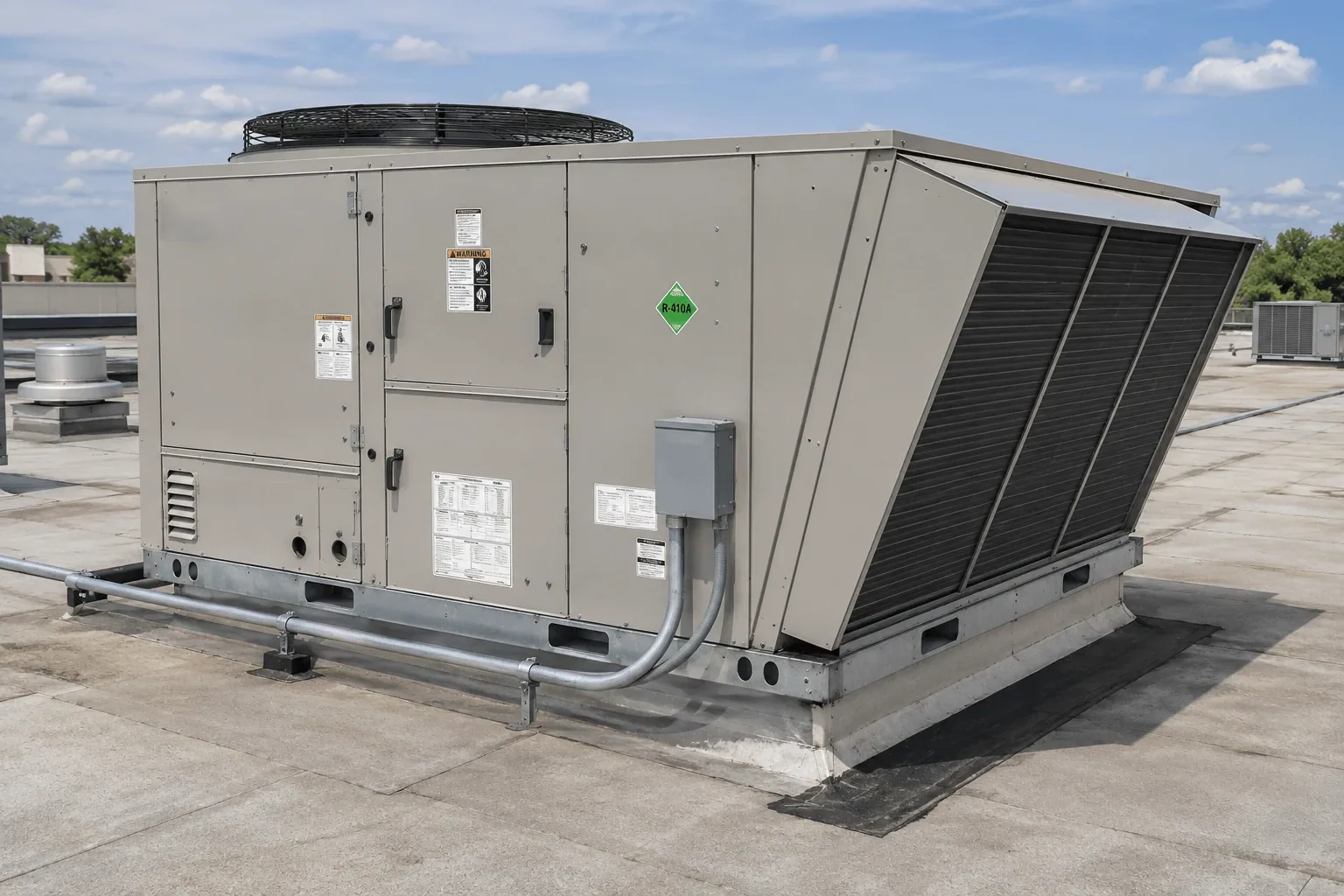
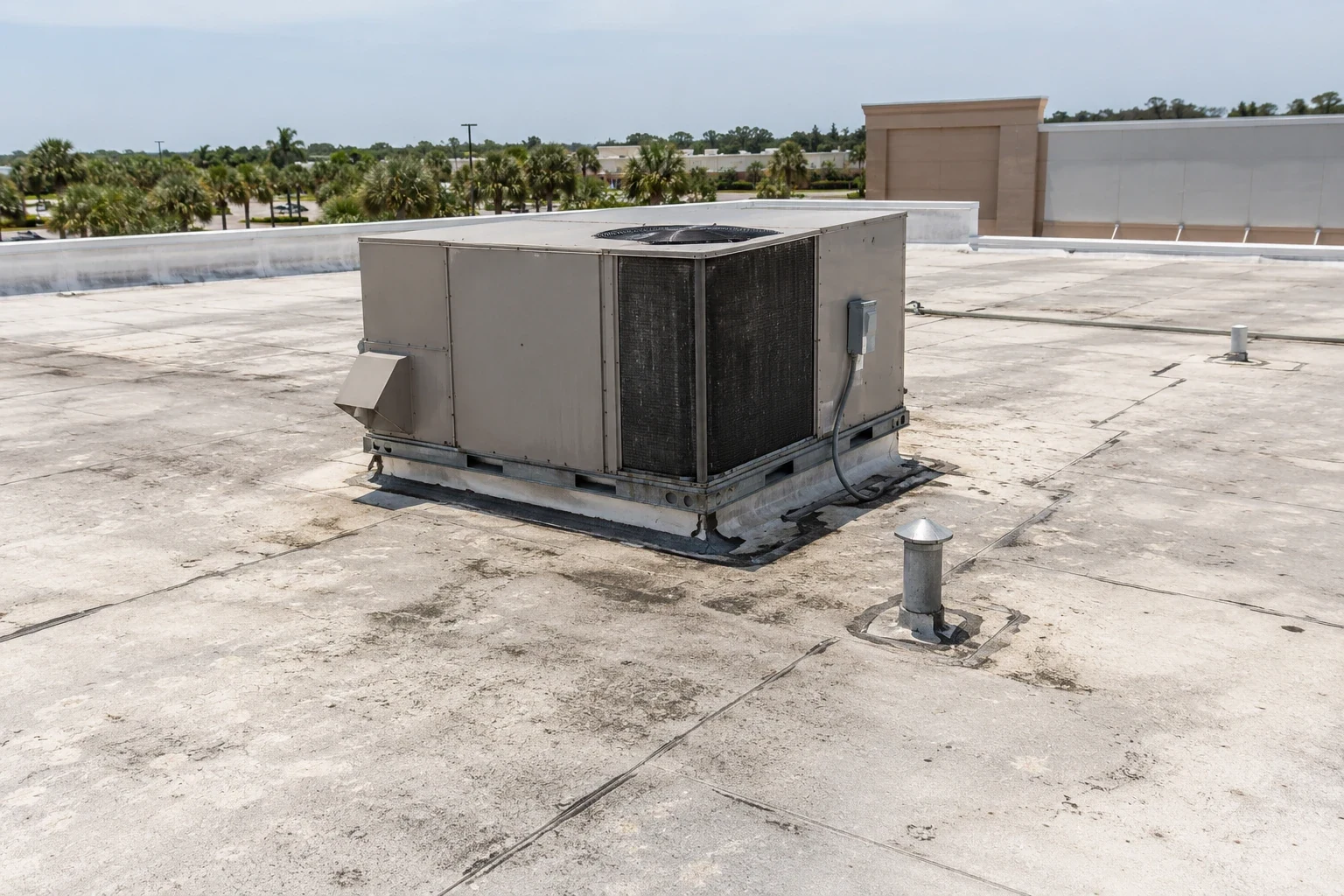
Hospitality properties often have kitchen exhaust, HVAC, plumbing vents, and other roof penetrations. Each one needs a compatible flashing detail and room for future service. We coordinate around mechanical vendors rather than changing their equipment. Penetration and skylight flashing can be inspected as part of the water path, while TPO roof options are considered only after the existing assembly, drainage, attachment, and project constraints are known. A system name alone does not decide the repair.
Make the scope useful to ownership
A property owner needs more than a total and a roof photo. The proposal should identify the affected zone, access assumptions, temporary protection, repair boundary, materials, exclusions, and any follow-up inspection. Cost and timing can change with wet insulation, deck condition, material staging, permit review, guest access limits, and the number of roof sections that must remain open. We separate confirmed work from optional investigation so a manager can route the approval without overstating what the inspection proved.
For a portfolio, a common record can capture property name, building, roof section, report date, room or service impact, and next decision. Property-management teams can use that structure to coordinate with owners and operating staff. Retail and restaurant chains may need a similar location-level handoff, with guest operations replaced by store schedules and franchise approvals. The inspection record should not include guest names or room details beyond what is needed to find the affected area. A dated roof-zone map and clear closeout notes make a future call easier to compare with the current repair.
Close out with a return check
After repair, we record the work performed, materials used, photos, and any conditions left for another trade or a later visit. If the repair relied on dry weather or a temporary cover, the return date should be explicit. The property contact can confirm that the room or service area is ready for normal use; our roof check addresses the repaired surface and nearby details. If the next rain reveals a different path, that report should be tied to the right roof zone rather than folded into an unrelated work order.
Conroe Marketplace and Grand Central Park are separate shopping and dining areas, while Town Center in The Woodlands combines lodging with other commercial uses. Hospitality operations differ across those settings, and roof condition differs from building to building. The Woodlands Town Center service area gives property teams a regional point of reference. For a specific hotel, send the affected area, operating restriction, access contact, and any event window so we can set an inspection step that fits the property.
Commercial Roofing Questions
What information helps when a guest reports water overhead?
The room or public-area location, time noticed, whether water is still entering, and any nearby equipment or ceiling condition help us narrow the inspection. The property team can move guests or protect contents while we trace the roof path.
Can roof repairs happen during a conference or busy check-in day?
The access window, work zone, noise, and material route decide that. We can break work into sections when the roof and repair method allow it, then coordinate each day with the hotel contact.
How do you keep a temporary measure from becoming the final repair?
We identify it as temporary in the work record, state what condition it addresses, and schedule the permanent repair or inspection. The property receives a clear return date and the next decision.
When does a recurring hotel leak call for a larger scope?
Repeated entry at the same roof zone, wet insulation, failed seams, or related defects across multiple areas can justify a broader review. We show the evidence and repair boundary before recommending that step.
What should ownership receive after the work?
A useful closeout lists the roof section, repair performed, materials, dated photos, exclusions, access limits, and follow-up items. Guest names are not needed to identify the roof work.
Related Roofing Work