Aircraft Hangar Roofing in Conroe, TX
Inspect aircraft hangar roofs near Conroe with attention to large door clearances, aircraft protection, roof drainage, and staged repair planning.
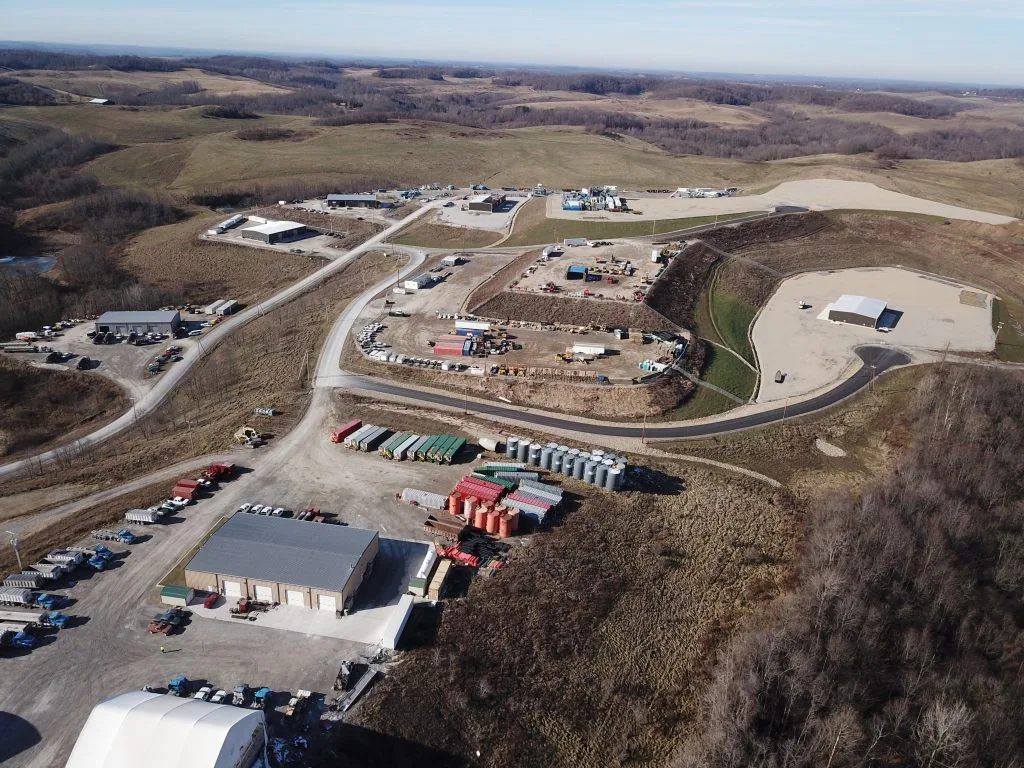
A leak over an aircraft bay can threaten equipment and interrupt movement through a wide hangar door. The roof plan should identify which bay is affected, where aircraft or service vehicles will be staged, and who controls door operation. Hangar roofs can span large areas with different framing, insulation, roof material, and door interfaces; those details must be inspected at the property. Conroe's I-45 and Loop 336 corridor connects local properties with regional routes, so truck access and staging should be confirmed with the hangar operator before arrival. The operator also sets the aircraft, door, and roof-access plan for each bay.
Define a clear aircraft and crew boundary
The facility contact should identify aircraft positions, movement schedules, access controls, and the area available for staging. We confirm whether a door must remain operable, which route equipment can use, and whether a spotter or escort is required. Roofing material, lifts, and tools stay within the approved work zone; the operator controls aircraft movement and any protection below the roof.
A long-span roof may cover multiple bays, but one leak report does not require closing the full building. The scope should name the bay, adjacent roof section, door path, and time window. If more than one section needs work, phased work in an occupied hangar can show which areas are closed and when they are returned. We agree on the daily inspection and weather-tight closeout before opening a roof detail.
Inspect the door opening and perimeter transitions
Large hangar doors create a roof and wall interface that needs careful inspection. We review visible edge metal, flashing, jamb transitions, upper door seals, and nearby roof seams for gaps, impact, or movement. The door's own mechanism and adjustment are controlled by the facility's door contractor. Roofing work should not alter tracks, motors, or counterbalance equipment without that trade's direction.
Water near the opening may come from a roof edge, a wall transition, or a detail farther uphill. We follow the apparent drainage direction and compare the interior report with adjacent curbs, penetrations, and scuppers. A commercial roof inspection can document the accessible roof and state which door or perimeter detail needs more review. If the building has different-use bays and office areas, flex-industrial roofing covers another mixed-use property type, though hangar doors and aircraft clearances call for a separate access plan.
Keep water moving across a broad roof span
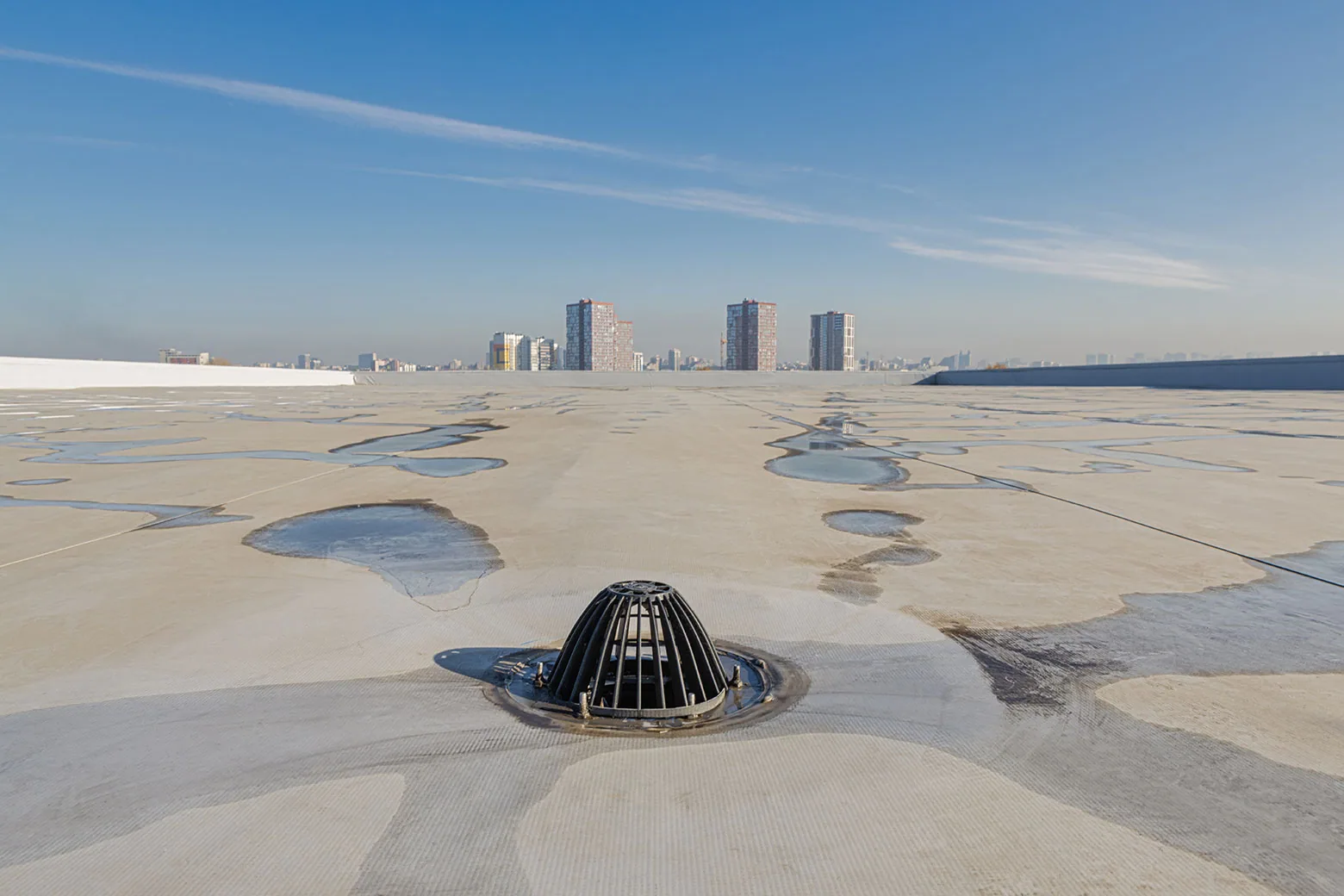
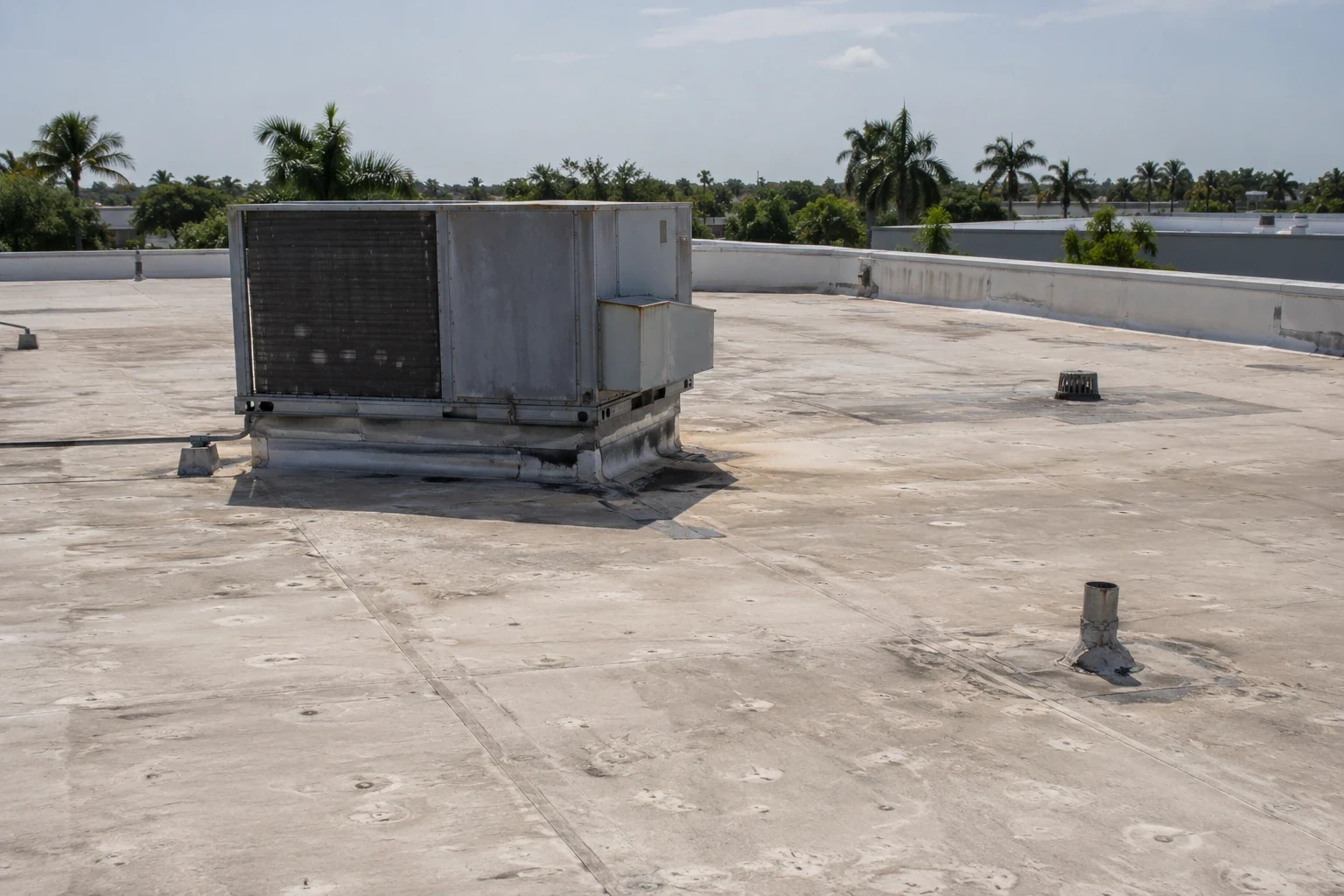
A wide span often carries water a long distance before it reaches an outlet. We review the slope and outlet arrangement on the inspected bay, then note any low area, debris, or damaged edge that affects runoff. A blockage and a membrane defect are different findings and should not be bundled into one repair line. The service plan should show which bay drains were reached and whether a separate drainage review is needed.
Conroe's hot season and fast-moving thunderstorms can compress a hangar work window. Check the current forecast, set the maximum area that can be opened, and agree on a dry-in deadline with the operator. Drain and scupper service can list visible restrictions and overflow paths. We agree how much roof may be opened and who receives a delay notice. The operator should know when the bay can return to use and whether a follow-up check remains.
Coordinate lights, exhaust, and rooftop systems
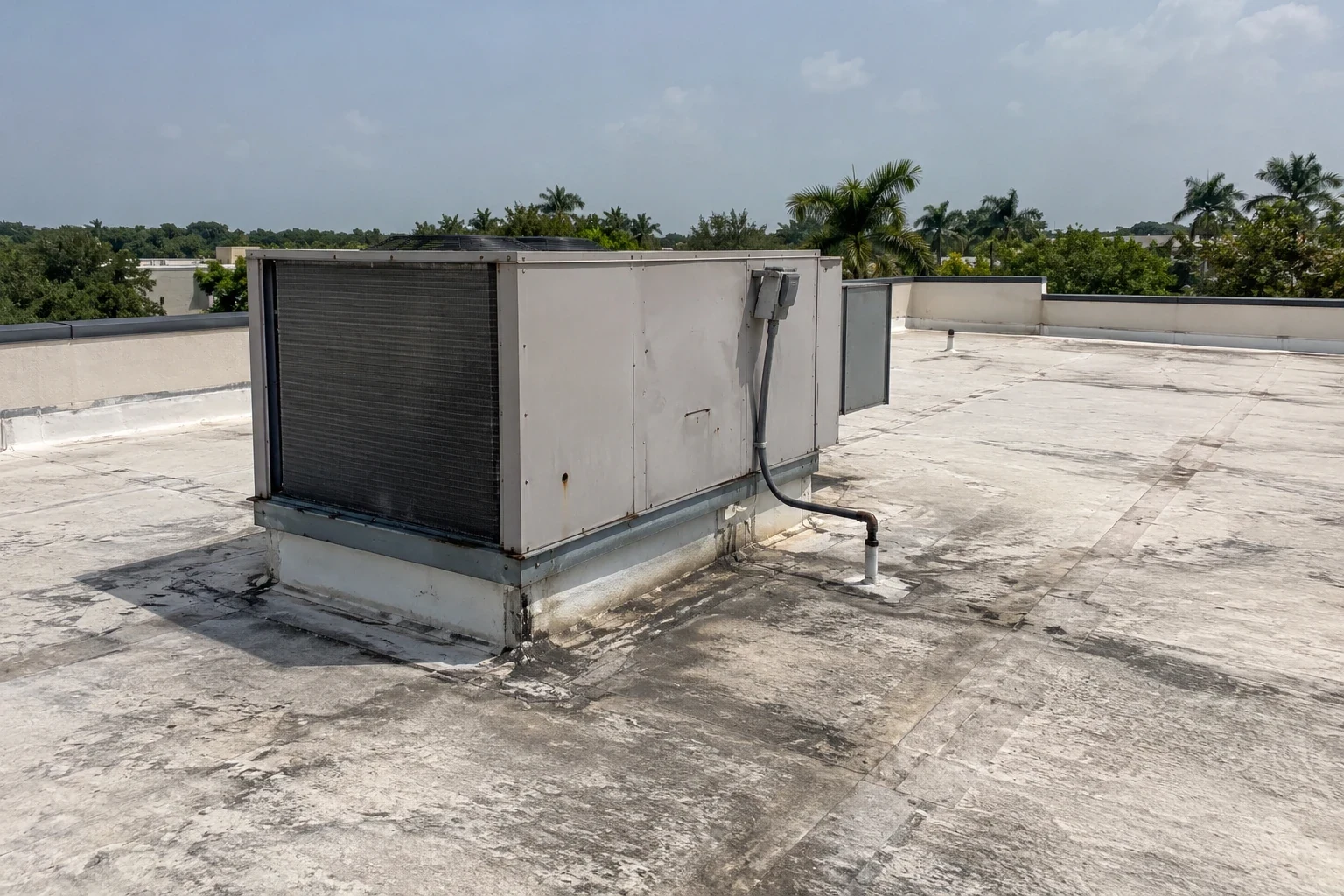
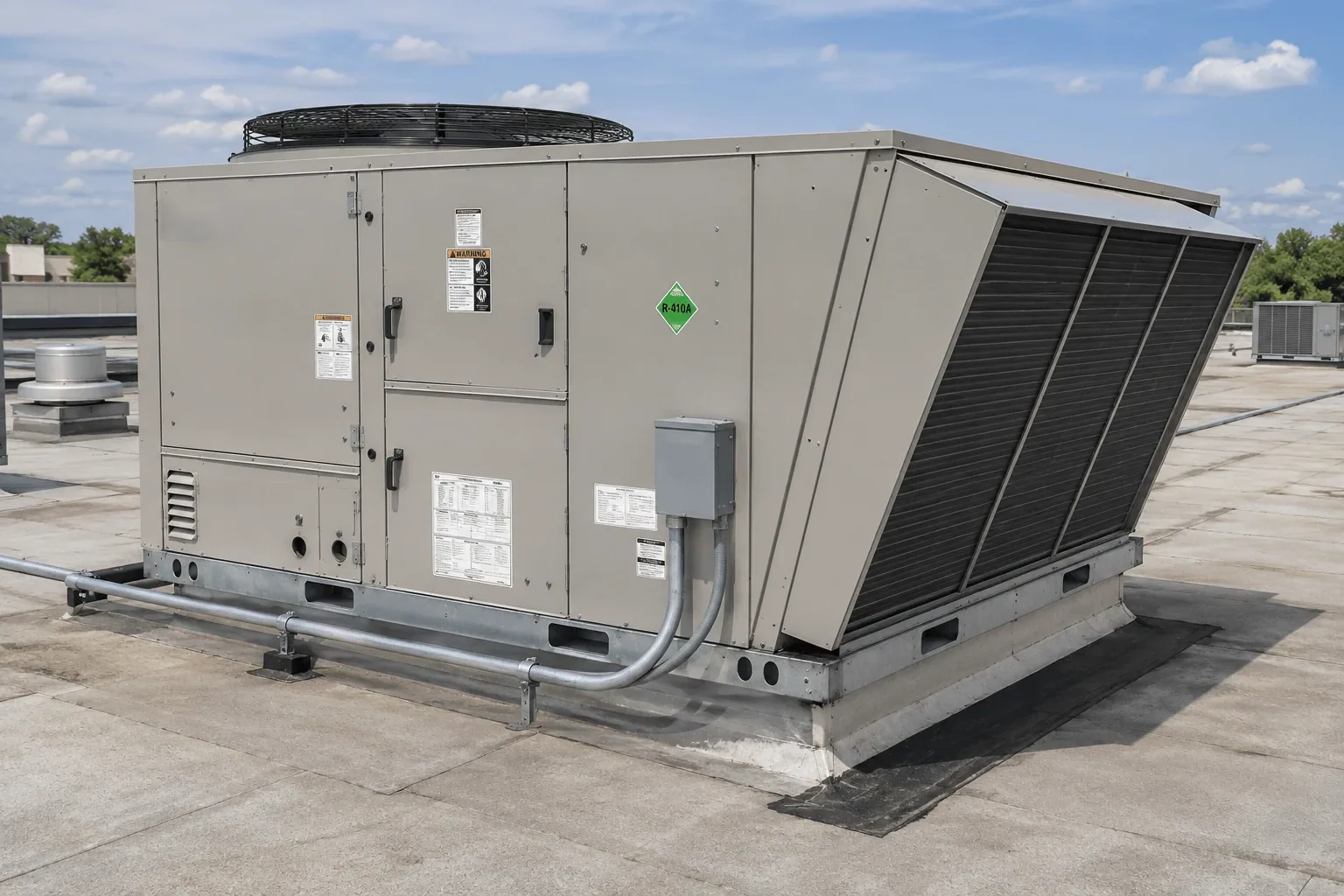
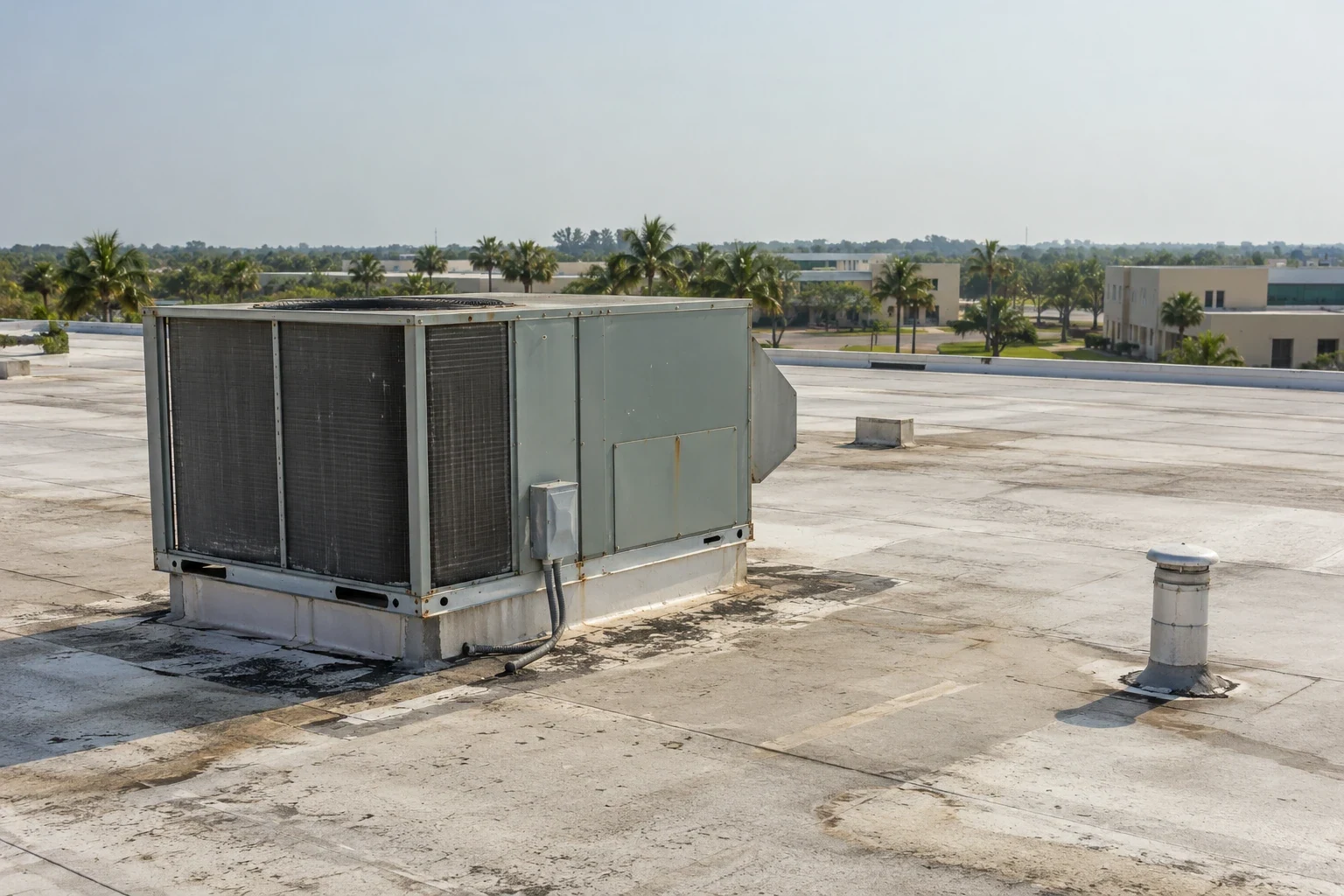
Hangars may have roof-mounted exhaust, ventilation, lighting, communications, and other systems. The equipment list and service rules come from the facility, not the roof appearance. We check visible curbs, supports, penetrations, and flashing and ask the authorized engineer or vendor about required clearance. We do not disconnect or reposition systems without authorization.
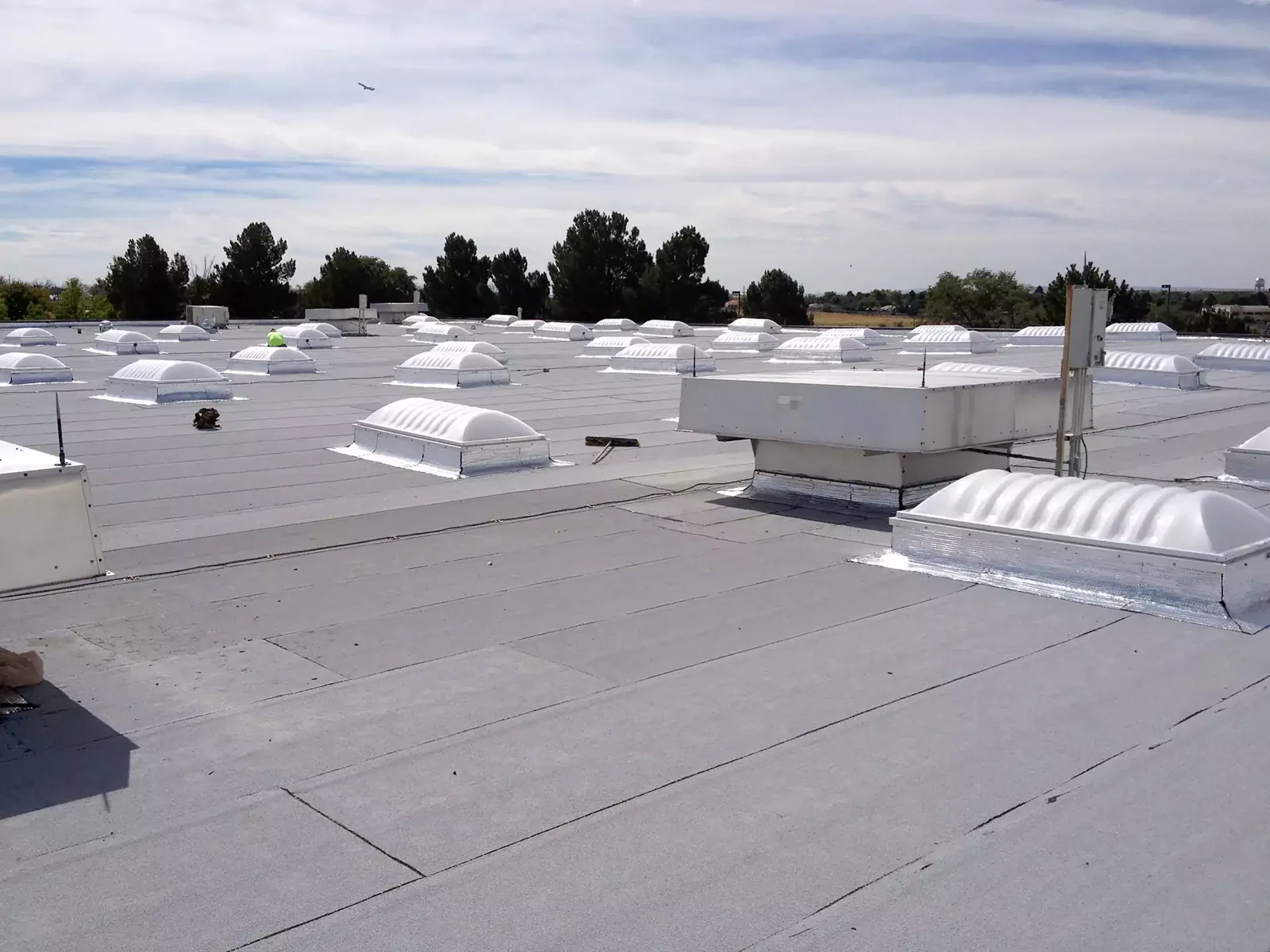
A water mark near a skylight or exhaust point may be caused by nearby membrane, edge flashing, or a seam. Equipment curb and support review can help define the roof interface. If access above aircraft is restricted, the facility can tell us whether equipment or aircraft needs to be moved before inspection. Any opening is closed or protected at the agreed end-of-shift point, and the report notes where close inspection was not possible.
Set the work window for local heat and storms
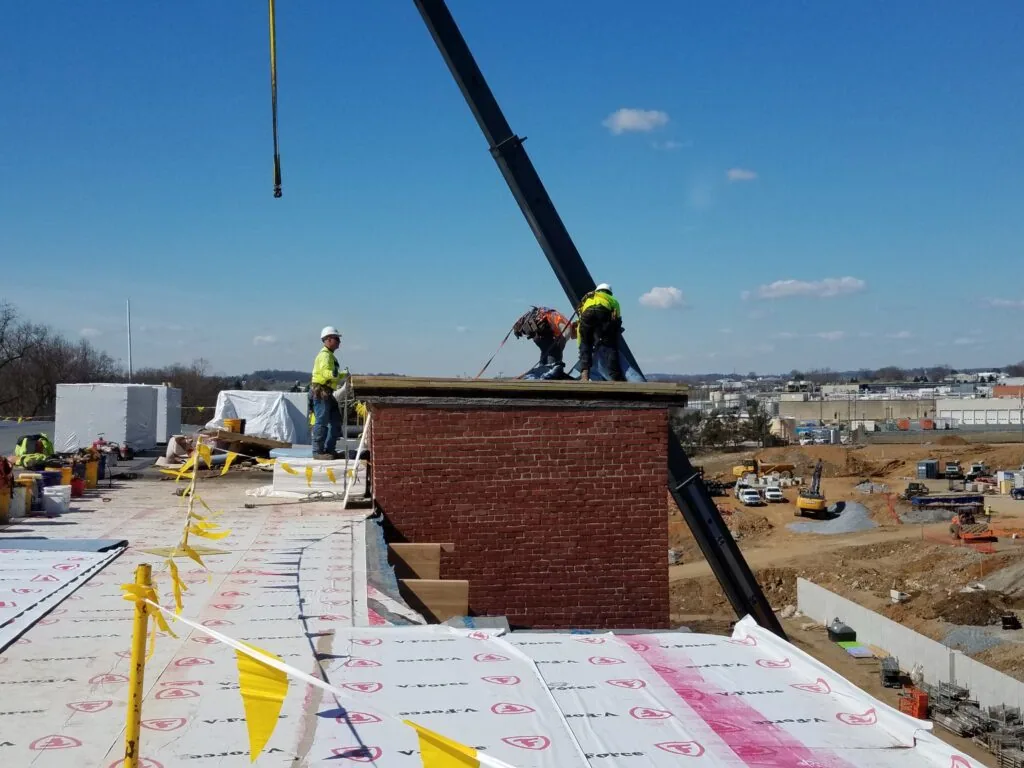
A hangar work plan should state what happens if the forecast shifts after the crew has reached the bay. Before removal, we set the maximum open area, the temporary cover method, and the person who can authorize a pause. If a lift or access platform must be cleared, the facility contact controls that movement. The roofing lead reports the section protected and whether another inspection is needed before aircraft or service activity resumes.
Conroe's hot season and fast-moving thunderstorms can compress a hangar work window; check the current forecast, set the maximum area that can be opened, and agree on a dry-in deadline with the operator. We inspect the reported section for lifted edge metal, punctures, damaged flashing, door-interface issues, and new interior water. Storm-damage roof repair should describe the observed area and any temporary measures separately from permanent work, without implying that a prior regional event caused the current condition.
Compare targeted work with full roof renewal
A local opening or transition defect can be repaired when the surrounding roof remains stable. Broad wet insulation, recurring reports in multiple bays, or deteriorated attachment may call for a larger assessment. Adding another layer is possible only if the existing construction, moisture condition, deck capacity, drainage, and applicable requirements support it. Removal provides a closer look at concealed materials but requires debris movement and a reliable dry-in plan over the hangar.
A proposal should state the bay, roof section, access route, aircraft protection, door status, equipment clearances, and weather hold point. It should explain who approves added work if concealed conditions are found. A replacement scope can sequence work by bay or building section. For a military aircraft maintenance property, military hangar roofing adds controlled-access requirements; any such site is handled only under its own authorization.
Record the bay and roof detail inspected
Closeout photographs should show the repaired detail and nearby roof context. The report can list the hangar, bay, work area, material, date, aircraft or door limitations, and any follow-up item. If the roof could not be reached safely above an active bay, state that limit instead of calling the full area inspected. This gives the facility team a clear basis for the next maintenance call.
Before mobilization, the hangar operator should confirm aircraft movement, door status, service routes, and the approved roof area. The Conroe I-45 and Loop 336 corridor connects the area with regional routes; coordinate truck arrival, lift staging, and any access restriction with the operator. At closeout, identify the bay, roof detail, work completed, and the next inspection point.
Commercial Roofing Questions
Can aircraft remain in a hangar during roof work?
The facility operator decides aircraft movement and protection. The roofing plan defines the bay, work boundary, overhead access, and weather-tight closeout before any opening begins.
What information helps trace a hangar leak?
Identify the bay, time noticed, door position, whether the leak continues, and any nearby equipment. The facility contact can provide roof plans and authorize inspection access.
Can roof work affect the hangar door?
It may if access or flashing work is near the opening. Door mechanics are handled by the facility's authorized door contractor, while the roofer documents and repairs the roof interface under the approved plan.
How do you inspect over a large aircraft bay?
We review safe access, visible seams, curbs, drainage, and door transitions, then record any area that cannot be inspected without moving an aircraft or equipment. The operator controls those moves.
When should hangar ownership consider replacement?
Repeated leaks, widespread moisture, or multiple failing bays may support a broader renewal review. The recommendation should compare repair, overlay, and removal against the actual assembly and operating plan.
Related Roofing Work