Military Hangar and Aircraft Maintenance Facility Roofing
Coordinate military hangar roof work with installation access rules, aircraft maintenance schedules, bay protection, drainage review, and documented closeout.
Water above a maintenance hangar can stop an inspection sequence and change when a bay is available for an aircraft. The roof scope has to fit the installation's own access rules, maintenance schedule, and authorization path. The facility representative identifies the approved building, bay, escort, tool controls, and work hours. Conroe's I-45 and Loop 336 corridor links local commercial activity to the regional interstate network, and NorthStar Industrial Park includes warehouse, distribution, and light-manufacturing uses. Those area facts provide context; they do not establish a military hangar or access approval near Conroe. Work at a military site depends on its project-specific authorization.
Confirm hangar permissions before mobilization
Each installation sets its own entry process. The authorized point of contact can confirm which crew members may enter, whether an escort is required, how tools are inventoried, where vehicles may park, and whether photography is restricted. We do not treat prior access to a commercial airport or another government property as permission for the installation. The roof map should list only the approved structure and work zone.
A named onsite contact should be available for a gate delay, weather stop, or request to move equipment. The crew can then pause at the approved boundary instead of seeking informal direction from nearby staff. Any change in the permitted route or access window should come from the installation representative.
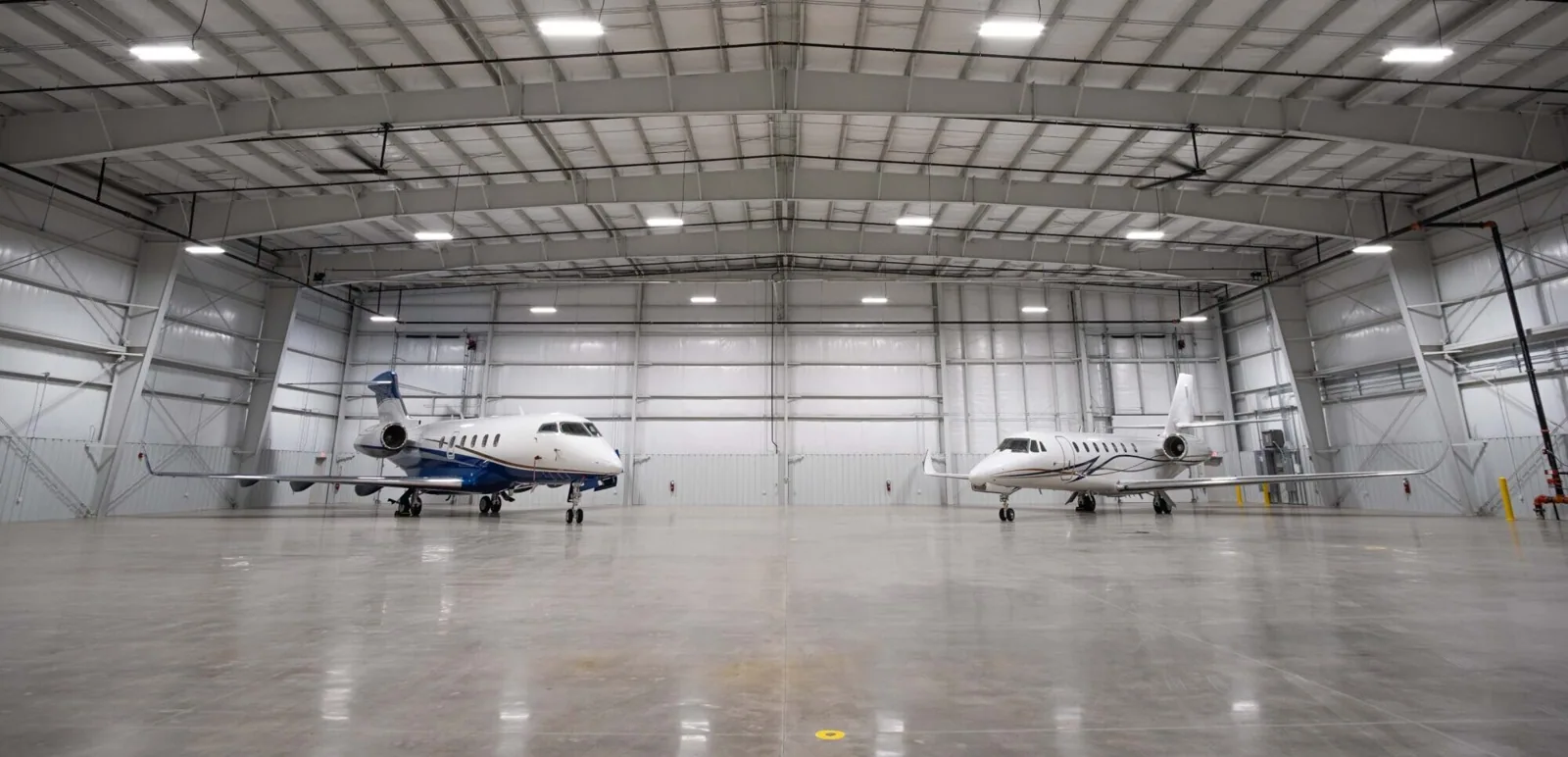
Aircraft maintenance often follows a planned sequence. The facility team can identify when a bay is clear, which work stands or service lanes must remain available, and who can approve a schedule change. A repair can then be timed around maintenance activity rather than interrupt it unexpectedly. Phased work in an occupied facility can structure the roofing schedule by hangar section, but the installation controls all aircraft movement and return-to-service decisions.
Separate overhead roofing from aircraft maintenance
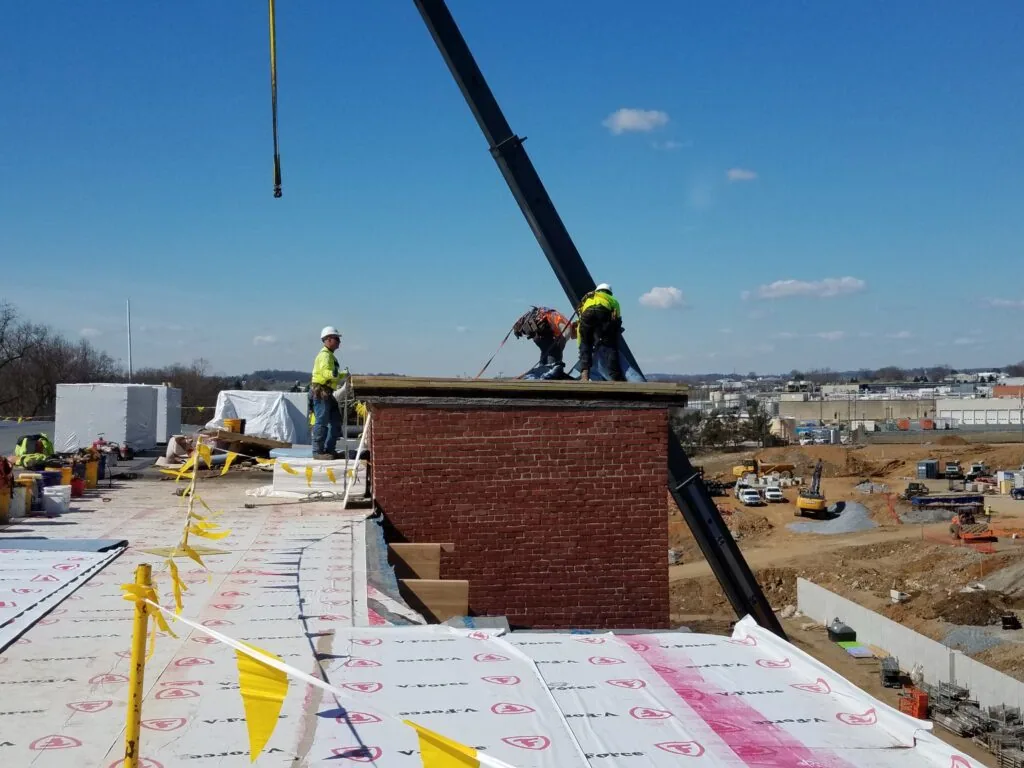
Before overhead work, the facility representative decides whether the bay below must be cleared, whether any equipment needs cover, and when it can be used again. Roofing staff protect the approved work zone and keep tools, fasteners, and removed materials within it. We do not handle aircraft, maintenance stands, avionics, or tools owned by the installation. The crew reports a new condition to the designated point of contact before expanding the work boundary.
Maintenance buildings can have high-bay areas, support spaces, and adjacent offices under different roof sections. We identify which assembly is above the scheduled bay and map nearby seams, penetrations, and transitions. A commercial roof inspection can document the accessible exterior and note what could not be seen from the authorized route. For a hangar without military maintenance controls, aircraft-hangar roofing covers general aircraft protection; installation requirements still govern this work.
Review roof openings without changing aircraft systems
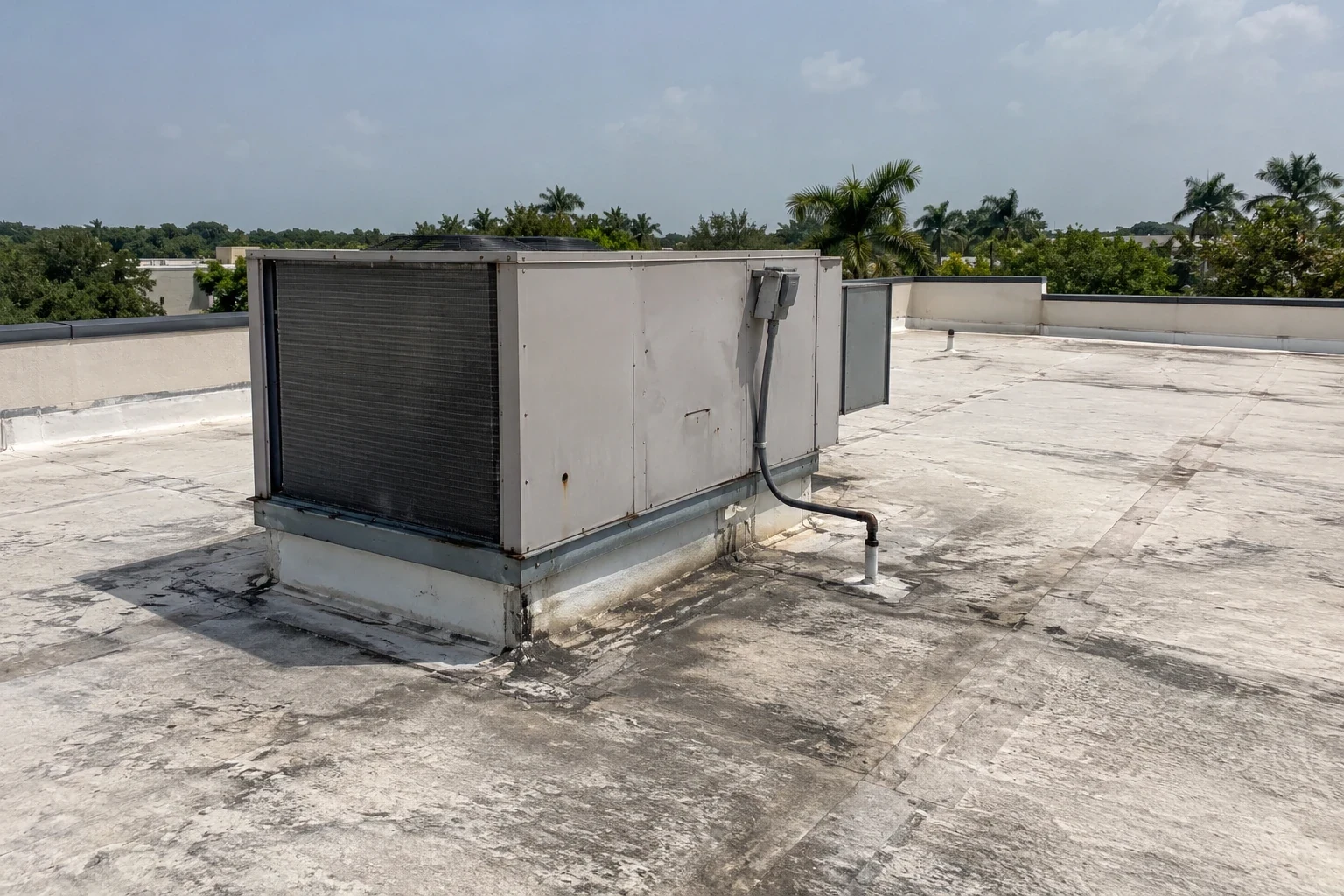
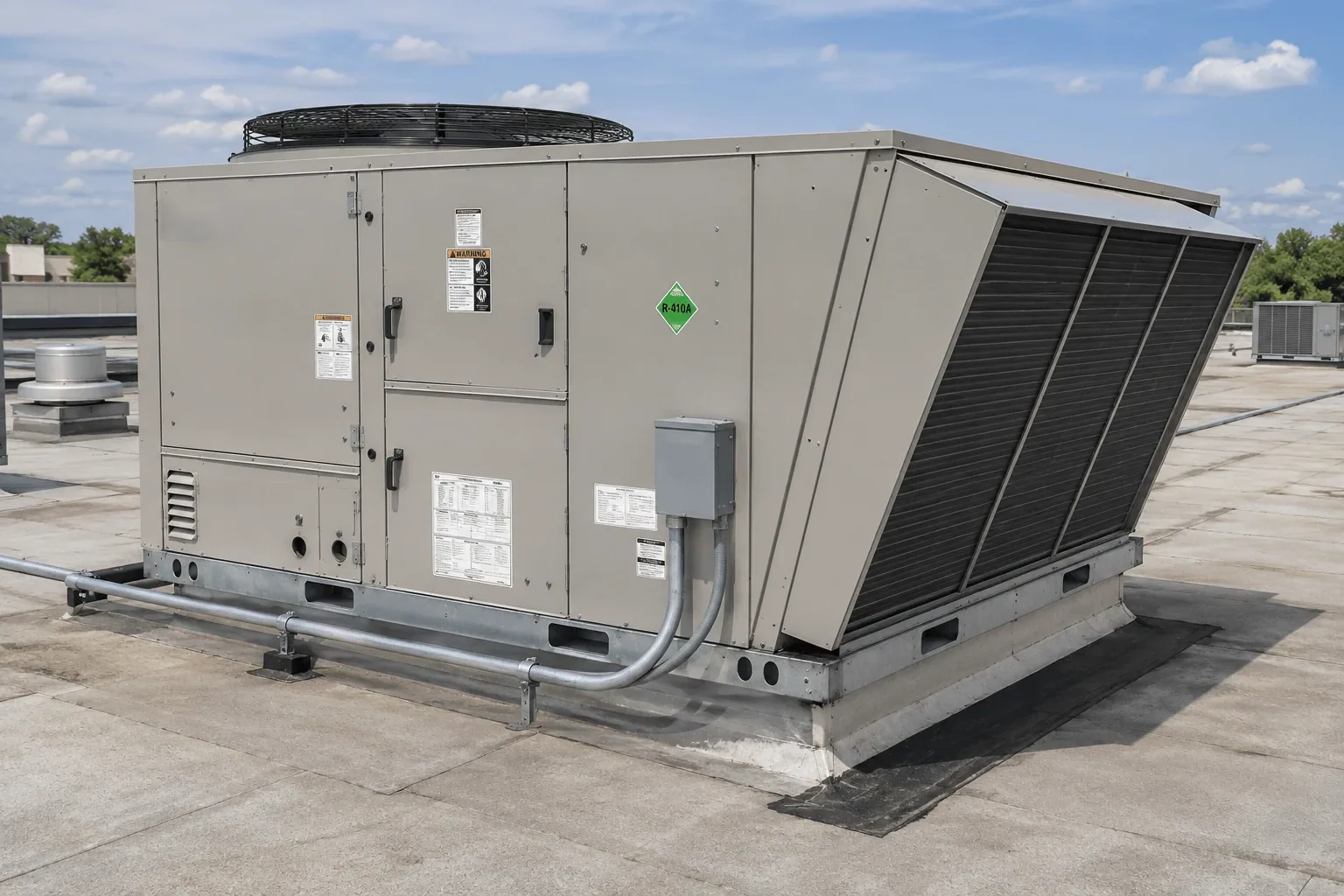
Large maintenance buildings may have exhaust, ventilation, communications, lighting, roof hatches, and equipment curbs. The installation's engineering lead identifies the function of each system and any shutdown, clearance, or contamination-control requirement. Roofing crews inspect visible flashing, supports, penetrations, and the adjacent membrane. We do not disconnect equipment or adjust a system based on appearance.
A leak close to an exhaust stack may enter from a seam, curb flashing, or an upper transition. We compare the reported bay with drains and roof details before selecting the repair area. Equipment curb and support review can define the work at the roof interface. If the facility has a large roof span, the inspection should identify each bay and detail that was actually accessible, not generalize one finding to the whole structure.
Inspect roof drainage before aircraft bays reopen
Water management affects a hangar even when the visible concern is an interior drip. We inspect accessible drains, scuppers, overflow routes, and low areas for debris, damage, or standing water. Drain and scupper review can describe the outlet and any maintenance or repair item. A low point may need a drainage assessment beyond clearing debris, especially if the issue appears repeatedly after rain.
The Conroe climate record is collected at Lone Star Executive Airport. Nearby Houston Intercontinental normal highs are 94.5°F in July and 94.9°F in August, so material handling and safe work time need to be planned. A rain delay should trigger a defined check of temporary protection before aircraft or service activity returns below that area. The installation representative controls bay access after weather interruption and receives a status that distinguishes a permanent repair from a temporary cover.
Base storm decisions on the current building inspection
Following a storm notice, the facility can report which hangar bay or maintenance area has a new leak or visible damage. We inspect the authorized roof section for punctures, displaced edge details, damaged flashing, and debris impact. The Conroe-area October 1997 tornado outbreak included an F0 tornado over the city and a second near Cut and Shoot along Highway 105; that history does not establish a current condition at a military property. Current photographs and site access determine what can be reported.
If the crew places temporary protection, the installation should receive its location, limits, and next inspection step. Storm-damage roof repair starts from observed damage and any contractual review points. The installation may require the facility manager, contracting official, safety lead, or aircraft-maintenance contact to accept a stage. We follow the authorized chain and keep restricted site information within the approved reporting method.
Document work by bay, asset, and acceptance point
The scope should identify the approved building, bay, roof area, repair detail, protection method, access window, and acceptance contact. If the project requires an inspection before covering a detail, the hold point should be written into the sequence. The scope compares targeted detail work with broader renewal only after the roof build-up, wet areas, support, and drainage have been reviewed against the contract. A replacement proposal can show work by bay and state where installation review occurs before work proceeds.
For offices, storage, or public-facing support buildings elsewhere on an installation, government-building roofing covers another property type. A hangar still has its own maintenance-bay boundary, aircraft clearances, and acceptance sequence. The contract representative should decide which project records can be shared with facility staff and which channels are authorized. That clarification prevents an ordinary closeout photo from being treated as a substitute for a formal inspection or installation acceptance.
Closeout records the roof sections reached, materials, dated photos if permitted, work completed, and any unresolved condition. NorthStar Industrial Park in Conroe is a broad industrial district, and the I-45/Loop 336 corridor is part of regional transportation access. Those public-area facts do not identify a military installation. the regional Conroe service area is a general service area; access to a restricted facility is handled only through its project authorization. That distinction keeps the visitor copy accurate and the actual job under site control.
Commercial Roofing Questions
Does a hangar roofing visit grant access to a military site?
No. The installation's authorized contact controls entry, escort, tools, vehicles, photography, and approved work areas for each project.
Can aircraft maintenance continue below roof repairs?
The installation representative decides whether the bay must be clear and when it can return to use. The roofing crew defines its overhead work zone and reports each closeout.
Will roofing crews handle aircraft or maintenance equipment?
No. Aircraft and installation equipment remain under the facility's control. The roof work plan sets protection and access boundaries around those items.
What should the hangar roof scope contain?
Identify the authorized building and bay, roof detail, work hours, safety controls, equipment clearances, inspection points, weather protection, and acceptance contact.
How are storm findings handled at a hangar?
The team records current roof evidence in the permitted format, notes temporary measures and limits, and follows the installation's approval process before permanent work changes.
Related Roofing Work